
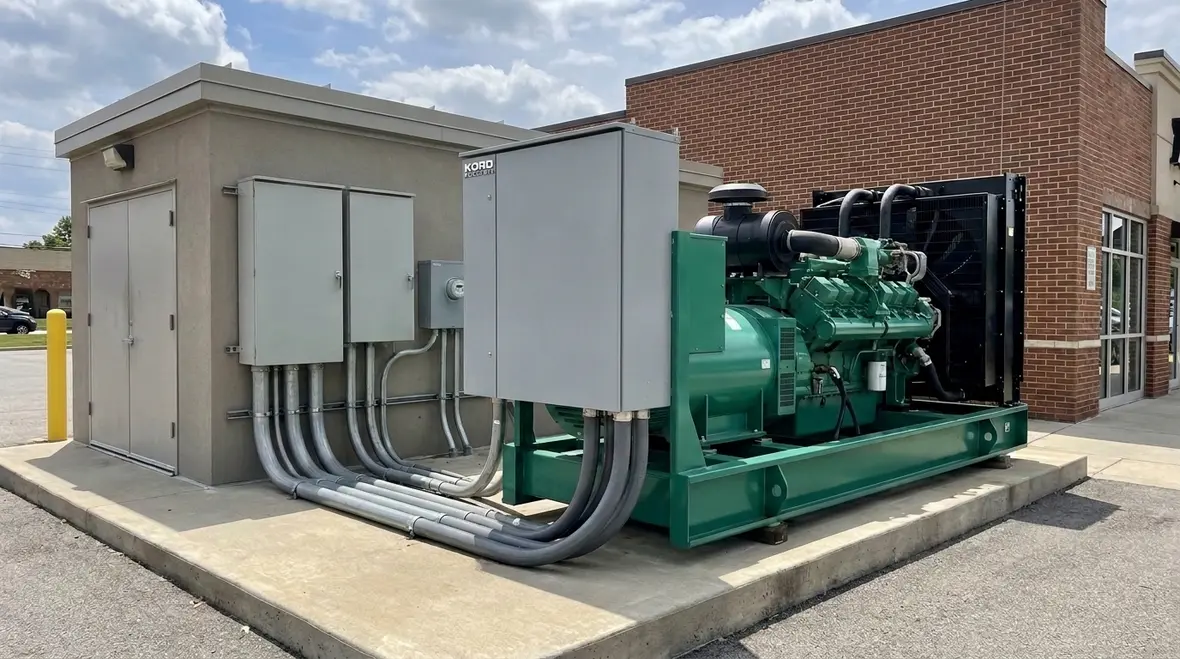
Industrial Emergency Power Systems: Backup Power & Reliability
Industrial Emergency Power Systems: Backup Power & Reliability for commercial and industrial sites
When an outage hits, time stops, alarms rise, and every critical system starts asking a simple question: “Are we protected?” At Kord Electric, we build Industrial Emergency Power Systems: Backup Power & Reliability for commercial and industrial facilities where downtime turns into real money, safety risks, and angry phone calls. We focus on backup power that keeps life support, process equipment, security systems, and life safety lighting operating when the grid fails.
Below, our experts explain how these systems are planned, installed, tested, and maintained. And yes, we’ll keep it calm. Even when the situation is not.
How emergency power keeps critical loads online

Industrial emergency power is not just a generator with a dramatic stance. It is a coordinated setup that matches power output to what the building needs, exactly when it needs it. First, we identify the critical loads that must run during an outage. These loads may include fire alarm panels, emergency egress lighting, sump pumps, IT and network gear, control systems, refrigeration controls, and specific production steps.
Next, we plan how power flows from the normal utility source to the emergency source. Then, we include transfer equipment that senses loss of utility power and moves electrical demand to the standby source. As a result, the building avoids the chaos that happens when circuits reboot in the wrong order or at the wrong time.
Third, we make sure the system can handle the real world. In real facilities, loads have starting currents, motors have inrush, and sensitive electronics need stable voltage and frequency. Our technicians review these details because a system that works on paper should still work when it is stressed.
Finally, we document the design so your team understands what runs, what does not, and how to respond. Others often treat this part like paperwork. We treat it like training, because it keeps everyone calm when the lights flicker. Or when someone in the office says, “I swear the building turned itself off.”

What we design for compliance and reliable transfer
Commercial and industrial sites require more than “something that turns on.” We design backup and emergency power systems to support life safety needs and business operations while following applicable codes and standards. We also coordinate with architects, electrical contractors, and facility managers to reduce surprises during commissioning.
To keep transfer dependable, we pay attention to three parts.
- Load classification: We separate life safety loads from standby loads, then match each group to the proper transfer strategy.
- Transfer speed: We determine how fast loads must transfer to avoid equipment trips, dropouts, or delayed shut down.
- System monitoring: We include alarms and status feedback so your operations team knows what happened and when.
As we go through the project, our expert service staff explains decisions in plain language. For example, we do not just say “use an ATS.” We explain why that choice matters for your building’s critical loads and how it behaves during normal operation, testing, and fault conditions.
And if someone asks, “Will it start right away?” we answer honestly, then we show how the system meets the performance targets you need. Reliability is not a vibe. It is a set of measurable results.
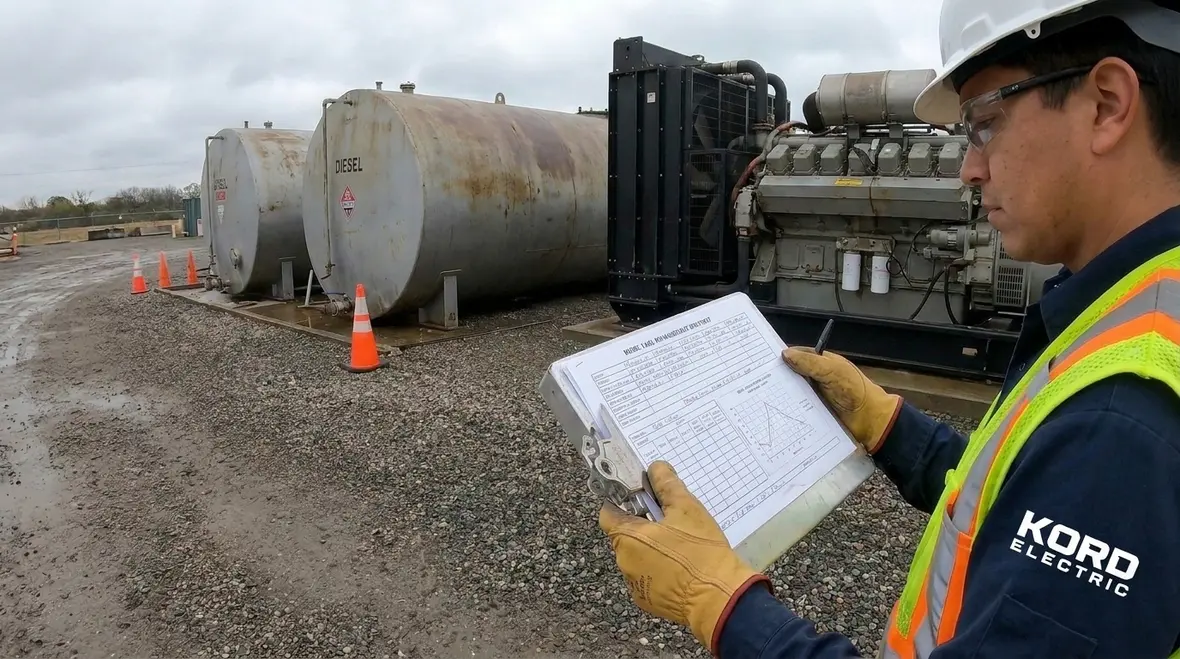
Choosing backup power: generator sizing and fuel strategy
When people hear “emergency power,” they picture one big generator and a satisfying startup sound. In reality, we treat selection as an engineering decision tied to your site. First, we calculate load demand using actual electrical characteristics. We do not rely only on installed panel schedules. Instead, we review motor loads, control power needs, and any equipment that cycles or ramps.
Next, we select the standby source and sizing method that fits your facility. That includes decisions like output capacity, voltage levels, and whether additional paralleling or load management is needed for larger sites.
Then we handle fuel. Fuel strategy often becomes the difference between “we have power” and “we have power long enough.” We evaluate storage capacity, run time needs, and logistics for refueling. If your operations require extended outage coverage, we design the fuel system and monitoring to support that expectation.
Here is where our technicians earn their keep. They ask the questions most teams avoid, like how quickly critical equipment must return to stable operation and what happens when partial loads are available. Then, they align the emergency power design with how your facility actually runs day to day.
And yes, we include the part everyone forgets until it hurts: service access. When maintenance matters, you want equipment that technicians can reach safely and efficiently. That is not glamour. It is how we prevent tomorrow’s emergency from becoming today’s headline.
Installation approach that reduces downtime and surprises
Commercial and industrial upgrades need a plan, not a guess. We build installation schedules that protect operations and reduce risk during electrical tie ins, shutdown windows, and system testing. Even when construction crews show up with good intentions and bad timing, our team keeps the work controlled and documented.
We start by reviewing site conditions and existing electrical infrastructure. Then, we verify conductor routing, equipment ratings, grounding, and protective device coordination. After that, we test components before final integration, so failures do not appear after everything is closed up.
During installation, our technicians also focus on clean commissioning. We confirm transfer sequence behavior, check load pick up performance, and validate alarm and monitoring functions. As a result, facility teams get a system that behaves predictably, not one that “usually works,” like a parking gate with a personality disorder.
After installation, we support operational readiness. We explain how testing works, what operators should observe, and what to do if alarms appear. Our expert service staff keeps training direct and practical so it fits the realities of a shift schedule and not an endless classroom session.
If you are mapping emergency power into a larger resilience strategy, it can be helpful to see how backup design connects with broader business continuity planning. Kord Electric’s coverage in Emergency Power for Business Continuity design shows how electrical decisions support real-world recovery playbooks instead of isolated one-off projects.
Testing, maintenance, and performance you can trust
A system only proves itself under conditions that resemble real outages. That is why we build maintenance into the life of your emergency power system. We recommend a service plan that includes periodic inspections, scheduled load testing, and verification of transfer equipment function.
First, we check the health of key components, including breakers, control circuits, battery systems, and power electronics where applicable. Next, we review alarms and logs so you understand trends, not just single events. Then, we conduct load tests that confirm the system carries the intended critical loads.
Our technicians also look at the details that affect long term reliability. For example, we monitor for fuel issues, verify cooling performance, and confirm that wiring terminations and connections remain in spec. These steps reduce the chance that a future outage reveals a problem you could have caught earlier, during a calm day.
Additionally, we coordinate service timing so your operations keep moving. That matters for major property buildings and industrial facilities that cannot pause whenever the calendar feels inconvenient. If a test requires operational awareness, we plan it with your team and communicate clearly.
And when questions come up, our expert service staff responds like professionals, not like they are reading from a manual. They explain what was tested, what passed, what needs attention, and how soon. You do not need mystery. You need uptime.
For facility teams that want to see how this plays out in the field, our guide on Emergency Power System Testing for Commercial Buildings walks through real testing routines that keep backup systems ready instead of “hopefully fine.”
Common commercial and industrial needs we support
Emergency power plans look different across property types, even within the same city. At Kord Electric, we support commercial and industrial facilities where continuity matters. That often includes manufacturing operations, logistics centers, healthcare adjacent environments that rely on life safety systems, data and network spaces, and large commercial complexes with high critical load concentration.
We also see scenarios where compliance and continuity collide. Some sites must maintain strict life safety readiness. Others must protect equipment and processes to avoid costly downtime and restart delays. Therefore, we design Industrial Emergency Power Systems: Backup Power & Reliability with both priorities in mind, instead of treating one as an afterthought.
In larger major property buildings, load control and zoning matter. We help clients define what must run immediately and what can wait for a staged response. In industrial settings, motor loads and control systems often define the sizing needs. In both cases, our approach starts with a real list of critical equipment, then we engineer the power delivery to match.
And for the record, we never assume every “critical” device behaves like a light switch. Some of them behave like a stubborn character in a sitcom. The kind that only turns on when nobody is watching.
If you are comparing emergency options across a wider portfolio of assets, it can help to explore how redundancy fits into the same picture. Kord Electric’s insights on Redundant Power Systems for Commercial Buildings show how layered sources and smart distribution design keep sites online even when one path falters.
FAQ: Emergency power for commercial and industrial facilities
Ready for resilient backup power that performs when it matters?
If you operate a commercial or industrial facility where downtime cannot be tolerated, Kord Electric can help you plan a dependable emergency power solution. Our technicians and expert service staff guide you from load review to installation and ongoing maintenance, so your system works the way you expect during real outages. Contact Kord Electric to discuss your site needs, critical loads, and reliability goals. Then we move forward with a clear plan you can trust, not a guess dressed up as engineering.
For businesses operating in Southern California, our team supports a broad range of commercial and industrial electrical needs across the region. You can see how we approach complex, multi-site work by exploring our dedicated overview of Los Angeles County electrical services, where emergency power, distribution upgrades, and preventative maintenance strategies all connect into one practical service plan.
If you are developing a wider outage strategy that goes beyond a single facility or system, it may also help to connect your Industrial Emergency Power Systems: Backup Power & Reliability planning with Kord Electric’s insights on Emergency Power Systems for Businesses: Backup Power & Continuity. Together, these approaches give your organization a layered path from design through testing, operations, and long-term resilience.
For facilities that depend on continuous operations even during extended grid events, our coverage of data center uptime strategies with power reliability and redundancy shows how disciplined design, layered backup, and proactive maintenance come together to keep critical loads online.
As you review options, remember that Industrial Emergency Power Systems: Backup Power & Reliability are not just about the next outage. They are about protecting people, processes, and property every day the building is in service.


