
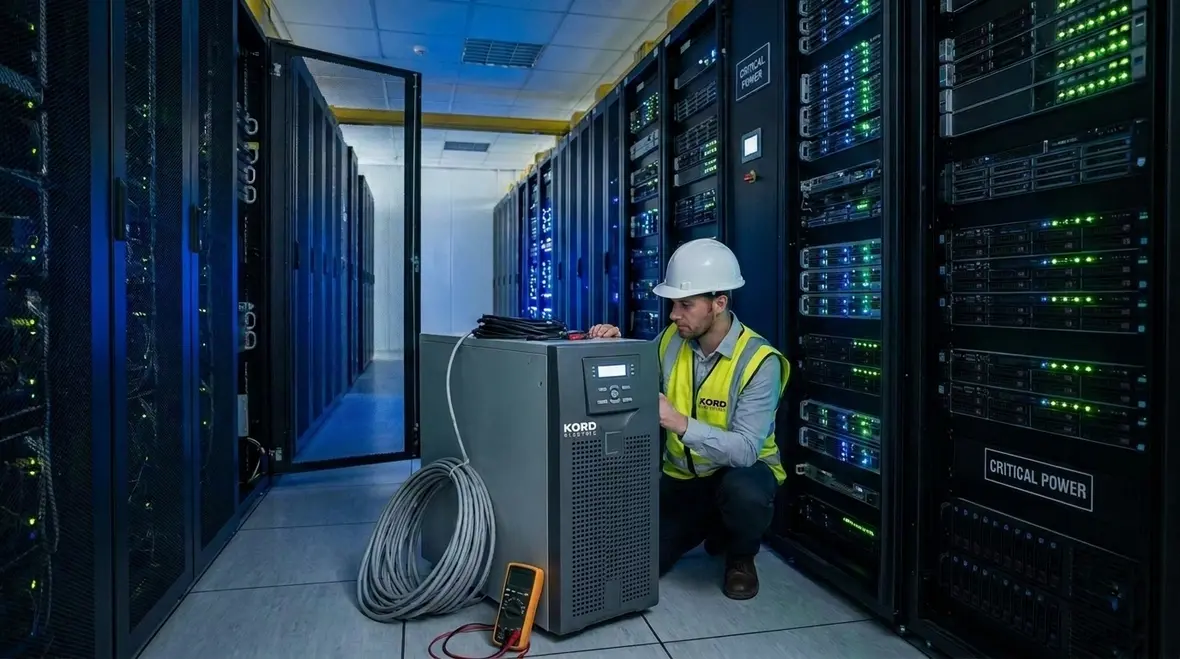
Data Center Uptime Strategy with Power Reliability and Redundancy
In commercial and industrial facilities, uptime is not a slogan. It is a promise we help you keep. At Kord Electric, we build a Data Center Uptime Strategy: Power Reliability, Redundancy & Maintenance around a simple idea: if power stays stable, your workloads stay online. And if something shifts, our teams move fast, with clear steps and calm judgment. We aim for fewer surprises, shorter repair windows, and tighter control of the risks that shut down operations.
Others chase flashy stats. We chase steady electrons and predictable service. Besides, outages never show up wearing a name tag. They arrive quietly, like a surprise pop quiz that no one studied for. So we design for what actually happens in the field.
Data center uptime begins with power we can trust
In commercial and industrial facilities, uptime is not a slogan. It is a promise we help you keep. At Kord Electric, we build a Data Center Uptime Strategy: Power Reliability, Redundancy & Maintenance around a simple idea: if power stays stable, your workloads stay online. And if something shifts, our teams move fast, with clear steps and calm judgment. We aim for fewer surprises, shorter repair windows, and tighter control of the risks that shut down operations.
Others chase flashy stats. We chase steady electrons and predictable service. Besides, outages never show up wearing a name tag. They arrive quietly, like a surprise pop quiz that no one studied for. So we design for what actually happens in the field.
Power reliability planning that protects critical loads
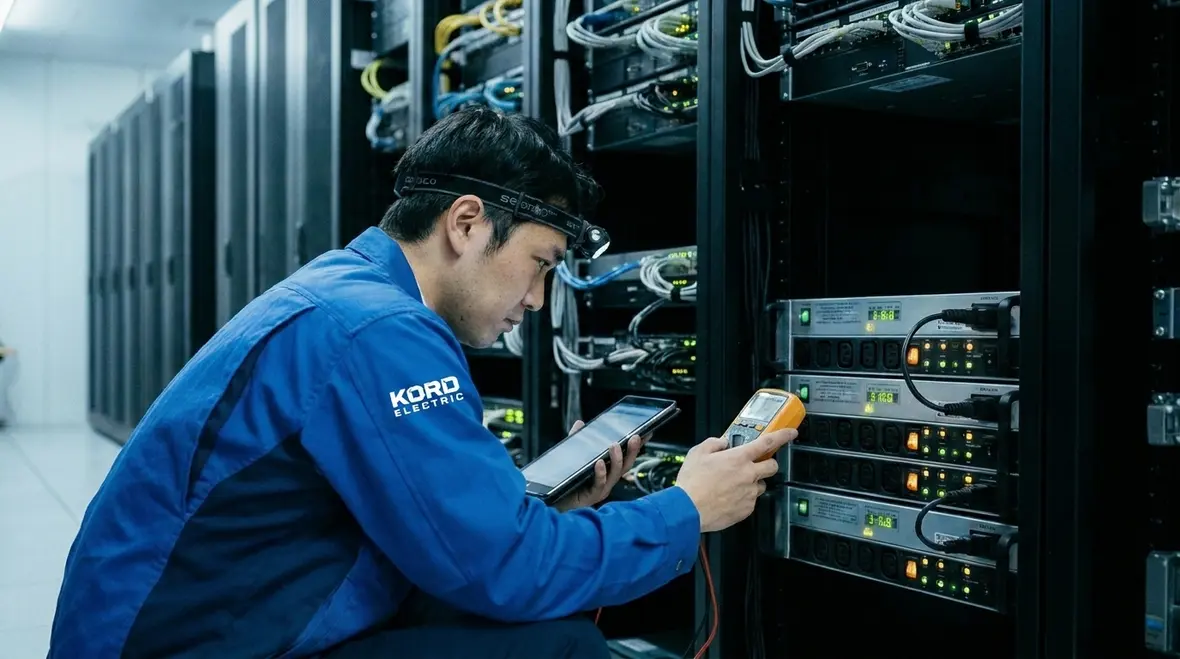
When our technicians review a site, we start by mapping how power flows to critical loads. Then we check what can degrade over time. Load banks, transformer temperature, switchgear health, UPS behavior, generator performance, and grounding quality all matter. If a system drifts even slightly, the impact shows up later, during a stress event. Therefore we plan with measurements, not guesses.
In most data center builds and major property centers, power reliability hinges on three fundamentals. First, we control voltage and frequency within the limits your equipment expects. Second, we prevent harmonics and switching transients from turning normal operation into constant stress. Third, we reduce single points of failure by designing pathways that can carry load when conditions change.
Our expert service staff explains each step in plain language, because confusion slows down decisions. For example, we do not just say, “Your UPS needs attention.” We show what indicators we watch and what those indicators mean for runtime, battery life, and transfer events. Then we align the plan with your maintenance windows, staffing, and operational goals.
And yes, we also laugh a little. If you have ever watched a generator test fail because of a simple fuel or control issue, you know how fast a “small thing” can become a big outage story. We make sure the small things stay small.
If you are building a broader roadmap for resilient power, you can also connect this planning step with Kord Electric’s deeper guidance in Data Center Power Reliability and Uptime Design, which pairs design choices with day-to-day operations so reliability stays consistent over the life of the system.
Redundancy that works during real transfer events
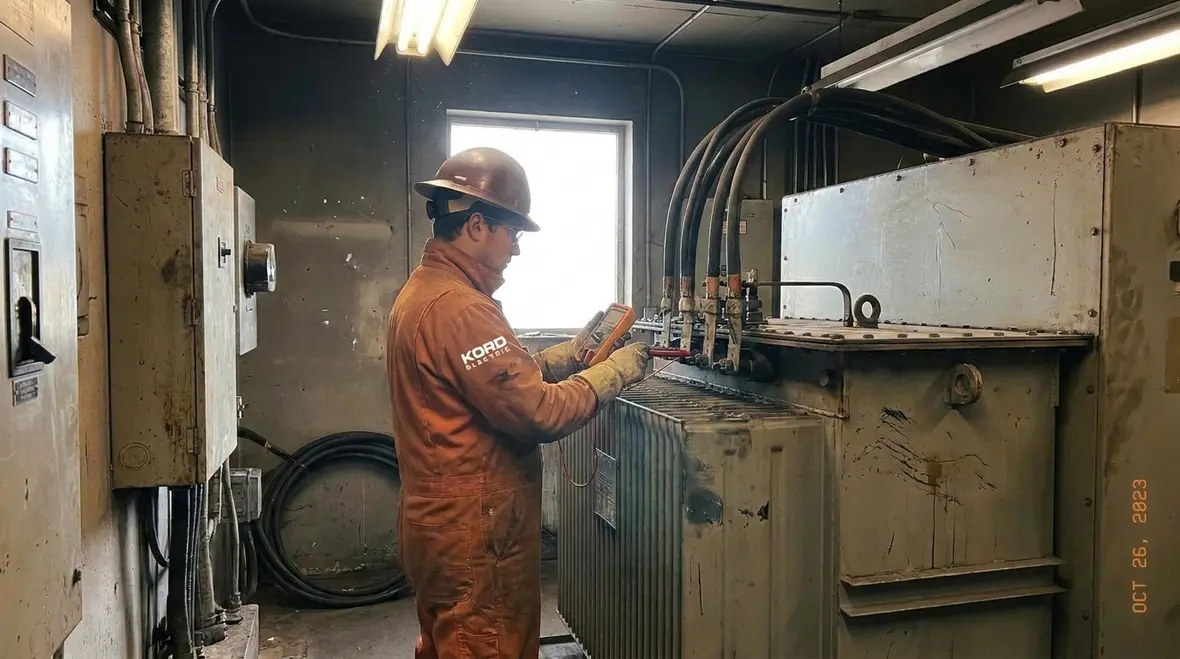
Redundancy sounds great until it meets the real world. Our Data Center Uptime Strategy: Power Reliability, Redundancy & Maintenance focuses on how systems behave when power transfers happen under load. We evaluate transfer switches, paralleling logic, bypass paths, and control settings. We also confirm coordination between upstream and downstream devices so faults get cleared without taking everything down with them.
Furthermore, we look beyond “N plus one” on paper. We inspect the controls that actually make redundancy function. For example, if a UPS must run in bypass mode, we check that your voltage regulation and protection scheme stay stable. If the generator takes over, we confirm the start sequence, load acceptance rate, and ramp settings match your mechanical and electrical realities.
Our team uses a disciplined approach to redundancy testing. We plan tests so they validate performance without interrupting business. Then we document results in a way that helps future service efforts. As a result, others who step in later understand what was verified, what was adjusted, and why it matters.
We also coordinate with building stakeholders at commercial and industrial sites, because redundancy touches more than one team. Maintenance staff, facilities management, security, and operations all need the same truth about what happens during a transfer. If everyone hears a different story, reliability becomes a rumor.
For teams that want to go deeper on redundancy architectures and failure modes, it can help to pair this strategy with Kord Electric’s article on Data Center Power Redundancy for High Availability, which walks through how redundancy decisions connect to real uptime targets and maintenance planning.
Maintenance that avoids downtime and prevents slow failures
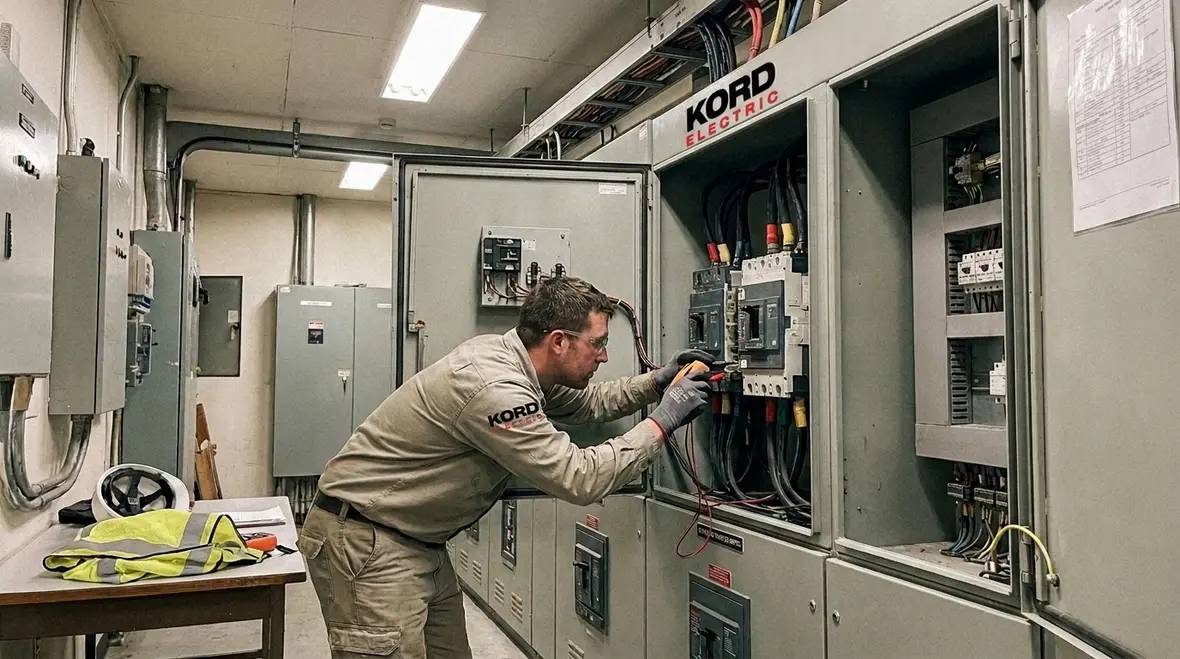
Maintenance is not a checkbox. It is a risk control process that aims to prevent slow failures from turning into sudden outages. We plan maintenance around system condition, criticality, and how your facility actually operates. Instead of relying on a generic calendar, we use inspections, trending data, and field observations to decide what gets serviced, when it gets serviced, and who performs it.
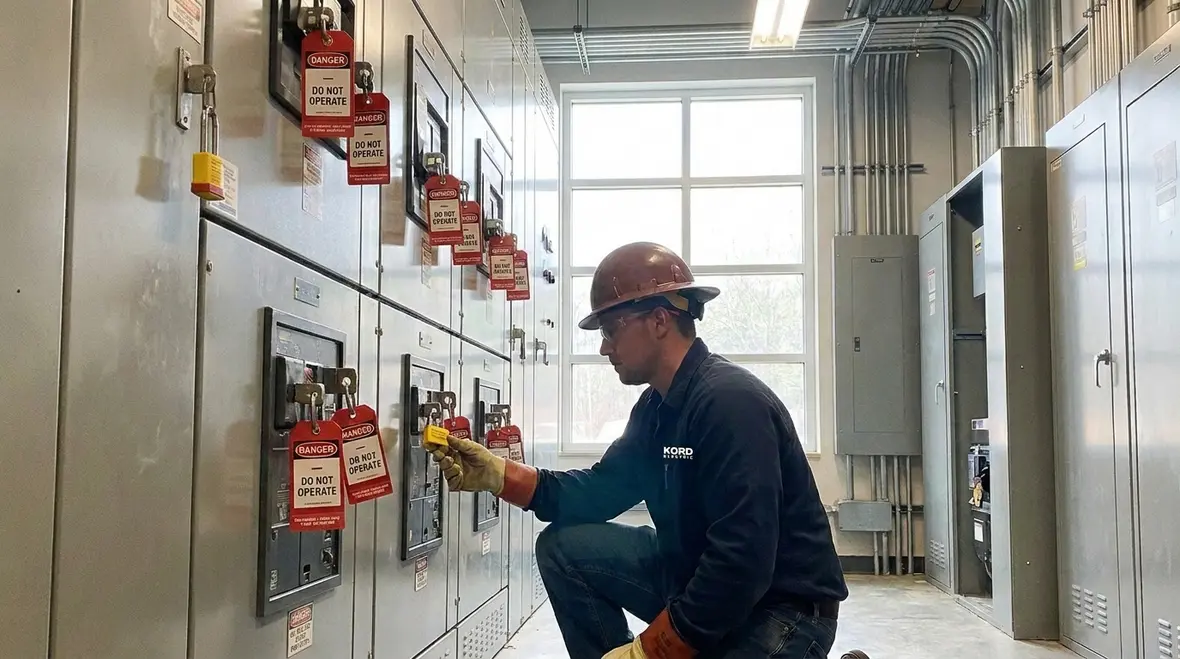
To keep uptime high, we also design maintenance around safe access to equipment. That means we plan lockout and tagout, verify test procedures, and prepare replacement parts before the maintenance window begins. Then we coordinate with your operations team so the work stays smooth and predictable.
Our expert service staff provides clear explanations and step by step guidance during planning and service events. For instance, we explain why certain switchgear tasks must follow strict sequences, and how improper steps can affect contacts, settings, and protection performance. We also explain why battery testing is not just about “passing or failing.” It is about understanding health trends and scheduling proactive replacements.
Here is the comforting truth: most outages do not happen because people never cared. They happen because systems age, and no one looks closely enough. We look closely. Then we document what we find, so your reliability program improves year after year.
As your maintenance program matures, you can tie it into broader reliability planning, including topics like power scalability and load evolution covered in Kord Electric’s guide on Data Center Power Scalability and Growth Planning, so inspections and upgrades stay aligned with future capacity.
Site readiness: load assessment, alarms, and response playbooks
Even the best electrical design can fail if the facility cannot react quickly. Therefore we help you build site readiness that supports uptime during abnormal events. We start with load assessment and power demand modeling for normal operation and for contingency conditions. We then review alarm pathways and escalation steps so the right team gets the right details at the right time.
Next, our technicians work with your internal teams to clarify who makes what decision when a UPS switches, when a breaker trips, or when generator loading changes. We also verify that remote monitoring, control signals, and notification systems provide actionable alerts, not noisy ones.
As the pace of business increases, every minute matters. So we push for playbooks that are easy to follow under stress. We also recommend drills for key scenarios, like transfer events and control panel faults, because experience reduces reaction time.
And if you think drills are silly, consider this: the only thing worse than a power event is a power event where nobody knows who is supposed to do what. We keep it practical, and we keep it calm.
Testing and validation you can measure
Validation turns a design into a dependable system. That means scheduled testing, acceptance verification, and ongoing checks that confirm performance at expected conditions. We help facilities confirm that protection settings behave as intended, that UPS and generator responses match the scenario, and that loads transfer predictably.
Because data centers and major property buildings run complex equipment, we prioritize tests that reveal real performance. For example, we verify transfer timing and stability under load, confirm generator start and stabilization behavior, and validate switchgear operation during simulated events. Then we review results with your stakeholders so decisions become clear.
To support long term performance, we also recommend post maintenance checks and functional verifications. After work is complete, we confirm the system returns to an expected state and we record outcomes for future trend analysis. This approach prevents “it works for now” from becoming a long term strategy, because “for now” is not a plan, it is a prayer.
Our service staff explains test outcomes in a way that supports operations. We translate technical observations into action steps, so your teams know what to fix, what to monitor, and what can wait.
If you want to benchmark your current testing and monitoring approach, Kord Electric’s article on Data Center Electrical Reliability: How to Prevent Power Failures offers additional ways to tighten validation so your Data Center Uptime Strategy: Power Reliability, Redundancy & Maintenance stays grounded in measurable performance.
Building a reliable program across multiple facilities
Many commercial and industrial companies manage more than one location. However, uptime goals do not improve when service varies wildly from site to site. So we help build a repeatable reliability program that keeps expectations consistent across your portfolio.
We standardize documentation, service intervals, and validation steps so you can compare health trends between buildings. Then we tailor schedules to each site’s operational needs, because every facility has different load profiles, space constraints, and downtime tolerance. Even so, our approach stays aligned.
In addition, we coordinate parts strategy and service availability. We do not want your team waiting for a critical component while the building sits in uncertainty. Therefore we plan inventory considerations and replacement timelines based on equipment condition and lead times.
Finally, we build communication rhythms. We provide clear reporting, we review findings with your key decision makers, and we recommend improvements that match your budget and risk level. That way, reliability becomes a managed program, not a crisis response.
For organizations operating in and around Southern California, Kord Electric also supports these reliability programs through regional field coverage and responsive Los Angeles County electrical services for commercial, industrial, and data center facilities.
FAQ
Conclusion: Let us harden your power uptime plan
If you run critical operations, you already know the cost of downtime. Now you need a disciplined power program that protects uptime with reliability, redundancy, and maintenance that actually fits how your facility works. Kord Electric brings expert service staff, practical planning, and measurable testing to commercial and industrial environments. Reach out to us for a site review and a clear roadmap for improving stability, transfer performance, and response readiness. Let us help you keep power dependable, so your business stays online.
When you are ready to turn strategy into action, our broader portfolio of data center and commercial electrical services can support everything from new design and upgrades to ongoing reliability programs, including the specialized planning outlined in Data Center Uptime Strategy: Power Reliability, Redundancy & Maintenance and related uptime resources across the Kord Electric blog.
Our team can also coordinate this uptime work with regional field coverage through dedicated Los Angeles County and Southern California service crews, so your strategy does not stay on paper; it shows up in the field when your facility needs it most.


