
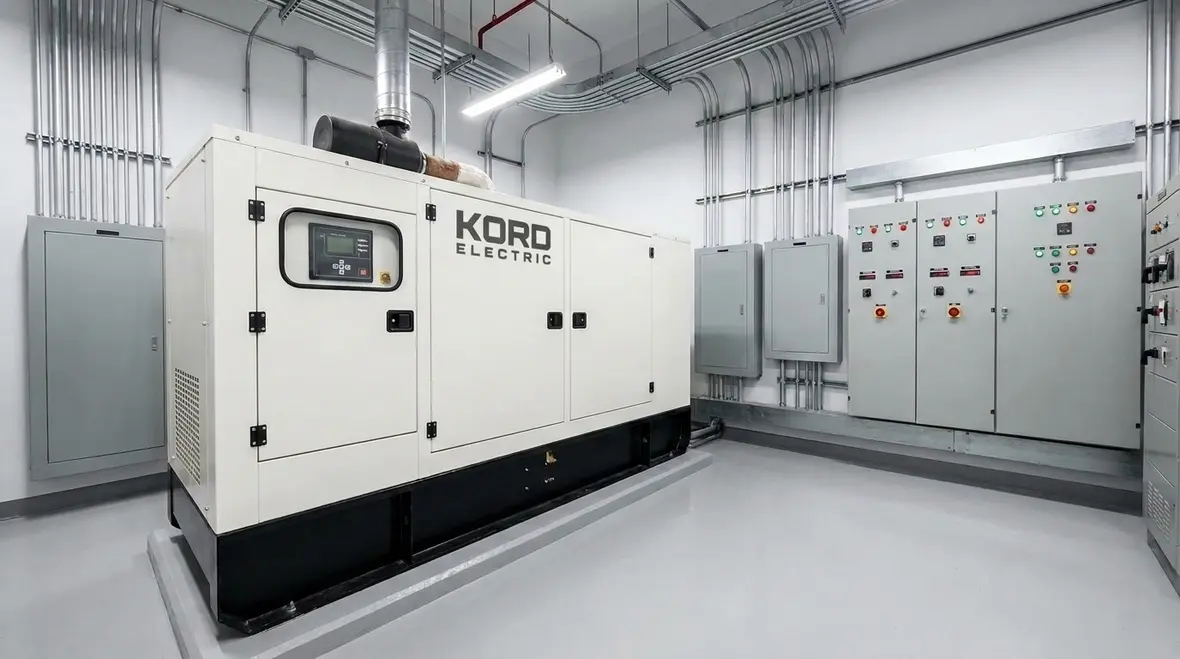
Backup Power for Critical Infrastructure Systems Design Reliability
When the lights go out, businesses should not follow. At Kord Electric, we build Backup Power for Critical Infrastructure: Systems, Design & Reliability into the real world needs of commercial and industrial facilities and major property buildings. And yes, we do it with planning, testing, and clear communication. Because downtime is expensive, and guesswork is even worse.
In this guide, third person perspective still tells the truth about how we work. We explain how backup power protects critical loads, how design choices affect reliability, and how our technicians walk others through the process step by step. After all, a backup system should behave like a calm professional, not like a coworker who says, “I can fix it,” then disappears for three hours.
Backup Power for Critical Infrastructure: Systems, Design & Reliability
In commercial and industrial facilities, backup power is not a luxury upgrade. It is the quiet structure that keeps life safety systems, process equipment, and building operations alive when the utility feed decides to take a break. Backup Power for Critical Infrastructure: Systems, Design & Reliability means treating those systems like core infrastructure rather than “nice to have” add ons.
At Kord Electric, our technicians and expert service staff approach each project with a mix of field experience and practical design discipline. They map real loads, not theoretical wish lists. They explain options without jargon. And they keep everyone focused on the same outcome: a backup power strategy that behaves predictably when the grid stumbles, whether that is a brief blink or a longer outage.
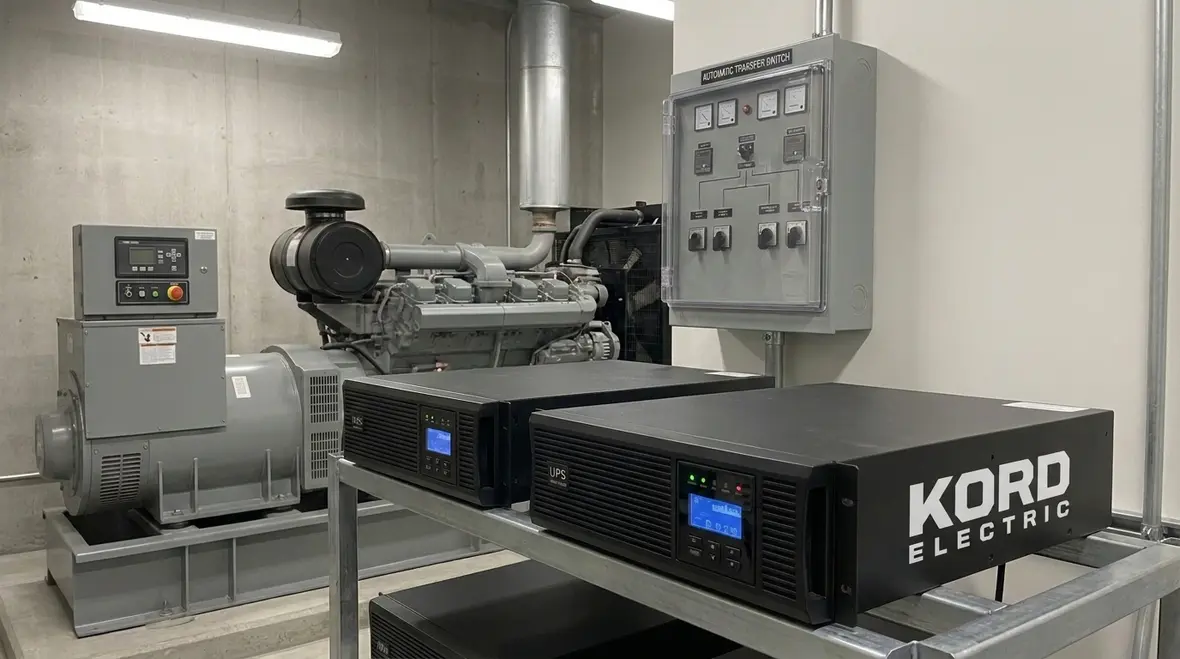
That is where design, installation, and maintenance all meet. A generator alone is not a plan. A UPS alone is not a plan. Even a list of “critical panels” is not a plan. Reliability appears when all of those elements work together under realistic conditions, with documentation that makes sense and testing that proves performance instead of assuming it.
What critical loads actually require for backup power
Commercial and industrial sites do not need the same backup power. Instead, others must separate what can wait from what cannot. Typically, critical loads include life safety systems, controls, communications, security, process equipment, and certain HVAC or refrigeration loads that protect product and operations.
First, our expert service staff asks for a load list, then validates it in the field. Next, they confirm starting characteristics for motors and compressors, because a motor that “runs” is not the same as a motor that “starts.” If a designer ignores starting surge, the backup system can trip or stall during the first seconds of an outage.
Then we help others define priorities. For example, an electrical shutdown can destroy data centers, interrupt manufacturing lines, or compromise building automation. Therefore, the plan often includes staged transfer, so power moves where it matters first, while nonessential circuits stay off until stability returns.
- We prioritize life safety and security first.
- We validate control power and communications for quick recovery.
- We model motor and compressor starting demands.
- We coordinate staged shedding to avoid overload.
That is how a backup system becomes a system, not a box that waits for disaster like a villain in a movie who thinks the hero will trip over a cable.
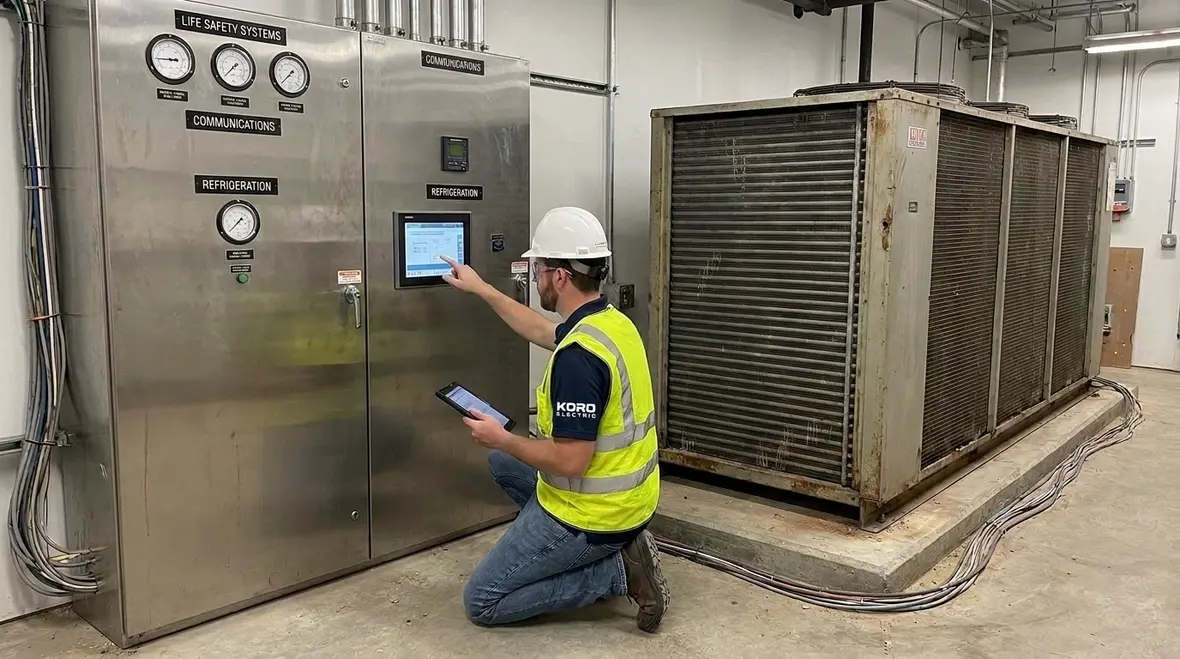
Once critical loads are clearly defined, we align them with real building operations. A life safety panel that feeds egress lighting and fire alarm circuits does not belong on the same priority level as decorative lighting or nonessential plug loads. Our team flags those mismatches early so owners can correct them in the design phase instead of discovering them mid outage.
How reliability is designed, not hoped for
Reliability comes from engineering decisions and operational discipline. In other words, it is not enough to install equipment and hope it works when the utility grid fails. At Kord Electric, our technicians treat reliability like a checklist that gets stronger over time, not a one time delivery.
First, we select backup power options based on the facility’s risk profile. Then we align system architecture with the critical load behavior. For example, some sites need fast transfer and tight voltage stability. Others can tolerate a longer ride through while processes adjust.
We also plan for the reality of failure modes. Switchgear, ATS equipment, generators, and parallel systems all have states and signals. Therefore, we document controls, interlocks, and alarms so the operators understand what “normal” looks like during an outage.
Next, we recommend monitoring and testing intervals. When others receive a maintenance plan that fits the building schedule, reliability improves because the team can act before problems grow. And yes, testing prevents surprises. It is the electrical version of checking the smoke alarm battery, except the consequences are far more serious than a chirp that makes someone blame the universe.
Reliability also depends on how backup systems interact with the rest of the electrical infrastructure. For deeper dives into redundancy strategy, owners often review related topics such as critical power redundancy architecture, where we discuss how layered power paths prevent one fault from becoming a full building event.
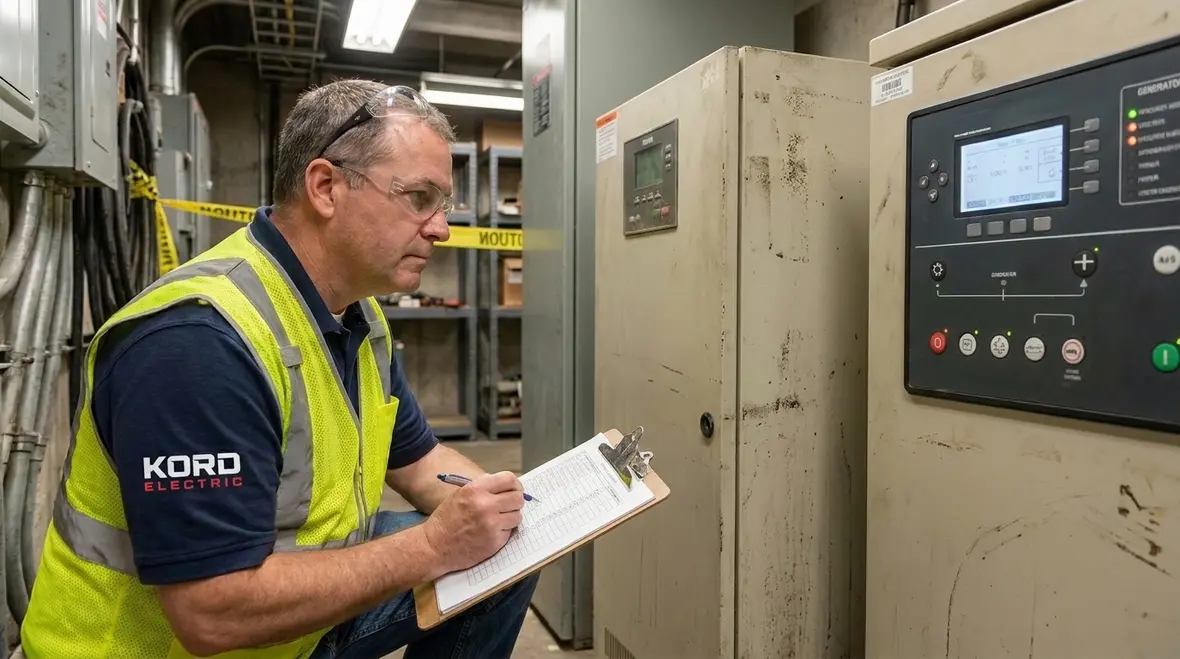
All of this documentation and testing work means that when a real outage arrives, the team is not improvising. They know which alarms matter first. They know how the ATS will sequence loads. They know how long the generator can support current conditions. That clarity is what turns “we hope it works” into “we have already seen it work under similar conditions.”
Generator, UPS, and transfer equipment choices that fit commercial buildings
Each backup power method has strengths, and each has boundaries. Others often picture one solution, but real facilities use a layered approach. The goal is to protect sensitive loads quickly while giving generators the time to stabilize power delivery.
UPS systems handle short interruptions with clean output. They protect servers, controls, and communications where even brief drops cause data loss or process resets. Then, generator systems cover longer outages and larger loads. In many commercial and industrial designs, the UPS supports the “bridge,” while generators supply sustained power.
Transfer equipment makes it all connect safely. Automatic transfer switches manage switching and ensure loads see power from the right source at the right moment. Moreover, proper transfer design reduces stress on equipment and prevents unsafe backfeed conditions.
When the system supports multiple critical loads, engineers often use logic for staged transfer. That approach balances load demand and reduces generator stress during the initial seconds. As a result, the facility avoids overload and maintains stable operation.
- UPS protects electronics and controls during the first seconds.
- Generators support continuous operation for longer outages.
- ATS and switching logic coordinate power source transitions.
- Staged transfer supports motor starting and load balance.
Our expert service staff helps others choose the right blend based on site operation, downtime cost, and the behavior of connected equipment. Instead of selling a “one size fits all” setup, we match the design to the building, because commercial reality is rarely that neat.
For buildings with especially tight uptime requirements, we often integrate these decisions with broader strategies like redundant power paths or specialized fault protection. Resources such as our coverage of critical power system protection best practices help show how equipment choices and protection settings work together instead of fighting each other.
Step by step backup system design process we follow
Design should be clear, repeatable, and traceable. That is how others can trust the final installation and how owners can budget with confidence. Our technicians guide the process with a structured path.
Step 1: Site assessment and load verification. Others provide plans and equipment lists, then our team verifies in the field. We identify critical circuits, confirm voltage levels, and check panel schedules and nameplate data.
Step 2: Power flow and system architecture. We map how power moves from utility to UPS to generator to critical panels. Then we set priorities and define how the system handles events like overload or maintenance mode.
Step 3: Generator sizing and electrical coordination. We calculate real and starting loads. We also coordinate breakers, switchgear, and protection settings so the system behaves in a fault, not just in a clean scenario.
Step 4: Control logic and monitoring. Others need a system that communicates status clearly. Therefore, we configure alarms, status outputs, and event logs where appropriate, so building operators know what happened and what to do next.
Step 5: Commissioning and acceptance testing. We test under realistic conditions and confirm transfer times, load pickup sequence, and control function. Afterward, our expert service staff explains the results in plain language so teams do not need a decoder ring to understand the system.
In the same way a well run orchestra hits the right notes at the right time, a properly commissioned backup system moves power without drama. And nobody wants drama. Not even in pop culture, where every outage somehow turns into a cliffhanger.
For facilities that rely heavily on data processing or network operations, we often align this step by step process with planning used in our data center power redundancy work, so building owners can see how design and commissioning scale from individual rooms to entire properties.
Installation, commissioning, and maintenance that keep uptime steady
Even the best design can fail if installation quality or maintenance planning slips. At Kord Electric, we focus on the details that affect performance over years, not weeks.
Installation includes proper conduit routing, equipment placement, and correct wiring practices. We verify torque values, termination quality, and phase identification. Then we confirm that ventilation, fuel systems, and operating conditions match manufacturer requirements for the environment found at commercial and industrial sites.
Commissioning follows with functional tests and load transfer checks. We validate that ATS control sequences align with the designed pickup order. Additionally, we test protective functions and confirm that operators see accurate indications.
Maintenance keeps reliability from fading. Our technicians help others build a routine that fits building schedules. Maintenance typically includes generator inspections, battery care where UPS or starting systems require it, and testing that proves the system performs when it matters.
Furthermore, owners benefit from training. Others should know how to interpret alarms, how to schedule testing, and how to handle maintenance events without bypassing safety logic. That is where our expert service staff shines. They do not just hand over documentation; they explain it, and they answer questions until the system feels understandable.
Many of our commercial clients in Southern California pair this approach with broader service offerings like Los Angeles County electrical services, so that troubleshooting, upgrades, and preventive maintenance all align with the same reliability goals.
Common mistakes we help commercial teams avoid
Many backup power failures come from avoidable oversights. Others often learn these lessons the hard way, which is expensive and stressful. So we point out the issues we watch for during planning and service.
Undersized generator capacity happens when teams use only running watts. Starting surges and control loads can push demand higher. When that happens, the generator may not pick up the load sequence as intended.
Missing critical load definitions creates confusion. If nobody confirms what “critical” means, the system can protect the wrong circuits. Then, during an outage, stakeholders argue while the building tries to function.
Poor coordination between UPS and generator can create momentary dropouts or unstable transfers. When controls are not tuned for the facility’s behavior, sensitive loads may reset.
No maintenance plan turns backup equipment into “someday” equipment. Batteries age, sensors drift, and protective settings change. Therefore, reliability requires a schedule and a responsible team.
Here is the playful part: if backup power is treated like a trendy insurance policy that everyone forgets until the claim, reliability will not show up. We treat it like a living system that needs care and verification.
For owners planning long term resilience upgrades, articles like our commercial backup power solutions for continuity show how to avoid these mistakes across complex portfolios, not just in a single building.
FAQ
Final word from Kord Electric
Backup power works best when it is engineered for your facility, commissioned with care, and maintained like a core system. Kord Electric helps commercial and industrial building owners protect critical operations with thoughtful design, clear documentation, and expert service from our technicians. If others want systems that switch cleanly, carry real loads, and stay dependable through real outages, we can help. Reach out to schedule a load review and reliability plan, and let us put calm where uncertainty used to live.
When you are ready to look at your entire electrical picture, from troubleshooting and code compliance to long term resilience and Backup Power for Critical Infrastructure: Systems, Design & Reliability, our team is available to walk through options, budgets, and timelines. We treat every project like the next outage is already on the calendar, and the goal is to be ready long before it arrives.
For facilities that want to connect design decisions with specific backup strategies, you can also explore our detailed guide on critical infrastructure support at Critical Power Infrastructure Backup Systems, where we expand on system design and reliability considerations for high stakes environments.
If your operations are based in Southern California and you want a partner that understands local codes, grid realities, and commercial expectations, Kord Electric is ready to help design, install, and maintain the systems that keep your building steady when everything else is trying to stop.


