Critical Power Infrastructure Backup Systems
Introduction: When the Lights Stay On Because the Plan Exists
At Kord Electric, we build and protect critical power infrastructure backup systems for commercial facilities, industrial plants, and major property buildings where downtime costs real money. And while other teams hope the utility behaves, we engineer for the moment it does not. In fact, we often tell others that a building should not panic just because the grid sneezed. We design the kind of resilient power setup that keeps life steady for operations, life safety loads, servers, and critical equipment.
Then we guide facility leaders through what to expect, and we do it with our technicians and expert service staff standing right there, explaining things in plain language. After all, you cannot make smart decisions about power reliability if the conversation sounds like a circuit diagram written in code.
How we assess critical loads before we design anything
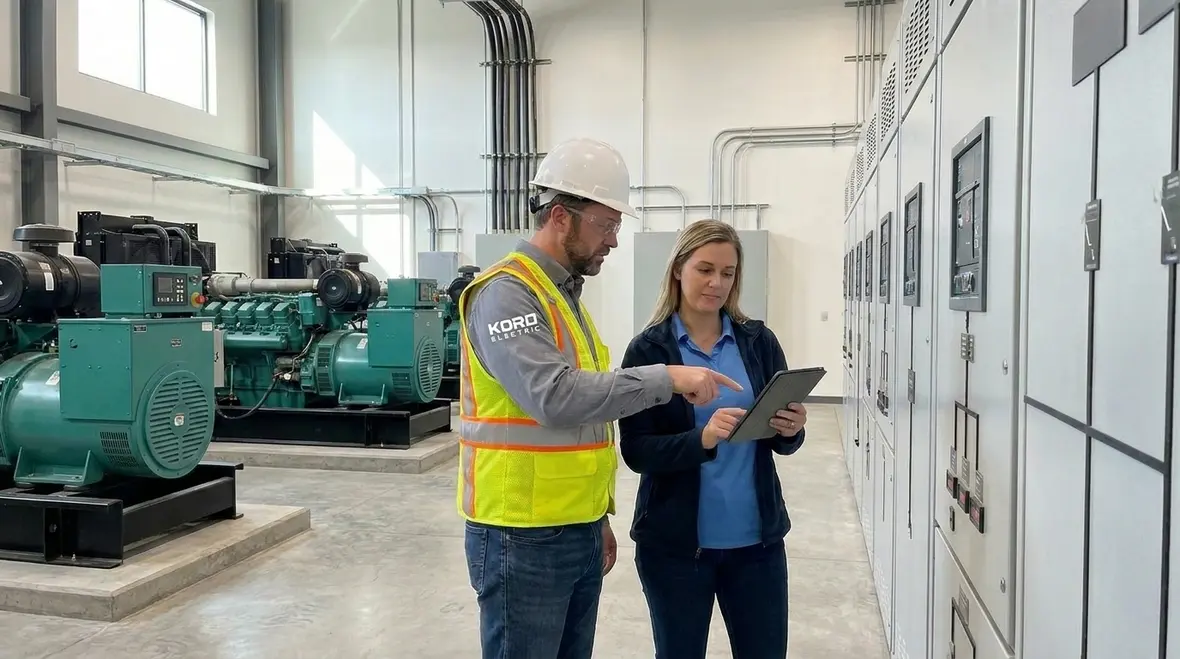
First, we start with the real map of the building, not the guesswork. In commercial and industrial spaces, “critical” does not mean everything in the building. It means specific loads that must keep running to protect people, prevent damage, and maintain business operations.
We work through load reviews, panel schedules, equipment lists, and operating cycles. Next, we classify loads by function, such as life safety, security, process control, refrigeration, IT, and critical lighting. Then we confirm how each system behaves during a utility outage. Some loads tolerate a brief interruption. Others must never dip. At this point, our service team explains the tradeoffs so stakeholders can understand the why, not just the what.
Even better, this approach reduces expensive surprises later. Because if a facility expects uninterrupted power but the design only covers a partial set of loads, the response plan collapses the moment it matters most. And nobody wants to discover that problem when a storm rolls through at 2 a m, like an uninvited sequel.
Power continuity planning for outages, brownouts, and transfers
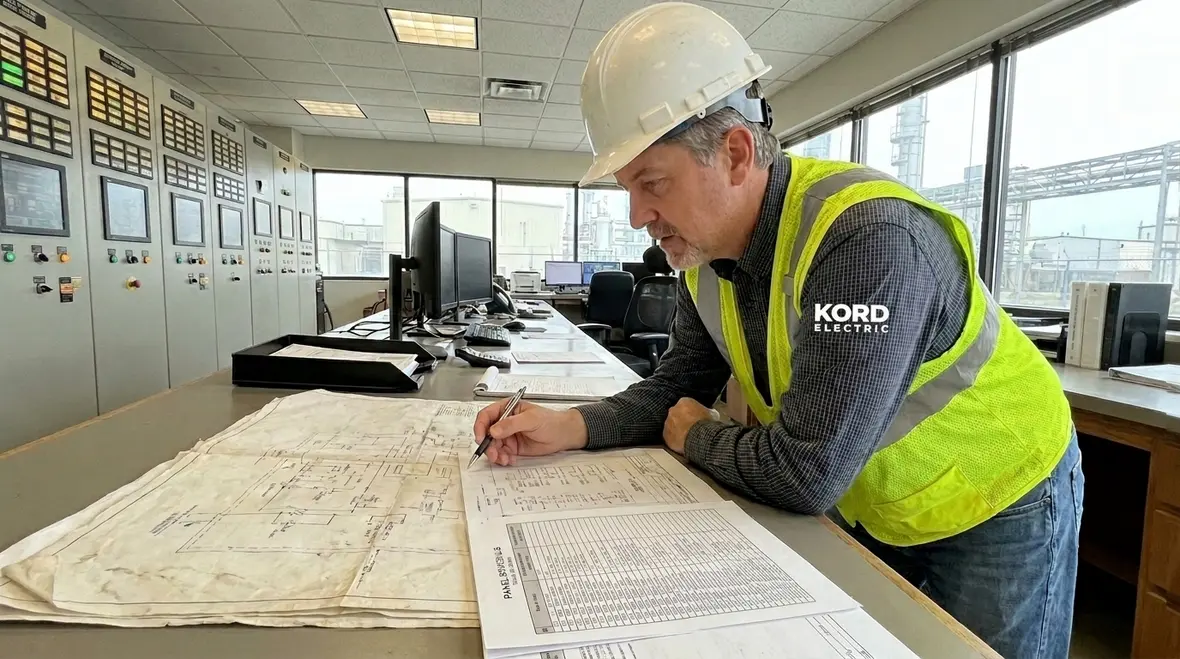
Once we define what must stay alive, we design for the power events that actually happen. Utilities may experience full outages. They may also deliver unstable voltage, which can damage drives, controllers, and sensitive electronics. Therefore, resilient design needs to handle both the absence of power and the bad versions of it.
We address transfer time and transfer method with the goal of keeping loads stable. We also consider coordination, so equipment transfers at the right moment and prevents nuisance shutdowns. Our technicians and expert service staff explain how transfer devices work, how signal paths behave, and why certain loads require special treatment.
To keep things clear, we break down the process in practical terms. First, we plan for detection of loss of utility. Then we plan for starting of standby sources if needed. After that, we plan for smooth transfer to the backup source. Finally, we plan for return to normal utility operation without creating new stress on sensitive equipment. It is a flow, not a gamble.
Choosing standby generation and supporting systems the right way
Many leaders ask about standby generation, but the real question is not simply “Do we need a generator?” It is “What size and configuration supports our loads with the right margins and the right controls?”
We analyze connected load, starting surges, and demand profiles, because motor loads can spike in ways spreadsheets quietly ignore. Then we review fuel options, runtime targets, and site constraints. For commercial and industrial facilities, fuel storage and delivery planning matter as much as the generator itself. If you plan for only “average” use, the system can fail at peak demand, like trying to put out a fire with a polite email.
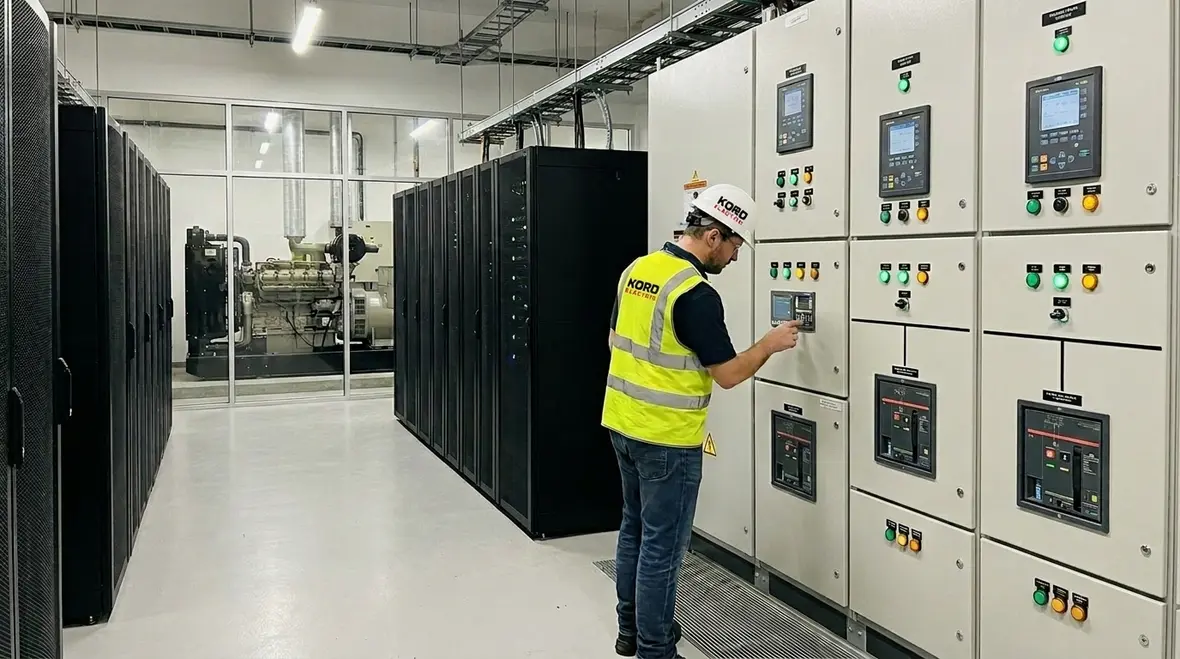
We also support the full ecosystem around generation. That includes switchgear integration, ventilation requirements, power distribution, and protective devices. In addition, we plan for monitoring and alarm strategies so the team can respond fast and safely. When our expert service staff walks clients through the system, they explain what should trigger an alert, what actions to take, and how to avoid unnecessary downtime during maintenance.
Designing backup power as a coordinated system
The most reliable critical power infrastructure backup setups treat generators, transfer switches, distribution gear, and controls as one synchronized system. That coordination prevents fighting signals, unnecessary trips, and confusing fault responses when you can least afford them.
Protection and monitoring that keep failures from spreading
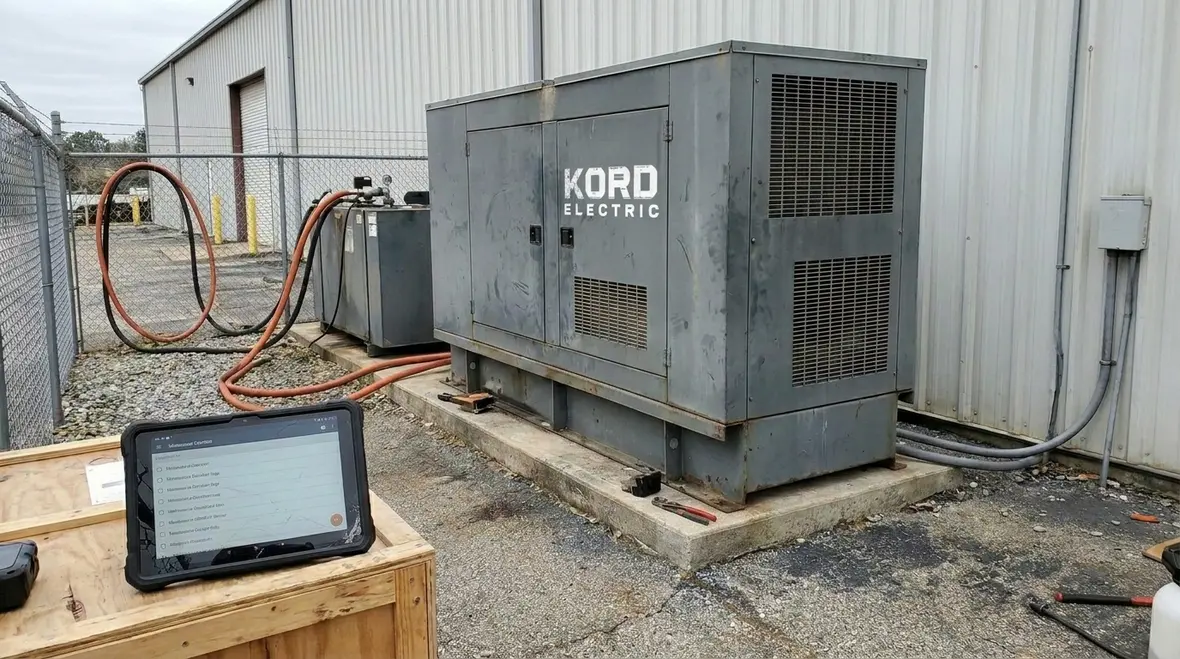
Resilience is not just about having a backup source. It is also about preventing one fault from turning into a larger outage. For that reason, we focus on protection and selective coordination. Proper protection helps isolate faults and keeps power available to the loads that still deserve to run.
We also incorporate monitoring so staff can see what happens during abnormal conditions. As a result, teams can correct issues before they become failures. Monitoring improves maintenance planning, because it helps pinpoint problems such as battery health, load behavior changes, or abnormal runtime patterns.
At Kord Electric, our technicians explain the monitoring layer in business terms. They connect the data to actions. For example, if the system shows frequent transfers, the staff can investigate utility stability or load characteristics. If alarms show repeated starting issues, the team can plan service before the moment that everyone remembers too late. Yes, the alarms matter, but only if people know what they mean.
Using data trends to strengthen uptime
Over time, monitoring trends tell a story about equipment health and real-world stress on your critical power infrastructure backup. That story helps prioritize upgrades before small issues grow into building-wide outages.
Reliability upgrades for commercial lighting, power, and controls
Modern commercial lighting upgrades often improve efficiency, but in real buildings, efficiency also changes the power profile. Therefore, we consider how lighting and controls changes interact with power continuity. A facility can cut energy use and still keep operations stable if the design considers the electrical impact.
Our team references practical guidance like the approach covered in our Commercial Lighting Upgrade Cost Guide, where we talk through cost drivers and upgrade planning. However, we take it one step further for power resilience. We help leaders connect the upgrade scope to the electrical design, so the lighting retrofit does not accidentally reduce margins or shift critical loads to panels not designed for backup operation.
For example, when lighting changes involve new controls, dimming, or occupancy sensors, the facility can gain better performance while still requiring reliable power paths. We review how those systems connect and how they behave during transfer events. Then we set up the design so the lighting system returns smoothly after outages. In short, we protect the upgrade, not just the wires.
And yes, we do try to keep it fun. Even electrical upgrades can feel like a thriller when someone explains transfer logic with the seriousness it deserves. We just prefer the ending where the lights come back on without a dramatic pause.
Linking reliability upgrades to broader electrical services
When facilities in Los Angeles County coordinate lighting, power, and control upgrades with structured electrical services for commercial buildings, they turn one-off projects into a long-term reliability plan that supports both energy savings and uptime.
Maintenance, testing, and how we keep uptime plans credible
Even a well designed critical power infrastructure backup system will not stay reliable without a plan to maintain it. Standby equipment needs inspections, battery care, fuel checks, breaker health reviews, and periodic testing to confirm performance. Otherwise, the system can fail when you need it most, and that is the kind of plot twist no one asked for.
We build maintenance steps around the facility’s risk and the equipment criticality. Next, we coordinate testing windows with operations, so you do not shut down production to prove a point. Then we document results clearly, because facilities need evidence, not just confidence.
Our expert service staff also teaches the team how to respond during an event. For example, they explain how to interpret transfer behavior, what alarms matter most, and what steps should come first. That way, decisions get made fast and correctly. When people know what the system is telling them, reliability improves not just in theory, but in the real world.
Keeping critical power infrastructure backup ready for the real world
The most robust designs fail if testing, inspection, and training fade over time. Building a culture that treats exercises, documented results, and post-event reviews as normal operations is what keeps your backup systems ready when the grid forgets its lines.
FAQ: Critical power infrastructure backup for commercial buildings
Conclusion: Let’s build a power plan you can trust
If your facility depends on uptime, you need more than a backup unit. You need a resilient design, clear load planning, smart transfer coordination, and maintenance that keeps performance real. At Kord Electric, our technicians and expert service staff work with commercial and industrial leaders to build critical power infrastructure backup systems that hold steady during storms and surprises. Reach out now, and we will review your loads, map your risk, and propose the right path forward. Because confidence is good, but verified reliability is better.
For facilities ready to connect reliability planning with broader electrical support, our commercial and industrial teams can align backup systems, lighting upgrades, and day-to-day service into one coordinated strategy, so your critical operations stay calm even when the utility does not.