
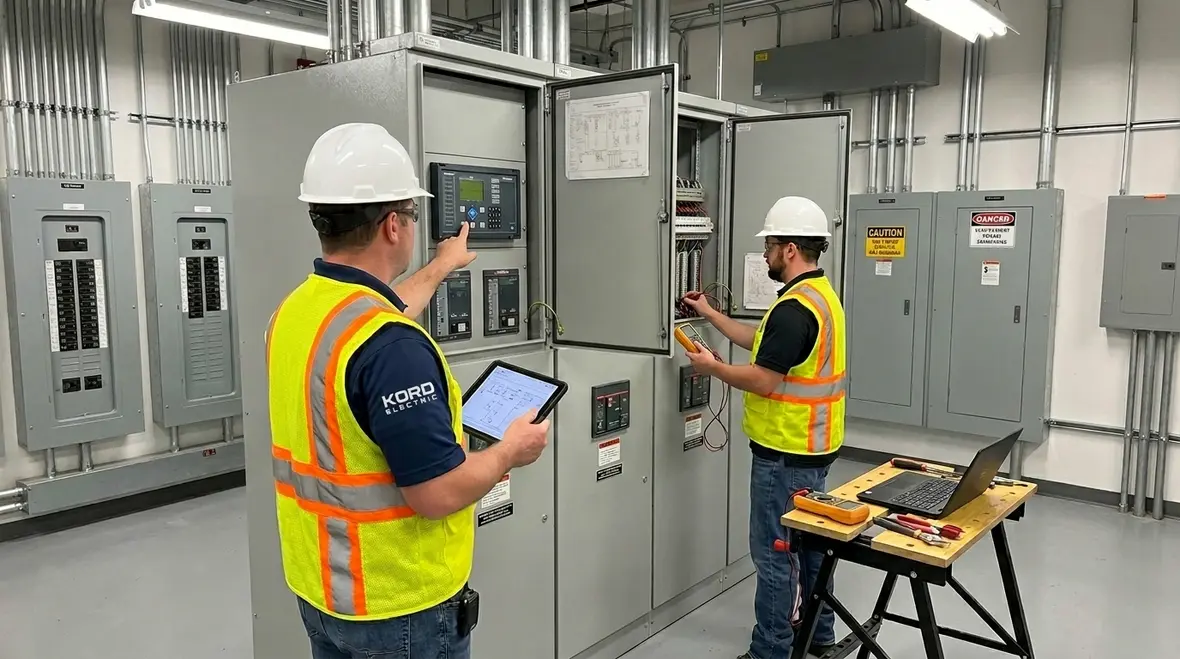
Critical Power System Protection Best Practices
At Kord Electric, we take critical power system protection personally. When power faults, a facility does not just “lose a little electricity,” it loses uptime, safety margins, and sometimes the ability to keep people moving. And yes, the lights going out can feel like a sitcom punchline, but we deal with the serious stuff. In this guide, we lay out best practices for protecting essential electrical systems across commercial and industrial facilities and major property buildings. We also make sure our customers understand the “why” behind each choice. That way, the protection system does not just exist on paper, it actually works when the real world tries to test it.
What does critical power system protection include in real facilities?
In the field, critical power system protection is not one device. It is a coordinated plan that covers detection, isolation, and safe restoration. To make this clear, our technicians and expert service staff explain the full chain of events during walkthroughs, because a good diagram without a shared understanding is like a fire drill with no exit route.
Typically, we design and support protection that includes the following:
- Protective relays that identify faults quickly and accurately
- Circuit breakers and switching devices that isolate faults without unnecessary downtime
- Coordination studies that align settings across upstream and downstream equipment
- Grounding and bonding practices that limit dangerous touch and step voltage
- Surge protection that reduces damage from transient events
Moreover, others sometimes treat protection as an afterthought, but power events do not care about our schedules. Therefore, we build these systems with the facility’s critical loads in mind, including data, life safety systems, pumps, HVAC controls, process equipment, and control circuits.
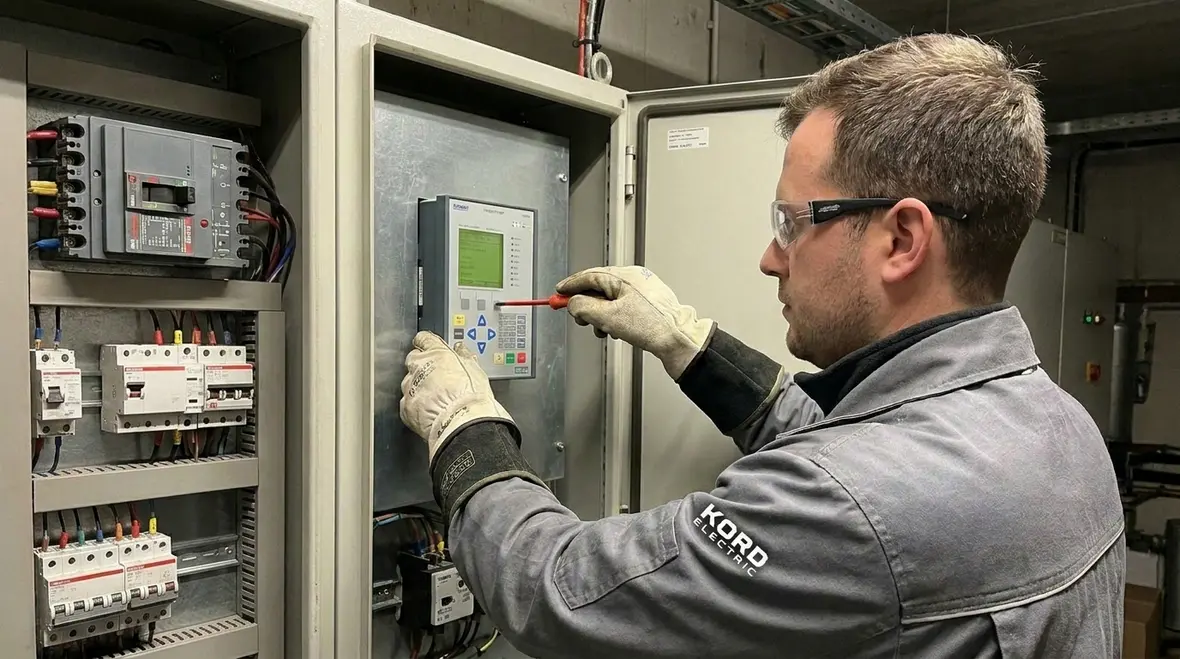
Layer the protection like a pro: selective tripping, speed, and coordination
If you want the facility to stay online during a fault, you need the right combination of speed and selectivity. In other words, equipment should trip fast enough to prevent damage, yet selective enough that only the faulty section goes dark. When this is done well, the rest of the building keeps functioning like it is on its best behavior.
Our teams focus on coordination studies, because breaker settings must “talk to each other.” We align relay timing, current thresholds, and breaker capabilities so the downstream devices clear the fault before upstream breakers step in. Otherwise, you get a broad outage when a smaller area needed to isolate.
Here is what we typically verify during engineering and commissioning:
- Overcurrent protection grading between main, feeder, and branch devices
- Relay pickup and time dial settings that match actual load and fault levels
- Coordination under multiple operating scenarios, including maintenance modes
- Assessment of transformer inrush and motor starting effects
And yes, if you have ever seen a plant trip everything because one motor went “dramatic,” you already know what poor coordination looks like. We try to prevent that drama from becoming company-wide.

Where coordination meets real-world maintenance
Coordination is not a one-time study that lives in a binder. As facilities add loads, expand panels, or change processes, the original settings can drift out of alignment with reality. That is why we revisit coordination as part of routine maintenance, especially when a major equipment change or system upgrade takes place.
For data centers and similar environments, that means tying coordination to how your backup systems behave. If your facility relies on UPS systems, generators, and transfer switches, the protective device settings must still work correctly during transitions. Kord Electric’s data center electrical maintenance checklist shows how coordination, testing, and documentation all support reliable fault response when uptime really matters.
Design for the fault you fear most: short circuits, ground faults, and arcs
Commercial and industrial facilities face different risk profiles, yet the patterns are consistent. Short circuits create massive current, ground faults can energize unintended paths, and arc faults can ignite equipment or spread damage. Therefore, our approach uses layered detection and equipment behavior that matches the likely fault types.
For short circuits, we ensure protective devices operate within safe clearing times. For ground faults, we pay close attention to system grounding method and the sensitivity of earth fault detection. Meanwhile, for arc hazards, we treat detection time and energy limits as critical parameters. We also consider how crews and occupants move through the space, because a “protected” system must protect people, not just equipment.
Our expert service staff often explains the practical side, such as how nuisance trips happen when settings do not match wiring length, loads, or process changes. In fact, facilities evolve. Loads change, panels get expanded, and contractors add circuits. If the protection plan never gets updated, the system can drift away from what it was designed to do.
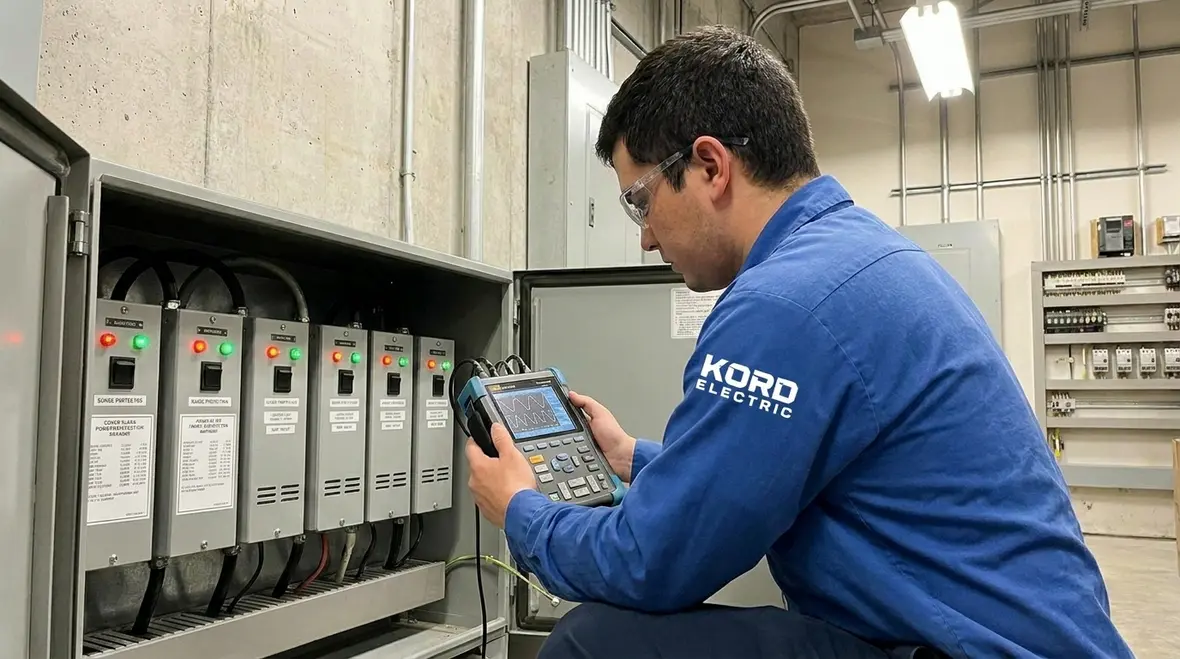
Translating fault studies into field-ready protection
Fault studies, arc flash analyses, and equipment ratings only deliver value if they translate into real settings and real procedures. We help facility teams connect those engineering results to actual device labels, breaker trips, and training so that when a fault happens, the system reacts as modeled instead of improvising under stress.
That connection between study and field work is also where NFPA-driven maintenance comes in. For example, the maintenance concepts in NFPA 70B electrical panels and switchgear maintenance support healthy equipment behavior during high-energy faults, making it easier for protection devices to operate as designed.
Account for power quality events and transients that still cause damage
Not every threat looks like a blackout. Many facilities suffer from repeated voltage dips, harmonics, and surges that quietly weaken equipment. Over time, this can shorten the life of drives, UPS systems, transformers, and sensitive electronics. So, we treat power quality as part of protection planning, not as a separate “nice to have.”
When we review protection and mitigation, we also look at:
- Coordination with surge protective devices to handle impulse energy
- Compliance with relevant standards for standby and emergency power systems
- Impact of harmonic distortion on protective relay behavior and overheating
- Isolation and filtering approaches for sensitive control systems
Then we verify that the whole chain supports the same goal: keep critical loads stable. If the facility relies on backup power, we also confirm that switching sequences and protection logic avoid creating new stress during transfer. Power events may look quick, but the cumulative effect can be brutal.
Power quality as part of critical power system protection
For many teams, power quality feels invisible until equipment starts failing early or nuisance trips multiply. We fold power quality data into critical power system protection so facilities can see how harmonics, imbalance, and transients affect protective devices and long-term reliability. Monitoring, trending, and targeted corrections help the system stay calm instead of lurching from one event to the next.
This is especially relevant in data-heavy environments, where poor power quality can undermine both uptime and safety. When we pair protection strategies with monitoring plans like those outlined in Kord Electric’s data center maintenance resources, facility teams get a clearer picture of how their electrical infrastructure really behaves under load.
Maintain reliability through testing, documentation, and fast restoration
Protection only works if it stays correct. That means testing, recordkeeping, and corrective action when results differ from expectations. We emphasize maintenance plans that match the facility’s operating risk. In other words, we do not treat a hospital like a small retail store, and we do not treat a plant shift like a quiet weekend. These are serious environments with serious consequences.
Our technicians typically support maintenance that includes:
- Relay functional tests and secondary injection where appropriate
- Breaker inspections, operation checks, and contact wear assessments
- Verification of settings against the latest one-line and field changes
- Review of event logs to confirm the system responds as intended
Importantly, we help customers keep documentation in order. When a fault happens, the team needs clear drawings, up-to-date settings, and known device identities. Without that, response time stretches out like a coffee order in a hurry.
We also encourage after-event reviews. If the system tripped too much or too little, we adjust the protection strategy. That is how reliability improves year after year.
Connecting maintenance to critical operations
In major property and industrial facilities, maintenance windows can be tight. We plan testing and inspection so operations keep moving while critical power system protection stays aligned with real-world risk. Over time, this creates a feedback loop: each fault, event, or test result informs better settings, better documentation, and faster restoration steps.
For multi-site or high-demand operations across Los Angeles County, many facility managers pair this approach with broader Los Angeles County electrical services support. That way, protection maintenance, upgrades, and future projects stay coordinated instead of becoming disconnected one-offs.
Train your teams and tighten response with clear operational playbooks
A protection system cannot “think” without people using it correctly. That is why we train operations and maintenance staff alongside electrical teams. Our goal is simple: when something fails, your people should understand what the protection did, why it did it, and what to do next.
We help build operational playbooks that cover safe isolation steps, alarm interpretation, and restoration sequencing. We also explain how relay language maps to real equipment states. Meanwhile, our expert service staff keeps it understandable, because “technical” should not mean “unusable.”
And here is the calm truth: in high-stakes facilities, clarity prevents chaos. Staff should not guess whether to reset, investigate, or escalate. Instead, they follow steps that protect both the equipment and the mission.
So yes, we keep things business casual, but we keep the procedures strict. Like good rules at a barbecue: you can joke, but you do not play with fire.
FAQ
Conclusion: let us protect your mission-critical power
If you run a commercial or industrial facility, you deserve protection that behaves predictably when the grid does not. At Kord Electric, we help you build reliable coordination, test what matters, and keep documentation and settings aligned with your real operations. Our technicians and expert service staff explain the process in plain language, so your team can respond confidently instead of panicking. If you want a protection assessment or a maintenance plan review, contact Kord Electric today and let’s strengthen your power protection before the next fault writes its own script.
Whether you are managing a single critical site or multiple facilities across the region, we can connect critical power system protection with ongoing maintenance, upgrades, and project work so your infrastructure grows without sacrificing reliability. When you are ready to turn best practices into a working plan, our service team is ready to help you map, test, and tune the systems that keep your operation moving.


