Commercial EV Fleet Infrastructure for Scalable Growth
Kord Electric helps commercial and industrial facilities build commercial ev fleet infrastructure that can grow without chaos. We plan charging, power delivery, controls, and maintenance so fleets can expand when the business is ready, not when the grid finally feels like cooperating. In this article, we walk through how our teams think ahead: we design for today’s routes, tomorrow’s chargers, and the reality of busy parking lots. Of course, we also make sure the work stays clean, safe, and aligned with code. Because nobody wants a “fun surprise” when a new vehicle arrives and the power plan is still in someone’s head like a forgotten playlist.
How we plan for commercial EV fleet growth
Others often start by asking where to put chargers. We start one step earlier by mapping how the fleet will change. That means we look at vehicle schedules, dwell time, route intensity, and peak charging patterns across the day and week. Then we translate that into a power timeline. In other words, we treat charging like a system, not like a one off install.
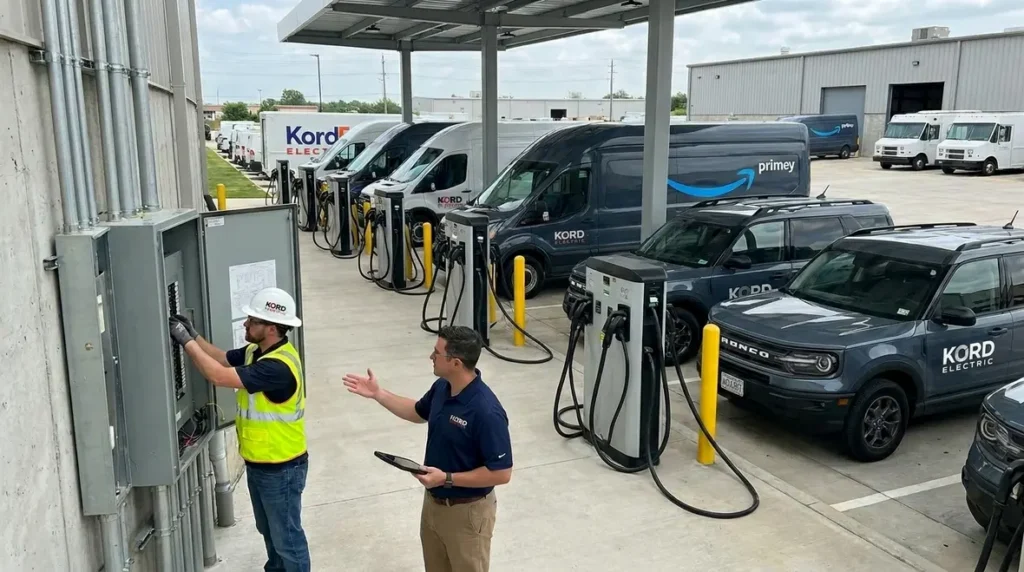
To move from guessing to clarity, our technicians and expert service staff review the site like it is a living machine. They consider building loads, existing panel capacity, transformer limits, and the condition of power distribution. Next, they evaluate charging behavior: slow charging for overnight fleets, managed charging for mixed duty cycles, and fast charging only when the business truly needs it. As a result, the plan fits the operation now, and it still holds up when the fleet grows later.
Assess the site like a roadmap for future scaling

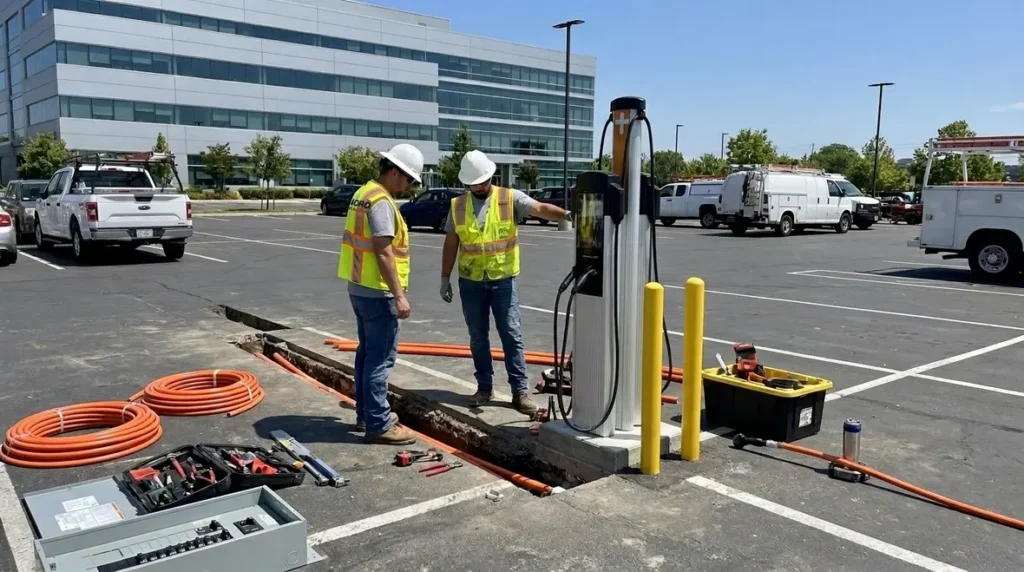
Before we design, we gather details that prevent costly rework. First, we identify electrical service size and available capacity. Then we inspect switchgear, main feeders, and any near term upgrade history. After that, we review site layout and construction constraints such as trench routes, parking lot surfaces, and cable pathways.
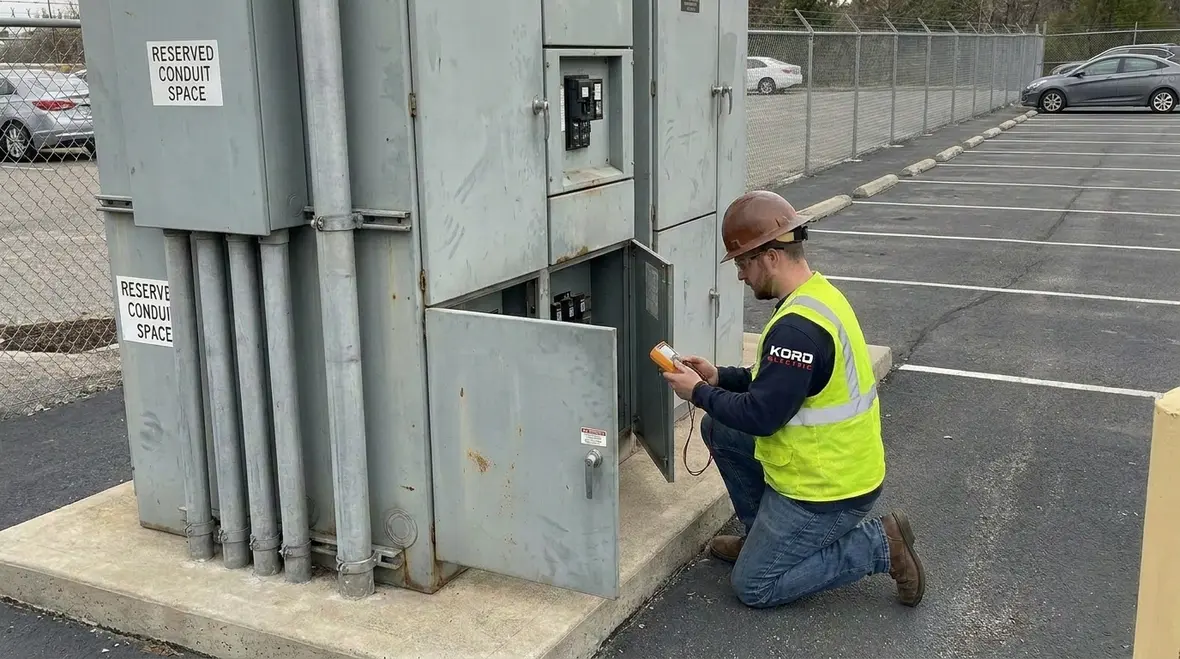
Additionally, we evaluate how much flexibility the site offers for expansion. For example, we check where conduit space can be reserved, where additional breaker capacity may be possible, and how future transformer or service upgrades could be staged. We also verify grounding and bonding paths, because a charging system that fights electrical noise usually ends up losing. And nobody wants that fight, especially not on a Monday when drivers are trying to meet appointments.
During this assessment, we also look for opportunities to align EV charging with other long term electrical care. Many facilities benefit from pairing fleet planning with structured programs like Kord Electric’s commercial and industrial electrical maintenance plans, so upgrades and inspections support both everyday reliability and future charging growth.
Design charging zones and power paths for expansion
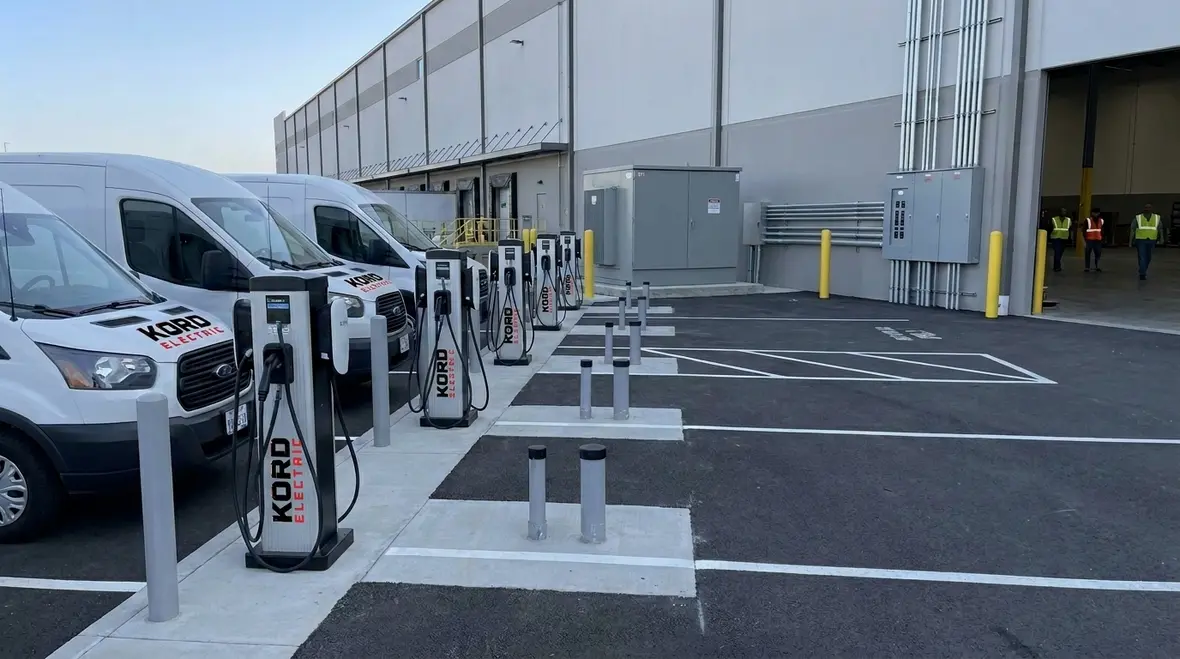
Now we move into design decisions that make scaling easier later. We create charging zones that match real parking patterns and operational needs. That approach reduces the chance that chargers end up on the wrong side of the lot, facing the wrong direction, or competing with customer parking. Then we plan the electrical routes so power can extend without tearing up the site again.
Our technicians focus on clear cable pathways, proper conduit sizing, and efficient load distribution. Moreover, we use thoughtful panel and breaker strategies so the next phase does not require a full redo. We consider both power delivery and control communication so the chargers can work together. This helps prevent peak demand surprises when multiple vehicles charge at the same time.
At this stage, we also bring in our commercial and industrial perspective on safety. We do not treat chargers like decorative equipment. We treat them like grid connected assets with strict requirements for protective devices, fault handling, and proper labeling. When everything matches the plan, scaling stays practical and predictable.
For property teams in Los Angeles County and nearby regions, this kind of planning often connects naturally with broader projects handled through Kord Electric’s Los Angeles County electrical services, where EV charging, lighting, distribution, and power quality upgrades all share the same long term roadmap.
Future proof with managed charging and smart controls
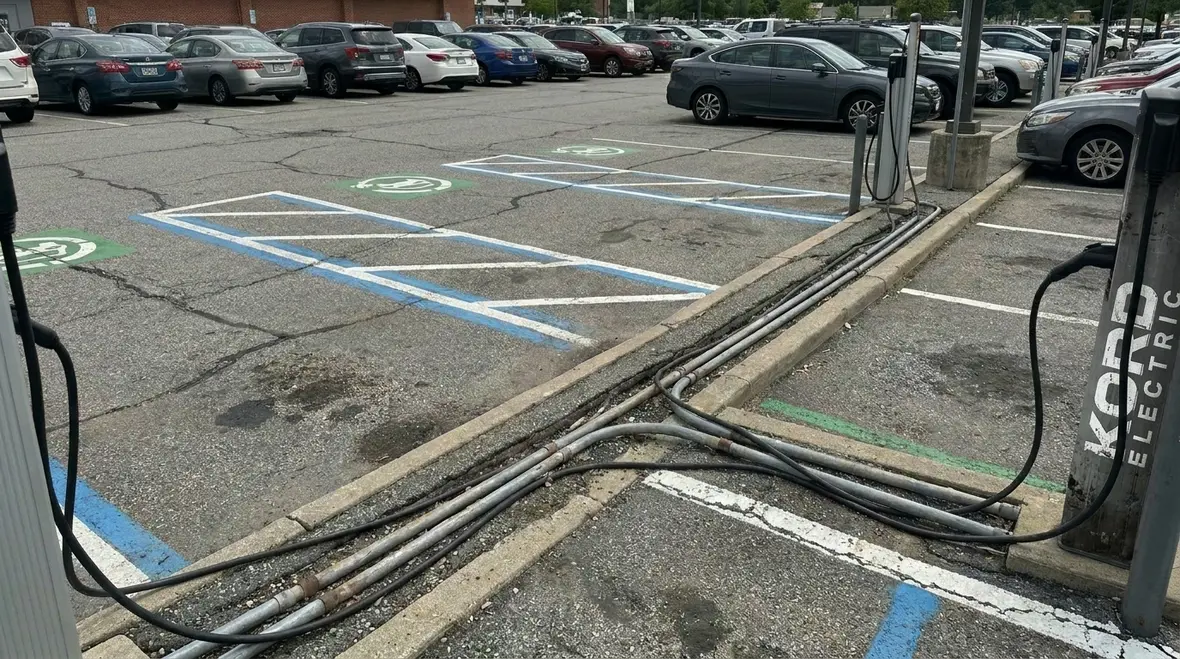
Managed charging is where scaling stops being luck and starts becoming engineering. Instead of letting every vehicle charge at full power right away, we coordinate charging rates using controls that respond to real time conditions. So, even when you add more vehicles, the system can reduce load spikes and keep demand within targeted limits.
To accomplish this, we align the charging network with the facility’s electrical profile. We also plan how the system will communicate with building management, where applicable. As demand rises, the controls prioritize charging sessions based on arrival times and required departure targets. Consequently, your fleet gets energy when it needs it, and the facility avoids the kind of overload that triggers expensive investigations.
We also keep maintenance in mind while designing controls. When technicians can access components and read diagnostics, repairs happen faster and cleaner. That matters for uptime in major property buildings where every outage becomes a business problem, not just an electrical inconvenience.
Maintenance planning that protects uptime and budgets
Charging systems must run day after day, season after season. That is why Kord Electric supports long term maintenance planning, especially for commercial and industrial facilities. If we only install and walk away, we trade a short term win for long term risk. So we build a plan that supports inspections, preventive work, and fast corrective service.
In fact, we follow a structured approach similar to what we outline in our commercial and industrial electrical maintenance plans guidance. Our process helps facilities manage inspections, document conditions, and prioritize corrective actions. As a result, the equipment stays reliable, and budgets become easier to plan because issues surface early rather than after a failure.
Our expert service staff explains what they see in practical terms, not in confusing jargon. They help others understand the “why” behind each recommendation: which components wear over time, which indicators show stress, and what needs attention before it becomes downtime. It is calm, clear communication with real field experience behind it.
Many facilities use the same maintenance conversations to coordinate other reliability work, such as addressing hidden distribution risks or planning for emergency scenarios. Articles like Kord Electric’s guides on concealed electrical hazards and power failure response provide additional context for how disciplined maintenance and commercial ev fleet infrastructure design support each other over the life of a property.
How we phase upgrades to keep operations moving
Scaling never happens all at once. Facilities need a path that protects business operations while new vehicles come online. Therefore, we phase upgrades by stage. We start with the portion of commercial ev fleet infrastructure that delivers value first, then we add capacity as demand grows.
Typically, we design with spare capacity where it makes sense and plan for future equipment locations. For example, we can stage conduit runs and leave pull strings in place, so later phases feel like expansion instead of demolition. We also plan for switchgear modifications and potential service upgrades so they occur in planned windows.
Meanwhile, we coordinate with facility schedules to minimize downtime. We understand that loading docks, service counters, and daily operations do not pause for construction. So we schedule work in a way that respects the building. And yes, sometimes that means we show up early, just like a pop star on a late show, except we do it with fewer sequins and more safety glasses.
Near the end of each phase, our teams also revisit the long term roadmap: future chargers, added routes, and potential building changes. That continuous check in keeps projects aligned with the bigger picture, whether a facility is adding a small group of vehicles or building a fully managed, region wide fleet.
FAQ
Conclusion: let’s plan your next charging phase
Kord Electric builds commercial ev fleet infrastructure for commercial and industrial facilities that want growth without surprise downtime. We assess your site, design charging zones and power paths, and plan managed controls so scaling stays practical. Then we support long term maintenance through structured inspection and service, explained clearly by our expert staff. If you are planning fleet expansion, contact us now to map the right upgrade path for your property and your timetable. We will bring the calm, and the power will follow.
As you plan your next phase, our team can also connect this work with related services such as lighting compliance, distribution upgrades, or panel modifications. Whether you start with a single depot or a portfolio of major properties, the same disciplined approach keeps your infrastructure ready for every new vehicle that joins the fleet.