

Redundant Power Systems for Commercial Buildings
Implementing redundant power systems is how commercial buildings keep the lights on when the grid stumbles. At Kord Electric, we start every project with a clear goal: reliable commercial building backup power that protects critical loads, supports uptime, and lets operations keep moving when others are stuck watching everything reboot. And yes, we know power outages can feel like the universe hitting pause. However, with the right design, that pause becomes a controlled transition, not a painful freeze. Our technicians and expert service staff explain each step in plain language, so building owners and facilities teams know what they are buying, why they need it, and how it will perform under real conditions.
We approach redundancy like a business plan for electricity. Instead of gambling on one path, we build multiple paths that share the work, cover each other, and fail gracefully. Then we test and document everything so your system behaves the way it was designed to behave.
What redundant power really means in a commercial setup
Redundancy is not just “another generator.” In a major property, data-heavy operation, or industrial site, redundancy means the electrical system keeps delivering power even when a component fails, maintenance is happening, or the utility supply becomes unstable. In practice, we design for continuity across several layers: supply, transfer, distribution, and monitoring.
First, we confirm the building’s critical loads. Then, we map how those loads connect to electrical gear, ATS or switchgear, feeders, and emergency distribution. After that, we add standby or alternate sources so the system can sustain operations without forcing shutdowns.
Our expert service staff often tells teams the simplest truth: if the power fails, the transfer must happen fast, and the sensitive equipment must stay within safe voltage and frequency limits. So, the “redundant system” includes control logic, protection settings, cabling routes, and reliability planning, not only the backup source.
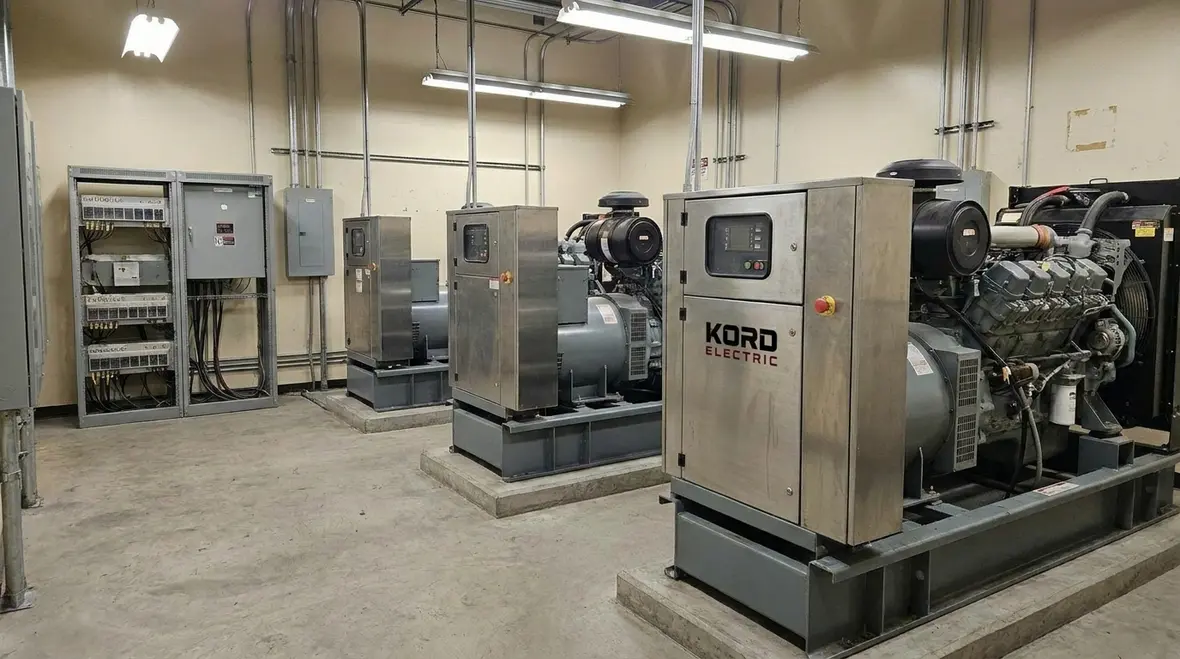
How we plan reliability before we touch equipment
Before Kord Electric installs anything, we treat planning like the blueprint for uptime. We review utility history, load profiles, starting currents, and the performance needs of motors, HVAC, process equipment, and life-safety loads. Then we define the redundancy level that matches the risks of downtime.
Next, we organize the power paths. One common and practical approach uses multiple feeders and switchgear sections so faults do not cascade. Another approach separates critical and noncritical loads, so noncritical areas can go dark while the operation stays alive. We also consider where equipment sits in the building and how to protect it from water, dust, and heat.
Finally, we build a test plan. Because even the best system can surprise you during commissioning if no one checked the details. Our technicians walk facilities teams through what to expect, how to verify performance, and what data to record so future troubleshooting stays quick and calm.
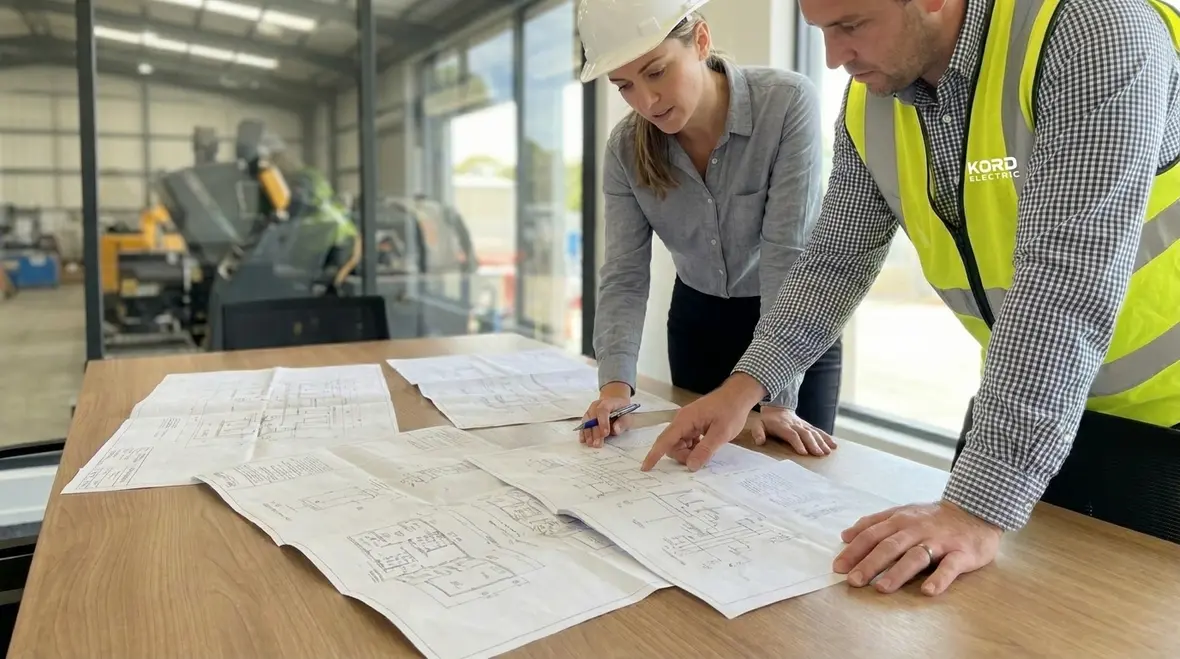
Choosing the right backup power sources for major property buildings
Different commercial and industrial facilities need different source combinations. Some teams want generator sets for longer events. Others need a mix that includes UPS for ride-through and protection for sensitive electronics. In many major property buildings, we design tiered support: UPS for brief interruptions, and generator systems for longer runtime.
As a reference point for high-availability expectations, our earlier guidance on data center electrical requirements for uptime stresses the need for planning that supports continuous operation. While your facility may not be a data center, the same mindset applies: minimize downtime, control transfer behavior, and verify that the system architecture supports the loads you cannot afford to lose.
Now, let’s keep it real. Picking sources without planning the transfer and distribution is like buying a fancy sports car and never checking the tires. It looks great at the dealership, and then it fails on the first turn. So we choose sources together with transfer methods, protection, and runtime needs.
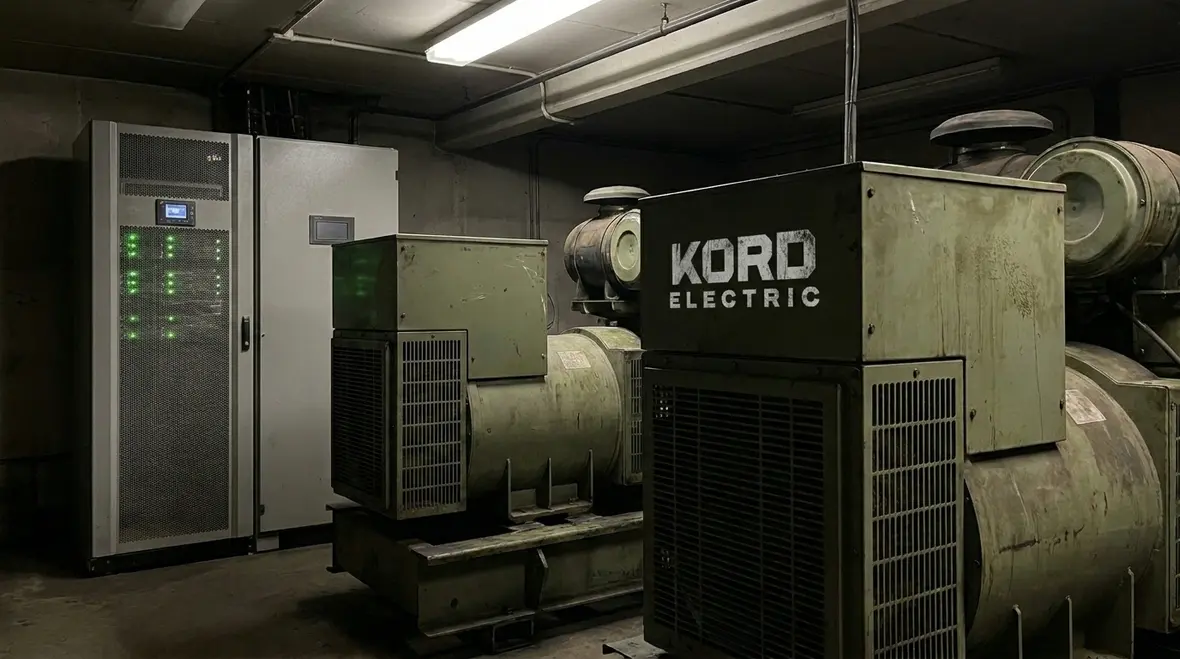
Designing transfer and switchgear so operations stay smooth
Redundant commercial building backup power succeeds or fails during transfer. We design transfer pathways so the system routes power correctly when utility fails, equipment is isolated, or maintenance mode starts. Our technicians explain the difference between transfer switches, ATS configurations, and switchgear sectionalizing in a way facilities teams can actually use during operations.
To avoid blind spots, we focus on three details. First, we use clear logic for priority loads and defined sequences. Second, we coordinate protection so a fault on one path does not trip the entire system. Third, we keep the controls and interlocks accurate and aligned with the electrical one-line.
Also, we think about how people interact with the gear. We label systems clearly, set up procedures, and confirm that the building staff can safely place equipment in service or maintenance. Because if your redundancy depends on a memory test, that is not redundancy. That is trivia night.
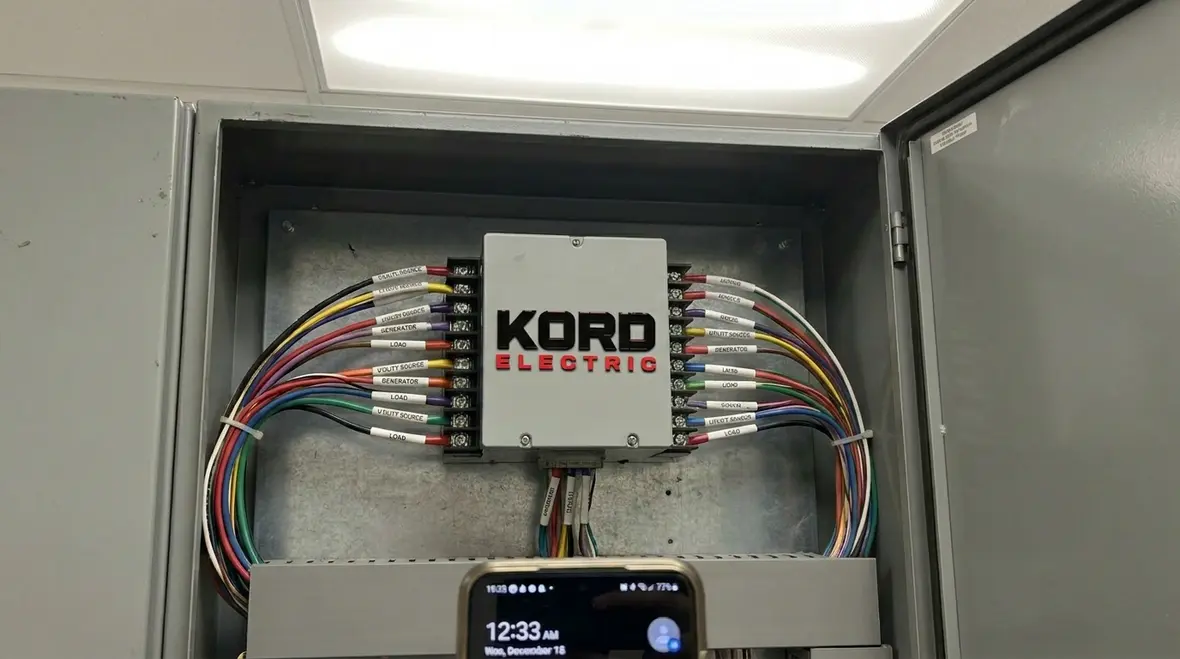
Maintaining redundancy with testing, monitoring, and trained support
A redundant system is only as reliable as its maintenance. Kord Electric supports commercial and industrial facilities with service practices that keep equipment ready when it matters most. We recommend routine inspections, predictive checks, and periodic load testing based on your runtime goals and manufacturer needs.
Then we add monitoring. Monitoring does not just show that the system is alive. It helps identify issues before they become downtime events, like abnormal voltage regulation, unexpected harmonics, or transfer events that repeat more often than they should.
Our expert service staff trains on what the readings mean and what actions to take. We also document every test result so future techs and facilities teams can track trends. In other words, we help you build an evidence trail, not a guess-and-check habit.
Common pitfalls we help commercial teams avoid
Most failures we see in redundant systems do not come from one dramatic disaster. Instead, they come from small mismatches: a load that was forgotten, a transfer sequence that does not align with how equipment starts, or protection settings that do not coordinate during a fault. And yes, sometimes someone installs gear in a way that works today, but it becomes a problem when the building expands.
To prevent that, we handle several risk areas early. We validate load types, including motor starting and nonlinear loads. We check that the system can handle the inrush and steady-state needs. We also confirm that critical circuits get the right redundancy, so you do not end up with a backup source that powers the wrong things.
Additionally, we evaluate physical installation choices that affect reliability, like cable routing separation and protection from environmental threats. It is not glamorous, but it matters. Power systems do not care about vibes.
FAQ: Redundant power systems for commercial and industrial facilities
Dual column snapshot: what Kord Electric builds for uptime
Design focus
Load mapping for critical and noncritical circuits
Transfer and protection coordination
Source strategy using UPS, generators, and distribution
Commissioning, documentation, and test plans
What the facility gets
Power continuity where downtime hurts most
Stable operation during utility failure and maintenance
Controlled transitions with predictable runtime
Evidence-based reliability that service teams trust
Next steps to protect your facility
If your business depends on steady power, we can help you design and implement a redundant system built for real uptime, not wishful thinking. Kord Electric works with commercial and industrial facilities and major property buildings to map critical loads, coordinate transfer behavior, and set up testing that keeps performance dependable. Reach out for a reliability-focused assessment and talk with our technicians and expert service staff. We will explain the options clearly and move you from uncertainty to a plan you can run with.
For facilities that already feel the strain of outages, faults, or unexplained shutdowns, pairing a redundancy upgrade with structured electrical preventive maintenance helps keep commercial building backup power ready when the unexpected happens. And if you are dealing with active failures or high-risk conditions, our dedicated emergency electrical services team can stabilize the situation while we plan long-term improvements.
Whether you are planning a new major property, upgrading existing switchgear, or formalizing your long-term reliability strategy, Kord Electric builds redundant power systems that match how your facility actually runs. We focus on clarity, testing, and documentation so your team is not guessing during the next outage—they are following a plan.


