EV Charger Power Demand Analysis Guide Commercial Sites
EV charger upgrades start with an EV charger power demand analysis
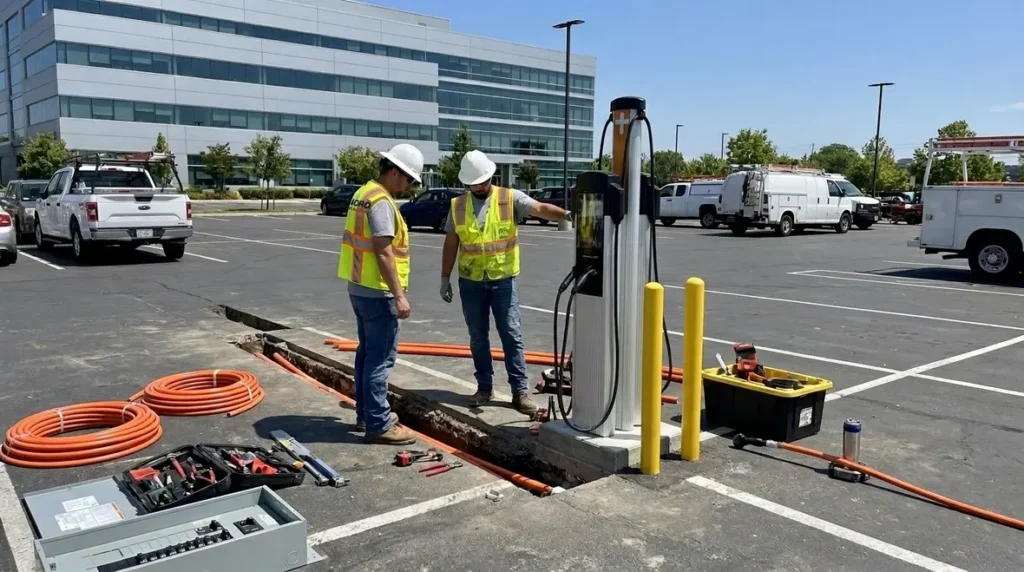
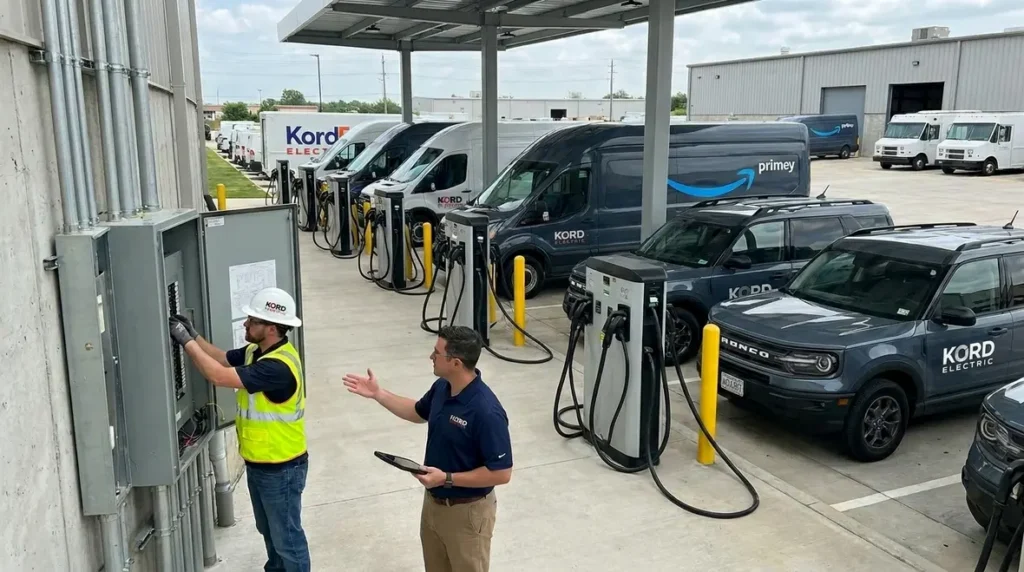
When a commercial site plans to add EV charging, we start by running an EV charger power demand analysis that tells us what the electrical system can actually handle. And yes, we know, it sounds like a fancy spreadsheet ritual. However, it prevents the kind of surprise that makes a facilities manager wish the charging plan came with a user manual. In our process at Kord Electric, we review panel capacity, demand patterns, voltage behavior, feeder capacity, and how the new loads interact with existing equipment. Then we translate that into a clear upgrade path for warehouses, retail centers, campuses, and multi unit major property buildings. From there, our expert technicians explain each step in plain language, so everyone understands what we found and why it matters.
How we assess electrical capacity before a charger plan
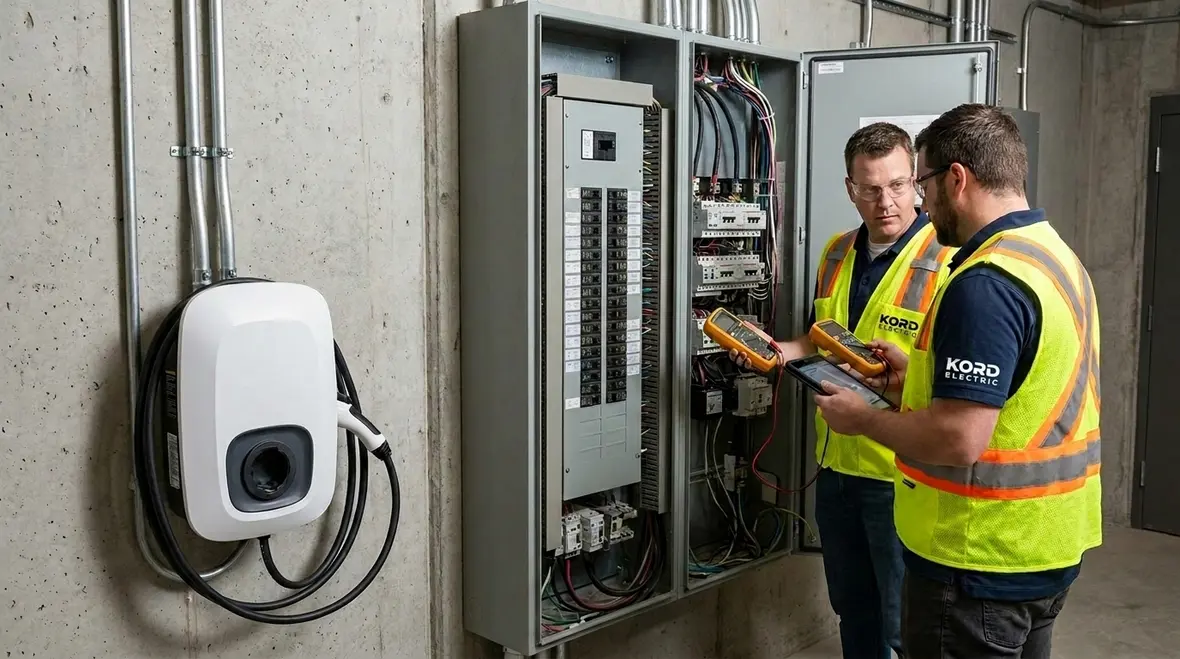
In commercial and industrial facilities, electrical capacity is not a single number. Instead, it is a system of limits that work together. First, our team inspects the service rating, main disconnect, and distribution panels. Then we evaluate the feeder sizes and the terminations, because chargers do not care about good intentions. Next, we look at existing loads like HVAC, lighting, motors, elevators, and any process equipment. Even if those systems look “fine” during office hours, chargers can push the site into new demand levels during peak usage.
At the same time, we confirm the charging layout: number of ports, power levels, and how often vehicles arrive. Because if a site schedules arrivals randomly, the load pattern can look different than a managed fleet plan. Additionally, we consider future growth. Many clients come to us after installing chargers “just to start.” Later, they add more, and suddenly the electrical capacity conversation returns, this time wearing a trench coat and a louder voice.
What electrical bottlenecks show up during capacity checks
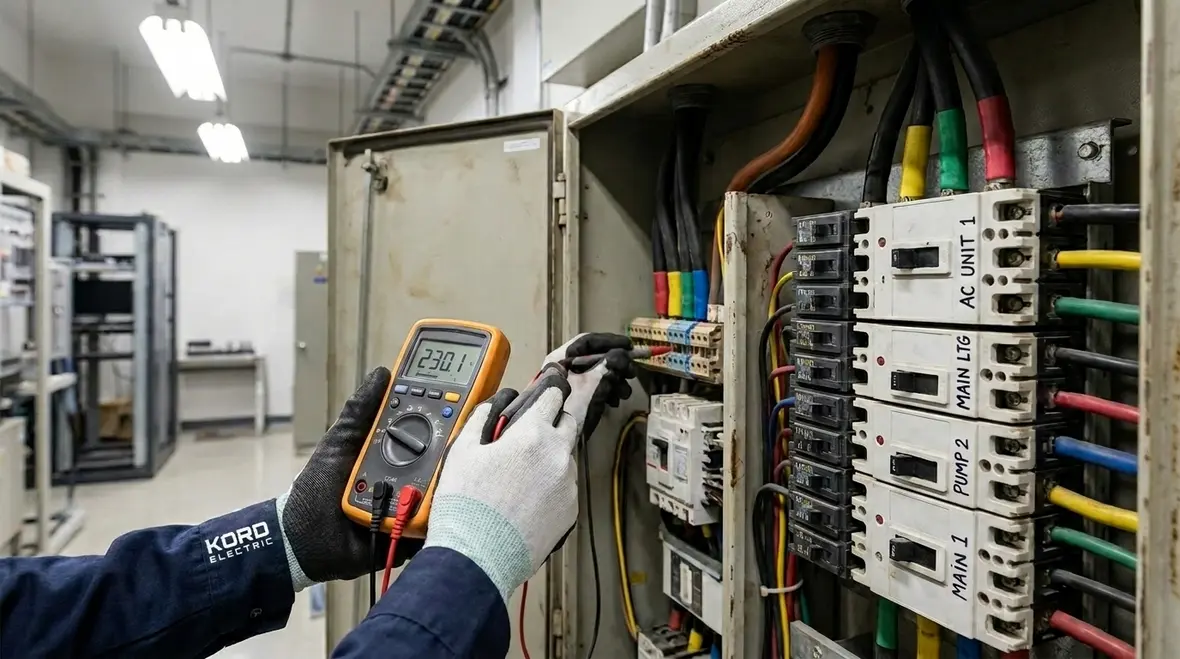
Our technicians often find that the biggest bottleneck is not the charger itself. It is the path from the utility connection to the charger location. Therefore, we check where capacity breaks down first. Common issues include undersized feeders, overloaded panels, limited spare capacity in switchgear, or protection devices that cannot safely handle the new current. Also, some sites have aging components that pass simple load tests but struggle under the steady draw of chargers, especially when multiple ports operate at once.
We also pay attention to voltage drop and heat. When current climbs, voltage can sag along long runs. That may reduce charging performance, trigger protection trips, or shorten equipment life. Moreover, improper grounding and bonding can complicate compliance and safety. In a commercial setting, the risk is bigger than a nuisance. So we treat these details like they matter, because they do.
Panel and service limits for commercial sites
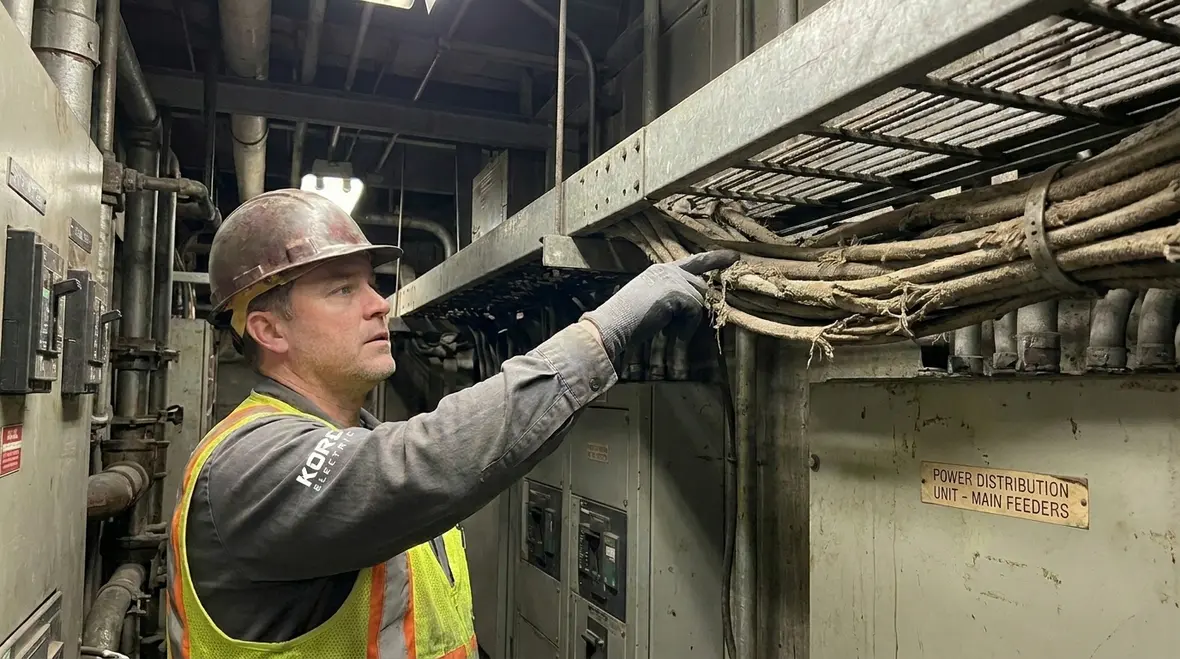
Most facilities want a straightforward answer, and we can give one. But we earn that answer through structured review. First, we calculate available bus capacity in panels and switchgear, considering how existing circuits load the system. Then we estimate how each charger block adds demand. This approach supports our ev charger power demand analysis findings and helps us decide whether the building needs a panel upgrade, new distribution, or a different charger configuration.
Depending on the site, upgrades may include adding spaces to switchgear, installing new panels, or updating service equipment. When a facility has limited panel space, we explore alternatives that still keep the electrical system balanced and code compliant. And to be clear, we do not guess. Our expert service staff explains the options, and we show the logic behind the decision so the plan does not turn into a “trust me bro” situation.
Additionally, we coordinate timing with operations. Because in major property buildings, shutdown windows are expensive. So we plan installation sequences to reduce disruption and maintain safe operation for tenants and staff.
Demand management strategies that protect capacity
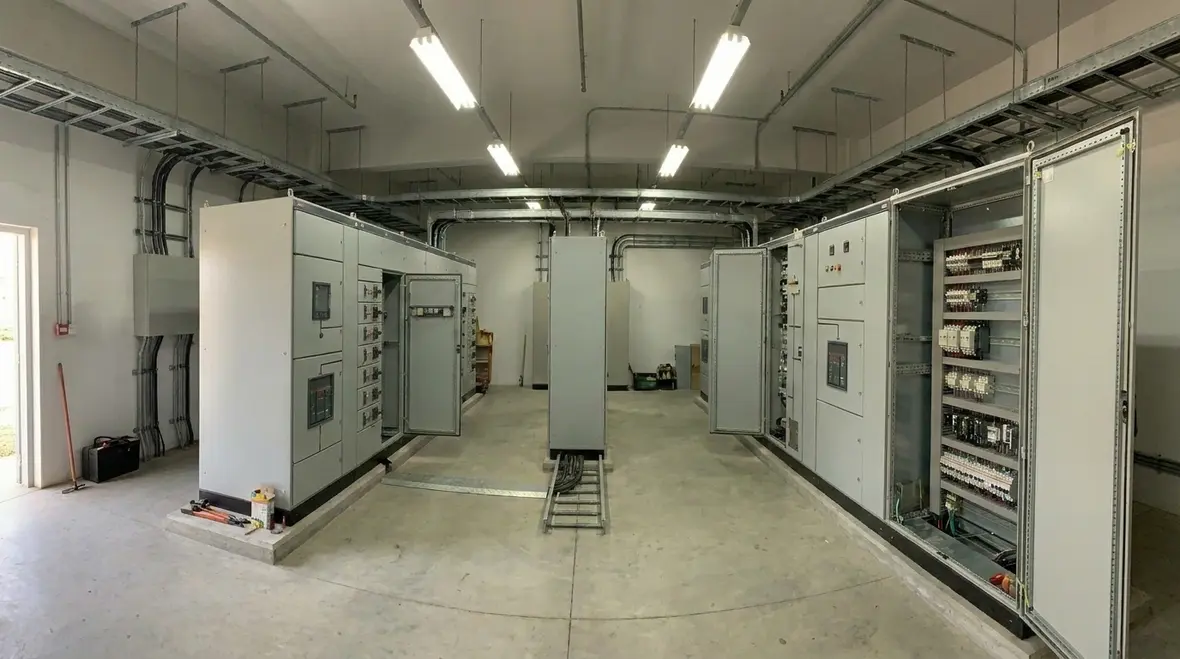
Even when the building electrical capacity looks tight, we often find a path forward. Smart charging changes the story. With managed charging, the facility controls how much power each charger draws at a given time. For example, a site might allow full output only when the building has spare capacity, then throttle chargers when other loads climb. This keeps the electrical system within safe limits while still offering dependable charging.
We also support scheduling approaches. Facilities can align charging with off peak periods or vehicle arrival patterns. Instead of asking the building to do everything at once, we help the site spread the load. That reduces stress on panels and feeders, and it can delay or reduce infrastructure upgrades. Of course, we verify that the controls align with the charger hardware and the electrical design, because compatibility is not optional.
In some cases, the best solution combines modest electrical upgrades with demand management. That gives the client performance today and room for growth later. And yes, it is possible to be practical and still avoid chaos. Charging should feel like a service, not a hobby you regret.
Using feeder and conductor checks to prevent future headaches
After we assess panels and service equipment, we move to the distribution side. Feeders and conductors decide how electricity travels, and they often reveal hidden constraints. Therefore, we verify conductor sizing, insulation ratings, and routing. We also confirm that the protection devices match the load and comply with safety requirements.
We run voltage drop considerations for longer feeder runs and multi charger clusters. When voltage drops exceed acceptable levels, chargers may slow down or fault under load. Additionally, we evaluate load balancing across phases when the site uses three phase power. Poor phase distribution can overload one phase while another phase sits underused, and that imbalance can trigger breakers and degrade performance.
Our team also checks for construction realities like cable tray capacity, conduit fill, and the condition of existing pathways. In commercial and industrial settings, those details can delay a project if they are discovered late. So we treat them early. Meanwhile, our expert staff keeps the communication steady, because nobody wants to hear surprises in the middle of a busy workday.
What capacity upgrades can cost and how we guide decisions
Commercial electrical upgrades can range from straightforward work to more involved construction, depending on what the building needs. Kord Electric helps clients make decisions based on real capacity findings, not guesswork. We also factor in planning and labor time, conduit and wiring materials, switchgear modifications, and testing and commissioning.
In our rewiring cost guide for commercial electrical systems, we explain how scope drives price, including whether the project requires new feeders, panel upgrades, or additional labor for access and shutdown coordination. To view the practical breakdown, we recommend reviewing our rewiring cost guide for commercial electrical systems on our blog. That guide also supports a simple principle we follow on every EV charging upgrade: align electrical scope with the actual demand requirements, and avoid expensive changes that happen after installation starts.
Additionally, we help clients phase projects when full scale work is not ideal. For example, we may install initial chargers with a conservative electrical design and demand management, then plan future expansion when additional capacity becomes available. That staged approach protects budgets while still delivering value.
FAQ for commercial EV charger capacity and power demand
Why Kord Electric helps facilities upgrade with confidence
When a building adds EV chargers, the electrical capacity question does not wait. Kord Electric handles that work for commercial and industrial facilities with a careful EV charger power demand analysis, real load reviews, and thorough feeder and protection checks. Then our expert technicians explain what they find and why each upgrade step matters. So you can protect operations, reduce downtime surprises, and plan growth with control. If you are planning EV charger upgrades for your property, contact us today for a capacity assessment and a clear upgrade path that fits your site.
For commercial properties planning both infrastructure reliability and EV charging growth, it can also help to review broader system strategies like electrical preventive maintenance, voltage stability, and long term upgrade planning. Exploring resources such as Kord Electric’s commercial and industrial electrical maintenance plans and voltage fluctuation repair insights can give facilities a fuller picture of how EV charging fits into overall electrical health and uptime planning.
If your site is ready to move from planning to implementation, Kord Electric’s dedicated EV charger installation services connect this kind of power demand analysis to real-world builds. From layout design and permitting support to final commissioning, our team aligns charger hardware, demand management, and commercial-grade electrical construction so your project runs like a coordinated plan instead of a trial-and-error experiment.
Whether you manage a warehouse, a campus, a retail center, or a portfolio of major property buildings, our goal is simple: help you add EV charging capacity with confidence instead of guesswork, using data-driven analysis, clear communication, and proven commercial electrical practices.