Delta 100kW EV Charger Installation Requirements for Commercial Spaces
When Delta 100kW fast chargers show up on a commercial site plan, the shiny hardware is the easy part. The real work happens in the planning: load, footprint, cabinet, conduit, trenching, clearances, commissioning, and long term service. This is where Kord Electric treats Delta 100kW EV charger projects like infrastructure, not like a parking lot accessory you install between errands.
In this guide, we walk through the Delta 100kW EV Charger Installation: Footprint, Power Cabinet & Site Requirements so facility managers, property owners, and project teams can see what a serious commercial deployment actually needs. Our focus is simple: stable power, clean layout, safe operation, and a project that still makes sense when the site adds more chargers next year.
Delta 100kW EV Charger Installation: Footprint, Power Cabinet & Site Requirements in commercial spaces
Kord Electric focuses on commercial and industrial facilities, and we treat charger deployment like real infrastructure, not like a weekend DIY project. When multiple Delta City 100kW units land on a commercial property, the Delta 100kW EV Charger Installation: Footprint, Power Cabinet & Site Requirements become a planning tool, not an afterthought. In most cases, the installation footprint depends on the charger pad size, cable routing, vehicle turning space, and the location of the electrical equipment. Meanwhile, the power cabinet requirement depends on whether the site needs a dedicated service upgrade, how the load sits on the building panel, and how we manage heat, clearance, and conduit runs.
And yes, we also make sure your “parking lot future” does not turn into a “surprise maintenance nightmare.” Others rush. We plan. Then we install.
How we size the installation footprint for multiple 100kW Delta City chargers
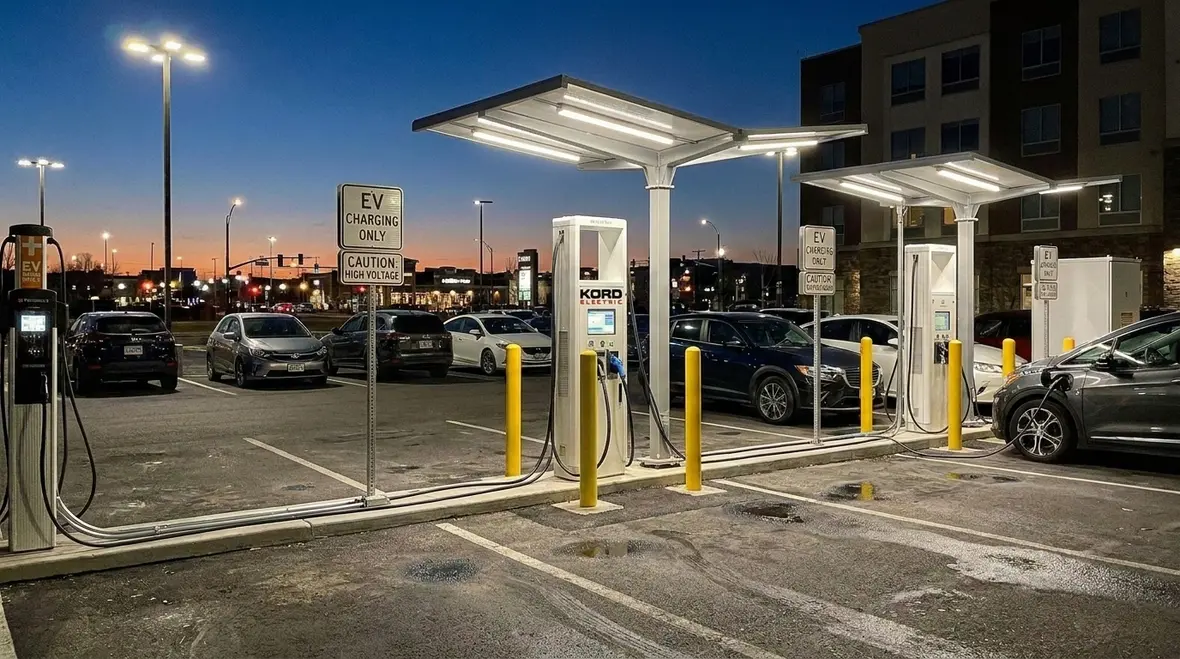
At commercial and industrial sites, footprint planning starts with motion and access. First, we look at vehicle flow: where drivers will stop, how they will park, and whether a curb, landscaping, or bollards will block safe approach. Then we account for cable paths and service routes so the wiring does not run across walkways like an obstacle course from a bad movie set.
Next, we map the hardware locations. Even when chargers look compact, the effective footprint grows when we add cable management, equipment clearances, and the working space needed for inspection and servicing. Therefore, our technicians and expert service staff measure and mark real locations in the field, not just on a drawing that “should work.”
We also consider how many units you deploy. With multiple Delta City 100kW chargers, you often need staggered spacing so that each station has safe pedestrian clearance and practical cable routing. Additionally, we plan for future expansion, because commercial properties rarely stop at one phase. They stop at a budget line, but the demand keeps growing. Like Netflix, it always finds a way to add another season.
For teams who want a deeper view of multi-charger layout and staging decisions, Kord Electric’s broader Commercial EV Charging Infrastructure Guide explains how physical placement, cabling, and panel capacity fit together on real properties.
What power cabinet capacity needs to be planned before any trenching
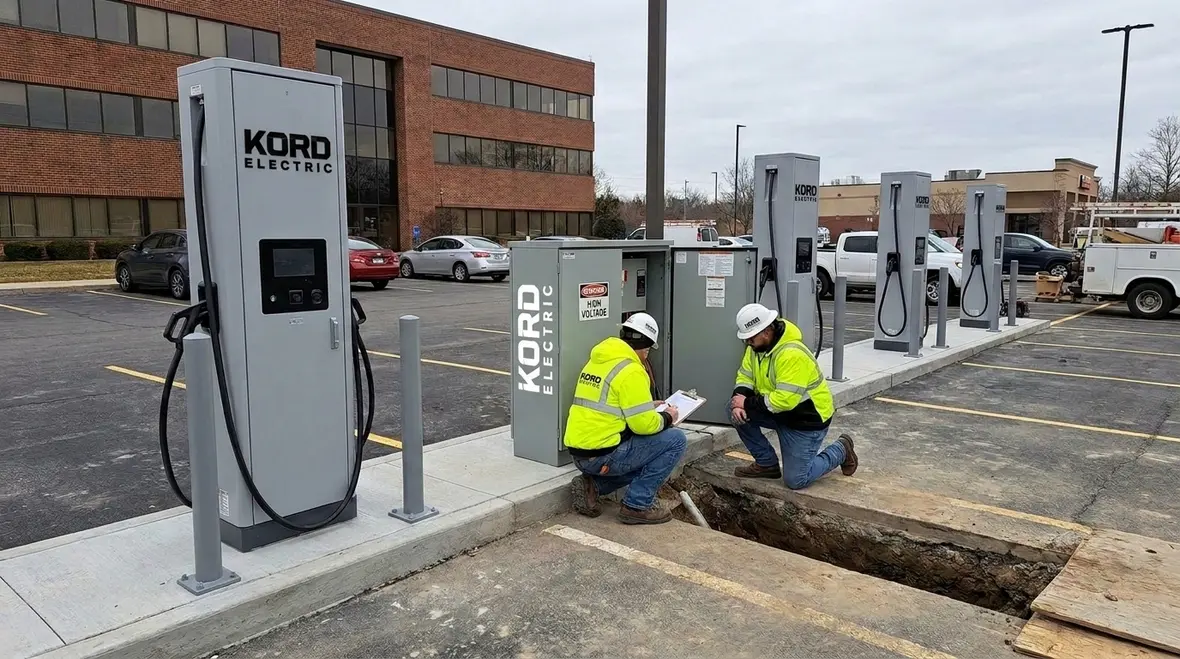
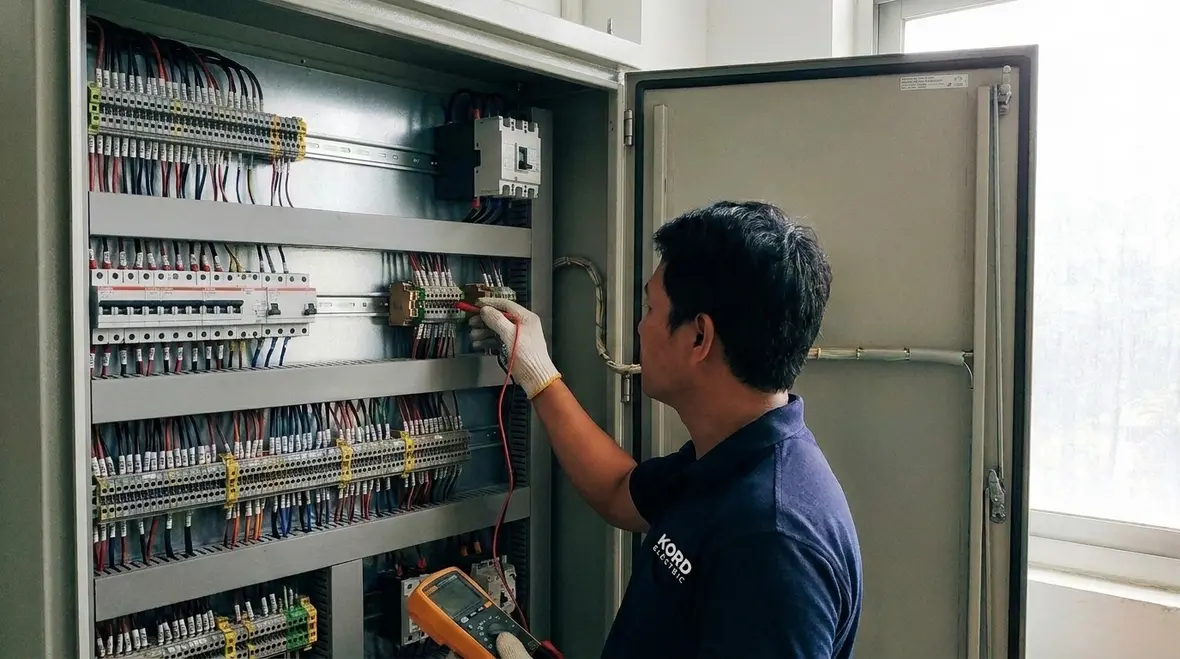
Once Kord Electric locks in charger placement, we move to electrical design. At 100kW per unit, power demand becomes serious, and the power cabinet cannot be treated as a decorative box. The cabinet requirement depends on your site’s utility feed, the available electrical room space, the distance between the utility connection and the charging area, and the current building panel configuration.
In most commercial deployments, we evaluate whether the property can support the load without overload. Then we determine how to distribute capacity so the chargers can operate reliably, especially during peak site usage. After that, we confirm the cabinet configuration for protection, metering, and routing to the charger enclosures.
Here is what our technicians focus on during design reviews. We verify ventilation and heat rise limits for the cabinet area. We also ensure proper clearance for servicing and code compliant access. Finally, we confirm that conduit sizing and cable selection match the calculated voltage drop, since excessive losses turn efficient systems into expensive hand warmers.
For properties completing broader distribution work at the same time, pairing Delta 100kW EV charger cabinet planning with a commercial subpanel installation checklist keeps feeders, subpanels, and EV loads aligned under one coordinated plan.
Site requirements that commercial properties must meet
Every major property building has its own constraints, and we respect that. Still, certain site requirements show up again and again. First, we confirm the charging equipment locations meet safety standards for vehicle impact protection, pedestrian safety, and access during maintenance. Second, we verify the ground conditions and mounting plan so the equipment stays stable and safe over time.
Then we handle the practical stuff. We verify lighting levels so users can find stations at night. We check signage needs so drivers understand where to connect. We also review snow and surface runoff concerns in colder climates, because water and electronics do not make a good partnership, even if someone jokes about it.
In addition, we plan for cable routing paths that avoid damage from foot traffic, forklifts, and landscaping work. We route intelligently, and we keep the wiring protected. That is where experienced service teams earn their pay, because good installation is what keeps downtime from becoming a recurring billing item.
If you are still shaping your EV roadmap across multiple properties, Kord Electric’s EV charging infrastructure planning for commercial sites article shows how feasibility, site readiness, and budgeting come together before the first trench is dug.
Using our commercial EV charger installation checklist as the backbone of the project
At Kord Electric, we rely on a structured approach to prevent gaps. Our commercial EV charger installation checklist guides our field workflow, so each step stays aligned with the electrical plan, site layout, and commissioning needs. We use it to confirm requirements early, not after the conduit has already been installed.
When our expert service staff leads the site walk, they verify key items like power availability, equipment location constraints, routing considerations, and safety access. Therefore, our clients know what we checked and why we moved certain components where we did. If something changes, we document it and update the plan quickly.
And because commercial owners care about schedules, we also align our checklist items with project timelines. We do not just “install.” We coordinate, stage materials, and communicate milestones clearly. It keeps the process calm. It keeps the property operational. And it keeps the site team from asking, “Why is there more work?” while they are trying to run a business.
For many sites, this checklist builds on the thinking in Kord Electric’s commercial EV charger installation checklist, turning a general framework into a Delta 100kW-ready plan that accounts for cabinet size, conduit, and real-world usage.
Electrical design decisions that prevent underperforming deployments
Power delivery at 100kW requires more than adding equipment. We make design decisions that affect performance, uptime, and long term costs. First, we evaluate how load sharing will work when multiple chargers operate at the same time. Then we ensure the electrical system supports the expected usage patterns for your site.
Next, we review conductor runs and conduit routes. Longer routes can increase voltage drop, which impacts charger performance. Therefore, we size and route carefully. Our technicians also confirm that circuit protection and control wiring support safe operation and future troubleshooting.
We also plan for metering and monitoring needs. Some properties want granular reporting for billing and fleet management. Others want simple health status for operations. Either way, we build the system so it can be serviced without turning the site into a mystery novel.
Finally, we coordinate with the property’s electrical room limitations. In commercial facilities, the room is often already packed with equipment. We plan clearances and access paths so maintenance crews can work without removing half the world.
Commissioning, testing, and training so the chargers keep working
Installation is only the start. Kord Electric finishes with testing, commissioning, and clear guidance. Our technicians verify the power cabinet setup, run functional checks, confirm safe operation, and verify charging behavior under realistic conditions. Then we document results so the property team can track what matters.
After testing, we train the right people on the basics. We explain how the system behaves, what normal startup looks like, and what to do when a fault occurs. We also share simple care guidance that prevents issues caused by neglect, like leaving access panels blocked by storage bins.
Because commercial and industrial customers need quick answers, our expert service staff stays ready to support after go live. If you ever wonder whether your chargers will behave during peak business hours, our goal is simple: you should never need to guess.
How Delta 100kW EV Charger Installation fits into broader electrical strategy
A Delta 100kW deployment rarely lives in isolation. It lands in the middle of existing panels, aging infrastructure, tenant loads, and future projects that are still in the planning folder. That is why we tie every charger plan back to broader electrical strategy instead of treating it like a stand alone gadget.
For some facilities, that strategy includes planned panel upgrades, new subpanels, or distribution changes. For others, it includes energy efficiency work, lighting retrofits, or power quality improvements. Aligning Delta 100kW EV charger work with these larger decisions gives you a system that grows instead of a set of one off fixes that compete for the same capacity.
If your buildings are already planning a broader upgrade, Kord Electric’s Los Angeles County electrical services for commercial and industrial facilities can coordinate EV charging with panel work, reliability projects, and long term maintenance so you are not juggling separate timelines and conflicting outages.
FAQ: Delta City 100kW planning for commercial properties
Call Kord Electric for a commercial EV charging plan that holds up
If you are deploying multiple Delta City 100kW units at a commercial or industrial property, start with a plan that matches real power, real space, and real maintenance needs. Kord Electric builds those plans with our technicians and expert service staff, using a proven checklist approach so you avoid costly redesigns. Contact us for a site assessment, footprint and cabinet planning, and a clear path to commissioning. Let us help your project charge up smoothly, not stall like a loading screen in the middle of a game.
When you are ready to move from drawings into construction, Kord Electric’s dedicated commercial EV charger installation services bring all of this planning together—from Delta 100kW layout and cabinet design to commissioning, testing, and training—so your site is ready for the next wave of drivers.