Commercial EV Charging Infrastructure Guide
Planning commercial EV charging infrastructure: a manager’s guide that actually gets projects done
When Kord Electric plans commercial EV charging infrastructure for workplaces, warehouses, and major property buildings, we start with one simple goal: make sure the chargers perform well and the project stays on schedule. That approach matters, because in the real world the fastest charger on paper still can fail if the electrical plan, site workflow, and utility coordination are off by even a little. Yes, even the best hardware cannot fix a bad plan.
In this guide, we explain how managers should think step by step, what to ask, and how our technicians and expert service staff help move the work from “we should do this” to “it is live and working.”
Start with the site, not the charger
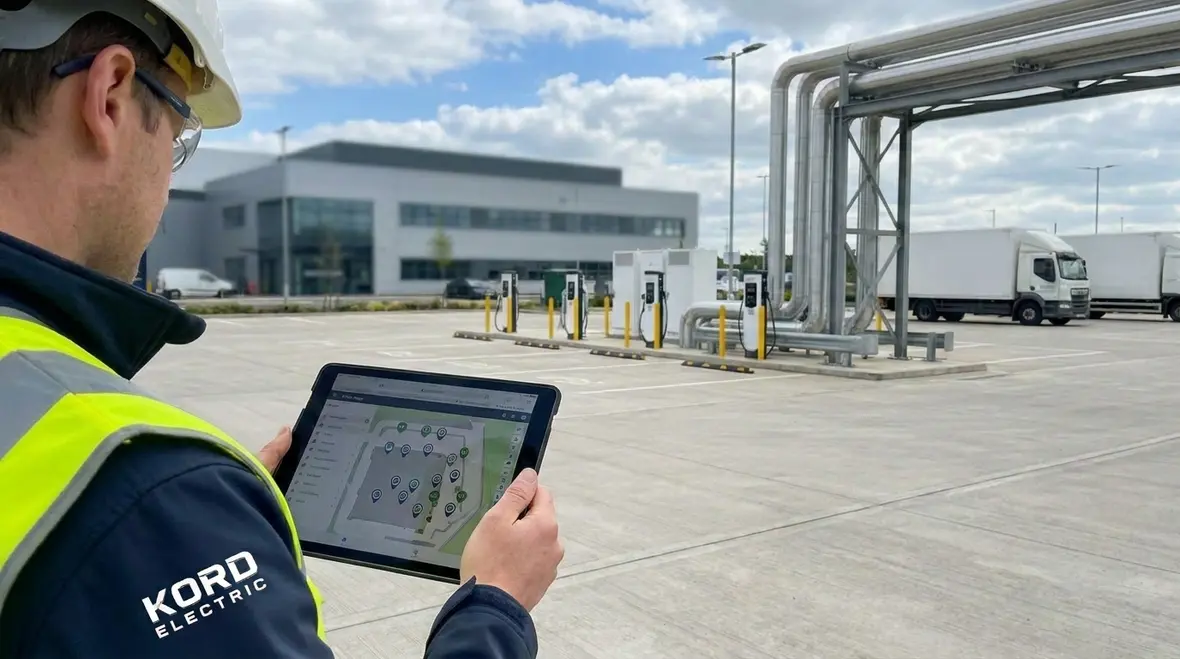
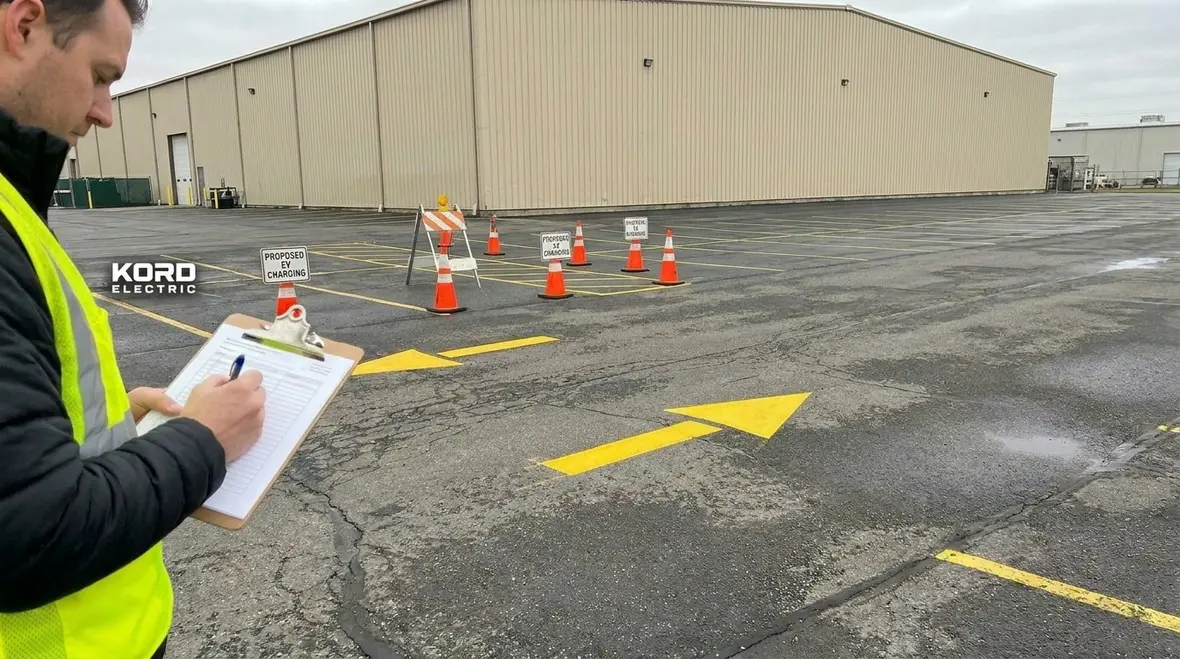
First, a manager should walk the property and map the real charging experience. We recommend focusing on parking layout, traffic flow, and how vehicles enter and exit the area. Then we look at who will use the chargers, how often, and whether drivers need fast turnaround between shifts.
After that, you want to match charger placement to operations. For commercial and industrial facilities, the charging spot cannot be random. It must support employee flow, visitor parking, fleet staging, and safety lines. If your chargers block emergency access or create a bottleneck during shift change, your “future convenience” becomes today’s production problem. And nobody wants that.
At Kord Electric, our expert service staff will also review site power availability early. Why? Because the easiest time to plan upgrades is before conduit is buried, not after. We have seen too many projects where the plan assumed “we will figure it out later.” Later always shows up, usually with a bigger bill.
How we plan electrical capacity for fleets and tenants
Once you understand the site, we move into the electrical reality. Most managers hear words like load calculation and demand, and understandably their eyes glaze over. Still, this step is where most project surprises hide.
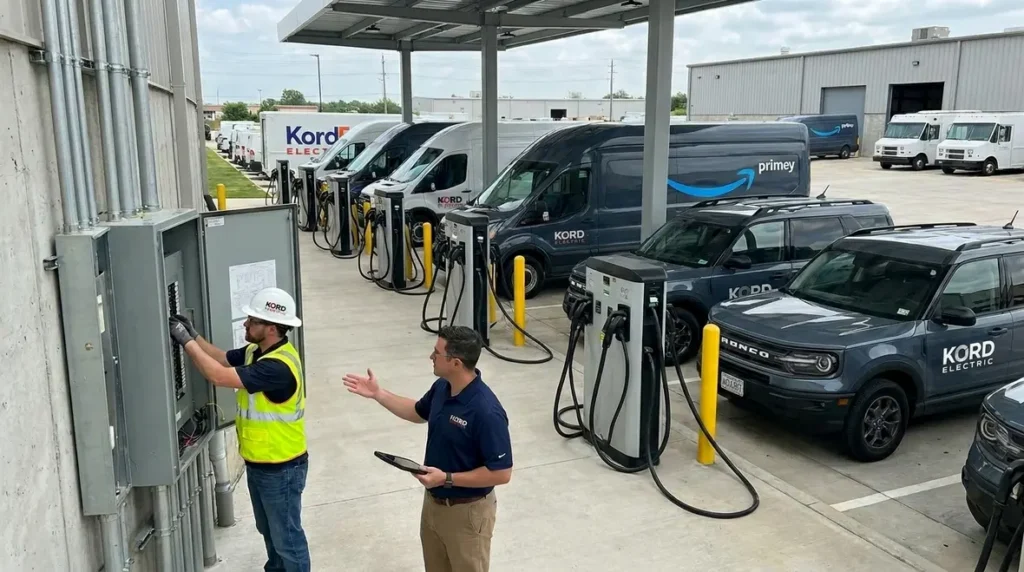
Our team evaluates service size, existing panel capacity, and the likely charging load at peak times. For example, a facility that charges multiple vehicles at once during an evening shift needs a different setup than a site with staggered plug in times. Then, we look at whether managed charging makes sense. In simple terms, managed charging helps spread power use so your facility does not exceed its available capacity.
Next, we coordinate with the utility when the site needs upgrades. Utilities often have timelines that do not care about your business deadlines, so we plan earlier rather than later. Meanwhile, our technicians document the design basis and keep the plan clear for stakeholders. That way, others can review the path without guesswork.
And if you are thinking, “We can just add a few breakers and call it a day,” we gently remind you that electrical systems do not run on wishful thinking. They run on proper design.
Permits, code, and project steps that keep momentum
After electrical planning, the next manager question is usually about permits and timelines. We handle these projects with a clear order of operations so the job does not stall in limbo.
First, we confirm requirements based on the building type and local rules. Then we produce a detailed installation plan that supports inspection readiness. Following that, we schedule work in a way that limits disruption to daily operations. In many commercial and industrial settings, that means coordinating with facility managers so we can work around business hours, deliveries, and safety procedures.
Because inspections matter, we also prepare documentation in advance. Our technicians follow code requirements from the first pull to the final test. In addition, we explain the process to your internal team as we go, so nobody feels like they are learning a new language at the last minute.
To keep things calm, we share a practical progress view: what is completed, what is in progress, and what is next. That simple habit cuts confusion more than any pep talk.
Site layout, safety, and the “don’t trip, don’t panic” checklist
Now we get specific about the physical install. A well planned layout does more than look neat. It protects people, vehicles, and property.
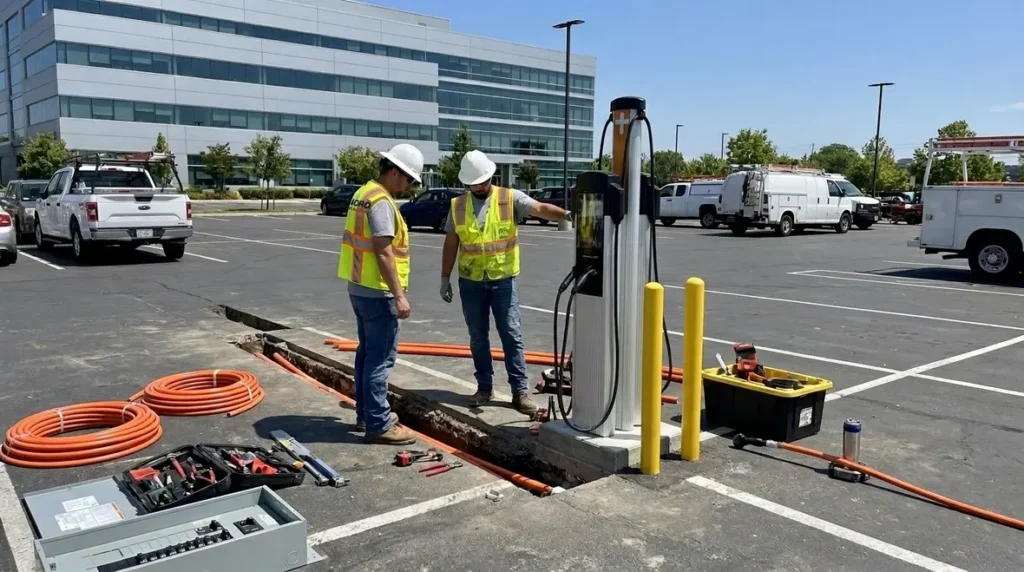
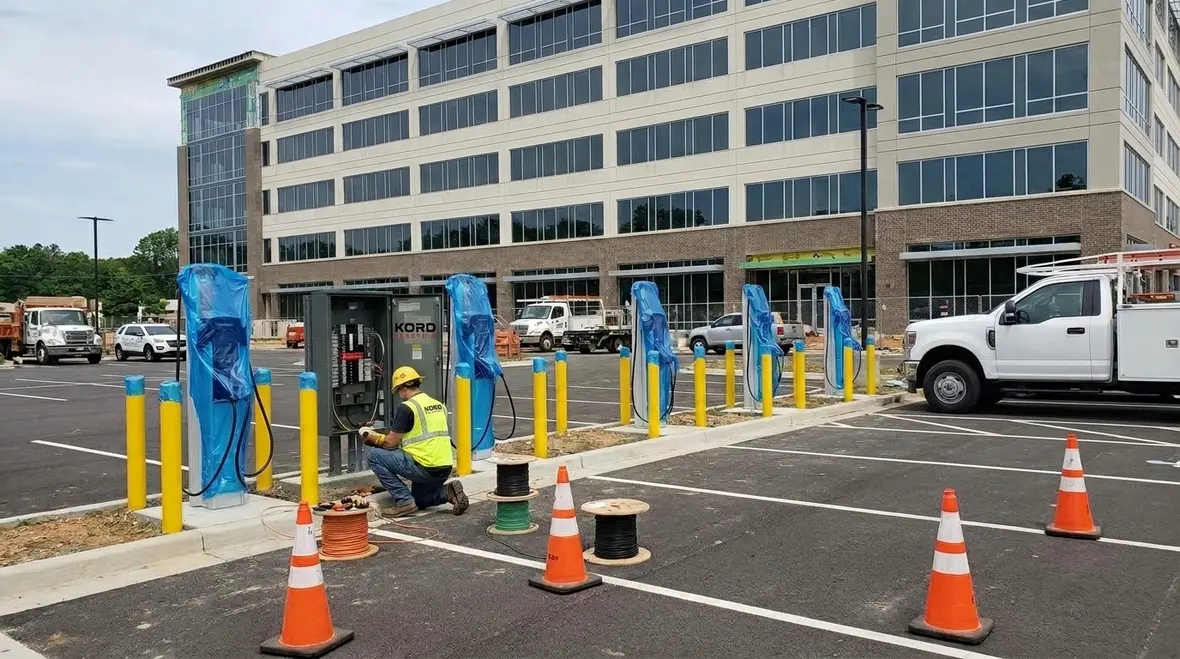
We evaluate cable routing, bollard placement where needed, and traffic lines to prevent vehicles from turning too sharply into charger zones. We also look at weather exposure, drainage, and access for maintenance. If a charger sits in a spot that collects snow, water, or debris, you will see downtime. Therefore, we design for the actual conditions your facility faces.
Next, we focus on safe operation. That includes proper spacing, clear labeling, and reliable mounting that holds up over time. Then we consider user behavior. In real life, drivers do not always park perfectly, and tenants do not always read the sign that says “please align.” So we plan with that in mind.
Finally, we coordinate with facility staff on turn on procedures. Our technicians walk through the commissioning steps and confirm the system runs correctly before we hand it over. We may not be able to stop every human from backing into a post, but we can make the system resilient.
Billing, management, and reporting for commercial operations
Once the hardware and electrical system work, managers usually ask about operations. How do we manage access, track usage, and handle billing if needed?
For commercial EV charging infrastructure deployments, reporting matters because it supports budgeting and future scaling. We help teams think through whether the chargers serve employees, a fleet, or both. Then we align the charging approach with how the site operates. For example, a fleet route may need predictable charging windows, while a building with multiple tenants may need different access rules.
In addition, managed charging features can help optimize costs and prevent demand peaks. When a site manages power across multiple chargers, it often gains more usable capacity without unnecessary upgrades. That is especially useful for major property buildings that already have crowded electrical schedules.
After setup, our expert service staff provides clear guidance on ongoing use. We explain what the system shows, how to review usage, and what to monitor for smooth performance. That way, others do not have to guess. They can make decisions with facts, not vibes.
Technicians on site: what expert service should look like
Some managers think installation is only about wiring. Yet in practice, a quality project depends on technicians who handle the details and communicate clearly. At Kord Electric, our technicians work through a structured process, and they also explain it in plain language.
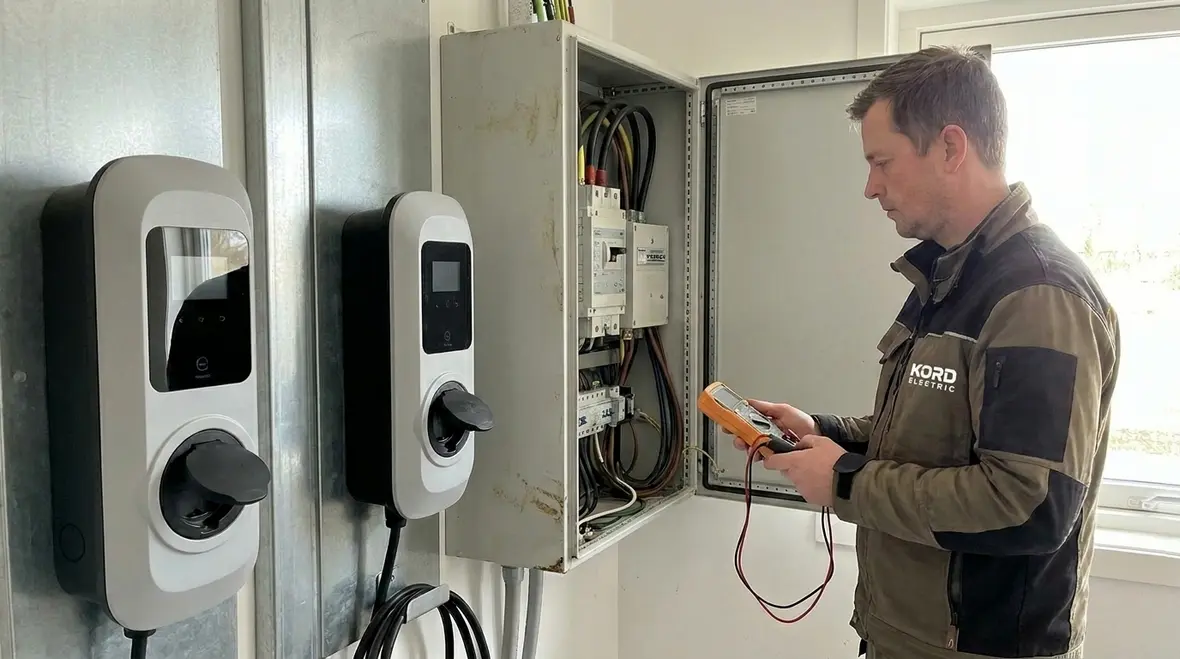
First, we confirm installation paths and equipment mounting details before we start. Then we coordinate conduit, cable runs, and labeling so the system is serviceable later. After the physical work is done, we test and commission the system. We verify safety functions, correct communication, and stable charging behavior under real conditions.
Next, we train the right people on your side. That might be a facilities lead, a property manager, or an electrical contact. We explain how to operate the system, how to report issues, and how to understand basic status indicators. Meanwhile, we keep documentation organized for handoff.
And here is the part that many contractors skip: we treat service as part of the job. Because charging systems live on your property, not ours, your long term peace of mind matters. We build projects for real operation, not just a successful inspection.
FAQ
Conclusion: let us plan the right system for your facility
If you are planning for employees, fleets, or major property buildings, start with a design that fits your site power, operations, and long term goals. Kord Electric builds and installs charging systems with managers in mind, and our technicians explain each step so your team stays confident from planning to commissioning. If you want commercial and industrial charging that runs reliably and scales over time, contact us now. We will review your property, outline the next steps, and keep the project moving with calm, steady execution.
For facilities building out commercial EV charging infrastructure in phases, you can also learn how Kord Electric approaches EV charging infrastructure scalability for commercial sites, so your initial installation and future expansions fit together without electrical surprises.
If you are ready to turn your plan into a live project, explore our dedicated EV charger installation services for commercial and industrial facilities. Our team handles design, permitting, installation, and long term performance so your charging system aligns with the rest of your electrical infrastructure.