
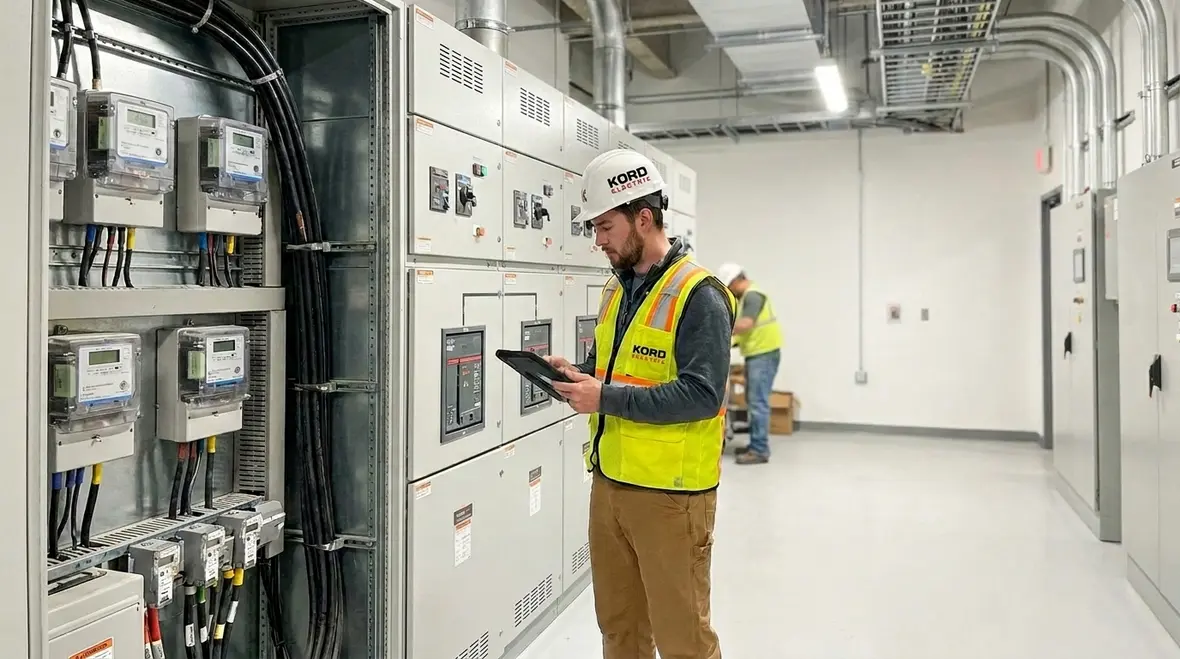
Business Continuity Electrical Services for Resilience
Kord Electric helps commercial and industrial facilities stay powered through outages with business continuity electrical services that plan for what can go wrong and prepare for it. When electrical systems hold steady, operations keep moving, safety stays intact, and teams do not have to improvise like it is a weekend survival show. And yes, we have seen enough emergency lighting “experiments” to know improvisation is not a strategy.
Our service teams approach resilience with a calm focus on design, protection, testing, and response. Meanwhile, facility leaders get clear guidance they can act on, not a mystery novel written in jargon. In this article, we explain why continuity depends on electrical resilience, how we support it, and what others in the building industry often miss until the lights go out.
Why electrical resilience determines continuity in real life
In commercial and industrial spaces, power does not only run lights. It runs controls, pumps, lifts, refrigeration, ventilation, elevators, data racks, access systems, and the quiet processes that keep production and service contracts alive. Therefore, when electrical resilience fails, continuity fails. Power interruptions, voltage dips, and unstable supply can trigger shutdowns, nuisance trips, or worse, damage.
We see this pattern repeatedly: a facility can “survive” a short outage, but it cannot recover quickly from repeated disturbances. A system that lacks resilience often recovers slowly because protection devices do not coordinate, standby equipment starts late, or monitoring lacks early warning. Then operations act like they are chasing smoke with a flashlight.
Others may treat resilience as a patchwork of spare parts. We treat it as a system behavior problem. In other words, the electrical system must keep doing the right thing under stress, not just look good during a one time test.
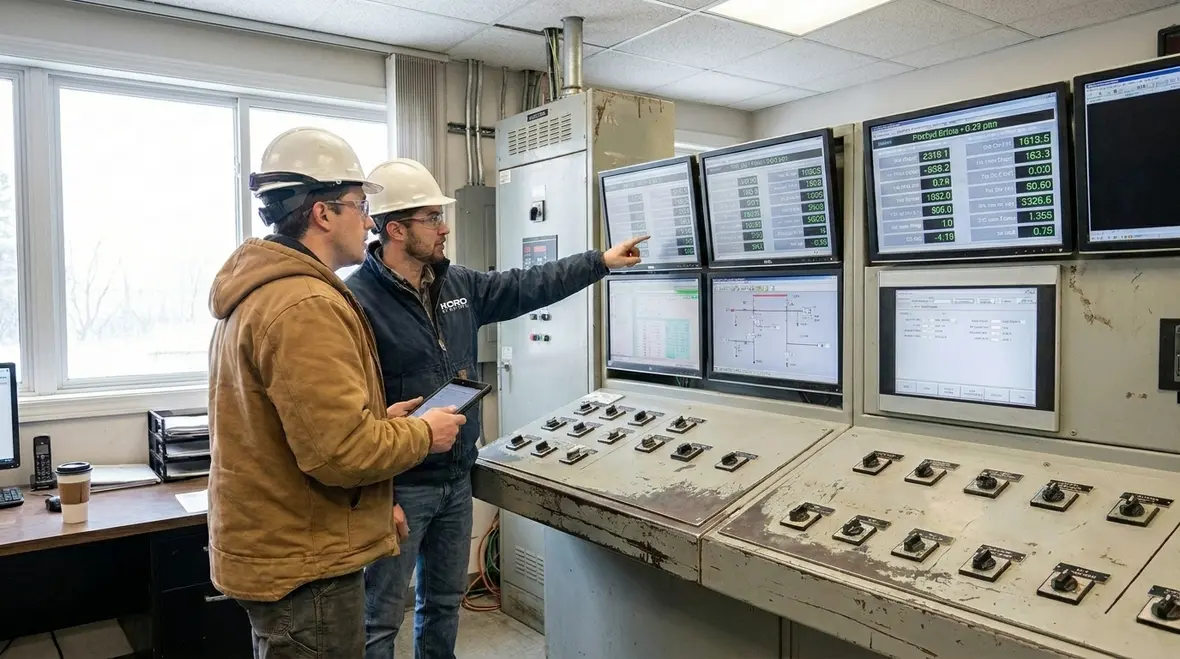
Electrical risk is not random, and we prove it with assessment
Electrical problems usually build over time. Heat, loose connections, aging switchgear, water intrusion, worn batteries, dust in ventilation, and poor labeling all degrade performance. However, the failure does not show itself until the demand rises or power quality drops. So, our approach begins with disciplined assessment across the power chain, from incoming service to distribution panels and critical loads.
Our technicians and expert service staff walk the site, review historical alarms, and examine how the facility actually operates. Then we map critical loads, identify what must ride through disturbances, and determine which parts of the electrical system need stronger protection or faster restoration.
To keep it practical, we translate findings into decisions facility teams can make. For example, we help others understand the difference between “backup power exists” and “backup power is ready to carry the loads in the time required.” Yes, a generator sitting in the dark does not help much, unless someone turns the light on and checks the reality behind the nameplate.
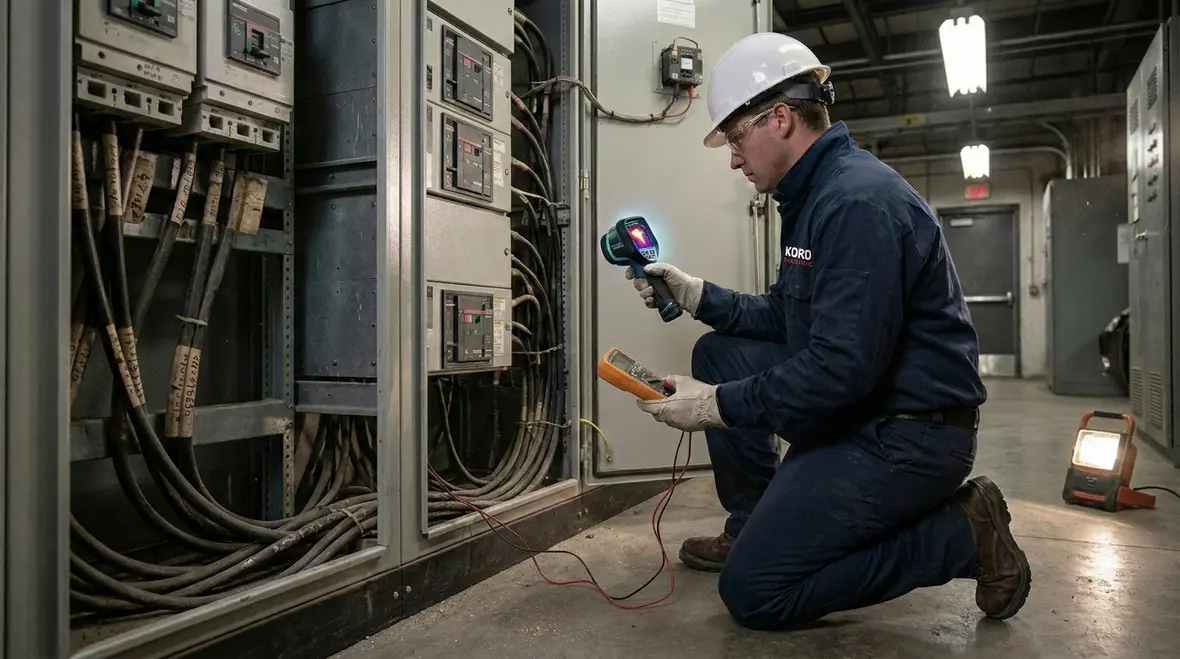
If your facility is formalizing a structured maintenance and assessment strategy, it also helps to connect those findings to an ongoing program. Resources like Kord Electric’s commercial and industrial electrical maintenance plans and dedicated electrical preventive maintenance services give continuity plans a practical backbone across the entire power chain.
Protection systems coordinate or they create bigger problems
Resilience depends on how the electrical system responds to faults. When a short circuit happens, protective devices should isolate the problem fast and limit the impact. If coordination fails, one trip can take out far more than expected. And if devices drift out of settings over time, the facility can experience repeated outages during normal conditions like motor starts or load changes.
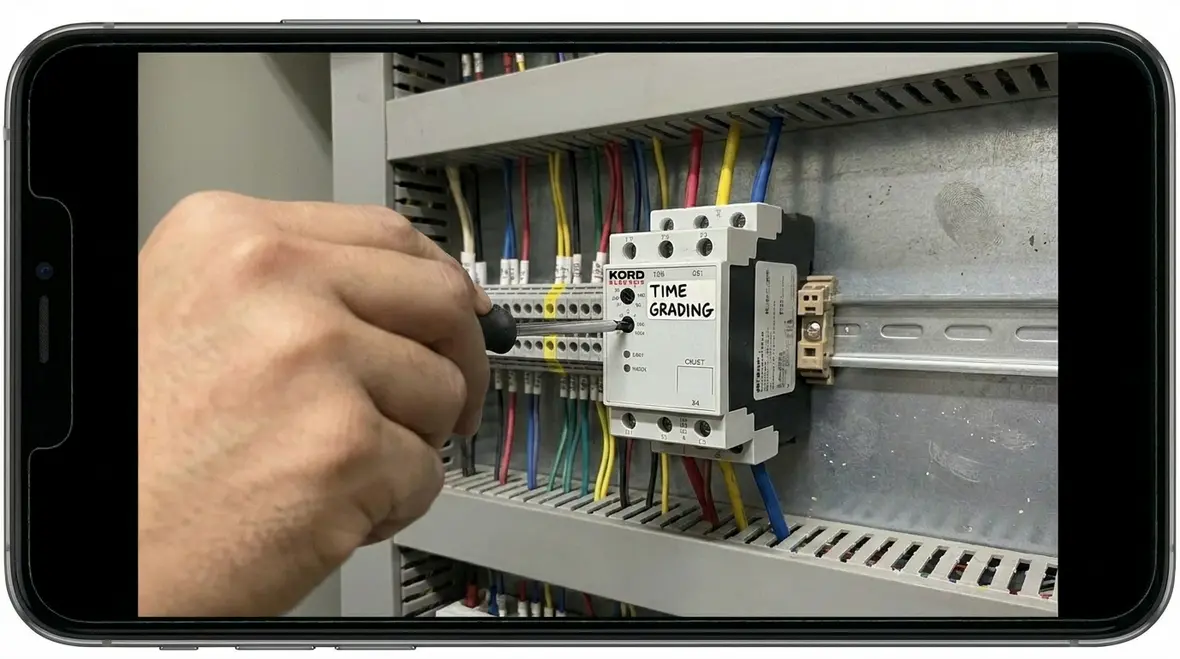
Therefore, we focus on protective coordination and settings discipline. Our technicians check switchgear logic, breaker settings, relay behavior, and time grading across levels of distribution. Then we verify that selective tripping works the way it was intended, so the smallest section of the system fails, not the whole building.
We also address power quality risks like harmonics and voltage sags. These issues can be subtle. A facility might keep running, but equipment can degrade, controls can reset, and electronics can lose communication. Consequently, “continuity” becomes unreliable even when the lights never fully go out.
For many property teams, this is also where broader system design and distribution decisions intersect with resilience. If your site operates mission critical spaces like server rooms or data processing areas, resources such as Kord Electric’s guidance on data center electrical distribution design for reliability show how selective coordination and power quality strategies scale up in complex environments.
Backup power must start, transfer, and sustain with confidence
Many businesses install backup systems and call the job done. Yet the true test happens under stress: transfer speed, startup sequence, voltage stability, load management, and fuel readiness. In commercial and industrial settings, these details decide whether operations keep moving or pause long enough to trigger delays, product loss, or compliance problems.
Our service teams evaluate transfer equipment and emergency power behavior in the conditions that matter. Then we align critical load priorities with how the facility actually runs. For instance, we support others with load shedding logic so non critical loads step away and critical systems stay online.
To maintain readiness, we also support testing practices that match the facility’s risk profile. We do not just “run the gear.” We verify that it performs as designed, documents results, and highlights changes that could cause future failures. And if you think testing is boring, well, so is fire. The difference is that fire usually does not schedule a visit.
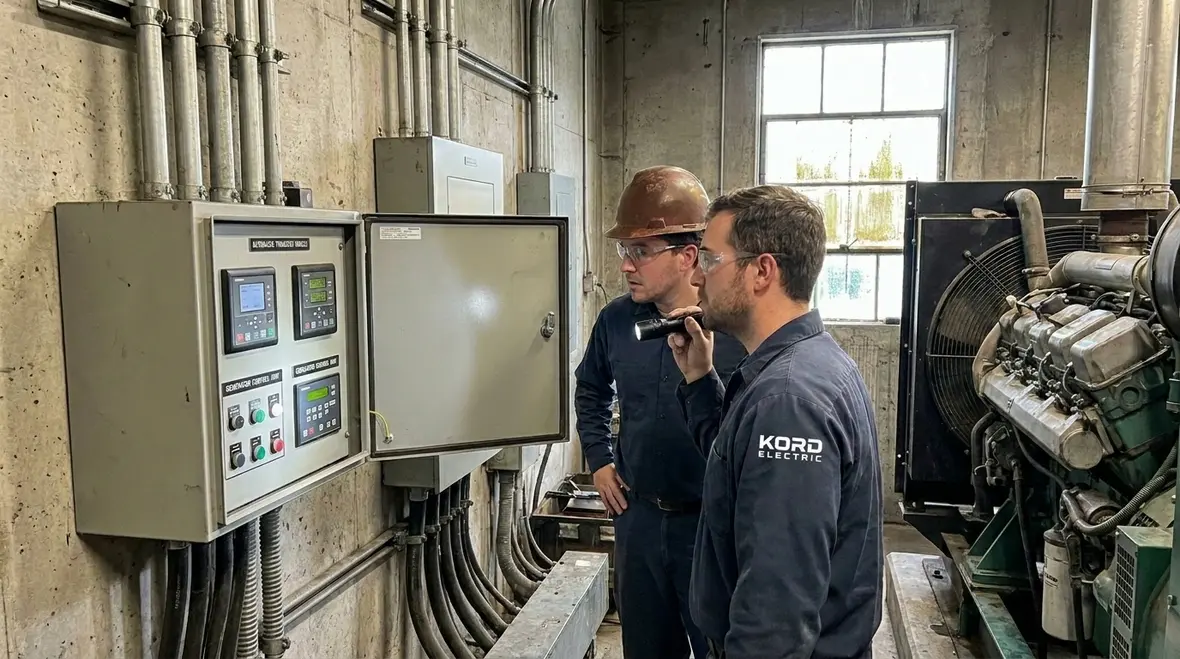
When backup systems serve high demand areas such as EV charging infrastructure, data rooms, or commercial kitchens, integration with other specialized services matters. For instance, facilities that rely on vehicle fleets may also explore Kord Electric’s commercial and industrial EV charger installation to keep both electrical distribution and charging capacity aligned with uptime goals.
How monitoring and maintenance protect uptime before failures happen
Electrical resilience improves when facilities see problems early. That means using monitoring tools, clear maintenance schedules, and honest performance metrics. Instead of waiting for a breaker to trip in the middle of production, we help others detect abnormal temperature, rising current, insulation decline, or control issues before they turn into outages.
Maintenance also has to match the environment. Dust, vibration, humidity, and ongoing mechanical work all affect electrical equipment. So, we guide commercial and industrial clients on maintenance that fits their schedules and risk level. As a result, teams avoid random fixes and instead build a routine that reduces downtime.
Our expert service staff also helps with documentation and change control. When someone modifies a circuit, upgrades equipment, or rebalances loads, continuity risk can change too. Therefore, we encourage disciplined records so the next service visit improves reliability rather than repeating the same guesswork.
For facilities that want to turn this discipline into a predictable program instead of a one time project, Kord Electric’s dedicated electrical preventive maintenance services and guidance on hidden electrical risks in commercial buildings show how monitoring, thermal checks, and structured inspections work together to protect uptime.
Resilience planning for major property buildings and fast recovery
Large commercial sites and major property buildings need continuity plans that work at the building level, not only at a panel level. That means coordinating building operations with electrical behavior. We support others by focusing on how the facility handles disturbances, transfers, and recovery sequences. In other words, we plan for the moments after something goes wrong, when confusion can multiply quickly.
To show the planning logic, we sometimes organize priorities in a structured way. Here is how we think about it, in two columns, so the discussion stays clear during facility meetings:
Continuity goal What we verify Maintain safe critical operations Protection behavior, critical load mapping, stability under disturbance Limit outage size Selective coordination, correct settings, fault isolation Restore quickly Transfer performance, startup sequence, recovery runbooks | Continuity goal What we verify Prevent hidden degradation Maintenance plans, thermal checks, testing intervals Protect sensitive equipment Power quality controls, monitoring, voltage stability checks Support compliance needs Documentation, testing records, clear change tracking |
As the facility gets stronger in these areas, disruptions stop feeling like surprises. Instead, they become controlled events with predictable outcomes. Over time, this turns your electrical design, testing routines, and business continuity electrical services into part of a broader facility resilience strategy instead of a series of disconnected projects.
For multi building sites, campuses, or properties that support data driven operations, it also helps to align this planning with guidance like Kord Electric’s data center electrical requirements for uptime, especially when critical loads share infrastructure with other building systems.
FAQ
Conclusion: plan resilience now, keep operations running later
If you want business continuity that does not crumble at the first disturbance, start with electrical resilience. At Kord Electric, our technicians and expert service staff assess your power system, verify protective coordination, ensure backup transfer performance, and support maintenance and monitoring that catch issues early. Then, your team gains clarity and confidence, not guesswork. Contact us to review your current setup and build a resilience plan for your commercial or industrial facility. Let’s keep the lights on and the downtime off your schedule.
To connect your resilience strategy with ongoing support, explore Kord Electric’s specialized services for large properties, including structured electrical preventive maintenance, emergency electrical services, and project based solutions such as lighting installation services. Each of these offerings reinforces the same goal: keeping critical systems online so your operations can move forward without wondering what is happening behind the walls.


