Troubleshooting Commercial Circuit Breakers Causes and Fixes
At Kord Electric, we run into a familiar scene in commercial buildings: the lights flicker, the air handlers pause, and then someone notices the tripped breaker. In many cases, troubleshooting commercial circuit breakers becomes a race against downtime. Our technicians handle that work with calm urgency, because the real goal is not just to reset the breaker, but to find why it tripped in the first place. So, when a breaker keeps tripping in a store, office tower, warehouse, or major property, we follow the same disciplined approach. First, we identify what happened right before the trip. Then we test the likely electrical causes. Finally, we confirm the system is stable again, so the problem does not return next week like an uninvited guest from a sitcom.
How a breaker trip actually happens in commercial systems
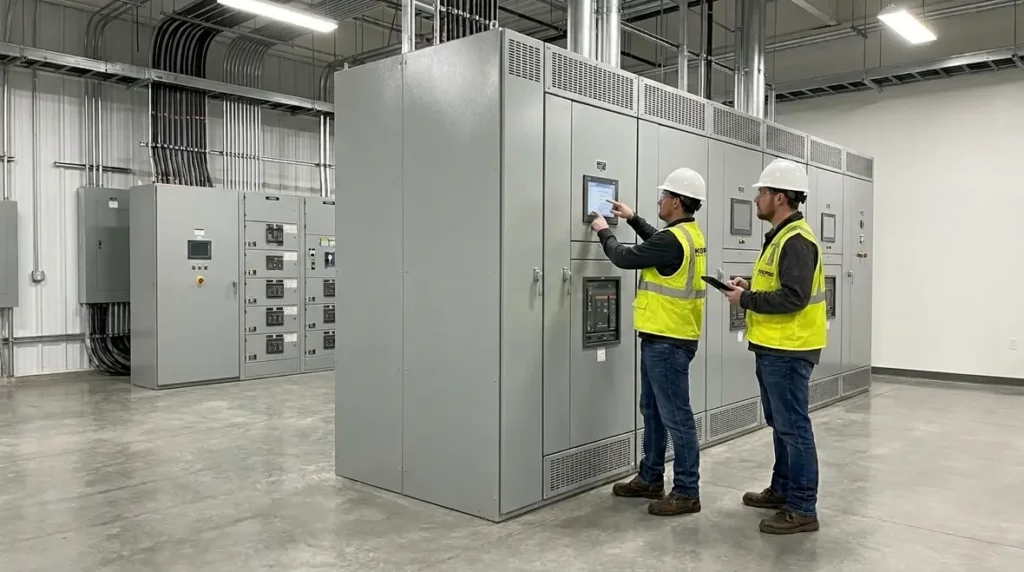
Commercial and industrial facilities use breakers to protect conductors, motors, and connected loads. When current or heat runs beyond safe limits, the breaker opens and stops the fault. In other words, the breaker is not “acting up.” It is doing its job. However, the same trip behavior can come from different root causes. For example, an overload might trigger thermal protection, while a short circuit or ground fault can trigger magnetic or instantaneous protection.
Our expert service staff explain it this way to building teams: the breaker is a sensor with a personality. It does not know your company timeline, your lunch schedule, or your tenant’s needs. It simply reacts to what the electrical system tells it.
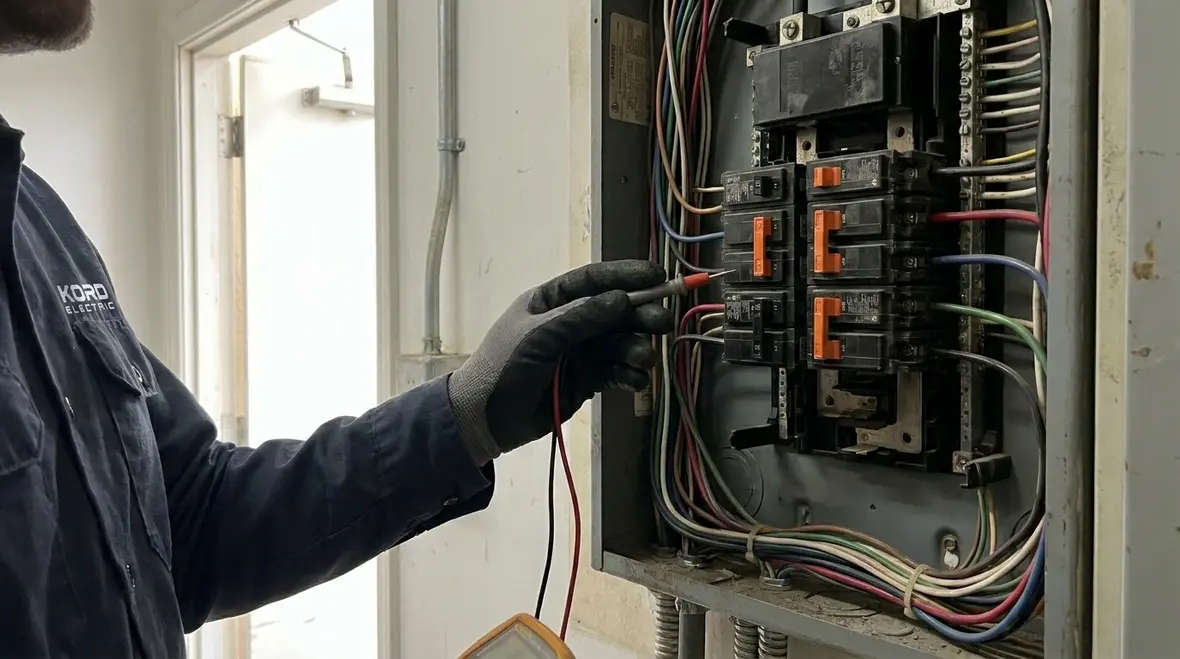
Therefore, when breakers trip, we do not jump straight to the reset button. Instead, we treat each incident like a clue. We ask what equipment was running, what changed recently, and whether the trip happens at a consistent time. That approach saves time and money, and it prevents repeat downtime. It also keeps facility managers from guessing, which is a popular hobby, but not a winning method.
Common overloads that push breakers over the edge
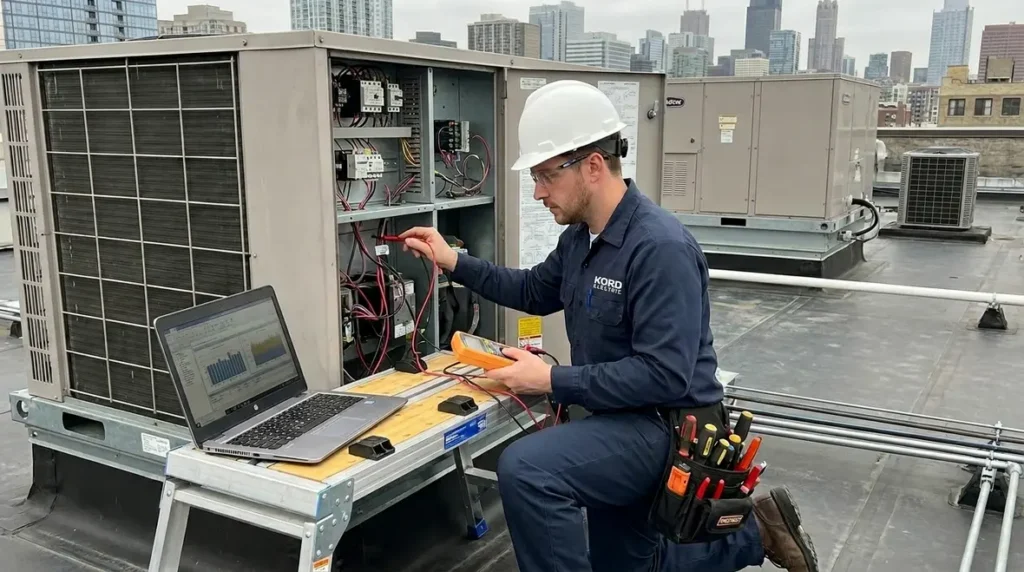
Overloads remain one of the most frequent reasons for tripping. In commercial settings, loads do not always stay steady. They spike when multiple processes run at once. For instance, rooftop units can draw higher current during start up. Similarly, a kitchen hood system, elevator, or restroom exhaust fan can surge when thermostats call for heat or when occupancy increases.
Also, an overload can show up when connected equipment becomes older or fails internally. A motor that has worn bearings may pull more current. A compressor with reduced efficiency can draw higher load. Even a clogged air filter can increase fan motor effort. Consequently, the breaker opens because the system exceeds safe current for too long.
Our technicians typically look for patterns. If the breaker trips during business hours, we focus on equipment schedules and demand cycles. If it trips during startup, we examine motor loads and inrush current. And if it happens after a renovation or tenant change, we check whether new equipment was added to an existing circuit without updated load calculations.
Bottom line, overloads rarely appear out of nowhere. They build over time or shift after operational changes. So we confirm the actual current draw, not just the story from the last maintenance log.
How overloads connect to broader facility risks
In many large facilities, overloads do not just trip a single breaker. They hint at deeper issues such as aging infrastructure, past modifications, or hidden electrical problems behind walls and ceilings. When repeated overloads appear on the same circuits, we often recommend a deeper look at panel loading, distribution paths, and long term reliability planning, so you are not relying on luck when production ramps up or tenants expand.
Short circuits and ground faults in real buildings
Short circuits and ground faults create faster, more serious trips. A short circuit happens when hot and neutral contact paths become too close, often due to damaged insulation, pinched wiring, or a failed component. A ground fault occurs when current leaks to ground, such as through moisture, insulation breakdown, or improper connections.
In commercial and industrial facilities, moisture plays a big role. Loading dock areas, bathrooms, and outdoor rated panels can face condensation. Also, cleaning crews using high pressure methods can accidentally expose wiring to moisture if a seal fails. Therefore, even if the breaker seems “random,” the cause might be environmental.
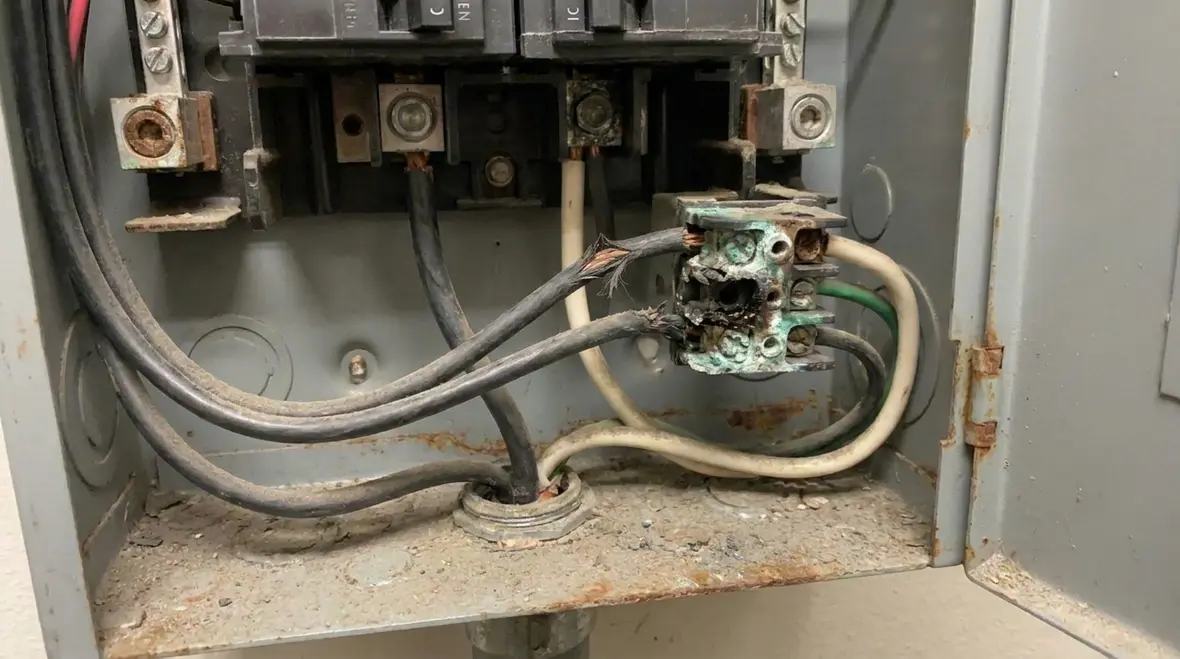
Our expert service staff also watch for signs of past trouble. For example, discoloration inside a panel, a burning odor after a trip, or melted wire insulation indicates internal problems. We also check terminations. Loose connections can generate heat, and heat can damage insulation. Once insulation weakens, ground faults become more likely.
In short circuit events, the breaker often trips quickly. Yet the time stamp can mislead people. That is why we inspect both the electrical data and the physical panel condition. We do not rely on “it tripped pretty fast” as a diagnosis, because that statement is about as scientific as guessing a movie plot from a single trailer.
Where short circuits and ground faults like to hide
Dock doors, mechanical rooms, rooftop equipment, and older tenant build outs are frequent locations for short circuits and ground faults. In these spaces, vibration, moisture, and repeated service access all increase the odds of damaged insulation or loose terminations. When troubleshooting commercial circuit breakers in these environments, we combine measurements with a detailed physical inspection, not just a quick look through the panel door.
Loose connections, corrosion, and heat damage
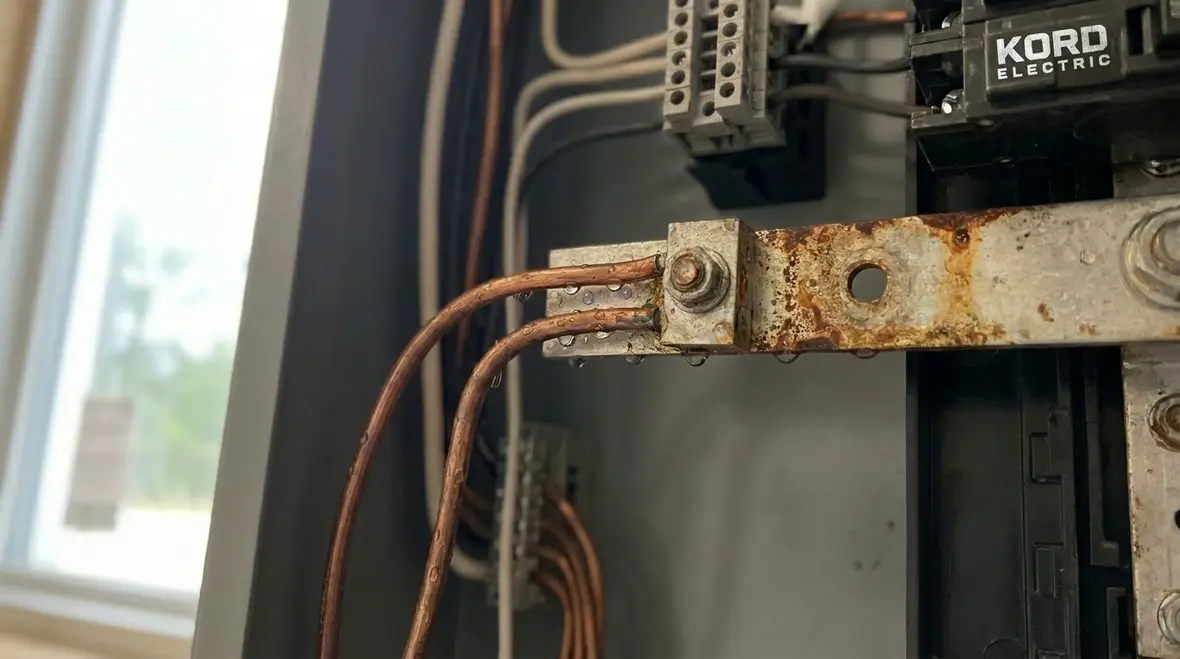
Loose connections and corrosion do not always trip a breaker immediately. Instead, they create resistive heating. Over time, that heat can degrade materials and tighten the feedback loop until the breaker finally trips. In many commercial buildings, this process plays out across seasons. Summer humidity, winter condensation, and building vibrations gradually work on terminals.
Additionally, building expansions can contribute. New conduits, moved equipment, or reworked wiring can disturb existing connections. If an installation uses the wrong torque or misses a tightening step, the connection can loosen under heat cycles.
When Kord Electric technicians inspect a tripping event, we check the entire circuit path. That includes panel lugs, breakers, splice points, and device terminations. Then we verify that insulation levels remain intact and that the enclosure environment stays controlled.
We also confirm that the breaker itself fits the design. Using mismatched breakers or incorrect ratings can create a situation where the breaker trips at the wrong threshold. Therefore, the fix involves both mechanical and electrical verification, not just a quick swap.
When loose connections point to broader maintenance needs
If we discover widespread loose connections, corrosion, or heat damage, it usually signals that the facility needs a more structured electrical preventive maintenance approach rather than one-off repairs. That is where partnering with a dedicated electrical preventive maintenance program helps facility teams move from reacting to trips toward preventing them with inspection schedules, torque checks, thermal imaging, and clear documentation.
Motor starting issues and why they trip breakers
Motors draw starting current that can be several times higher than normal running current. In commercial facilities, motors drive fans, pumps, compressors, conveyors, and many other critical systems. When motor starting devices, wiring, or overload settings are wrong, the breaker trips even when nothing is “shorted.”
For example, a motor might start too often due to control problems. Or the motor could experience voltage dips that increase current draw. If the circuit has long conductor runs with voltage drop, starting current rises. Moreover, a failing motor starter or contactor can cause uneven starting behavior. As a result, the breaker sees a pattern it cannot tolerate.
Our technicians also review motor protection settings where applicable. In some cases, the breaker protects the circuit, while a separate overload relay protects the motor. If those settings conflict with the actual motor load, trips follow. That is why we verify nameplate data, check actual current, and confirm that protection devices match the application.
We explain it plainly to clients: a motor does not need to be “broken” to trip a breaker. It just needs to be asked to start under conditions outside the plan. And when those starts pile up, the breaker acts like a bouncer at a club, only the bouncer is the thermal curve.
How motor issues connect to voltage and distribution problems
Frequent motor trips often overlap with voltage fluctuations, unbalanced phases, or undersized distribution equipment. When we see motors struggling, we do not stop at the local starter. We look upstream at panel capacity, feeder sizing, and power quality. That combination of troubleshooting commercial circuit breakers and checking distribution health helps prevent future trips and protects the motors your building depends on every day.
How we troubleshoot commercial circuit breakers without guessing
When a facility calls Kord Electric, we respond with a method built for commercial and industrial environments. First, we gather facts. We ask which breaker tripped, when it happened, and what equipment ran nearby. Then we check the panel schedule and circuit labeling so we connect the symptom to the correct load.
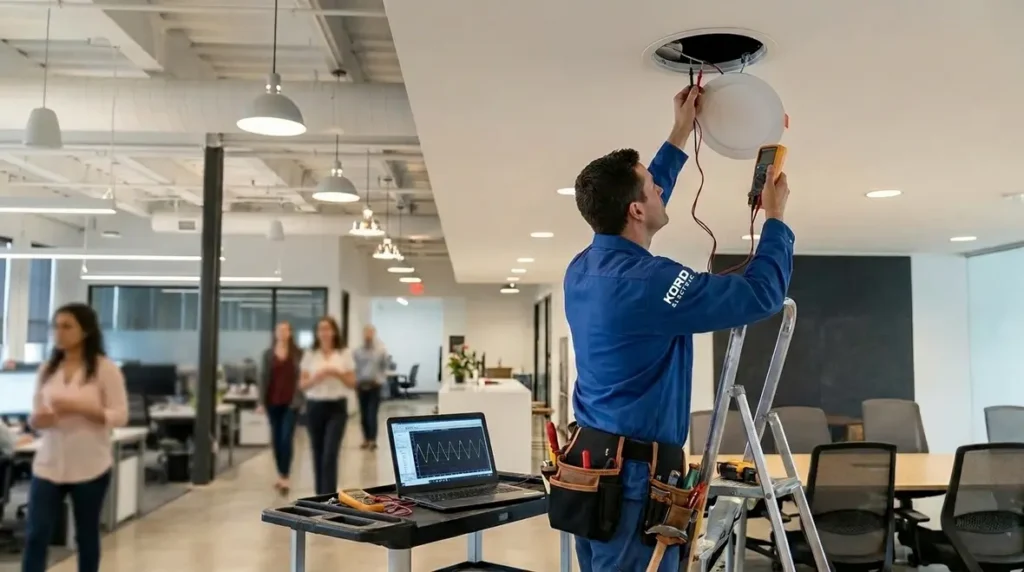
Next, our troubleshooting commercial circuit breakers process focuses on electrical checks. We inspect for visible damage, then verify breaker ratings and condition. We also look at load behavior, because an incident that repeats under specific operation usually points to a consistent electrical cause. After that, we test current draw under realistic conditions and compare results to expected values.
At the same time, we coordinate with facility teams. This keeps operations stable and reduces unnecessary shutdowns. Our expert service staff walk building managers through what we found in plain language and what it means for next steps. That communication matters, especially in major property buildings where multiple tenants depend on shared systems.
Finally, we confirm the fix through follow up checks. We do not just reset and leave. We verify stability so the breaker does not trip again after the next peak load. In many cases, that means correcting the cause, not just treating the symptom.
From single trip to long term strategy
Every nuisance trip is also an opportunity to improve your electrical system. Sometimes the answer is a targeted repair. Other times, it leads to a broader conversation about hidden electrical risks, panel upgrades, or full electrical preventive maintenance programs. Our goal is to translate one frustrating outage into a clear roadmap that reduces risk, extends equipment life, and keeps tenants and production lines running.
FAQ about breaker tripping in commercial buildings
When to call Kord Electric for commercial breaker issues
If a breaker trips once and then stays stable, people often relax. However, in major property buildings, “mostly stable” can still lead to damage. Therefore, we recommend calling Kord Electric when trips repeat, when they happen after renovations or equipment changes, or when you notice heat, odor, discoloration, or signs of moisture in the panel area. Our technicians will troubleshoot the circuit properly, verify protection settings, and restore safe operation. And yes, we will explain what we find without speaking in code. Your electrical system deserves better than guesswork, and so do your tenants.
In many facilities, breaker trips are closely tied to how the building is operated and maintained day to day. That is why we often connect troubleshooting work with broader services such as structured electrical preventive maintenance for panels and switchgear, or targeted upgrades in areas like commercial lighting and distribution where hidden overloads and aging components tend to collect. Coordinating these efforts turns today’s emergency call into tomorrow’s reliability plan.
Call Kord Electric today for commercial and industrial troubleshooting, inspections, and repairs. When a breaker trips, we help you protect critical loads, reduce downtime, and avoid repeat failures. Our technicians and expert service staff work with building teams to diagnose causes accurately and restore stable power. Don’t let a tripping circuit become a recurring episode. Let us handle the episode arc, so your facilities stay on schedule and your power stays dependable.
If your facility is already dealing with repeated trips, unexplained voltage swings, or older panels that have not seen a thorough inspection in years, this is an ideal time to pair troubleshooting with a dedicated electrical preventive maintenance program. By scheduling routine inspections, thermal scans, and documented testing on panels and switchgear, you dramatically reduce surprise outages and turn your electrical system from a constant source of questions into a quiet, predictable backbone for your operations.
For facilities planning upgrades, expansions, or new equipment that will add load to existing systems, Kord Electric also provides comprehensive electrical preventive maintenance and panel inspection services that align with NFPA and NEC guidance. Integrating these services with your next project ensures that new circuits, motors, and controls are supported by properly maintained breakers, distribution paths, and protective devices—not by guesswork and hope.