Proactive Commercial Electrical Maintenance Checklist
Managers want fewer surprises, smoother operations, and electrical systems that do not act like they are auditioning for a disaster movie. That is why we build our proactive commercial electrical maintenance checklist into a practical workflow. In the first 100 to 150 words of this guide, we lay it out: set clear priorities, confirm safe access, verify protective devices, inspect panels and distribution, test key circuits, review grounding and bonding, log results, and schedule follow ups based on risk. Then we keep going with the details, because a checklist that lives only on paper is like a smoke detector with the battery removed.
Note We serve commercial and industrial facilities and major property buildings only, so every step here fits the way larger sites operate, with real loads, real uptime goals, and real code expectations.
Proactive commercial electrical maintenance checklist that managers can actually use
Before we get into the nuts and bolts, here is the practical flow that turns a commercial electrical maintenance checklist into an actual maintenance rhythm instead of a once-a-year fire drill:
- Set clear priorities Decide what matters most: safety, uptime, compliance, and equipment longevity. Rank them so decisions stay consistent when tradeoffs appear.
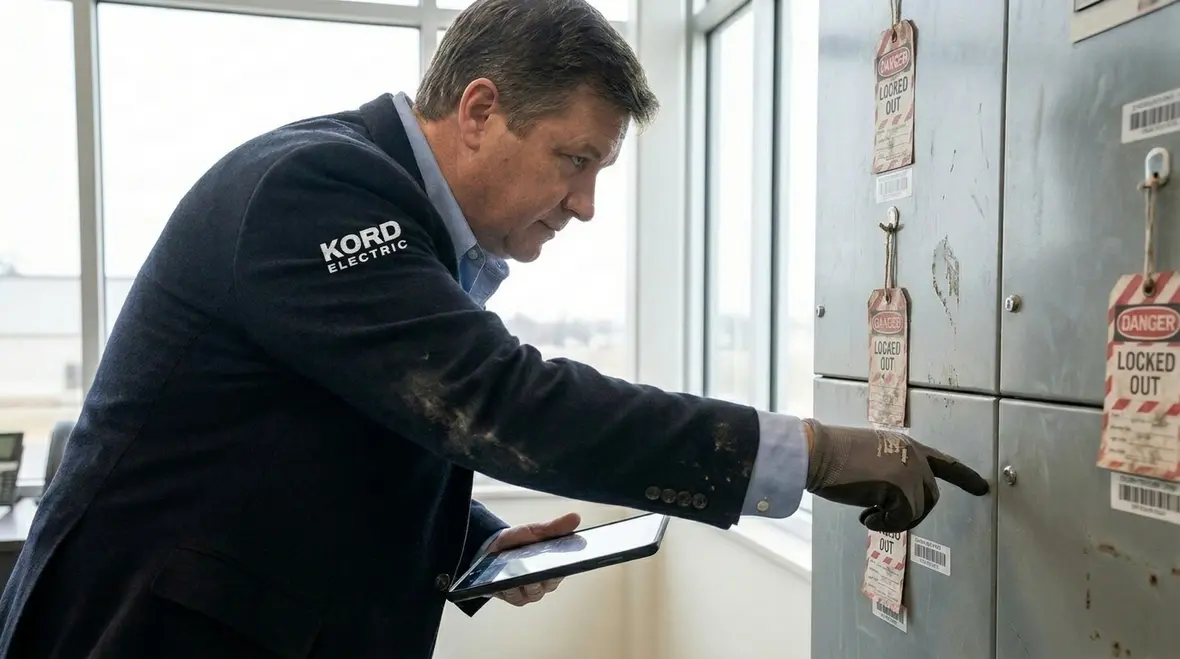
- Confirm safe access Make sure technicians can reach panels, switchgear, and equipment without obstacle courses of storage, temporary construction, or locked rooms with no escort.
- Verify protective devices Confirm breakers, fuses, and other protective equipment are appropriate for the loads and have not been casually swapped out over the years.
- Inspect panels and distribution Open up what actually carries the load: panels, feeders, terminations, bus connections, and key junctions.
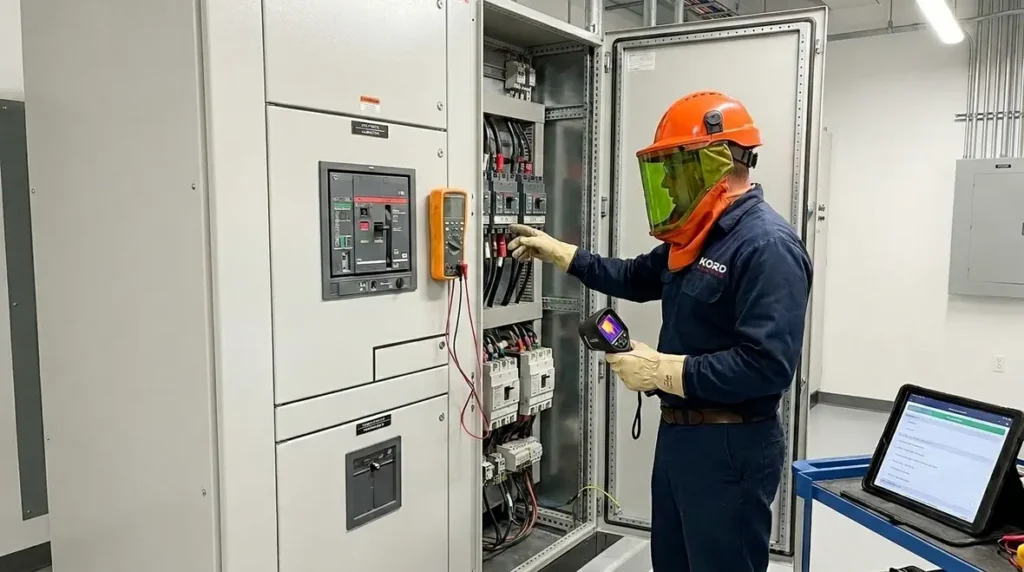
- Test key circuits Pair visual inspection with real measurements and, when appropriate, energized testing and thermal scanning.
- Review grounding and bonding Confirm the return paths that keep faults controlled and equipment stable.
- Log results in manager-friendly language Capture findings in terms of risk, impact, and recommended actions, not just technical notes.
- Schedule follow ups based on risk Use a risk-based schedule instead of a one-size-fits-all calendar so higher risk assets get more attention.
Each of these stages ties back to the same goal: give managers real visibility into their systems, and build a commercial electrical maintenance checklist that works in the real world, not just in documentation.
If you want a deeper dive into how structured plans support long-term reliability across large facilities, Kord Electric also shares additional context in their guide to commercial and industrial electrical maintenance plans.
What a manager should own before a technician ever touches a cabinet
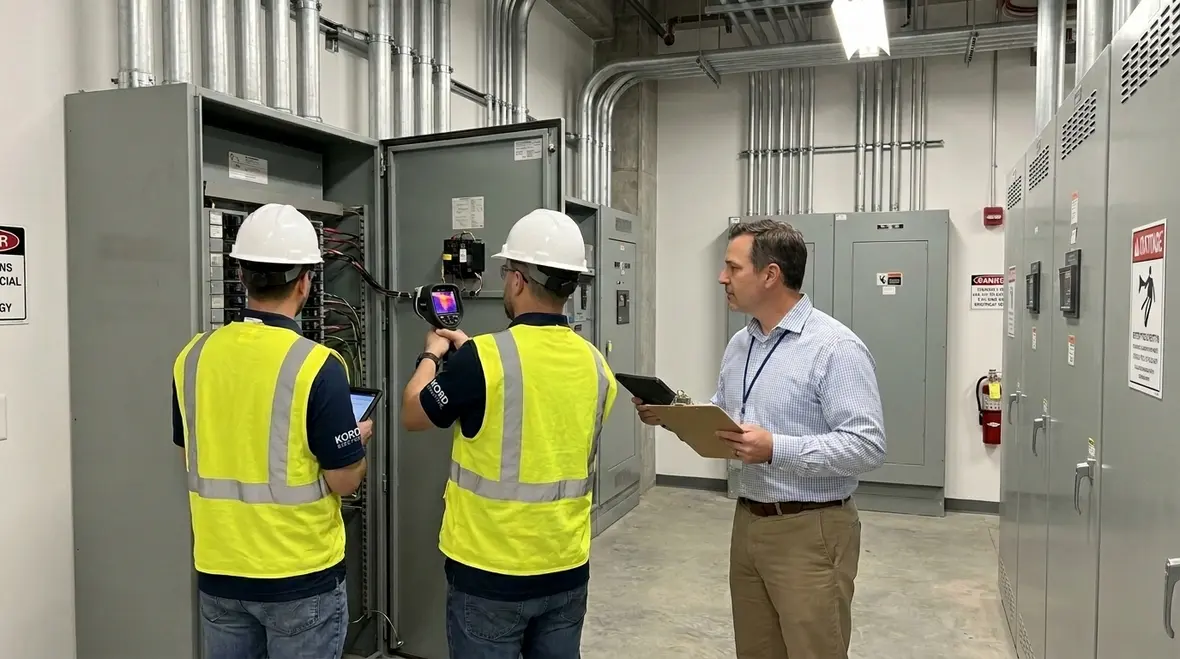
In our experience, the best maintenance outcomes start with manager decisions, not last minute heroics. First, we confirm scope and access. Then we make sure safety controls are in place before our expert service staff arrives. While some teams treat electrical work like plumbing, electricity does not care about confidence. It cares about procedure.
Here is what a manager should handle up front:
- Asset inventory and labeling We expect panel schedules, circuit IDs, and equipment tags that match reality. When labels drift, troubleshooting becomes guessing.
- Access windows We plan work during low load periods, or we coordinate temporary load handling when downtime is not an option.
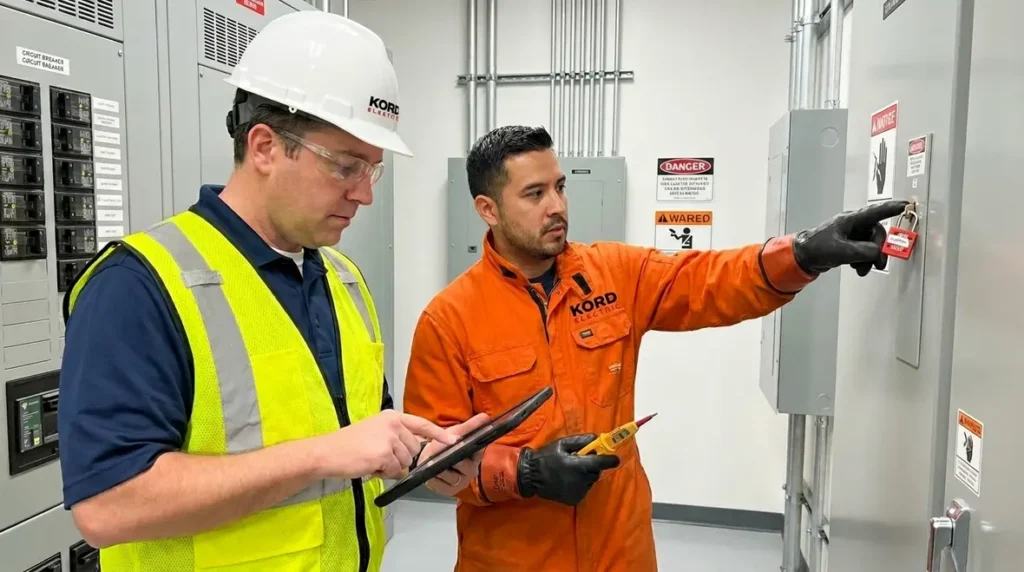
- Work permits and lockout standards We verify that the site process is clear and current. Our technicians follow your safety rules and also insist on good ones.
- Budget for fixes, not just inspections A checklist should lead to action. Otherwise, you get a binder full of “recommendations” and no results.
- Communication chain We tell managers who approves shut downs, who escorts access, and who receives issue reports.
As a bonus, we explain the “why” behind each step to your team. When people understand the purpose, they support the schedule instead of fighting it.

These early decisions also make it easier to align site processes with formal standards like NFPA 70B for panels and switchgear, so your commercial electrical maintenance checklist supports both daily operations and long-term compliance expectations.
How Kord Electric builds the maintenance rhythm for panels, feeders, and distribution
Once access and safety are set, our approach stays steady. We do not jump around like a pop quiz. Instead, we follow a sequence that reduces risk and improves data quality. That matters because managers need consistent reporting, not random observations.
Our technicians typically focus on the core areas that cause operational pain in major property buildings:
- Service entrance and main switchgear We check for signs of overheating, loose terminations, moisture intrusion, and abnormal wear.
- Distribution panels We review breaker condition, torque integrity where applicable, and panel cleanliness. Dust buildup and corrosion can turn a small issue into a big outage.
- Bus bars and connections We look for discoloration, insulation degradation, and evidence of arcing.
- Incoming feeders and terminations We verify tightness and confirm that routing, shielding, and protection remain correct.
- Grounding and bonding points We confirm continuity where needed, because a system without proper grounding acts like a phone with a bad Wi Fi connection. It may still “work,” but it is unstable.
Then we record what we find in a way that managers can use. As we do this, we also show your staff what changes to look for during routine operations. That keeps your team from missing warning signs between service visits.
For managers who want a side-by-side view of how panel and switchgear upkeep fits into broader standards, Kord Electric's article on NFPA 70B electrical panels and switchgear maintenance shows how disciplined inspections support safer, more predictable performance.
Testing strategies that reduce downtime and catch problems early
Inspections alone do not stop failures. Testing helps managers see what the system does under real conditions and under stress, not just what it looks like. Therefore we align tests with the site profile and the equipment type.
Common testing areas in our commercial electrical maintenance checklist workflow include:
- Insulation checks We evaluate insulation condition for selected circuits where applicable, so insulation breakdown does not become a surprise event.
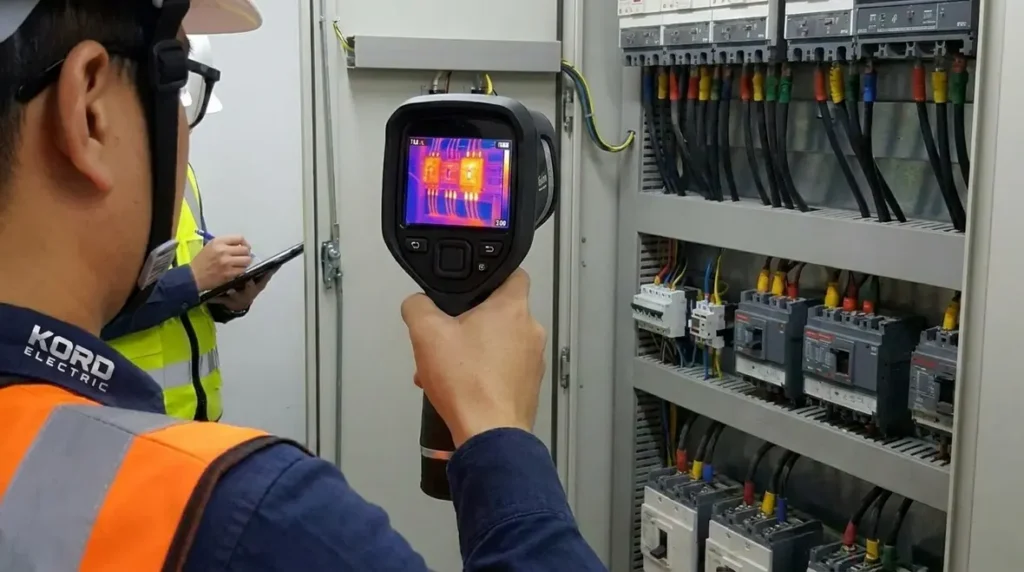
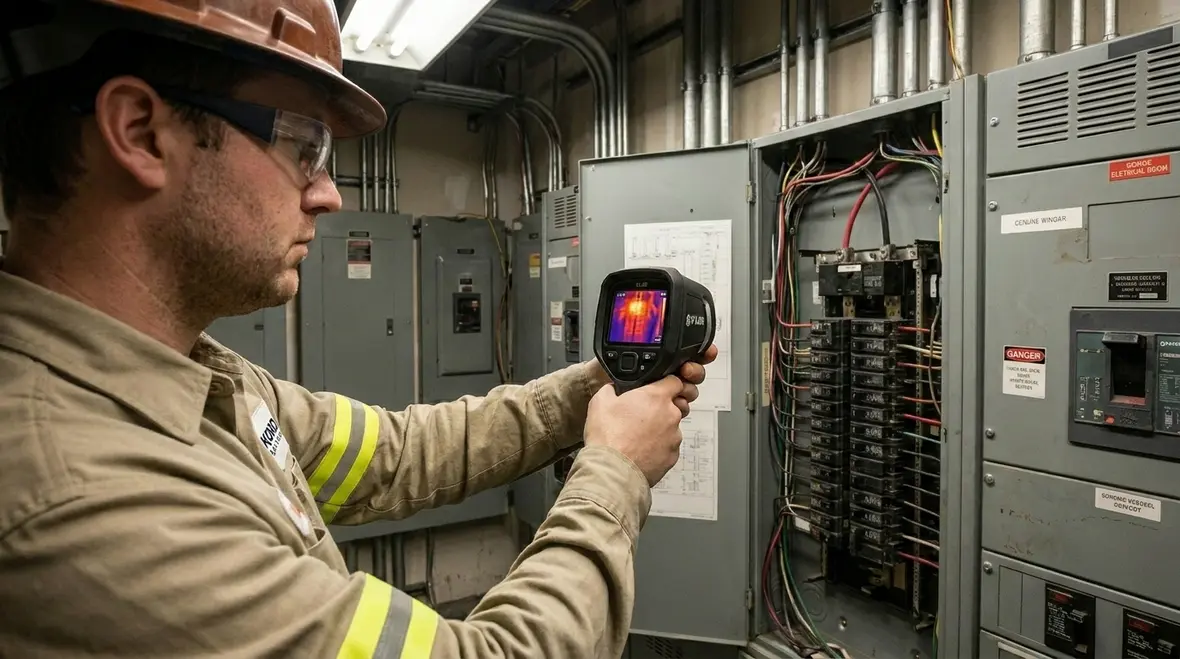
- Thermal scanning We spot hot spots that can indicate loose connections or overloading. If you have ever touched a light switch and felt warmth that was not normal, you already understand the idea.
- Load review and circuit balance We compare observed conditions to expected loads. Unbalanced loads can create heat and shorten equipment life.
- Protective device behavior We verify that breakers and protective elements perform as intended. In simple terms, protection must trip when it should, not after smoke shows up like a late party guest.
- Ground continuity verification We confirm pathways that protect people and equipment. Safe systems rely on consistent grounding.
After testing, we interpret results and we recommend actions in order of impact. We keep this in business language, not academic language. Managers do not need a thesis; they need a plan.
If tests uncover unstable voltage, recurring breaker trips, or unusual loading, Kord Electric also provides targeted support for voltage fluctuations in commercial and industrial facilities, helping protect sensitive equipment and stabilize operations after maintenance findings.
Risk based scheduling: a practical way to prioritize repairs
Managers often ask how we decide what to fix first. We base it on risk, impact, and likelihood of failure. In other words, we focus on what can cause downtime, safety issues, or equipment damage. Nobody wants a maintenance schedule that reads like a “to do later” list.
Here is how we prioritize at Kord Electric for commercial and industrial facilities:
- Safety and life safety impact If an issue can put people at risk, we treat it as urgent. That includes abnormal overheating near critical areas.
- Equipment criticality We weigh how essential the equipment is to daily operations, including elevators, HVAC controls, process equipment, and life support systems in applicable facilities.
- Failure likelihood We consider patterns, repeat findings, and visible degradation. If the same problem shows up twice, it is not “random.”
- Repair complexity and downtime needs We match the fix to the schedule. Sometimes the right move is to stage work so you avoid a long shutdown.
- Code and compliance considerations We keep alignment with standards that apply to commercial and industrial environments.
Then we build a timeline. If we find a small defect now, we do not just note it. We also show how it can grow when the site keeps operating.
And yes, our technicians do explain. We talk through what we saw, what it means, and what the next step should be. It is like getting the plot summary before the movie, so your team does not walk in blind.
For sites that want this risk-based mindset tied directly into ongoing service, Kord Electric's electrical preventive maintenance programs connect your commercial electrical maintenance checklist to scheduled inspections, repairs, and documentation.
Documentation that managers can use in audits and daily operations
Good work does not end at the panel door. It continues in the reports, the logs, and the clarity of next steps. Our goal is to help managers prove what happened and plan what comes next, without messy spreadsheets that look like they were assembled during a storm.
Our service documentation typically includes:
- System and equipment summary What we inspected, where we worked, and what conditions we observed.
- Test results and measurements We include values and notes so comparisons can be made over time.
- Findings with priority We categorize issues based on risk and operational impact.
- Recommended actions We specify what should be repaired, what can be monitored, and what needs follow up.
- Maintenance schedule guidance We suggest next inspection timing based on conditions and equipment behavior.
In many major property buildings, documentation supports internal audits and helps teams coordinate capital projects. Moreover, it helps facilities staff communicate across departments, because everyone understands the same facts.
When documentation highlights aging infrastructure, capacity constraints, or repeated issues, it also becomes a bridge to larger decisions like rewiring cost planning for commercial electrical systems, so capital investments align with what your maintenance data already shows.
FAQ for the proactive maintenance checklist in commercial buildings
How we turn maintenance into fewer emergencies, starting now
Managers do not need more paperwork. They need less downtime and safer systems. At Kord Electric, we bring a proactive commercial electrical maintenance checklist approach built for commercial and industrial facilities and major property buildings. Our technicians inspect, test, document, and explain findings so your team can plan repairs with confidence. If you want steadier operations and fewer “why did this fail” meetings, call us. We will review your current setup and recommend a practical schedule that fits your site and your uptime goals.
If you are ready to translate your checklist into a structured program, you can explore Kord Electric's dedicated electrical preventive maintenance services, built specifically for commercial and industrial environments that cannot afford surprises.
From there, you can connect this plan with other focused solutions across your portfolio, whether that means stabilizing voltage, upgrading lighting, or preparing for future rewiring and expansion as your facility grows.