Office Lighting Control Systems for Smart Buildings
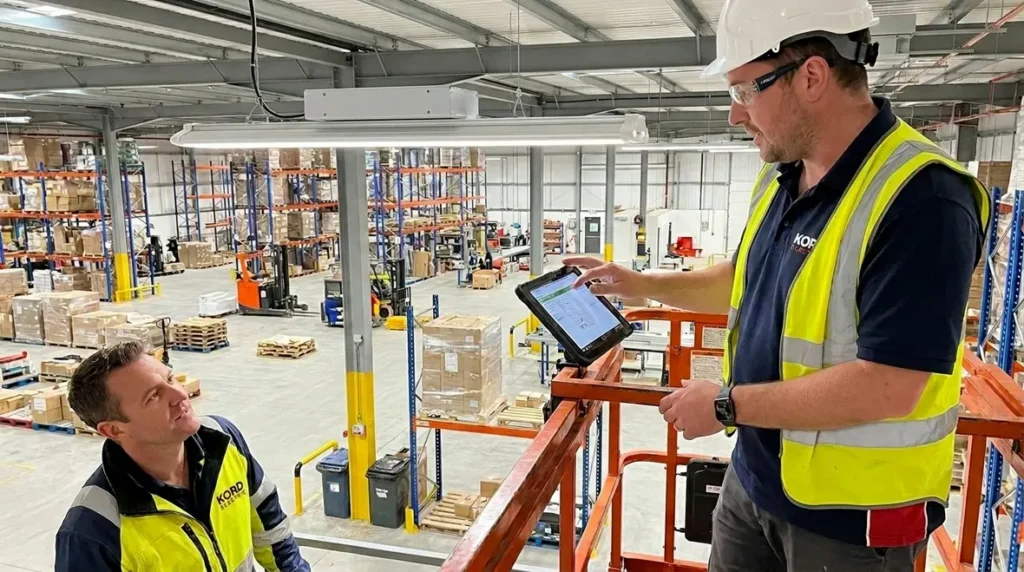
Modern office lighting should do more than turn on and off. At Kord Electric, we install office lighting control systems that help commercial and industrial facilities run smarter, safer, and more comfortable for people who spend their days inside them. Instead of relying on tired timers and guesswork, our teams bring sensing, scheduling, and smart dimming into the same system. And yes, the lights can behave like adults: they stay steady when they should, they adapt when conditions change, and they do not throw a tantrum when a cloud passes over the parking lot.
How intelligent lighting control systems reduce waste
When a building burns electricity just to keep the lights at one fixed level, it wastes money and energy. Intelligent control changes that. We start by treating lighting as a managed environment, not a static setting. Then we coordinate it with real conditions, like daylight, occupancy, and time of day. As a result, the system dims when spaces are empty and brightens when people actually show up.
In many commercial properties, the big problem is not that lights are “too bright.” The problem is that they stay bright when nobody needs them. Similarly, lights can be too dim during critical tasks, which forces people to compensate by opening shades or adding portable lamps. Therefore, modern systems aim for consistent comfort and reliable visibility. This approach also supports compliance goals because the building demonstrates stable control behavior rather than random manual overrides.
And for the record, we have met facilities where the lights were controlled by a switch that was basically a light themed coin toss. With office lighting control systems, that randomness ends. We replace it with repeatable logic that facility teams can understand and maintain.
What we design for offices, plants, and large buildings
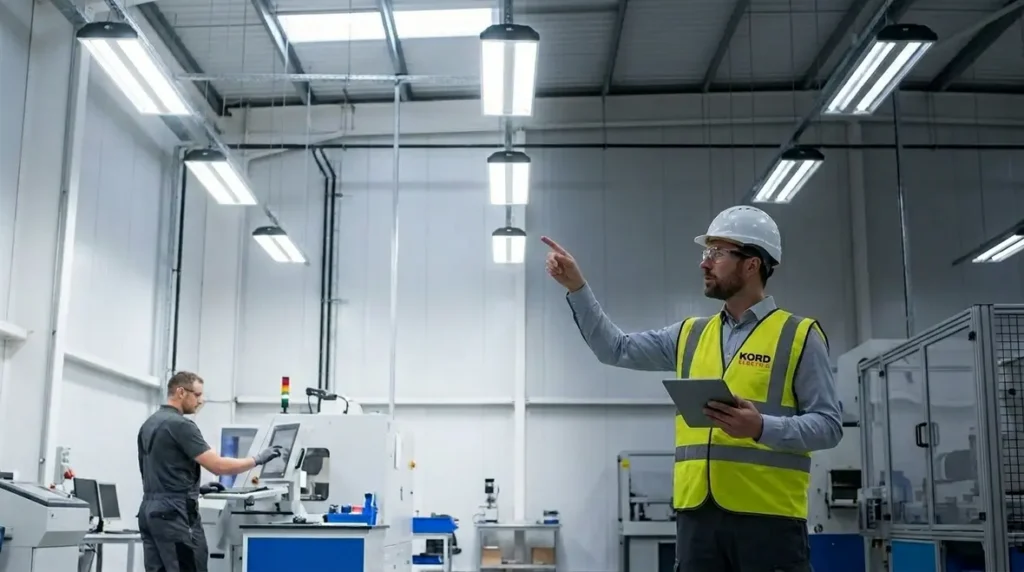
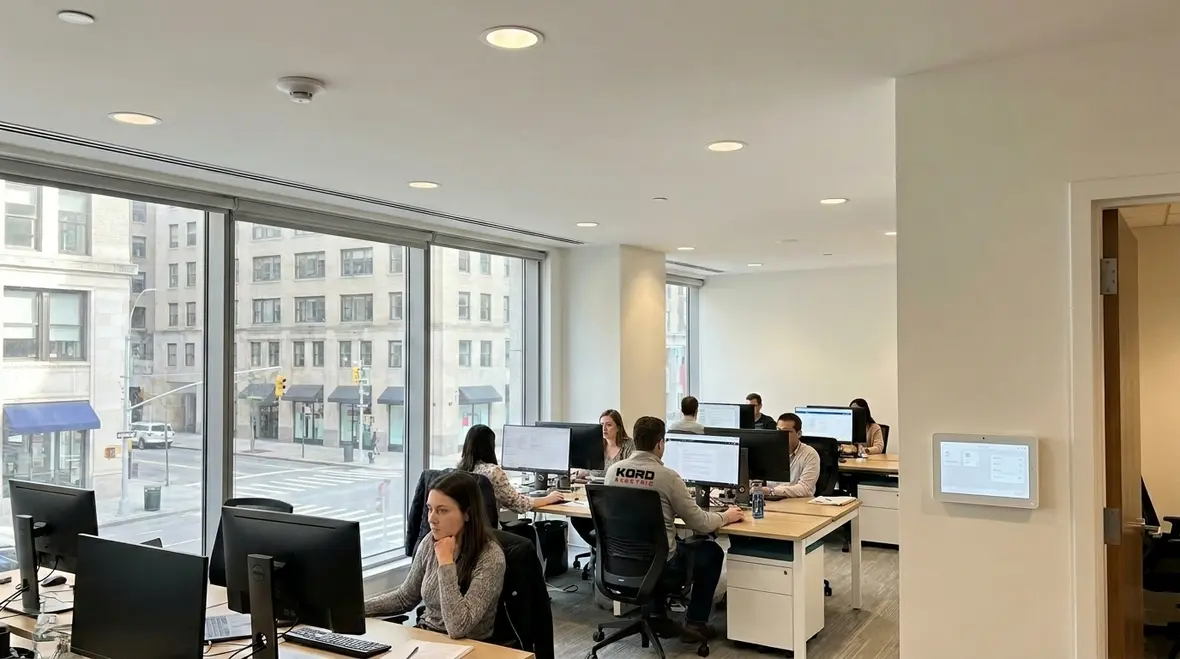
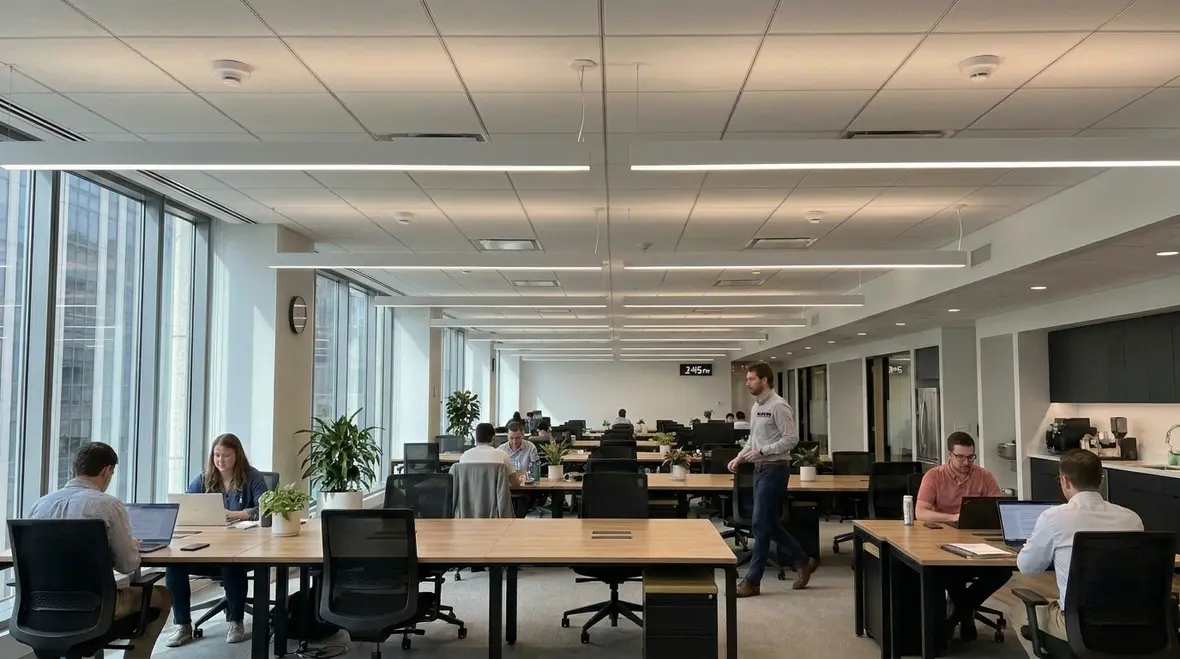
Commercial and industrial buildings do not all behave the same. An office floor with large windows needs different control rules than a warehouse bay with minimal daylight. Therefore, Kord Electric builds solutions around each zone and its purpose. We look at the layout, the work patterns, the hours of operation, and the lighting fixtures already in place. Then we match the controls to the space, not the other way around.
Our technicians and expert service staff take the time to explain the plan in plain language. For example, they often walk property managers through how zones split, how occupancy sensors interact with dimming, and what happens during overrides. After all, if your staff cannot predict system behavior, the system will feel like a mysterious gadget that only electricians understand. We prefer systems that facility teams can run with confidence.
Depending on the project, we may configure different lighting scenes for conference rooms, training spaces, common areas, corridors, and production support zones. However, we do not treat “scene setting” as a fancy extra. We use it to support daily workflow and to avoid unnecessary lighting spikes.
These lighting designs pair naturally with broader upgrades like LED retrofits and commercial lighting improvements. When office lighting control systems are planned alongside projects such as a commercial lighting upgrade or a compliance driven retrofit, the result is a unified strategy instead of a collection of disconnected projects.
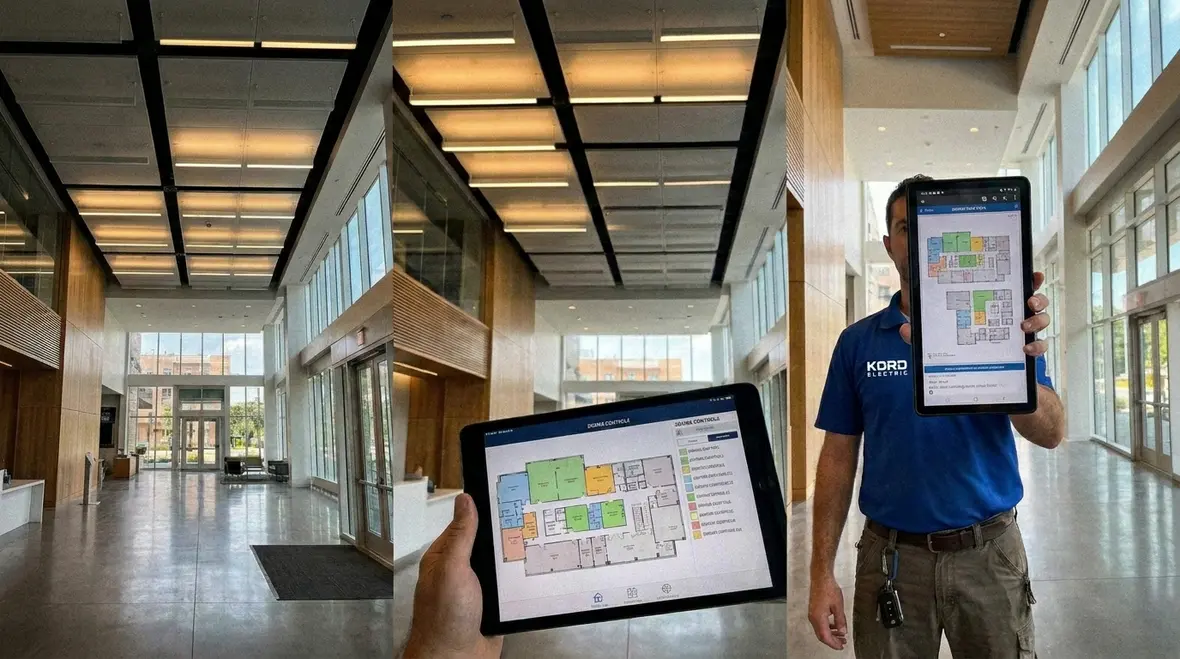
How we manage daylight, motion, and schedules together
People tend to think lighting controls only handle motion. They do not. When systems blend daylight response, occupancy status, and schedules, they create a stable experience. For instance, a perimeter office suite can automatically dim as sunlight increases. Meanwhile, interior zones can follow occupancy patterns so the lights stay off or low when a room sits empty. Then, at specific times, the system follows a schedule for pre occupied warm up or after hours security levels.
This combined approach matters because each input is imperfect alone. Motion detection can miss long meetings when nobody moves much, but daylight sensing keeps levels stable. Scheduling can be too rigid, but occupancy prevents waste when someone works late. Therefore, layered control logic gives the building a more human-like response without requiring human constant attention.
Our expert service staff also ensures the rules remain understandable. We explain what the building will do during transitions, such as when daylight drops suddenly or when a room goes from empty to active. And we make sure the system does not fight the occupants. If a user needs more light for a task, the system should respond smoothly, not with flicker or abrupt jumps that make people feel like they are inside a disco from the eighties.
Because many California properties must also meet Title 24 lighting control requirements, we often align these strategies with broader compliance goals. That might include documenting daylight harvesting zones, tuning setpoints to match code expectations, or pairing smart lighting with ongoing electrical preventive maintenance so performance stays consistent over time.
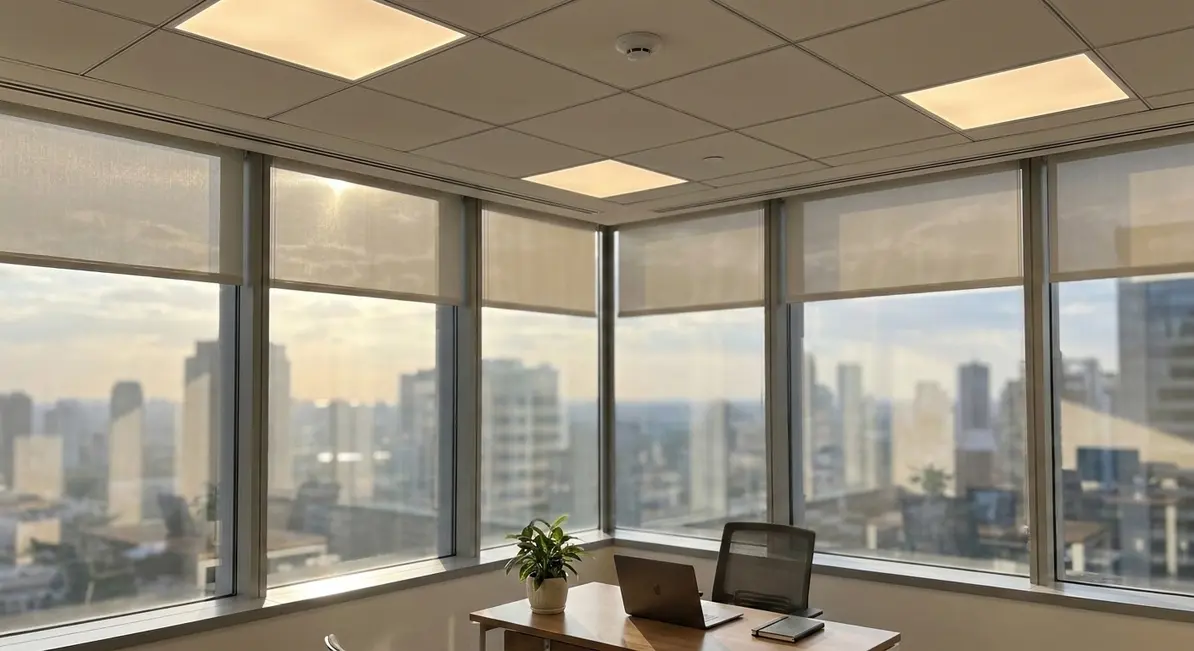
Comfort, safety, and productivity in the real world
Good lighting control systems do not just save energy. They support how people work and how they feel in the space. For office and major property buildings, stable lighting reduces eye strain, improves task comfort, and helps maintain focus. In industrial environments, proper lighting levels support safer movement, clearer visibility for inspections, and more reliable visual checks.
When controls handle dimming properly, they can keep light levels consistent throughout the day. Instead of harsh changes when cloud cover passes, the system can maintain a target brightness. As a result, workers spend less time adapting and more time doing their job. Furthermore, well configured emergency and egress related behavior can integrate with the overall strategy so the building operates reliably.
We also pay attention to how the controls influence behavior. If lights turn off too aggressively, occupants will override them constantly. If they stay on too long, no one bothers. We tune time delays, sensitivity, and dimming steps to match the space. Then we test it with real use patterns so the system behaves the way people expect.
In facilities that also use advanced building systems for ventilation, power quality, or environmental monitoring, office lighting control systems become one more way to keep people comfortable and safe without constant manual intervention. When everything works together, the space feels predictable and calm instead of “always adjusting” in the background.
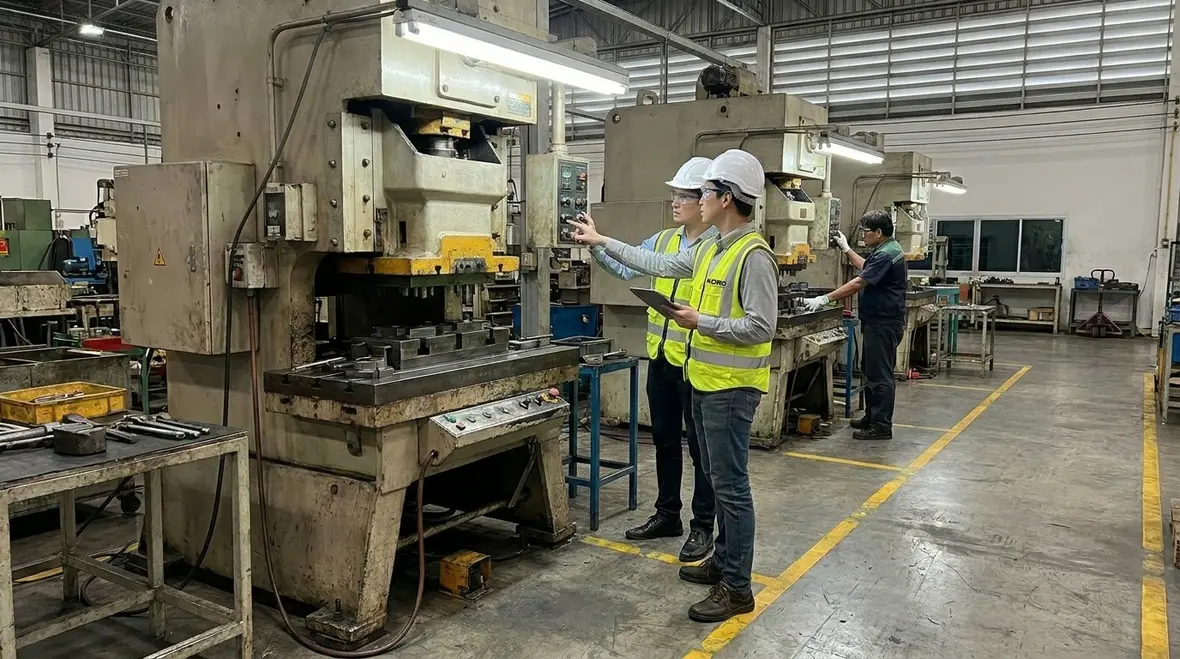
Integration with building management and sitewide standards
Many commercial properties already use building management systems, energy monitoring, and standard maintenance workflows. Therefore, our job includes integrating lighting controls into the broader facility ecosystem. We coordinate control points, monitoring needs, and user access so the solution supports operations rather than competing with them.
In practice, this means facility teams can observe performance and manage settings through their existing processes. Instead of hunting for hidden control boxes, authorized staff can review schedules, occupancy events, and performance trends. This helps maintenance teams troubleshoot faster and supports long term planning. Also, integration helps with reporting when leadership asks for proof of energy reduction.
Our technicians explain how integration affects day to day operations. For example, they clarify what facility staff can change, what requires higher permissions, and how updates get handled. We keep the system practical, because a control system that nobody can manage is like a smart watch for a person who never checks notifications. It exists, but it does not help.
For properties that must document California commercial lighting compliance, this integration also connects the dots between code requirements, daily schedules, and real energy use. Pairing a smart control strategy with resources like Kord Electric’s guides on commercial lighting compliance and California lighting code requirements can make internal reporting smoother and less stressful.
Installation, commissioning, and training our experts deliver
The difference between a promising system and a great one is the work after installation. Kord Electric focuses on careful commissioning. We verify sensor placement, confirm zoning behavior, test control responses across multiple conditions, and validate that schedules and scenes operate as intended. Then we fine tune dimming curves so the light level changes feel smooth, not jumpy.
Just as important, we train the right people. Our expert service staff walks through how to use the system day to day, how to handle common questions, and how to request adjustments without disrupting operations. Because commercial and industrial facilities cannot stop production for long training sessions, we deliver training that fits the environment.
Additionally, we support long term reliability with service planning. We help property teams understand what maintenance looks like, what parts may need inspection, and how to respond when an issue appears. That support reduces downtime and keeps office lighting control systems performing at their best over time.
When lighting controls are installed alongside broader lighting installation services, such as LED upgrades, new fixture layouts, or emergency lighting improvements, commissioning ties everything together. You are not just getting a new piece of technology; you are getting a tuned system with clear documentation and a team that stands behind the work.
Planning for ROI in commercial properties
Energy savings often lead the conversation, but we also track comfort and operational benefits. In commercial and industrial buildings, ROI depends on the baseline usage, the number of controlled zones, daylight availability, occupancy patterns, and how well the system aligns with real schedules. Therefore, we recommend a planning approach that starts with an on site understanding, not a generic estimate.
When controls reduce unnecessary lighting runtime and maintain stable levels during occupancy, the building avoids “waste creep.” That is the gradual increase in lights being left on longer as schedules change, departments reorganize, or building staff settle into routines. With smart control logic, the system stays aligned with current conditions, and our team helps property managers keep it that way.
Also, when lighting behaves predictably, occupants use fewer manual overrides. That reduces friction between facilities and end users. And when there is less friction, fewer calls come in that begin with, “Hey, the lights are acting weird.” We still answer those calls, of course, but we aim to prevent them.
For portfolios that must budget carefully, we can also coordinate office lighting control systems with phased projects such as LED retrofits, panel upgrades, or targeted Title 24 lighting compliance work. That way, each step contributes to ROI instead of becoming a one off expense that does not fit the bigger picture.
FAQ
Ready to modernize lighting control with Kord Electric?
If you want lighting that saves energy, improves comfort, and runs reliably across your building, we are ready to help. At Kord Electric, our technicians and expert service staff design, install, commission, and train teams so the system works the way you expect, not like a mystery device. Contact us today to discuss your facility zones, schedules, and daylight conditions, and we will outline a smart, practical plan for your modernization goals.
If your project also includes fixture upgrades, layout changes, or a broader modernization effort, our dedicated lighting installation services team can support everything from design and code compliance to final commissioning. That way, your office lighting control systems, fixtures, and documentation all move forward together as one coordinated project.