EV Charging Infrastructure Planning for Commercial Sites
EV Charging Infrastructure Planning for Commercial Properties
When a commercial site wants to add an electric vehicle charging station feasibility plan, the first question should never be “Can we do it?” It should be “Can we do it safely, profitably, and without upsetting the power bill gods?” In the next sections, we walk through how Kord Electric approaches charging for commercial and industrial facilities and major property buildings. Our technicians and expert service staff review electrical capacity, site layout, incentives, and timelines, then we translate that into a practical roadmap. Yes, it is detailed. No, it is not boring. At least not more than waiting for a software update to finish, right?
And because real life rarely matches a simple diagram, we make sure the plan accounts for demand growth, tenant needs, and electrical upgrades that often hide in plain sight.
For owners who also want to think ahead about long term growth, it can help to pair feasibility planning with how you intend to scale charging over time. That is why many property teams also review our insights on EV charging infrastructure scalability for commercial sites, where we dive into phased build strategies, load controls, and expansion planning that keeps upgrades from turning into recurring drama.
Power capacity and load study basics for sites

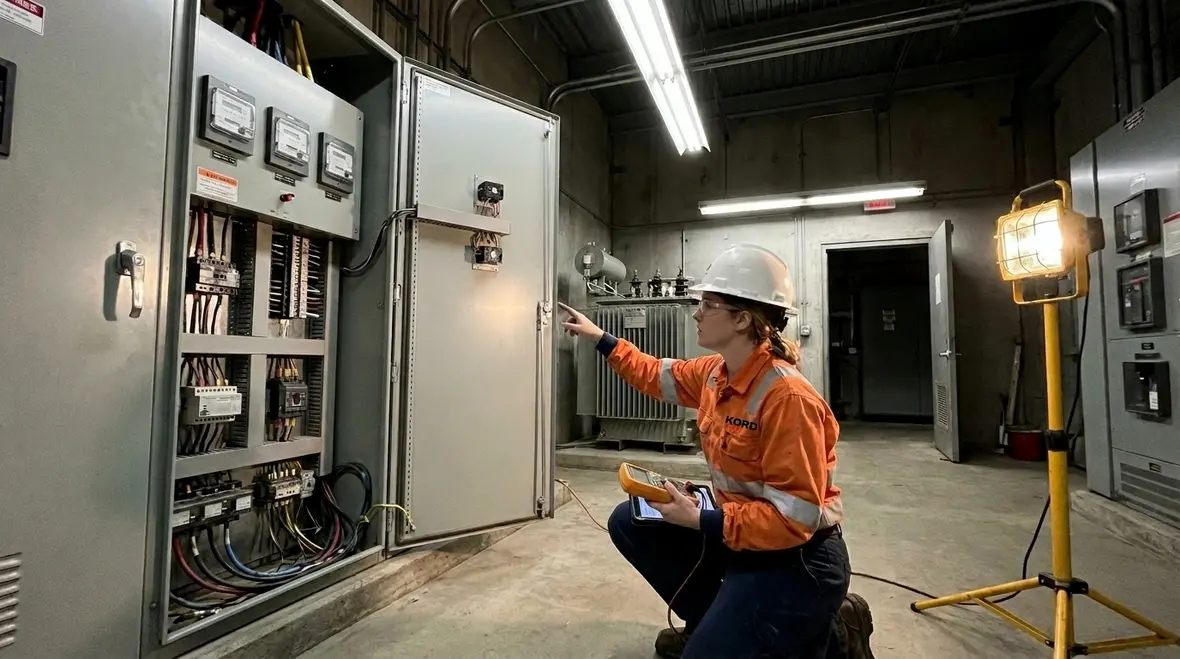
First, Kord Electric starts with the load picture, because electricity does not care about optimism. We assess service size, transformer ratings, panel capacity, and existing demand across the facility. Then, we model likely EV charging behavior based on vehicle mix, expected usage windows, and whether chargers run simultaneously.
Next, our team checks for the “silent villain” problem: voltage drop and thermal limits along feeders and conduits. Even if the utility transformer looks fine on paper, the path to the charger may still struggle. Therefore, we plan conductor sizing, breaker coordination, and grounding before anyone installs hardware in a hurry.
To keep everything grounded, our expert service staff explains the results in plain terms to the property team. They may not all love electrical calculations, but they usually understand this: a load study prevents costly changes after the parking lot is already paved. And nobody wants to jackhammer asphalt because the demand forecast was optimistic like a superhero landing that misses the street by one inch.
During this step, we also look for opportunities to align EV charging with broader reliability work. If your facility is already considering commercial and industrial electrical maintenance plans or targeted power quality improvements, it often makes sense to coordinate those decisions with your charging roadmap so one upgrade supports the other instead of competing for capacity.
What site layout does to charging reliability
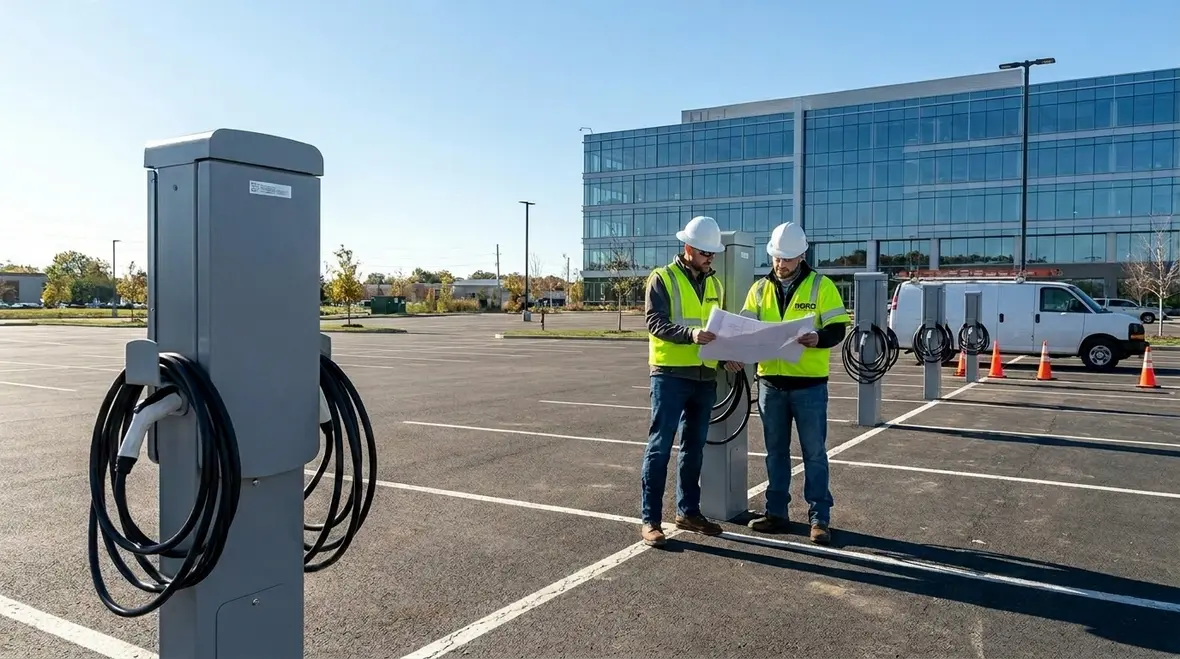
Then we move from watts to wheels. A facility can have plenty of power capacity, yet still underperform if the site layout fights the user experience. So we analyze parking flow, stall placement, cable routes, and traffic patterns. We also check whether chargers sit near electrical rooms or if they require long runs that increase cost and complexity.
Because commercial buildings run on schedules, we consider dwell time. For example, fleet and employee use often needs different design choices than short customer stops. Moreover, we recommend power routing that matches future expansion so the next charger does not become a brand new construction project.
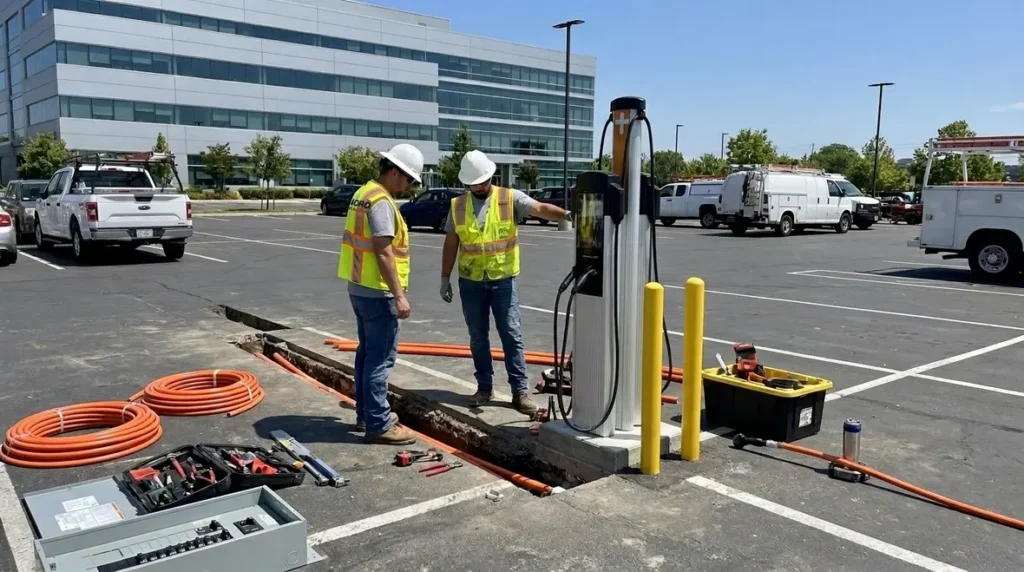
Our technicians also verify weather protection needs, bollards, and mounting choices for equipment durability. If someone backs into a charger with confidence, we make sure the system survives reality. In short, layout choices impact uptime, access, and serviceability, and those factors decide whether the chargers become an amenity or a neglected corner of the lot.
Good layout work is also where you can quietly future proof your property. We often design pathways and spare capacity so that phased additions later feel like simple extensions. That mindset mirrors our approach when planning commercial EV charging installation cost ranges: get the routing and civil work staged correctly, and sudden expansion rarely requires tearing up the same pavement twice.

How electrical upgrades get planned without chaos
At this point, the feasibility work clarifies whether the site needs minor adjustments or major upgrades. Sometimes we only add circuits and panel space. Other times, we coordinate transformer upgrades, utility service changes, or new electrical rooms. Either way, we plan the sequence to reduce disruption to operations.
Additionally, we help property teams think through phasing. For instance, we may install initial chargers while the longer-lead utility work proceeds. That way, the site benefits sooner, and the overall project stays aligned with budgets and leasing schedules.
Importantly, we coordinate permitting and code compliance early. We confirm the proper installation standards and the level of documentation required. Then we make sure contractors, inspectors, and facility managers share the same plan, not different versions of the same drawing like a pop quiz no one studied for.
This same structured approach also helps when owners want to understand the bigger electrical picture across their portfolio. If you are responsible for several commercial buildings or industrial sites, tying your EV readiness plan into a broader strategy for commercial electrical systems for modern buildings keeps you from solving the same upgrade questions in isolation at every location.

Should you use Level 2 or DC fast for your business?
Choosing between Level 2 and DC fast charging depends on how the facility earns value. Kord Electric evaluates the real demand profile and the revenue model, whether that includes tenant perks, public customer access, or fleet operations. Therefore, we use usage data and site goals to select equipment that matches the expected parking behavior.
Level 2 chargers fit well when vehicles remain parked for longer periods, like during work shifts or building occupancy windows. They also typically require less aggressive electrical upgrades. DC fast charging can serve quicker turnarounds, yet it usually demands stronger electrical supply and more careful planning. For many properties, the best approach mixes both, starting with manageable deployments while preparing for expansion.
Our expert service staff explains tradeoffs without marketing fog. They will tell you what the system can support and what it cannot, because a charger that looks impressive but underdelivers is just expensive signage. And for commercial sites, that is not the type of brand exposure anyone wants.
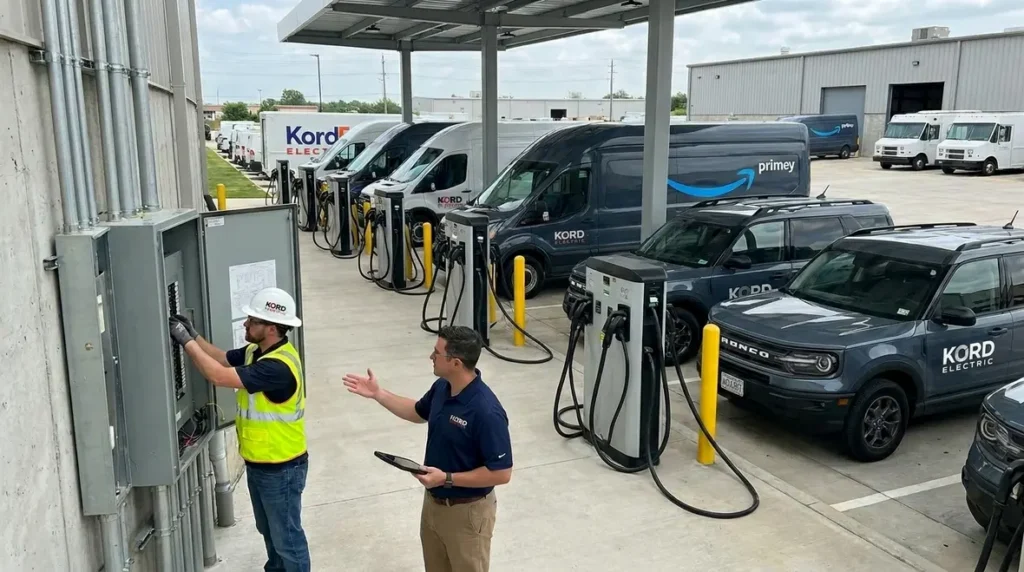
When a site is ready to move from choosing charger types into actually installing them, it is often helpful to review what a full commercial EV charger installation process looks like end to end. That includes how long trenching, wiring, commissioning, and testing really take, and what you should expect from your electrical contractor at each milestone.
Permits, incentives, and schedules that actually hold up
Once the technical design makes sense, we shift to the project timeline. For commercial and industrial facilities, permitting and utility coordination can create the longest delays, so we treat them like a first-class milestone. Kord Electric gathers the needed documents and supports the permitting process with clear engineering and installation plans.
Next, we consider incentives and rebates where available. Even when funding exists, eligibility often depends on equipment specs, installation practices, and project documentation. Therefore, we plan the paperwork as carefully as the wiring.
To keep decision makers comfortable, we outline a realistic schedule with long-lead items identified early. Additionally, we advise on procurement timing so charger hardware does not become the bottleneck. Our technicians also plan for commissioning, testing, and training so the system starts operating correctly, right after the final switch gets flipped.
In California and other regions with active incentive programs, feasibility planning also includes a review of which rebates realistically apply to your project. Aligning your design with the requirements behind commercial EV charger incentives and utility make ready programs can significantly change the overall budget — in a good way — if you plan them into the schedule instead of treating them like an afterthought.
Dual-column checklist for electric vehicle readiness and budgeting
To help property teams move faster, Kord Electric uses a practical readiness checklist. Below, we keep it straightforward, so leaders can decide with confidence and not with guesswork.
| Feasibility inputs we gather | Decisions we help you make |
|
Site electrical details including service size, panels, and transformer ratings Expected usage by vehicle type and time of day Parking layout and charger placement options Space for equipment, access for maintenance, and cable routing Target growth timeline for future stalls |
Charger type selection and number of ports to start Upgrade scope and phasing plan Budget ranges aligned to real construction needs Permitting and utility coordination path Operational plan for staff and tenant support |
This kind of checklist also makes it easier to coordinate EV charging with other electrical projects on your calendar. For properties across Los Angeles County that are already planning panel upgrades, lighting retrofits, or reliability work, combining those efforts under one electrical plan can help control downtime and protect operating margins.
FAQ: electric vehicle charging station feasibility
Below are common questions commercial property teams ask when they first explore electric vehicle charging station feasibility for their sites.
Our closing recommendation from the electricians
Kord Electric helps commercial and industrial facilities build charging systems that work in the real world, not just on a sales brochure. We start with electric vehicle charging station feasibility, then we move step by step through capacity planning, layout decisions, permits, and commissioning. If you want a project that stays on schedule, supports future growth, and serves tenants or fleets reliably, contact us for an expert site review. We will map the path clearly, so your next move feels calm, not chaotic.
For facilities across the region, including those comparing multiple properties in Los Angeles County, partnering with a commercial electrical team that already understands local permitting, utility requirements, and typical building conditions can make a measurable difference in both schedule and budget. When you are ready to move from planning into action, Kord Electric’s dedicated EV charger installation services help you translate that feasibility work into safe, code-compliant infrastructure that your drivers can actually depend on.
And if EV charging is just one piece of a broader reliability or upgrade program, you can align it with other electrical work so your investment supports everything from lighting and controls to process equipment and backup systems under one coordinated plan instead of scattered projects.
To explore how these planning steps fit into a complete service strategy for your site, review how our team supports commercial and industrial facilities throughout Los Angeles County with electrical services that are built around long term performance, not one-time fixes.