
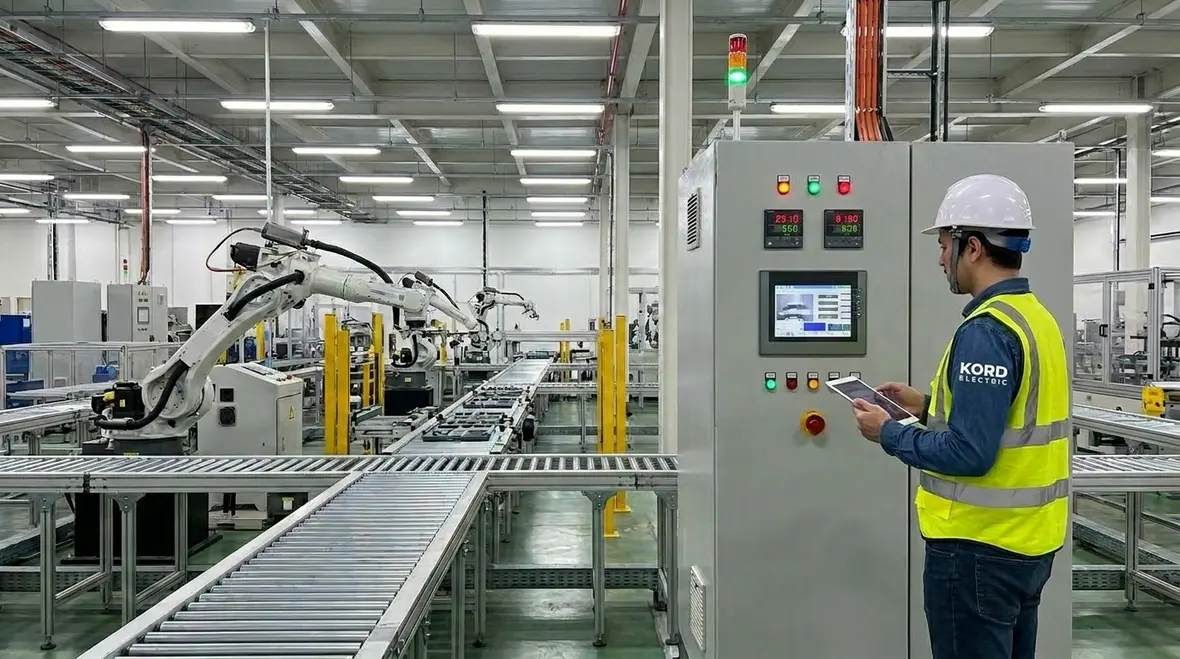
Commercial Smart Energy Systems for Manufacturing
How we integrate commercial smart energy systems into manufacturing plants
At Kord Electric, we deploy commercial smart energy systems that help industrial facilities run smarter, steadier, and with less waste. We do not treat energy like an afterthought, because in a plant, electricity is a living thing that affects uptime, product quality, and safety. So, we plan the install like we are building a control room for your future.
Our approach blends sensors, controls, and practical power management. Then our team of technicians and expert service staff walks the floor with you, explaining what is happening and why, without drowning anyone in jargon. If you have ever tried to decode a utility bill during a busy shift, you already know the stakes. And yes, we aim to make the numbers behave.
Why smart energy matters when equipment never really “rests”
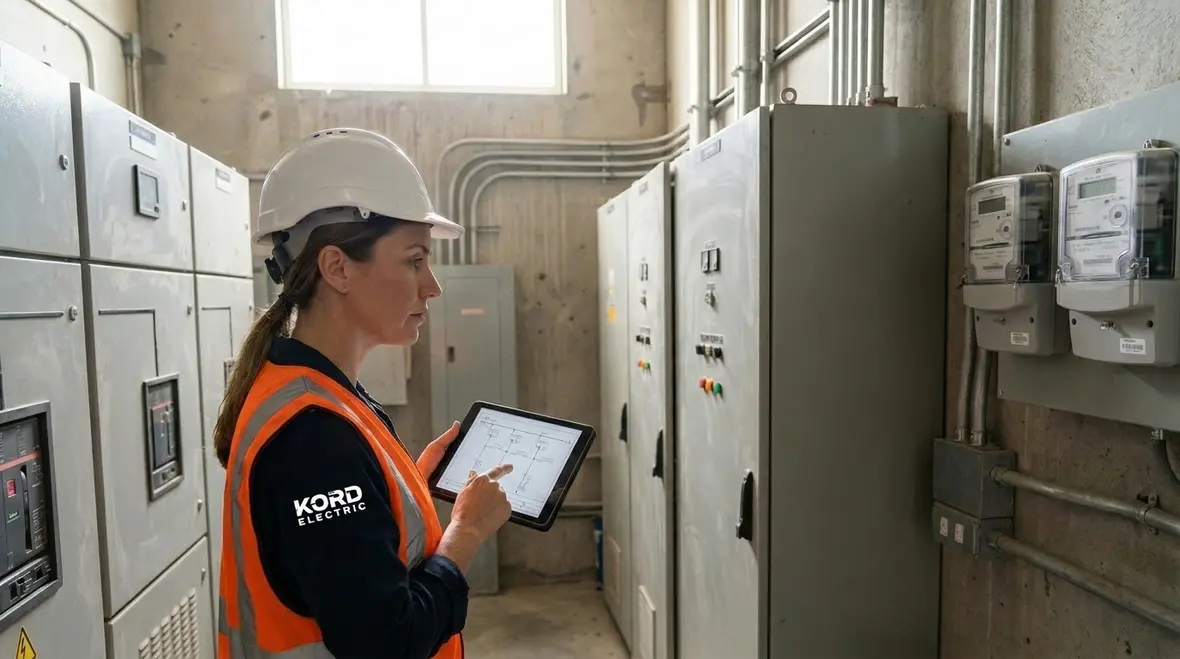
Manufacturing plants keep machines running, and that means load changes are constant. When motor banks start, pumps cycle, and HVAC swings with production schedules, power quality and energy demand shift minute by minute. Over time, those swings can trigger nuisance trips, increase harmonic distortion, and push equipment toward premature wear. Consequently, the plant pays twice: once in energy cost, and again in maintenance.
With our commercial smart energy systems, we help others track what is happening across the facility. Instead of guessing which area causes spikes, operators can see the pattern. Then our technicians advise on how to respond, whether the goal is better demand control, smoother power factor correction, or coordinated controls that protect critical processes.
And here is the calm part: once the system monitors properly, the plant stops feeling like a chaotic orchestra with nobody holding the baton.
Where we place sensors, meters, and controls for real visibility

A smart system cannot be smart if it only watches one corner of the building. Therefore, we start by mapping the plant’s electrical architecture: switchboards, motor control centers, transformers, and major feeders. After that, we place metering and monitoring where decisions actually get made.
In practice, we often include:
- Submetering at key process loads, so operations leaders can see energy by line, bay, or department
- Power quality monitoring to detect voltage imbalance, harmonics, and waveform issues
- Temperature and airflow sensing that ties equipment performance to energy use
- Control integration with existing building management or plant control systems
Then, our expert service staff helps facilities understand the difference between raw data and usable insight. For example, a graph that spikes during shift change is not helpful on its own. However, when the system correlates demand with equipment schedules, it becomes a tool for planning. That is how we turn “information overload” into a steady workflow.
For teams that want to go deeper into electrical visibility, resources like Kord Electric’s guide to rewiring cost planning for commercial electrical systems show how upgraded infrastructure and monitoring can work together over the long term.
How we manage demand, peak load, and utility exposure

Energy costs often rise when demand peaks. At many industrial sites, peaks do not come from one obvious machine. Instead, they come from timing: multiple loads starting close together, ventilation ramping too fast, or controls that do not coordinate across systems. As a result, the facility pays for capacity it does not truly need.
We use commercial smart energy systems to manage demand through monitoring and control logic. First, the system predicts short term load behavior based on live measurements and schedules. Next, it applies strategies such as load shifting, controlled ramping, and coordinated start sequences. When HVAC and process loads share a timing plan, peaks shrink without compromising production targets.
Also, we help others prepare for tariff and rate changes by giving them clearer visibility into how usage patterns align with billing intervals. If your team has ever said, “We used the same amount, so why did the bill jump?” we understand that frustration. Smart controls can reveal the hidden causes, like demand peaks that occur for just a few minutes, which then get billed heavily.
When facilities combine smart demand control with upgrades like automated lighting controls or commercial solar integration, the result is a tighter, more predictable energy profile that supports long term planning.
Power quality and efficiency upgrades that actually hold up

Energy efficiency is more than chasing lower kilowatt hours. In industrial facilities, efficiency improvements must maintain stable power quality. Otherwise, equipment performance becomes unpredictable. So, we focus on both efficiency and reliability.
Our technicians commonly address issues that undermine performance:
- Power factor drift that increases current draw and can create avoidable losses
- Harmonic distortion that stresses transformers, drives, and sensitive electronics
- Unbalanced phases that raise motor heating and reduce lifespan
- Short cycling or inefficient control sequences that waste energy
Then we coordinate upgrades with the plant schedule. That matters. If you upgrade at the wrong time, the install can become a production problem instead of a solution. Our service staff explains the plan in plain language and confirms how each change affects operations. The goal is simple: fewer surprises, smoother commissioning, and a system your teams can trust.
Yes, we still respect the fact that plants run on deadlines, not on hope. Pop culture teaches us that, right. A “dramatic reveal” has its place in movies, not in switchgear.
For manufacturers that operate heavy duty equipment, Kord Electric’s work with reducing voltage fluctuations in commercial and industrial systems shows how stabilizing power quality directly protects assets and keeps lines running.
Commissioning, training, and ongoing support for industrial teams
After equipment is installed, the work only starts. If operators cannot interpret reports or adjust setpoints safely, the system becomes a fancy box that nobody touches. Therefore, Kord Electric builds commissioning and training into the lifecycle.
We work with your team step by step. First, our technicians validate telemetry, confirm control actions in safe conditions, and document the configuration. Next, our expert service staff trains plant personnel on how to read dashboards, alarms, and trends. We also show how to respond when the plant changes, such as after a production line retrofit or a season HVAC shift.
To keep performance consistent, we recommend ongoing checks. That might include reviewing alarm history, validating metering calibration, and tuning control sequences based on measured outcomes. In other words, we do not “install and disappear.” We stay engaged, because energy systems live in the real world. They change when the plant changes.
Many industrial teams pair commissioning with structured electrical preventive maintenance programs so that monitoring, testing, and hands-on service stay aligned year after year.
What this looks like in a major property or multi site facility
Large commercial and industrial property buildings often share similar constraints: multiple tenants, shared electrical rooms, and complex operating schedules. In those settings, visibility must extend across zones without disrupting daily operations. The same is true for industrial sites with expansions, where new loads attach to older infrastructure.
We design commercial smart energy systems to scale. That means the monitoring framework can handle additional feeders, new meters, and updated control points. It also means reporting remains structured, so others can compare performance over time and across buildings.
For owners, this provides more than cost control. It creates a measurable pathway to compliance reporting, maintenance planning, and energy management goals. For operations managers, it delivers clarity, because fewer alarms mean fewer distractions and faster response times. And for maintenance teams, it supports predictive thinking, since trends can reveal issues before they become emergencies.
Basically, we help the facility move from reactive energy management to proactive operations. If that sounds like a superhero origin story, yes, but with fewer capes and more switchgear labeling.
FAQ
Final CTA: Get a smart energy plan built for your facility
If your plant runs hard and you want energy control that matches real operations, Kord Electric can help you design and deploy commercial smart energy systems that improve visibility, protect power quality, and manage peak demand. Our technicians and expert service staff will guide the full process, from planning and installation to training and support. Contact us to schedule an assessment for your manufacturing plant or major property building. We will map your electrical loads and build a clear path forward, without the guesswork.
If you operate across multiple locations or within complex facilities in Southern California, explore how our broader Los Angeles County electrical services support everything from preventive maintenance to upgrades, safety compliance, and advanced controls under one experienced team.


