
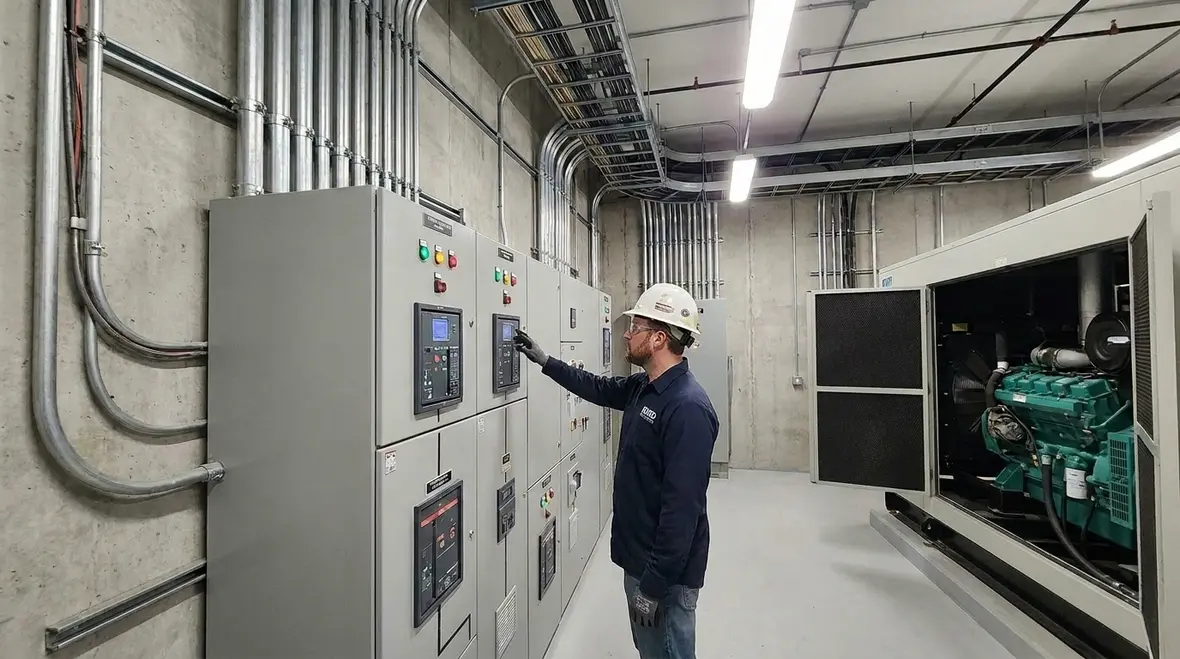
Custom Emergency Power Distribution Solutions
Kord Electric designs emergency power distribution solutions for commercial and industrial facilities and major property buildings where downtime costs more than the equipment itself. We engineer systems that keep critical circuits alive, protect sensitive loads, and help your operation ride through outages with confidence. Then we install, test, and support them with a team that actually knows the difference between “it powers something” and “it powers the right things.” Others may speak in generic terms, but our technicians walk the site, review the building’s needs, and explain options in plain language. And yes, we do say it out loud when a plan is solid, because surprises are great for birthdays, not for switchgear.
Custom emergency power design for complex buildings
When a building has multiple tenants, varied process loads, and long critical feeder runs, off the shelf solutions often create new problems. So we build custom emergency power systems around how the property actually operates. Our engineering process starts with load review and power path mapping. We look at what must stay on, how long it must run, and what happens when loads start up in sequence.
Then we design the distribution so power transfers happen cleanly. We coordinate protective devices, feeder ratings, and grounding methods to reduce nuisance trips. In other words, we plan for reality, not wishful thinking. Also, when the building has life safety demands and mission critical equipment, we treat coordination like a job interview: no shortcuts, just evidence.
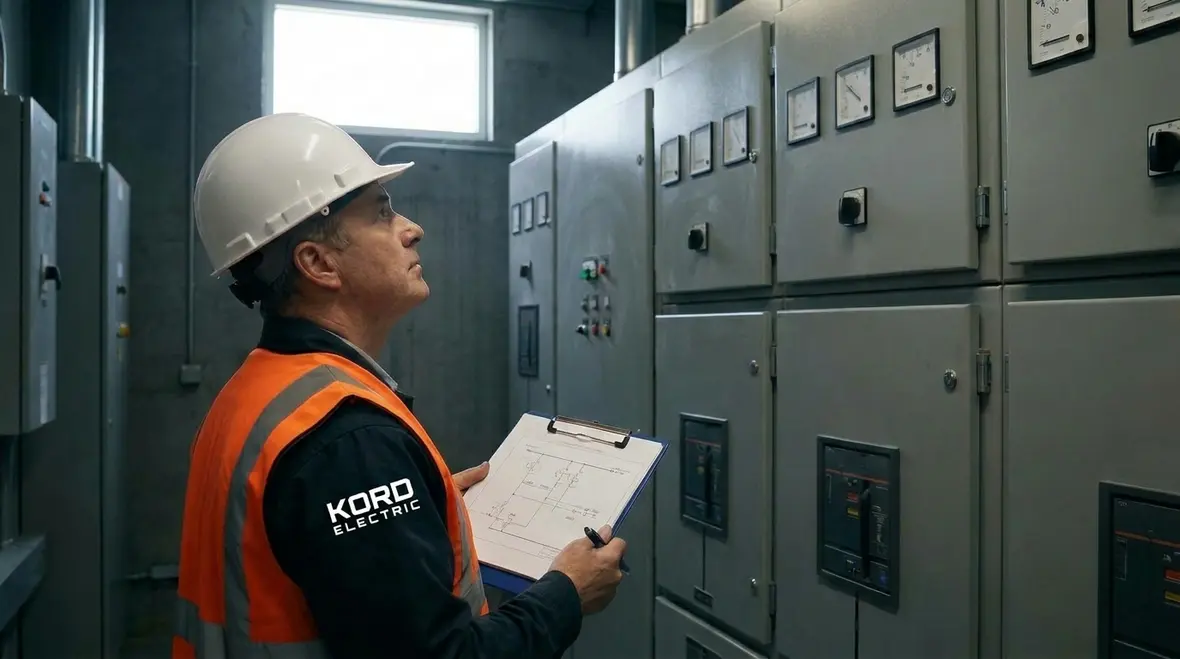
How we plan power continuity and avoid nuisance shutdowns
Our expert service staff guides clients through the steps that prevent failures during real outages. First, we confirm the power quality requirements for critical equipment. Next, we evaluate starting currents and inrush behavior for motors, HVAC components, lifts, pumps, and any process machinery. After that, we set up selective coordination so faults clear fast and only where needed.
Moreover, we design transfer logic and timing to reduce overlap that can stress the system. During restoration, we control load pick up so the generator or other source does not get slammed by every circuit at once. This matters because an outage is already stressful enough without the building acting like it forgot everything it learned in training.
To support our approach, our technicians also review labeling, panel schedules, and wiring documentation. We want maintenance teams to understand the system quickly. When people can trace circuits without guesswork, response time improves and confidence follows.
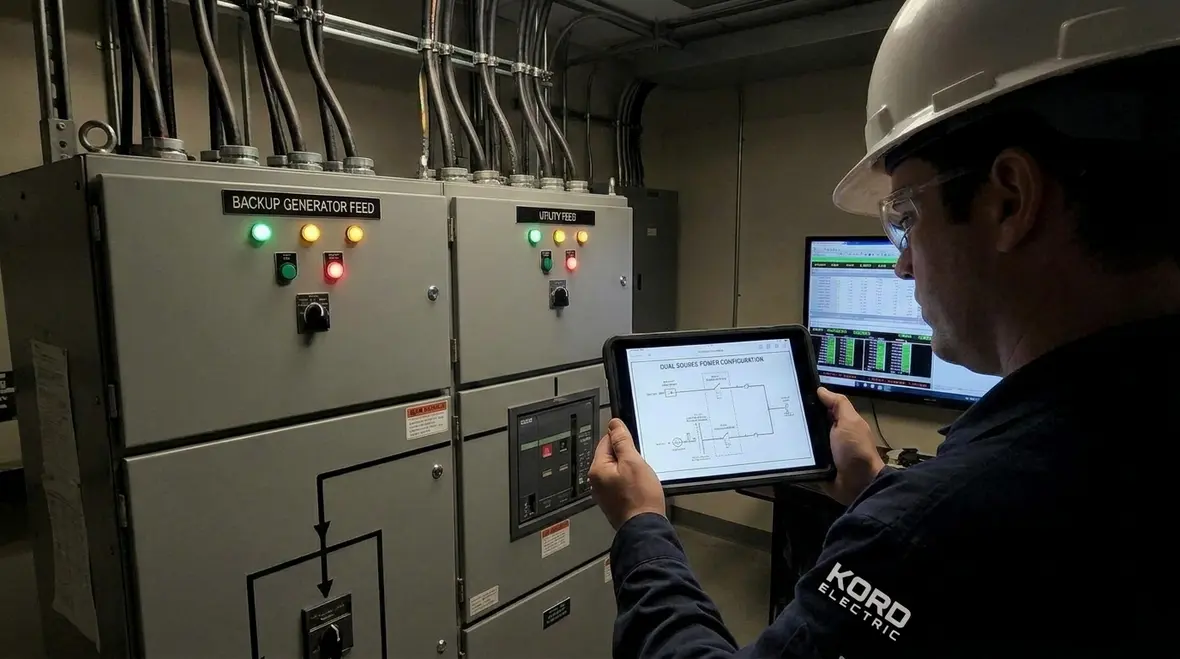
Dual source strategies for operations that cannot pause
Some facilities need an extra layer of protection because their business rhythm cannot stop. That is where dual source strategies become valuable. We help clients decide when a second supply, a generator backed approach, or a layered scheme makes sense based on risk, budget, and operational impact. Then we configure emergency power distribution solutions so critical loads receive reliable supply under different outage scenarios.
As we work, we balance three realities. One, the building has to transition quickly and safely. Two, the distribution gear must handle the fault energy and thermal stress. Three, the maintenance plan has to stay practical for the people on site. In fact, we often recommend a system design that supports scheduled testing without disrupting operations more than necessary.
For many major properties and industrial operations, we also plan for selective load shedding. That means non critical circuits go offline when required, so essential equipment keeps running. It is the electrical equivalent of prioritizing survival, not ego.
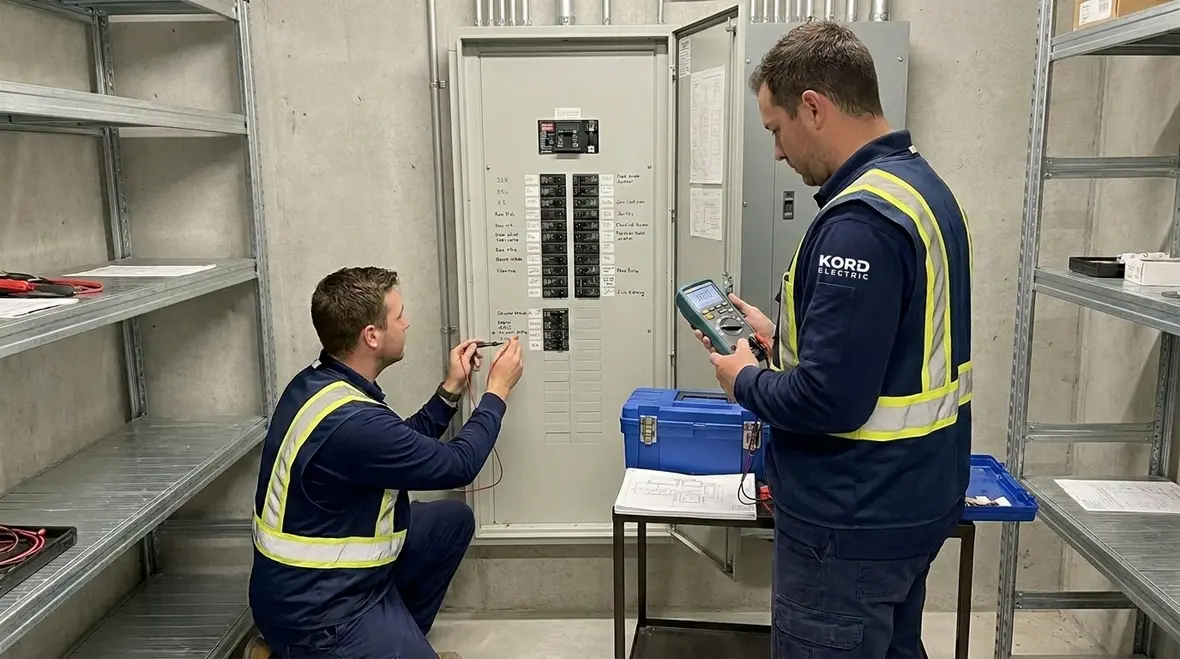
Engineered distribution that scales across panels and feeders
Complex buildings rarely rely on one simple panel and one simple path. Therefore, we engineer distribution across switchboards, panelboards, ATS and associated controls, plus feeder routing that matches the building layout. We also address harmonics and sensitive power requirements when needed, especially where drives, computers, and process controls sit nearby.
Next, we design for safe service access. Our technicians plan installation sequencing so teams can maintain clear working space and follow proper access requirements. Then we make sure the labeling and circuit documentation align with the final build. A well built system that nobody can understand is just a fancy mystery box.
We also support scalable designs when a facility plans expansions. Instead of forcing a redesign later, we reserve capacity and design feeder routes with future loads in mind. That keeps growth smoother and avoids expensive stop-and-start upgrades.
Testing, commissioning, and expert technicians on site
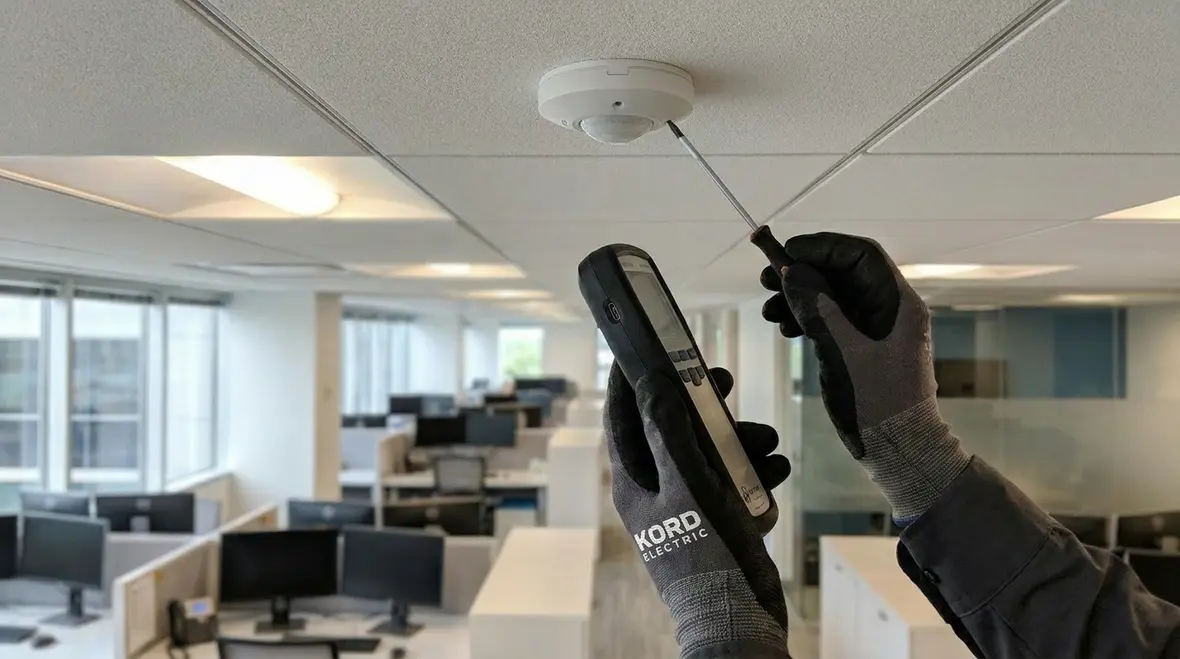
Design is only part of the job. Commissioning makes the difference between a system that looks good and one that performs. Our expert service staff develops a test plan that matches the building’s operating needs and safety expectations. We verify transfer behavior, protective device settings, and load pick up performance under controlled conditions.
During commissioning, our technicians check wiring terminations, confirm control logic, and validate operational sequencing. We also run diagnostic checks that catch issues before an outage does. After testing, we provide documentation that helps maintenance teams understand what to check and how to respond.
Additionally, we coach facility staff on basic operational steps. We explain what alarms mean, what typical conditions look like, and how to avoid common mistakes. Not long ago, a client told us their previous system “just made noise.” We helped them learn what the noise meant, and the building stopped acting like it was starring in a suspense movie.
Common compliance and reliability challenges for commercial and industrial sites
Facilities often face pressure from deadlines, existing infrastructure constraints, and complex utility arrangements. Because we serve commercial and industrial facilities and major property buildings only, we focus on the patterns we see most often. For example, older buildings may have mismatched panels, unclear as built drawings, and feeder upgrades that happened in phases. That can create uncertainty during system design and transfer upgrades.
So we take a practical approach. We review existing conditions, verify device ratings, and create an upgrade path that respects what is already installed. We also coordinate with facility stakeholders so work schedules stay realistic. Then we set reliability targets that match the real risk profile rather than an overly optimistic checklist.
Meanwhile, we do not ignore human factors. If the people who maintain the gear cannot access it safely or interpret the documentation, reliability suffers. Therefore, we build systems that are maintainable, testable, and clear.
Project delivery with clarity, timelines, and hands on support
Our process stays calm even when the project schedule gets loud. First, we confirm site constraints and required milestones. Then we propose a design and scope that aligns with operational priorities. Next, we coordinate installation so the work does not disrupt the facility more than necessary.
To keep things transparent, we communicate through each stage. We also provide service support after completion so the system continues to perform as intended. In other words, we do not hand over a stack of papers and disappear. We stay engaged, because emergency power distribution is not a one time event. It is a responsibility.
What does Kord Electric do during a typical emergency power upgrade?
Our steps
- Site walk, load review, and power path mapping for critical circuits
- Custom design of emergency power distribution solutions for your equipment and feeders
- Coordination of protective devices, controls, and transfer sequencing
- Installation planning that supports safe access and maintainability
- Commissioning and testing with clear results and documentation
What clients notice
- Fewer surprises during installation and commissioning
- Cleaner transfer behavior during controlled outage tests
- Better maintenance clarity for technicians and facility teams
- Reliable performance targets that match real operations
- Support that continues after handoff, not just at it
FAQ about custom emergency power distribution
For facilities that want to reinforce reliability beyond emergency power alone, structured electrical preventive maintenance programs help keep panels, switchgear, and critical circuits ready for the moment backup systems need to perform.
If your property also needs broader electrical support across tenant spaces, production areas, and shared infrastructure, Kord Electric’s Los Angeles County electrical services provide a comprehensive foundation that pairs well with custom emergency upgrades.
Ready to protect your facility during an outage
If your building cannot afford downtime, Kord Electric can engineer and deliver a custom emergency power upgrade built for how your operation runs. We design emergency power distribution solutions that coordinate transfer behavior, protect feeders, and support real maintenance needs. Our technicians stay hands on from planning to commissioning, and our expert service staff explains the system so your team can act fast. Contact us today for a focused assessment and a plan that brings calm to a situation that usually brings chaos.
For facilities that want a long term strategy, pairing emergency power distribution solutions with services like electrical preventive maintenance, voltage stability assessments, and targeted upgrades creates a layered defense against outages and equipment failures. The goal is simple: keep the right circuits online, keep people safe, and keep your operation moving.


