Warehouse Lighting Energy Savings and Safety Tips
Warehouse lighting energy savings tips that cut cost without cutting corners
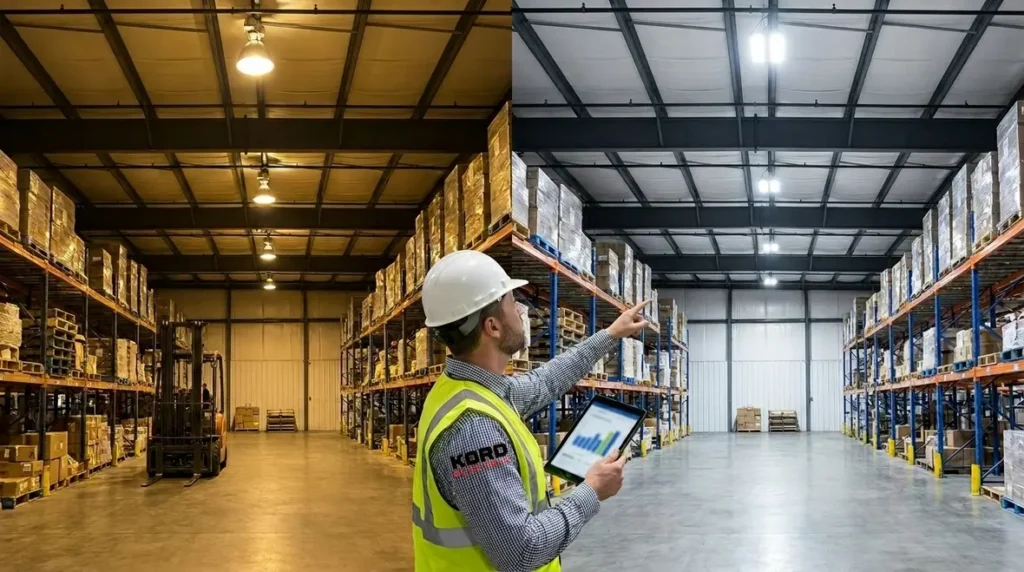
Commercial and industrial teams can lower utility bills and reduce safety risk at the same time, and it starts with practical warehouse lighting energy savings tips. We tell our clients to start by auditing usage hours, trimming overlit zones, and matching light output to task needs. Next, we optimize controls like motion sensing in low traffic aisles and daylight dimming near dock doors. Then we upgrade to efficient fixtures and drivers, and we keep them clean and aimed. In other words, we help teams stop paying for “extra brightness” that no forklift driver asked for. After that, the work becomes about engineering, not guesswork. In the sections that follow, Kord Electric explains what to check, what to upgrade, and why safety matters in every step.
Why warehouse lighting drives both energy and incident risk

In many facilities, lighting failures do not show up as dramatic outages first. Instead, they show up as dim rows, flicker, glare, and uneven coverage. However, those issues do more than annoy people. They raise trip hazards, reduce visibility for pedestrians and operators, and make it harder to spot floor damage, pallet labels, and safety markings. As a result, costs rise in ways that do not always hit the electricity line. Inspections, downtime, incident investigations, and claims can add up fast, and nobody budgets for that the way they budget for bulbs.
We also see a common pattern: facilities keep lights running at full output even when demand drops. Meanwhile, storage height, aisle width, and reflective surfaces change what “good light” looks like. So the lighting plan needs to fit the layout, not the old ceiling grid that happened years ago. Think of it like buying a suit off the rack for a warehouse technician. It might look fine from ten feet away, but it will not move right when the job starts.
How we assess your lighting before we touch a fixture
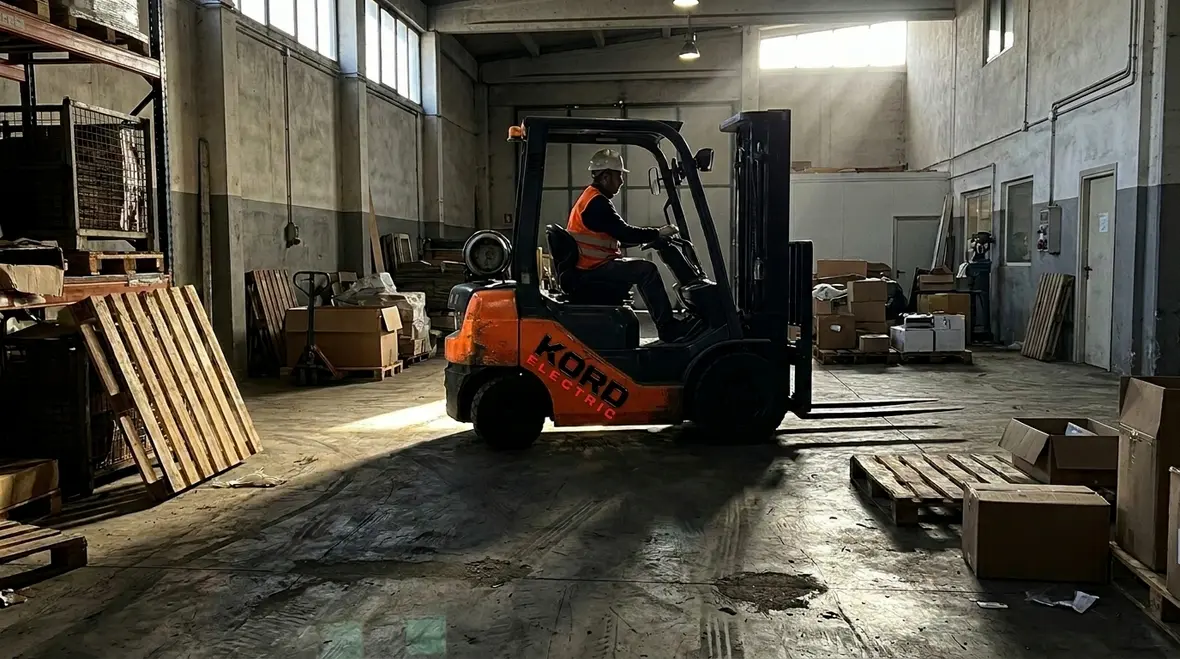
Our experienced service staff does not walk in with a bag of replacements and a hope-based plan. Instead, we run a step by step evaluation. First, we review operating patterns: shift length, foot traffic, forklift routes, and seasonal changes. Then we map lighting performance across typical work zones. After that, we check controls, emergency coverage, and maintenance history. Because when lights fail early, the reason is usually hiding in wiring, drivers, mounting hardware, or dust loading.
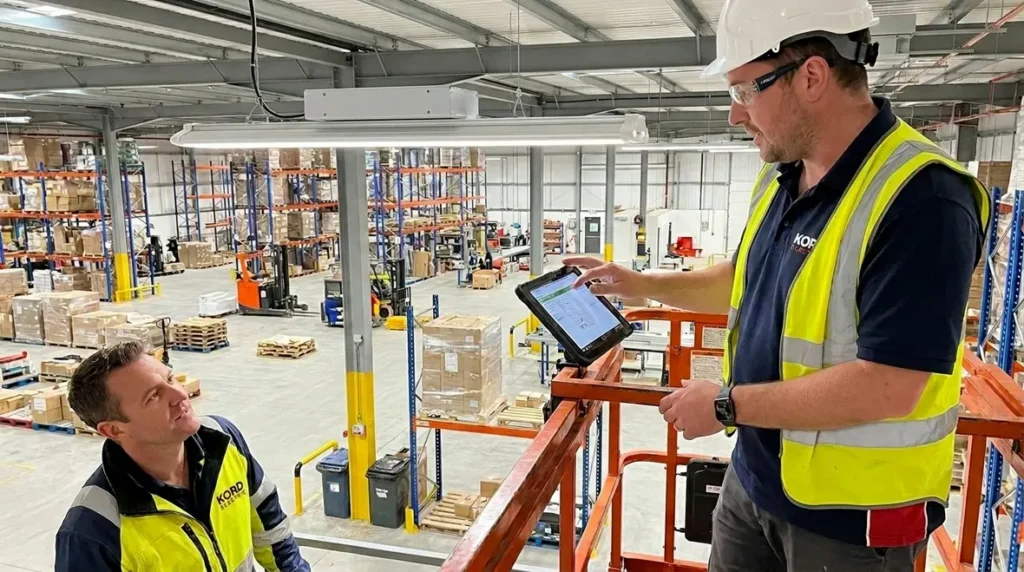
In addition, our technicians measure illumination where it matters: picking areas, packing lines, loading docks, staging bays, and access routes. We also look at uniformity, not just average brightness. Uneven light creates shadows where people step and where pallets disappear. Furthermore, we test for glare risk and check how light spreads at different mounting heights. That is how we avoid the classic mistake of “more lumens” that still leaves dark corners.
And yes, we document the findings in a way that supports decision making. Others may hand over a rough spreadsheet. We give our clients clear recommendations, prioritized by impact, safety, and realistic payback.
Design upgrades that improve safety and lower energy use

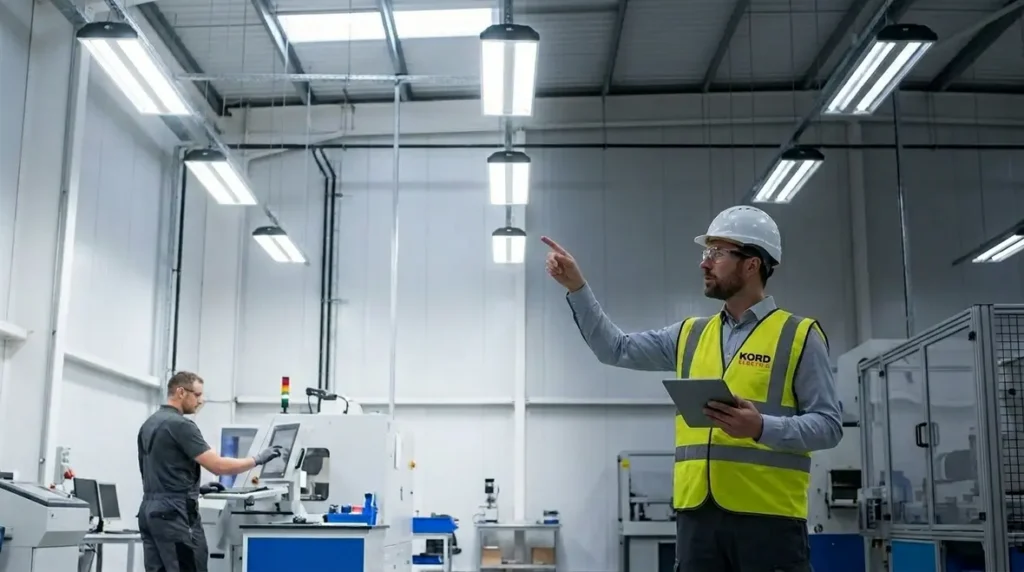
After the assessment, Kord Electric typically focuses on upgrades that reduce watts while improving sightlines. We often recommend high efficiency LED fixtures matched to the warehouse task, with proper lumen output for the ceiling height and beam spread. Then we tune spacing and mounting to reduce dead zones. This step matters because a fixture layout that worked for older technology may not deliver the same coverage today.
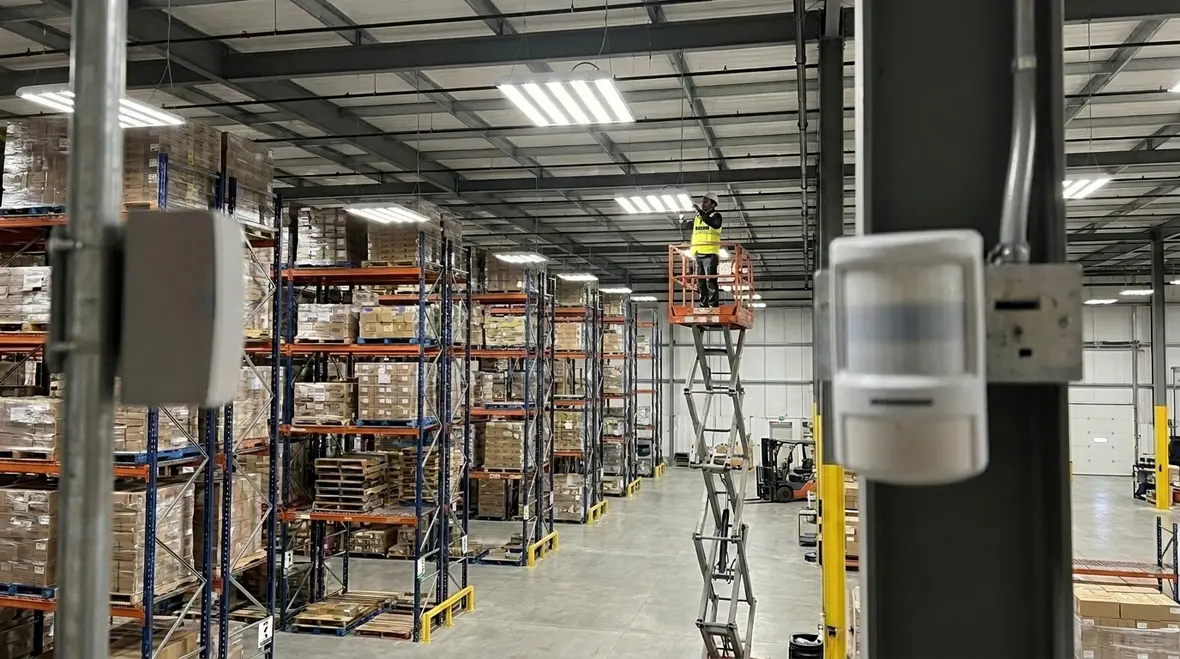
Next, we implement controls. In many warehouses, lighting energy waste happens because lights stay on when no one needs them. Therefore we use solutions like occupancy sensing for infrequent aisles and scheduled dimming based on shift patterns. Where daylight exists, we coordinate with skylights and dock side windows for daylight harvesting. This does not just cut energy. It also helps maintain stable lighting levels, which supports safer movement and clearer visibility of floor markings.
We also address emergency lighting and life safety coverage. Safety systems must stay reliable during outages and planned maintenance. So we verify that emergency fixtures, testing intervals, and circuit planning meet the facility requirements. If a warehouse is run like a bus with the doors open, “good enough” becomes “expensive.” We prefer proven solutions.
Bringing code compliance and energy efficiency together
Many of the most effective warehouse lighting energy savings tips also line up with code and inspection expectations. Proper fixture selection, spacing, and mounting help maintain required illumination levels in aisles, loading docks, and production zones without wasting energy. That means fewer dark patches that trigger red flags and fewer overlit areas that drive up your bill.
When you plan upgrades with a commercial specialist, you are not just buying hardware. You are coordinating safety, energy performance, and compliance in one design cycle so your lighting passes inspection and supports day to day work instead of fighting it.
Controls and maintenance plans that keep savings alive
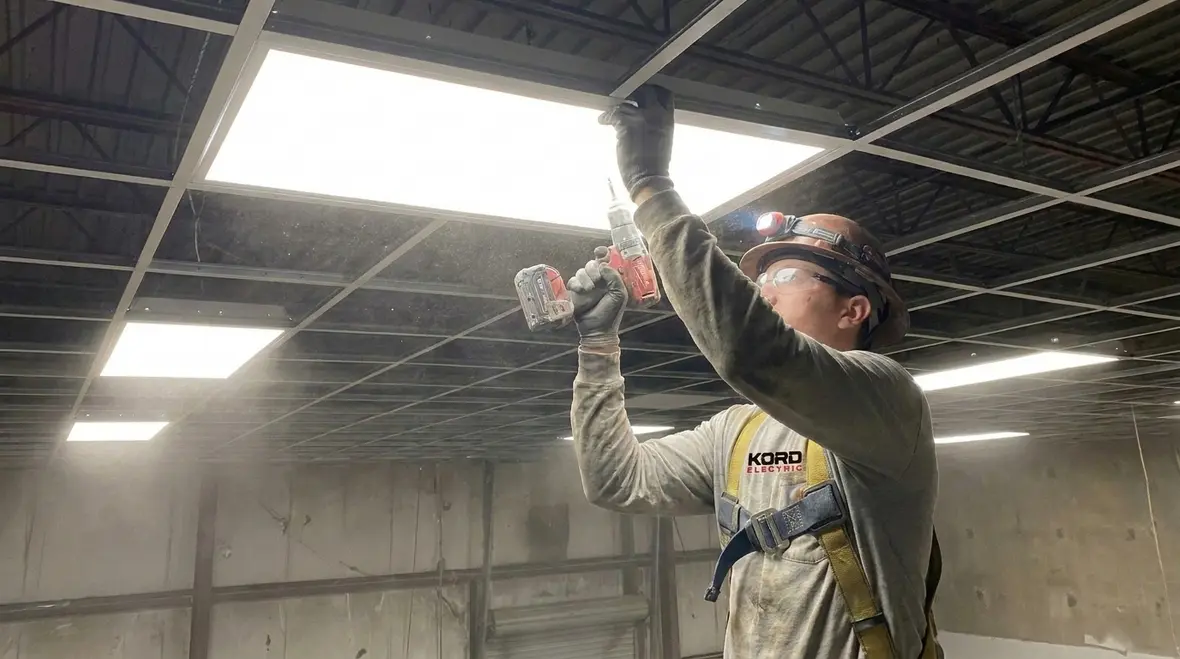
Even the best upgrade will lose performance if maintenance is treated like a seasonal chore. As dust and grime build up on fixtures and lenses, light output drops. Over time, that can force managers to turn lights up or leave them on longer, which kills savings. So we help teams build a routine that protects performance without disrupting operations.
Our technicians also verify the control system settings after installation. Dimming curves, sensor sensitivity, and time delays must match real traffic patterns. For example, a loading bay may feel empty during certain minutes but still needs stable lighting when trucks arrive. We tune those settings so the lights behave the way the operation behaves.
Additionally, we set up tracking for performance. That means monitoring, scheduled inspections, and clear triggers for replacement. We do not just say, “Call us when something breaks.” We show our clients how to prevent failures that lead to safety issues and unplanned downtime.
Why preventive electrical work supports lighting reliability
Lighting performance depends on more than fixtures and lenses. Panels, breakers, and switchgear need regular attention so power stays stable and predictable. When electrical components run neglected, nuisance trips, loose connections, and minor faults can ripple into flicker, unexplained outages, or control misbehavior that eats away at both safety and energy performance.
When warehouse teams combine routine lighting maintenance with broader electrical preventive maintenance, they turn “hoping it keeps working” into a structured plan that supports uptime and keeps all those warehouse lighting energy savings tips delivering value month after month.
Power quality, grounding, and reliability for warehouse operations
Warehouses rely on steady power for lighting, controls, conveyors, and safety systems. When power quality slips, lighting systems can flicker, drivers can fail early, and controls can behave unpredictably. That can create a real hazard in motion heavy spaces. So reliability is not optional. It is part of safety engineering.
Because industrial facilities often include other systems that demand uptime, we also connect the dots between lighting and broader electrical reliability. For example, the requirements that support data center uptime can reflect good discipline in electrical design, testing, and backup planning. Kord Electric has covered this thinking in our article about data center electrical requirements for uptime. While a warehouse is not a data center, the mindset transfers well: we plan for stable power, we avoid weak links, and we test so the system performs when it matters.
In practical terms, we review panel capacity, circuit protection, and grounding. Then we confirm that lighting circuits do not share risky loads in ways that lead to nuisance trips or unstable operation. We also check switching devices and dimming compatibility so the system stays steady through startup and load changes.
Linking lighting reliability with broader facility goals
When lighting reliability improves, other metrics usually follow. Fewer disruptions mean better throughput, calmer shift changeovers, and less time troubleshooting mysterious “blink and reset” events. When power quality and grounding stay under control, sensitive equipment, control gear, and safety systems enjoy longer life and fewer surprise incidents.
That is why smart facilities treat warehouse lighting as part of a larger reliability strategy instead of an isolated project. They design and maintain electrical infrastructure so that visibility, safety, and uptime all move in the same direction.
Smart ways to manage upgrades in an active facility
Most commercial and industrial sites cannot shut down lighting for weeks. So we plan upgrades to keep operations moving. First, we stage work by zone. That limits the time any aisle or bay runs at partial output. Next, we use safe lockout procedures and clearly marked work areas. Our technicians treat safety like a hard requirement, not a suggestion.
Then we coordinate with facility schedules. We plan around peak receiving, shift handoffs, and any critical production windows. As part of that, we verify that emergency systems stay functional and that any temporary lighting meets the safety needs of the space.
Finally, we support training for the people who run the facility day to day. Because the best hardware in the world still fails if nobody knows how to operate the control settings. Our team explains what we install, how it behaves, and what normal maintenance looks like. And if someone asks, “Is this supposed to dim that much?” we answer with calm confidence, not that corporate shrug.
Planning upgrades around real work, not wishful thinking
A successful project respects the fact that pallets, people, and product still need to move. That means aligning lighting changeovers with real deadlines, routing around critical paths, and setting expectations so supervisors and operators know what is happening in their area. When upgrades are staged, communicated, and tested carefully, teams see improvements instead of interruptions.
The result is a warehouse that feels more predictable: better visibility in the places that matter, calmer shift transitions, and fewer “sorry, the lights are weird today” conversations on the floor.
FAQ
Choosing Kord Electric for energy efficient, safer warehouse lighting
When a warehouse needs lighting that performs, Kord Electric helps you plan, design, and upgrade with safety and savings in mind. We assess your layout, verify controls and emergency coverage, and tune systems so lights stay consistent across shifts. Our technicians explain the work in plain terms, so your team knows what to expect and how to maintain performance. If you want lower energy use, fewer lighting issues, and safer aisles, contact Kord Electric today to schedule an evaluation.
For facilities that are ready to turn warehouse lighting energy savings tips into a full upgrade plan, it often helps to align lighting changes with broader service work. Exploring dedicated commercial and industrial lighting installation services can give your team a clearer roadmap for new fixtures, retrofits, and control strategies tailored to your building.
If your operation spans multiple sites or you are coordinating improvements across a wider service area, you can also review how Kord Electric supports complex properties and regional portfolios through comprehensive Los Angeles County electrical services. That way, lighting upgrades, power quality work, and preventive maintenance all move in step instead of in scattered projects.