Fixing Flickering Lights in Commercial Offices
When Office Lights Start Flickering, Everything Feels Off
In commercial office spaces, flickering lights do more than annoy people. They disrupt focus, strain eyes, and make meetings feel like they are being filmed for a bad reality show. At Kord Electric, we often see the same pattern: a tenant complains, maintenance checks bulbs, and the issue returns again and again. That is where flickering lights in office solutions become more than a quick fix. Our electricians and expert service staff treat this like a real system problem, because it usually is. Then we track the cause from the power source to the wiring, and we document what we find so the building team can act with confidence.
What Causes Persistent Flickering in Commercial Buildings?
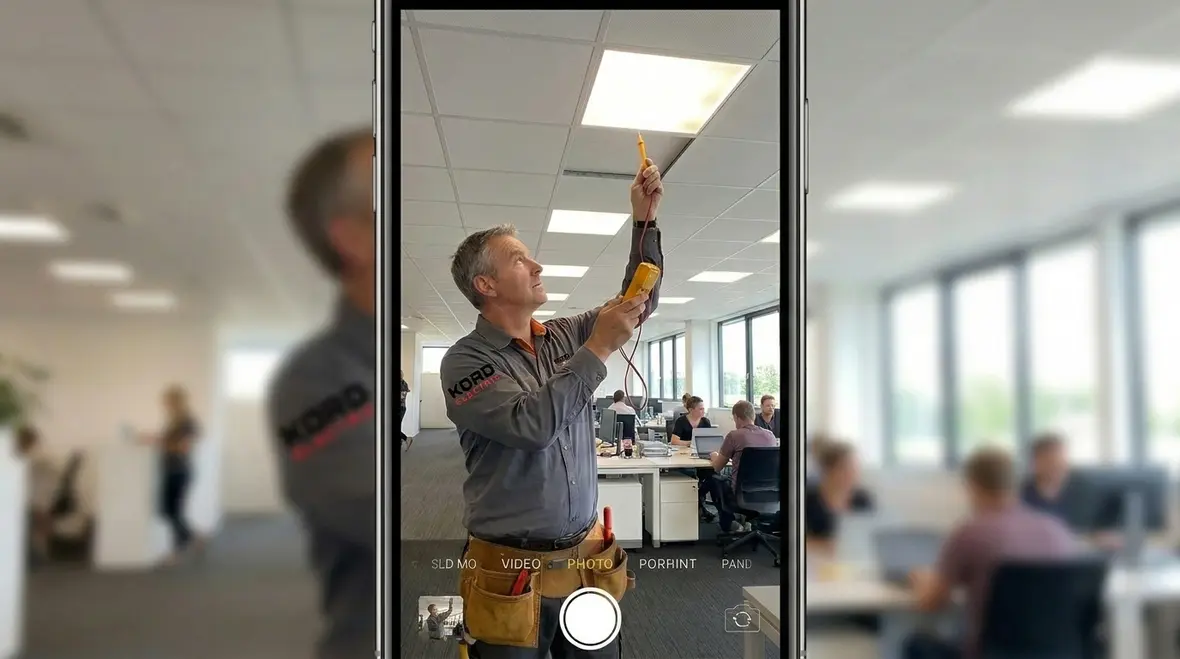
In most office environments, flicker does not come from one single thing. Instead, it shows up when several power and control factors line up poorly. First, voltage drops and surges can cause lights to blink, especially in buildings with motors, HVAC systems, elevators, or heavy equipment cycling on and off. Next, loose connections at panels, breakers, or fixture bases can create an unstable contact. Then there is load interaction, where one circuit affects another through shared neutrals or improperly balanced phases.
Additionally, aging components play a role. We see worn dimmers, outdated drivers on LED fixtures, and controls that no longer match the electrical design. Therefore, the right approach is not guesswork. Our technicians examine the full path of electricity, because flicker is often a symptom of something upstream.

Start Troubleshooting Without Guessing, Follow the Power Path
When our team responds to a commercial office issue, we begin with a smart, step by step plan. We ask the building team what changed recently: new tenant loads, a refreshed lighting plan, a remodel, or even a new data center. Then we inspect where the flicker appears. Is it one zone, one floor, or one row of offices? Does it happen during certain times, like morning startup or after lunch when HVAC ramps up?
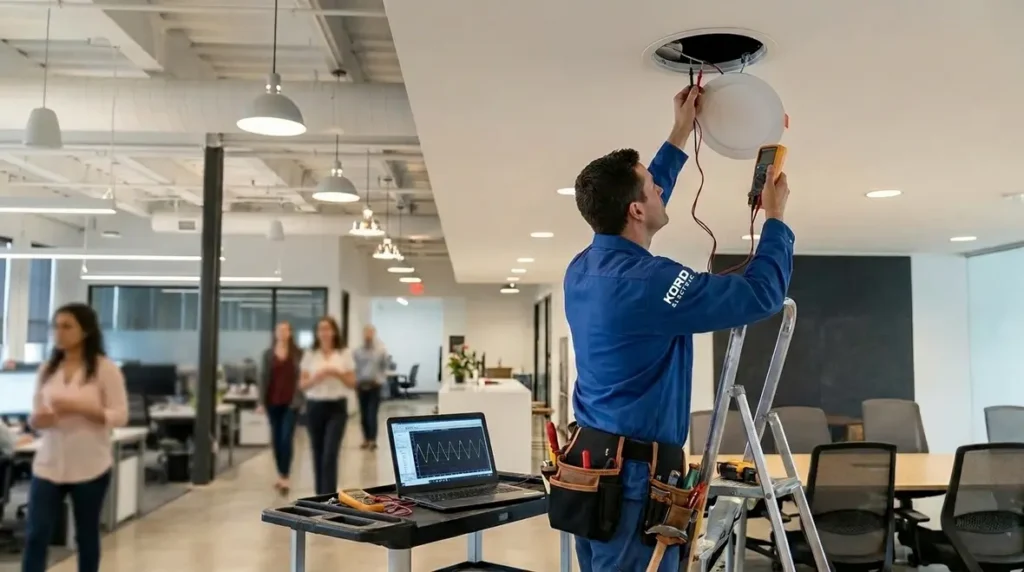
After that, our expert service staff checks the basics that often get skipped. We verify fixture compatibility, confirm correct wiring, and test the dimming control settings if dimmers exist. We also inspect the panel schedule and the load profile. If the building uses shared neutrals or has multiwire branch circuits, we look closely there. In short, we follow the electricity like an experienced detective, not like someone swapping random parts and hoping the problem disappears.
For many facilities, this method pairs naturally with structured maintenance strategies. Building teams who already use commercial and industrial electrical maintenance plans are usually a step ahead, because they already track changes in panels, loads, and equipment over time.
How We Test for Voltage, Load, and Connection Issues
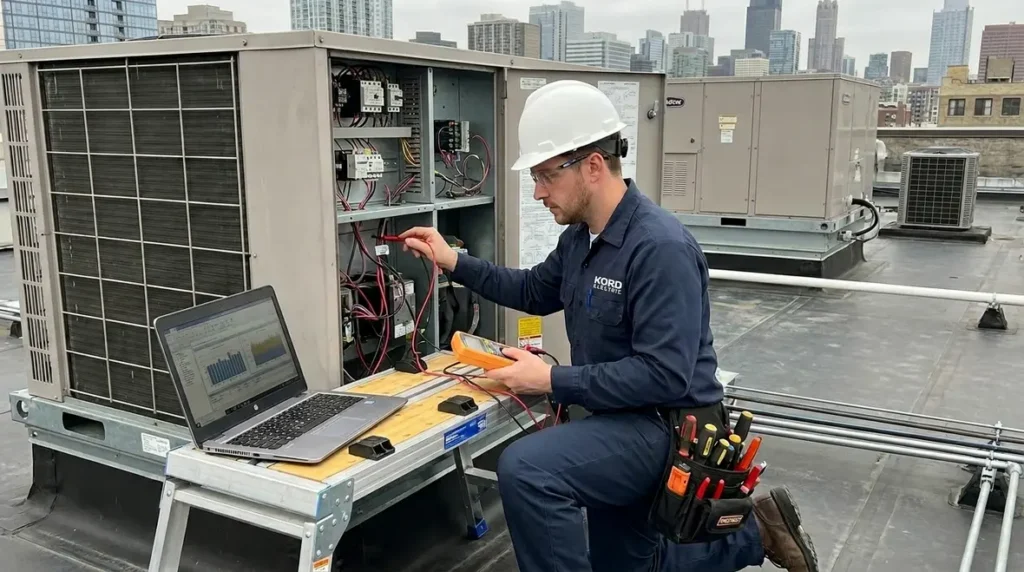
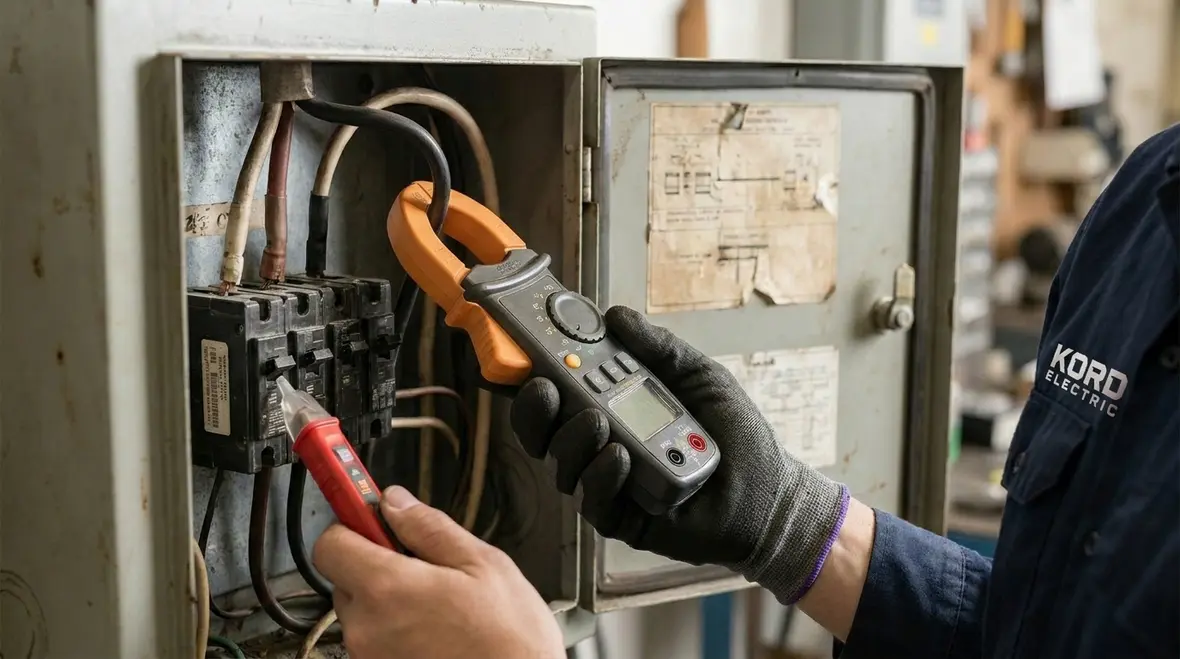
Effective troubleshooting needs real data. So we use calibrated measurements and structured checks instead of “it looks loose” opinions. We inspect incoming power quality and we evaluate if the supply voltage stays steady under normal building demand. Then we check for voltage imbalance and signs of harmonic distortion, which can confuse some LED drivers and electronic ballasts.
Next, we examine terminations. We tighten and evaluate connections at distribution boards, branch circuit points, and within fixture leads. Because even slight movement or corrosion can cause micro arcs, the lights may flicker under specific load conditions. Finally, we correlate findings with the time pattern of the issue. If flicker increases when elevators start, or when compressors cycle, that clue points our work toward the interaction between lighting and the larger building system.

In some Los Angeles County properties, we also coordinate with teams handling emergency power and critical circuits. Addressing recurring flicker as part of a broader reliability strategy often ties into services similar to Kord Electric’s broader Los Angeles County electrical services for commercial facilities, where lighting, distribution, and life safety all share the same infrastructure.
Where Maintenance Plans Fit: Prevention Beats Patchwork
Once we locate the cause, we build a path to stop the issue from coming back. That is why Kord Electric supports commercial and industrial electrical maintenance plans for major property buildings. Instead of waiting for failures, we schedule inspections and targeted testing that catch drift early. Our technicians understand that offices do not run on patience. A single outage or repeated lighting problem can disrupt operations, tenants, and customer trust.
Our approach aligns with maintenance planning that supports long term reliability. For many facilities, we review panel health, evaluate circuit loading, check control components, and document recommended updates. Then we coordinate service work in a way that limits downtime. In other words, we keep the building ready before the building gets loud about the problem.
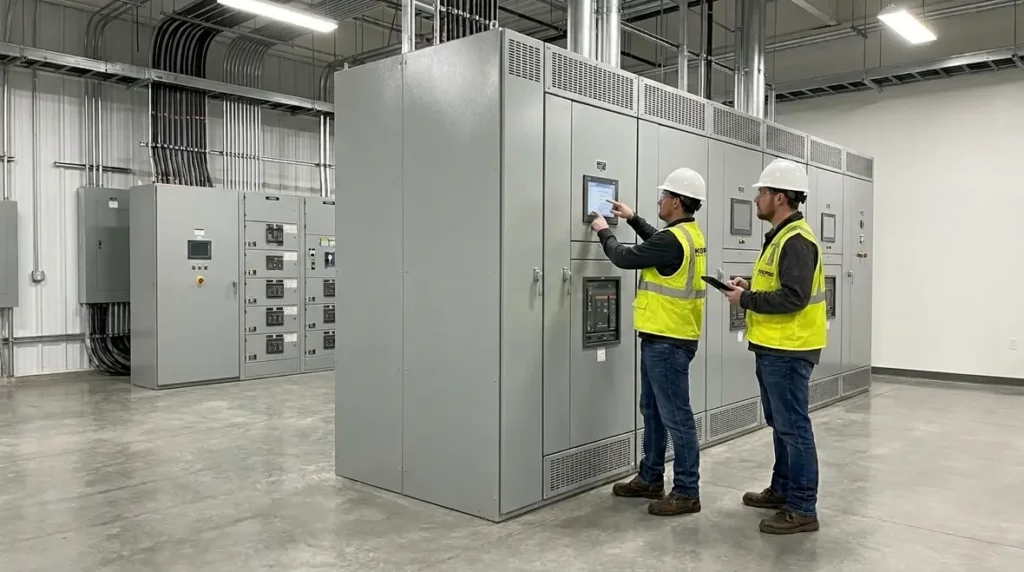
For property teams that want a deeper, structured framework, we often reference broader programs like dedicated electrical preventive maintenance services. Building out a plan that includes lighting, panels, switchgear, and protective devices makes it much easier to treat flicker as one more solvable data point rather than a recurring mystery.
Common Fixes for Flicker: What We Recommend and Why
Every building has a different electrical story, but the most common fixes fall into a few clear categories. First, if we find loose or failing terminations, we correct and resecure connections. That prevents intermittent contact that can trigger flicker. Next, if dimming controls mismatch the fixture type, we update or recalibrate the lighting controls so the driver and the dimmer behave together.
Third, if voltage issues drive the flicker, we address the distribution problem rather than replacing lights. That may mean balancing phases, improving panel distribution, or correcting wiring design that causes instability. Fourth, if a shared neutral or circuit loading pattern is wrong, we correct the circuit scheme so return currents do not create strange light behavior.
Finally, if we confirm driver or fixture electronics are failing, we replace affected components with products that meet the building’s electrical design. And yes, sometimes the culprit is simply a batch of incompatible LED drivers. When that happens, the fix is straightforward. Still, we verify first, because guesswork is how budgets get “surprised” and nobody smiles at surprises.
Getting Buy In From Facility Teams Without Causing Panic
In commercial office spaces, facility teams need clear explanations and a calm plan. Our expert service staff communicates findings in a business friendly way, because the goal is not to overwhelm. We explain what we tested, what we found, and what each correction accomplishes. Then we help the team prioritize work based on risk and impact.
We also guide the next steps for operations. If a building needs a phased lighting or electrical update, we suggest scheduling that avoids peak hours and keeps critical spaces stable. Additionally, we recommend how to monitor progress after repairs, so the team knows the issue is truly resolved.
When people feel informed, they cooperate. And when they cooperate, we finish faster. In other words, good communication is the least expensive service upgrade we offer.
Dual Column Reference: Quick Signs and Likely Drivers
Observed Sign
Flicker appears during HVAC cycling
Flicker affects a single row or zone
Flicker varies with dimming levels
Flicker intensifies after building modifications
Flicker is intermittent and hard to repeat
Likely Electrical Driver
Voltage drop or load interaction
Branch circuit or fixture driver mismatch
Incompatible dimmer or control setting
New load causing phase or neutral imbalance
Loose terminations or failing connections
FAQ: Flickering Lights in Office Solutions for Commercial Sites
Request Expert Help From Kord Electric
If your commercial office lights keep flickering, do not treat it like a recurring nuisance. Contact Kord Electric and let our technicians troubleshoot the power path with real testing and clear reporting. We work only on commercial and industrial facilities and major property buildings, so our process fits your operational needs. Then we recommend fixes that keep the building steady, tenant friendly, and ready for the next day. Call us now and let us bring the lighting back to calm.
Whether you manage a single office tower or a portfolio of properties, tying your flickering light investigations into a broader preventive program helps protect the entire electrical system. If you are ready to connect lighting stability with long term reliability, our electrical preventive maintenance and commercial service offerings are built to support that next step.
From troubleshooting complex dimming networks to coordinating with building engineers on future upgrades, our team focuses on calm, methodical work. We follow the data, explain the options, and recommend practical solutions so your offices feel stable, professional, and ready for everyday business instead of the next round of complaints about flicker.