Electrical System Condition Monitoring: Detect Problems Before Failure
Introduction: Electrical System Condition Monitoring: Detect Problems Before Failure
At Kord Electric, we treat downtime like it is personal. When electrical issues quietly grow in the shadows, your facility pays the price through outages, reduced production, and emergency calls that always seem to arrive at the worst time. That is why we rely on Electrical System Condition Monitoring: Detect Problems Before Failure for commercial and industrial facilities and major property buildings. Our approach helps us spot early warning signs before equipment fails. Then we plan repairs during normal windows instead of chaos.
In this guide, we explain how our technicians and expert service staff use practical monitoring methods, including infrared thermography, to reduce risk and extend asset life. And yes, we do it with a steady hand, because even electricity benefits from good manners.
Why commercial facilities need condition monitoring, not guesswork
In a plant, a hospital, a data center, or a large office tower, electrical systems do not “feel better” over time. They change. Cables age, connections loosen, insulation breaks down, and harmonics build pressure in the background. Without a structured program, teams often discover issues the way people discover they forgot an umbrella: only after the problem shows up and soaks everything.
Condition monitoring shifts us from a reactive mindset to a controlled one. For example, we do not wait for a breaker to trip, for a busbar to heat up, or for a transformer to begin acting dramatic. Instead, we measure signals and trends. Then we compare results across time. As a result, we can tell the difference between normal aging and an active failure process.
Also, this matters because many commercial and industrial environments run close to capacity. When an electrical problem forms, it can spread into other parts of the system, and the costs compound. Therefore, monitoring becomes both a safety tool and a business tool.
Infrared thermography as a fast early warning system
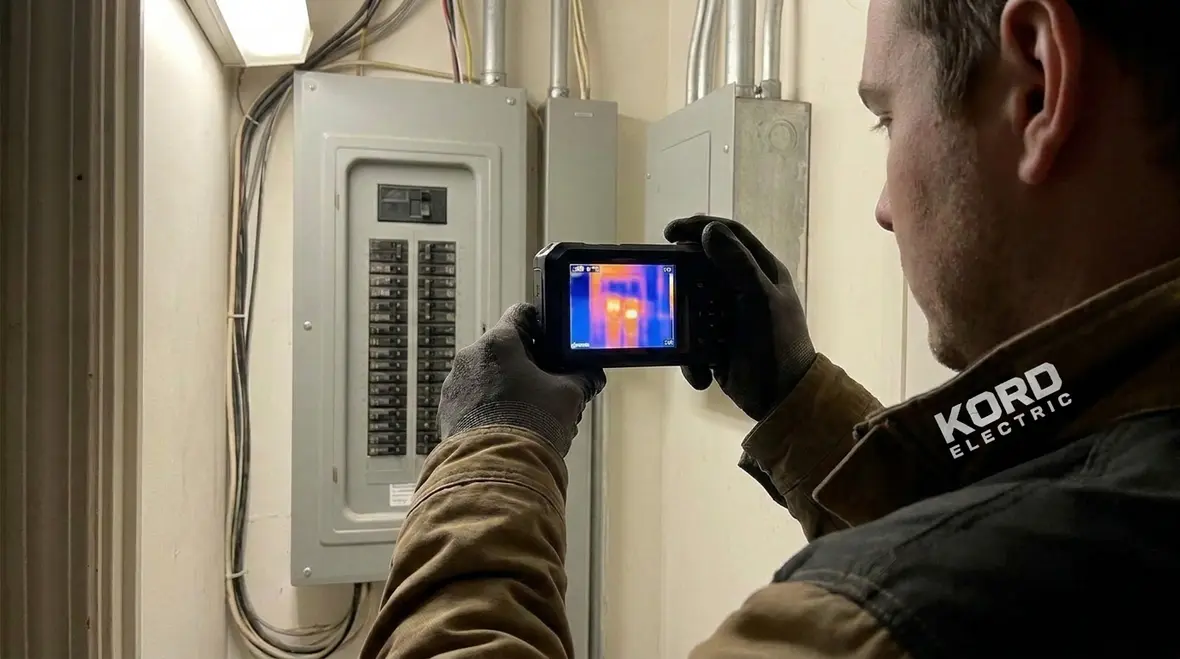
We often start with infrared thermography because it gives our team eyes where they normally cannot look. When electrical current flows through a loose connection, damaged insulation, or worn contact surfaces, heat rises in a specific pattern. Our technicians capture that pattern and convert it into a clear story about what is happening inside panels, switchgear, and distribution gear.
In the Kord Electric service guide for electrical infrared thermography, we emphasize how we conduct inspections and interpret results for real facilities, not lab equipment. We check for hot spots around terminations, bus connections, and components that commonly show early stress. Then we document location, temperature readings, equipment condition, and our recommended next steps. For a deeper technical walk-through, you can also review our dedicated electrical infrared thermography services guide, which aligns closely with how we monitor commercial and industrial systems in the field.
Here is the key point: thermography does not just show “something is hot.” Instead, it helps us identify where heat patterns suggest an electrical defect. That means our electrical system condition monitoring approach does not rely on vibes or history alone.
And because no one wants a surprise fire, we prioritize safety. We coordinate access, follow proper safety procedures, and confirm findings using electrical context and system design knowledge.
What technicians look for during electrical monitoring
Our expert service staff uses a methodical checklist and real-world experience. Yet we also know that every facility tells a different story. A distribution board in a warehouse behaves differently than a switchgear lineup in a healthcare building. So we focus on key failure points that show up again and again.
During monitoring, we look for:
- Loose connections at lugs, breakers, and terminal blocks, which can raise resistance and increase heat
- Worn contacts inside switches and breakers, where arcing history can cause recurring stress
- Overloaded conductors that run above expected thermal limits, especially during peak operations
- Moisture and contamination effects, which can create leakage and uneven thermal patterns
- Transformer hot spots in windings and connections, which can indicate insulation issues or abnormal loading
- Busbar temperature rise that suggests imbalance or a developing connection problem
Then, we go deeper. We compare readings from similar components, review load conditions, and use system knowledge to separate harmless variability from true defects. In other words, we do not just chase the brightest spot. We follow the evidence to the likely cause.
Sometimes we find a problem that looks small on the surface. And sometimes that “small” issue is the spark that starts a much bigger event. Electrical work loves drama, but we prefer our drama on a calendar, not in a control room.
How we reduce false alarms and build clear action plans
Some monitoring programs generate too many alerts, and teams waste time investigating noise. We avoid that. We blend measurement with context. First, we consider operating mode, time of day, ambient temperature, and load history. Next, we confirm thermal findings with electrical reasoning and repeat checks when needed.
To move from observation to action, our technicians build a plan that fits your facility. We prioritize items based on risk. For example, a component showing consistent abnormal temperature rise in multiple inspections gets higher urgency than a one time anomaly that aligns with a temporary operational condition.
We also focus on deliverables you can use. Our reports typically connect the dots between what we saw and what you should do next. We then coordinate with your maintenance team for scheduling, parts, and safe access. If an outage is not required, we aim for maintenance during planned hours. If an intervention needs careful timing, we help you plan around production needs.
Transitioning from “we found heat” to “we fixed a problem before it failed” requires discipline. And that is exactly what our expert service staff brings to the table, week after week.
From monitoring to reliability: trends, maintenance alignment, and upgrades
Electrical System Condition Monitoring: Detect Problems Before Failure does not stop at inspection day. It continues through trends. When we measure the same assets over time, we spot growth rates. That matters because failure processes often start subtly and then accelerate. Therefore, trend data tells us when a component moves from normal aging into an active fault direction.
We also help align monitoring with maintenance strategies. Instead of spreading effort evenly across everything, we focus on what will likely matter most next. That can reduce unnecessary work while still protecting critical operations.
Additionally, we recommend targeted upgrades when monitoring reveals repeating weaknesses. For instance, if our team repeatedly detects connection issues in a specific type of termination method, we can suggest improved practices or modernization paths. We treat upgrades as risk reduction, not as a sales script. Our goal remains the same: protect your facility, keep systems stable, and reduce unexpected downtime.
And yes, we know budgets. We work within them. We help you choose actions that deliver value with clear risk logic, because “trust us” is not a maintenance strategy.
When you are looking at broader resilience, our monitoring work often pairs naturally with programs like power reliability audits for commercial facilities, so condition data, corrective work, and long-term reliability all move in the same direction instead of living in separate silos.
Dual-column checklist for a practical monitoring program
This table helps you picture how a typical monitoring cycle works for commercial and industrial facilities and major property buildings.
| Step | What we do |
| Scope | We define critical areas like switchgear, panelboards, transformers, motor control centers, and distribution gear |
| Baseline | We capture initial readings and document operating context so later results have a fair comparison |
| Inspection | We perform infrared thermography and other condition checks aligned with your system design |
| Analysis | We interpret results using electrical logic, load context, and component behavior over time |
| Action plan | We prioritize findings, recommend next steps, and help schedule work during planned windows |
| Follow up | We confirm corrections and keep tracking trends to verify improvement and spot new issues |
Electrical infrared thermography services guide: how we apply it on site
When we reference our Kord Electric infrared thermography services guide, we do it for a reason. It outlines how we structure inspections so results hold up under real maintenance scrutiny. We focus on proper setup, safe access, and careful interpretation. Then we connect thermal results to electrical components that commonly fail.
In practice, our technicians plan around your operations. We consider when systems run at steady load and when conditions best reveal thermal differences. We also document locations clearly so your maintenance team can find the exact component that needs attention.
Finally, we keep the tone professional and the process practical. Our team does not throw random color maps at you like a modern art exhibit. Instead, we translate what we see into clear recommendations that support reliability and safety.
That is the difference between inspection and improvement. One is a snapshot. The other is a strategy.
FAQ
Conclusion: let’s protect your facility before the next failure
If you operate critical equipment, you deserve more than reactive electrical repairs. We at Kord Electric build an Electrical System Condition Monitoring approach that helps you detect problems before they become downtime, using disciplined inspection and clear action plans. Our technicians and expert service staff explain findings in plain language and support maintenance teams with practical next steps. If you want a reliable monitoring plan for your commercial or industrial facility, reach out to us now. We will review your key assets and propose the right path forward.
For organizations across the region that need a broader roadmap, you can also connect our monitoring work with comprehensive Los Angeles County electrical services for commercial and industrial facilities, so preventive maintenance, troubleshooting, and capital projects support the same reliability goals instead of competing for attention.
Whether you are just starting a condition monitoring program or expanding from a single site to a full portfolio, our team is ready to help you move from “we hope everything holds together” to a calm, documented plan. The earlier you begin, the more problems you catch before failure.