Electrical Infrared Thermography Services Guide
At Kord Electric, we help commercial and industrial facilities catch electrical problems before they turn into outages, code issues, or expensive repairs. We use electrical infrared thermography services to spot hidden hot spots in switchgear, bus bars, panels, and connections that look normal to the naked eye. Early detection matters because heat does not lie, even when people do. And yes, hot components sometimes run quietly, like that one coworker who never answers emails but somehow always knows what is going on.
Below, our team walks through how thermography finds hazards, what technicians verify on site, and how the process supports safer operations. Others may call it a “scan.” We call it a practical risk control tool.
What hidden hazards does infrared thermography reveal in electrical systems?
Most electrical failures start with something small: resistance that builds over time, loose terminations, aging insulation, or corrosion at a connection. As those issues grow, temperature climbs at the exact locations where current struggles to pass. Then, the rest of the system pays the bill.
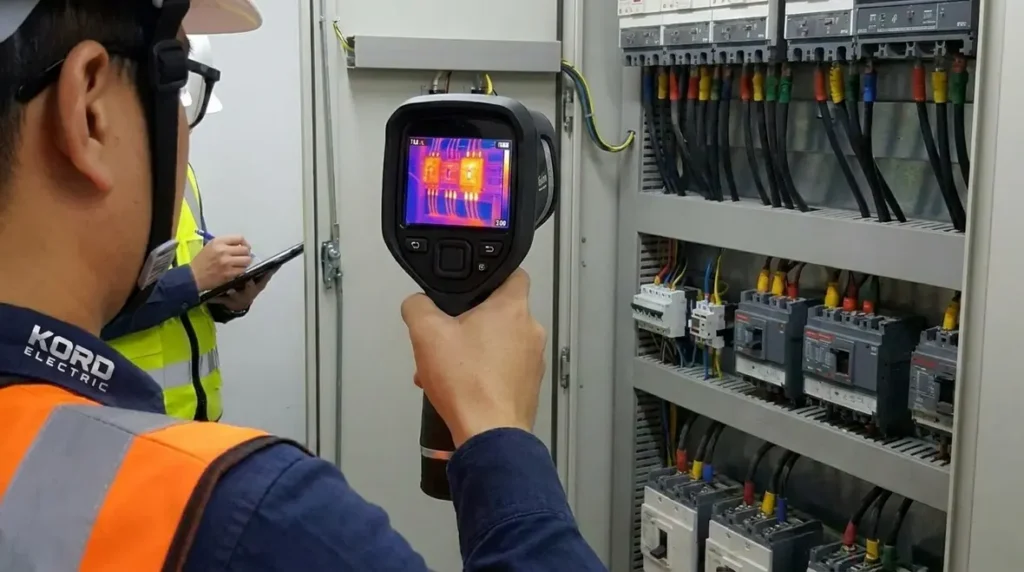
Our technicians use infrared imaging to identify those abnormal temperature patterns. For commercial and industrial environments, common hidden hazards include elevated temperatures at lug connections, uneven heating across bus bars, damaged components inside enclosures, and failing terminations in motor control centers. In addition, thermography can reveal issues caused by recent work, such as wiring torque that did not land within spec, or a connection that loosened after vibration and thermal cycling.
Because an infrared image shows temperature distribution, we can compare one phase to another, and we can watch how conditions change from one inspection to the next. Therefore, the goal is not just to find “something hot.” The goal is to find the cause early, document it clearly, and reduce risk before it becomes a real emergency.

How our expert staff performs a safe, accurate inspection
We do not treat thermography like a drive by. We treat it like a controlled diagnostic step. First, our electrical infrared thermography services start with a plan based on the facility layout, the equipment type, and the operating schedule. Then, we coordinate access so the system is stable enough to measure reliably.
Next, our expert service staff evaluates conditions that can distort results. For example, the difference between reflected heat and actual component heat matters. We also account for whether the equipment has been recently serviced, cleaned, or loaded. Moreover, we consider ambient temperature and airflow, since cooling conditions can hide or exaggerate heat signatures.
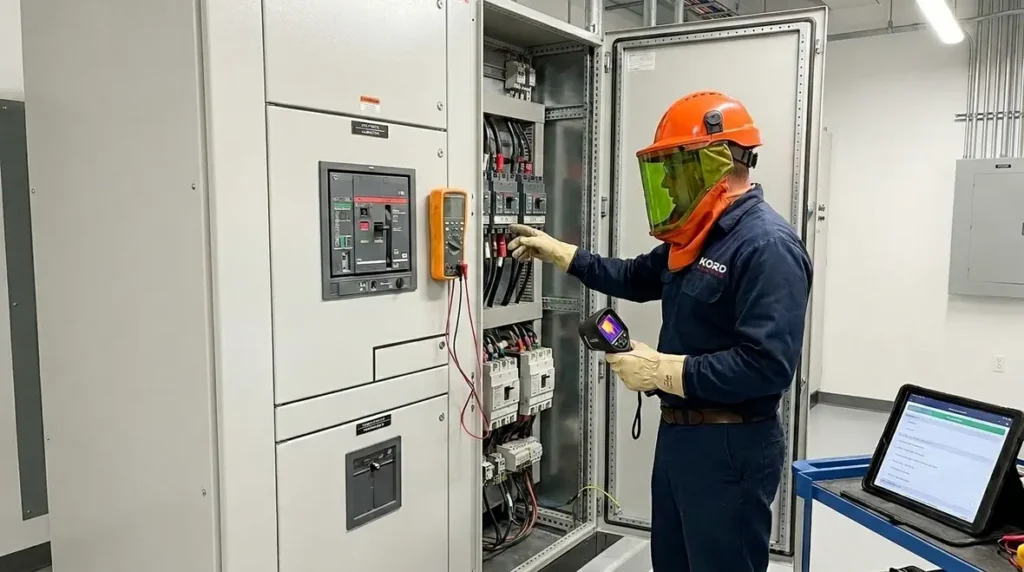
During the scan, our technicians capture images at defined distances and angles, then they log notes that help later troubleshooting. After that, they cross check findings against electrical fundamentals, like expected current paths and known failure modes for specific equipment. In short, we bring method, not guesswork.
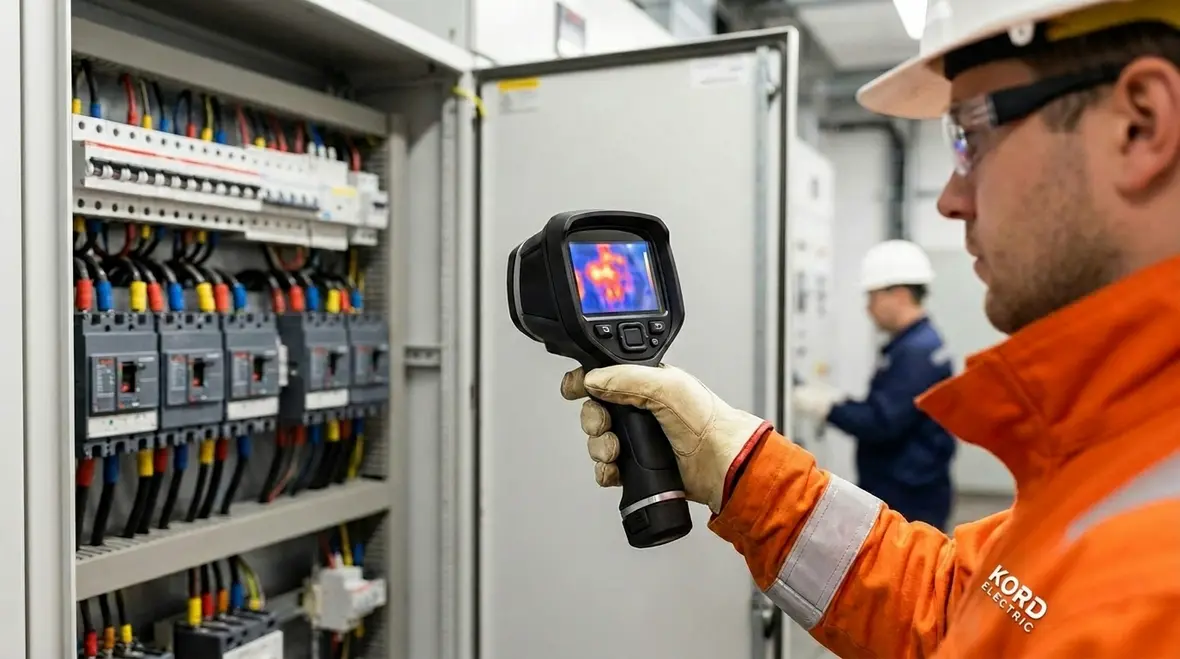
And if you are picturing someone waving a camera at a panel, let us calm that down. Our team measures with intention. The camera is only one part of the process, like the microphone is only one part of a great song.
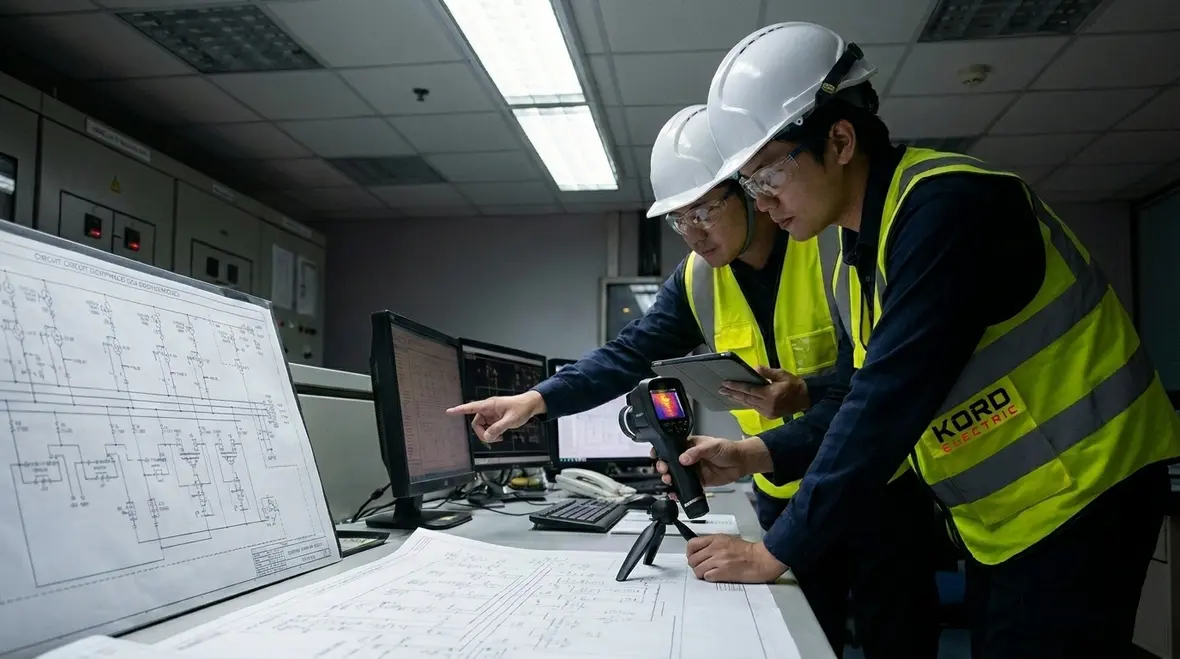
Where hot spots hide in switchgear, panels, and bus ducts
Electrical failures often begin at interfaces. Interfaces include bolted connections, cable terminations, and transitions between devices. Therefore, thermography targets areas where resistance increases and heat collects.
In switchgear, common hotspots appear at bus bar joints, breaker connections, and the terminations that feed auxiliary circuits. In panelboards, we often see temperature differences at neutral bars, overloaded branch circuits, or connections that did not seat evenly. In motor control centers, hotspots can show up at contactors, starter connections, and sections fed through older wiring methods.
Bus duct and large current pathways deserve extra attention in major property buildings because they carry heavy loads and experience thermal cycling. Even when equipment passes a basic visual inspection, our infrared scan can reveal a thermal imbalance that indicates a connection issue.
Furthermore, we do not stop at “finding.” We explain what the temperature pattern typically means, and we help your team prioritize repairs based on risk, load conditions, and equipment criticality. That matters most for facilities where downtime is not a suggestion, it is a cost center.
If you want to see how these hidden weaknesses play out across large properties, our article on hidden electrical risks in commercial buildings walks through the kinds of problems that often show up during infrared scans and structured inspections.

What the temperature differences mean, in plain business terms
Infrared images show relative temperature and sometimes absolute temperature, depending on measurement setup. However, the most useful insight comes from comparing components within the same system and comparing across inspections. That is how we separate normal variation from a growing problem.
Our technicians analyze patterns such as phase imbalance, localized heating at a single termination, and broad heating across an entire section. Localized heat often points to a connection issue, like insufficient torque or corrosion at a lug. Phase imbalance may suggest unequal loading, a missing or degraded connection, or insulation problems.
On the other hand, broader heat across a section can indicate higher loading or internal component wear. Then, we align the image data with equipment ratings, load history, and operational constraints.
In business terms, the point is simple: we help you focus on components that are trending toward failure, not components that are merely warm. And yes, warm does not always mean danger, but cold does not always mean safe either. Electrical systems love to keep surprises in their pockets.
How we document findings and support quick, smart repairs
Thermography adds value when it turns into decisions. Therefore, Kord Electric provides documentation that supports maintenance planning and capital justification for commercial and industrial facilities.
Our reports typically include annotated images, location details, and temperature findings, plus a clear description of what likely causes the condition. We also support your team with suggested next steps, such as tightening connections, cleaning corrosion, replacing failing components, or performing targeted electrical testing when needed.
Moreover, we help prioritize. Not every hotspot carries the same risk. A critical feed to a life safety system or a main switchgear incomer cannot wait as long as a minor branch issue. Our approach supports sequence planning, so your team can schedule outages and repairs with fewer surprises.
And because facilities do not run on wishful thinking, we keep the process practical. Our technicians communicate in a way that maintenance leaders and facility managers can act on immediately.
For teams building a broader strategy, our overview of commercial and industrial electrical maintenance plans shows how infrared thermography fits into a structured, long term maintenance program.

How often should a facility schedule thermography?
Frequency depends on risk, load, age, and operational demands. Still, many commercial and industrial facilities benefit from routine scans that establish a baseline, then follow-up inspections that track change over time. After equipment upgrades or new installations, we also recommend an inspection to confirm connections and identify any early anomalies.
We work with property teams to set a schedule that matches real operations. For example, some sites need inspections aligned with seasonal load changes, while others align with planned maintenance windows. Also, if a facility has older switchgear, frequent panel openings, or a history of connection issues, we often increase scan frequency to tighten control.
Because hazards do not respect calendars, the goal is not “check once and forget.” Instead, the goal is continuous learning from electrical infrared thermography services and repeat imaging, so your team catches escalation early.
In many cases, thermography becomes one of the core tools inside a broader electrical preventive maintenance program, alongside breaker testing, load studies, and emergency system checks.
Dual value: safety, compliance, and reduced downtime
Infrared imaging supports more than repair work. It supports safer operations by identifying overheating before it causes damage, smoke, or arcing events. It also supports compliance expectations by providing documented evidence of proactive risk management in major property buildings and industrial settings.
Additionally, thermography helps reduce downtime by shifting repairs from emergency response to planned maintenance. That matters because unplanned outages rarely land at convenient times, and they rarely come with a calm timeline.
Our expert service staff often explains the “why” behind each recommended action. Therefore, your maintenance team does not just receive a report. They receive clarity, so repairs stay accurate and efficient. It is like having a guide in a warehouse maze. Nobody wants to get lost, and nobody wants to guess where the problem is hiding.
For facilities that need to align with evolving standards, our insight on NFPA 70B electrical panels and switchgear maintenance shows how infrared inspections support code driven maintenance requirements.
FAQ: Infrared thermography for commercial and industrial electrical systems
Why Kord Electric for electrical infrared thermography services
When your facility runs day and night, you need more than reactive maintenance. You need controlled detection. Kord Electric delivers clear findings, practical recommendations, and repeatable inspection routines for commercial and industrial facilities and major property buildings. Our expert service staff explains the results in plain language, so your team can act with confidence. If you want fewer surprises, safer operations, and better planning for repairs, contact us today to schedule an assessment with electrical infrared thermography services.
To integrate thermography into a broader service program, explore our dedicated electrical preventive maintenance services, which combine infrared inspections, panel and switchgear maintenance, and structured reporting for long term reliability.
If your facility faces unique environmental pressures, such as coastal exposure, pairing infrared inspections with location specific strategies like those outlined in our Santa Monica electrical safety for coastal properties guide can further harden your system against corrosion, moisture, and accelerated wear.
Whether you manage a high rise, manufacturing plant, logistics hub, or data environment, our electrical infrared thermography services give you a clearer picture of what is happening inside your electrical infrastructure, so decisions move from guesswork to grounded evidence.