Electrical Work Orders Improve Maintenance Tracking
Electrical Work Orders: How Commercial Facilities Can Improve Maintenance Tracking
At Kord Electric, we see something every day: commercial buildings run on good intentions, until the day they do not. When facilities struggle to track repairs, tasks become rumors instead of records. That is why Electrical Work Orders: How Commercial Facilities Can Improve Maintenance Tracking matters. With clear work orders, teams can schedule electrical maintenance, document what happened, and keep decisions grounded in real data. As our technicians and expert service staff explain, a solid system turns “I think we fixed that” into “we fixed it on this date, with these results, using this asset history.” And yes, it saves time, prevents repeats, and keeps your operations from acting like a sitcom where everyone forgets the plot.
Why commercial facilities need clean electrical work order records
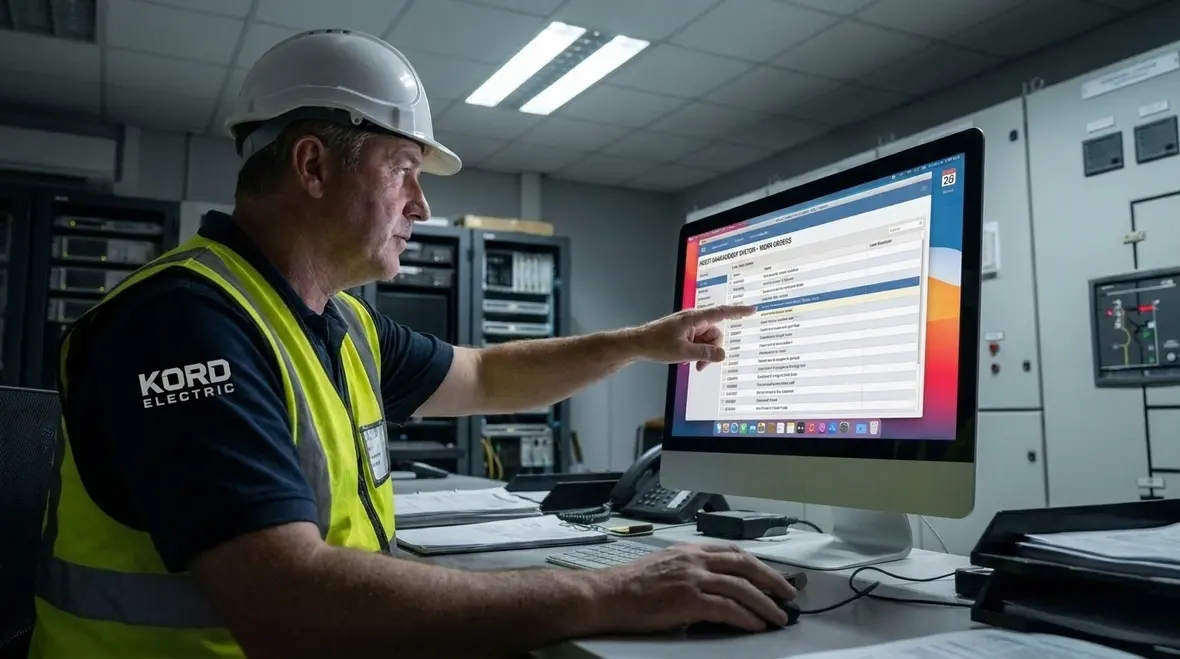
In commercial and industrial environments, downtime costs money fast. Meanwhile, electrical systems quietly collect wear, heat, and vibration the way a couch collects crumbs. Without structured electrical work orders, your maintenance crew may chase symptoms instead of causes. Even worse, future teams lose context and end up redoing work, or guessing at the condition of key components like panels, switchgear, motor controls, and lighting circuits.
Therefore, Kord Electric builds work order practices that protect the entire facility lifecycle. We make sure the details capture the real story: what was reported, what was found, what we tested, what failed, what we corrected, and what we recommend next. In other words, we help you maintain continuity across shifts, vendors, and busy seasons when everyone is already fighting the calendar.
What a strong work order should include
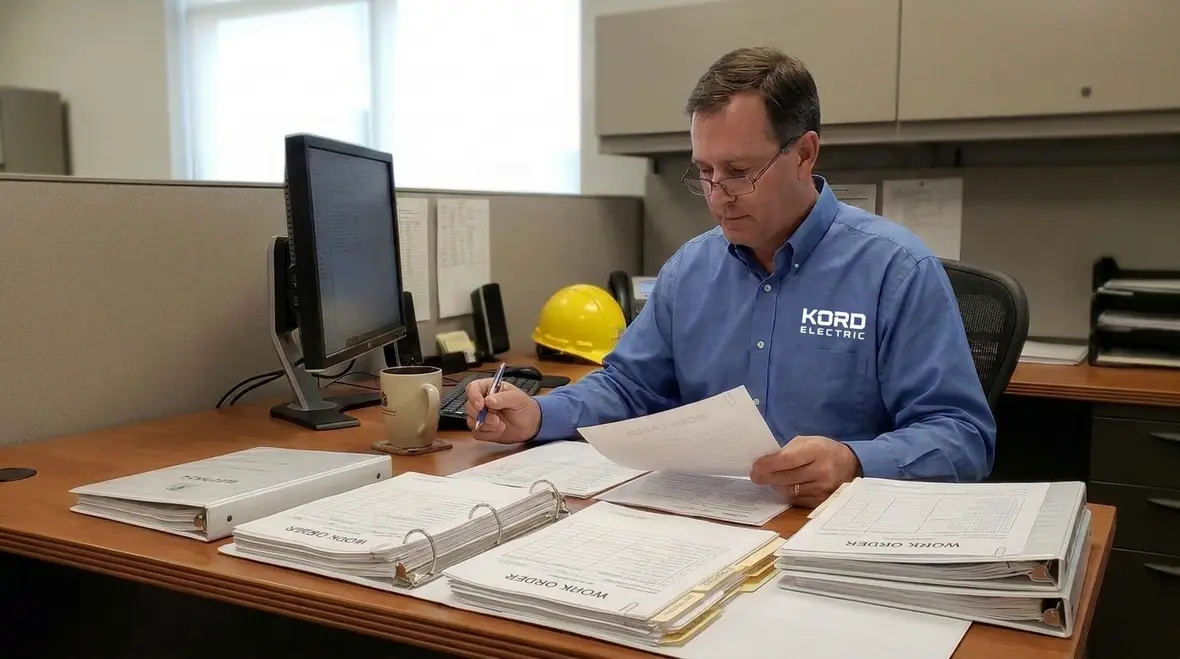
When we train or guide clients, our expert service staff always comes back to one core rule: a work order should answer the next technician’s questions. That means it needs to be specific enough for someone who was not at the original visit. So, we recommend structured fields that cover the basics and go deeper where it counts.
- Asset identification such as panel name, circuit number, equipment tag, location, and system type
- Description of the issue using clear language from the requester, plus what the field team observed
- Safety and compliance notes including lockout, test results, and code-relevant observations
- Diagnostic steps so others can understand how you ruled things in or out
- Corrective action including parts replaced, adjustments made, and retesting completed
- Maintenance recommendation like follow up testing, load checks, or scheduled inspections
As a result, work order history becomes a foundation for smarter planning. And when building management reviews patterns, the “why” starts to show up, not just the “what.”
Link work orders to electrical system asset management
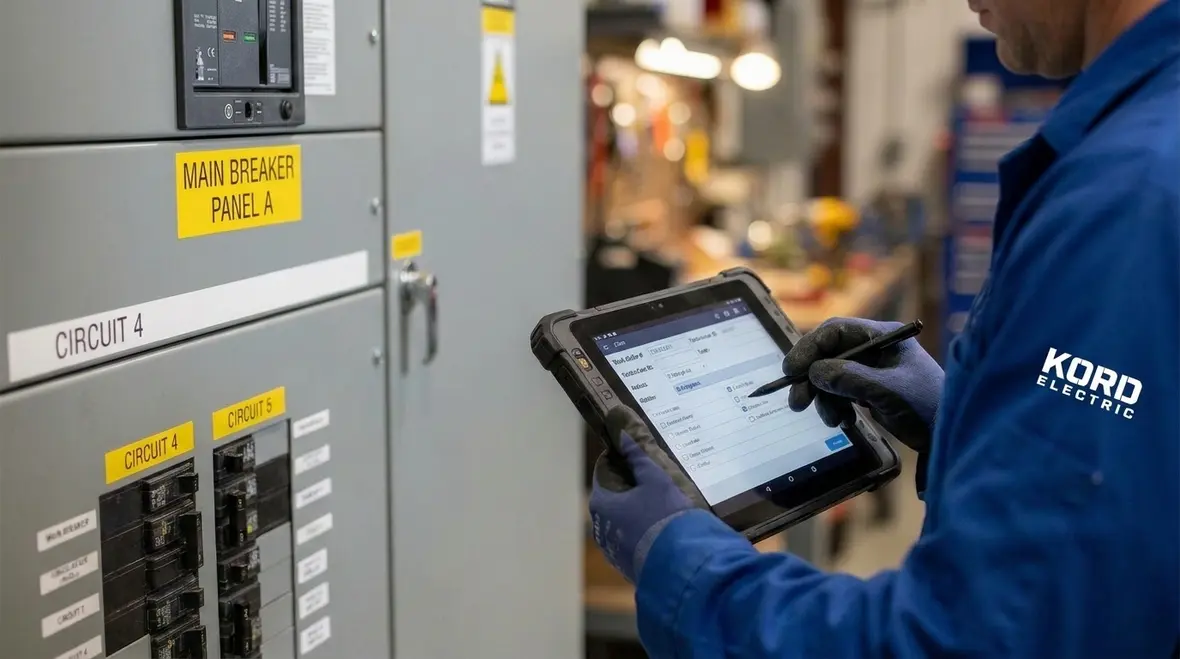
Electrical issues rarely live in isolation. They connect to age, loading, installation quality, and past repairs. That is why we encourage clients to connect electrical work orders to electrical system asset management. The goal is simple: every work order should strengthen your asset picture, and every asset record should guide your future work orders.
If you have ever watched a TV character carry a mystery file from episode to episode, you get the idea. Your building should not lose its plot. When asset management stays updated, it supports planning like condition based testing, preventive schedules, and targeted upgrades. Meanwhile, your maintenance team stops treating each call as an isolated incident.
From the perspective outlined in our electrical system asset management guide, this approach works best when you keep asset inventories accurate, use failure history responsibly, and create maintenance strategies tied to actual system needs. In practice, Kord Electric helps teams map critical assets, define risk levels, and set maintenance tasks that match how the equipment behaves in the real world, not how it behaves on paper.
If you want an even more data-focused companion read, our article on Electrical Distribution Equipment Data Management for Commercial Facilities shows how disciplined records, test data, and asset tags all plug into the same reliability story as your work orders.
How we help facilities improve maintenance tracking fast
People often ask us how quickly they can see results. We tell them the same thing every time: you can improve tracking quickly, but you must improve the workflow, not just the paperwork. So, we focus on how work moves from reporting to resolution and back into the system of record.
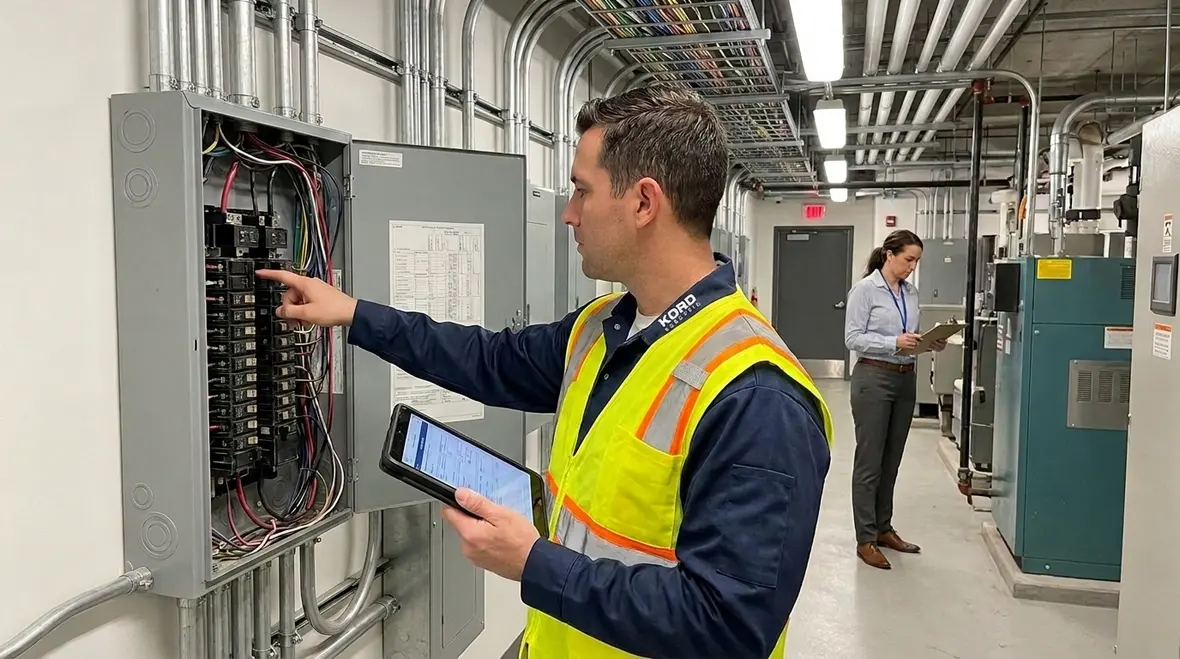
First, our technicians clarify the intake. We ask for the right details at the start, such as equipment tags, symptoms, time of occurrence, and any related building events like power quality alarms. Then, during service, we document test findings immediately and accurately. Next, our expert service staff reviews the completed notes to ensure the work order is complete enough for the next person.
Finally, we help clients connect each work order to scheduling. If a breaker trips repeatedly, that work order becomes input to follow up testing. If we identify overheating signs, the record triggers inspection or replacement planning. If we confirm a nuisance alarm, we document the adjustment and prevent unnecessary repeat visits. In short, we do not just close tickets. We close loops.
And yes, this is where you win back time. Because nobody wants a maintenance manager doing data entry like it is a second job. We would rather you spend that energy preventing the next call.
Reduce repeat issues with better diagnostics and history
One of the most expensive patterns in commercial buildings is the repeat failure. You fix something, it fails again, and suddenly you are paying for the same problem twice. Meanwhile, the first fix might have addressed the symptom, not the root cause. Therefore, we place emphasis on diagnostics that produce useful work order history.
When Kord Electric handles service calls, we treat documentation as part of the job. We record test results, observations about wear, and any signs that point to underlying drivers such as load imbalance, loose connections, insulation degradation, or environmental impacts. Then, we translate those findings into clear recommendations.
For example, if multiple circuits show similar voltage drop behavior, a work order should not end with “replaced device.” Instead, it should explain what the tests showed, why the replacement mattered, and what else needs attention. Over time, your data highlights trends, and those trends guide planned maintenance and upgrades.
That is how a building’s electrical maintenance stops being reactive and starts becoming proactive. And when it becomes proactive, you stop spending like a company that keeps calling the same mechanic because the engine light came back on. We are not judging. We are just improving the system.
Set maintenance priorities using risk and criticality
Not every electrical issue needs the same level of urgency. A minor fixture problem in a hallway is not the same as an unexpected fault near a life safety system or a critical production feed. So, we help commercial and industrial facilities use risk and criticality when they plan work.
To do that, we recommend building teams classify assets based on impact to operations, safety, and service continuity. Then, each electrical work order reflects that context. When a work order includes asset criticality, your tracking system becomes more than a log. It becomes a decision tool.
For instance, if a panel serves critical refrigeration or a manufacturing line, the same “overheating” note triggers a different response than overheating in a noncritical zone. Additionally, if a component sits on a feed with redundancy, the urgency changes. Kord Electric helps clients define those rules so the response stays consistent even when staff turnover happens or workloads spike.
In the end, this approach protects budgets and reduces surprises. Because you cannot prevent every electrical failure, but you can manage the likelihood and reduce the damage when it occurs.
Connect work orders with broader electrical services
Stronger work orders get even more powerful when they connect to a contractor who understands the bigger picture of power reliability, code, and operations. Many commercial and industrial teams in Southern California link their maintenance tracking with Kord Electric’s Los Angeles County electrical services, so preventive work, troubleshooting, and upgrades all feed the same record system.
In practice, that might mean using your electrical work order trends to trigger a power reliability audit, to plan targeted distribution upgrades, or to coordinate lighting and emergency power changes without losing the thread of what was done where. When the same team that updates your work orders also performs system studies, testing, and construction, your maintenance tracking stops feeling like a stack of paperwork and starts acting like a living playbook for the whole facility.
FAQ
Choose the work order system that keeps your electrical assets dependable
When you run a commercial or industrial facility, you need maintenance tracking that does not fall apart the moment someone is busy. Kord Electric helps you build clearer electrical work order records, stronger asset history, and practical scheduling decisions. Our technicians and expert service staff document the details that matter and translate them into action. If you want fewer repeat issues and better planning, contact Kord Electric today. Let us help you tighten the workflow, protect uptime, and keep your electrical systems performing with confidence.
And if you are ready to align your work orders with a broader reliability plan, our regional team can connect Electrical Work Orders: How Commercial Facilities Can Improve Maintenance Tracking with structured testing, power reliability audits, and upgrade projects so every task you complete moves your facility toward fewer surprises and calmer operations.