
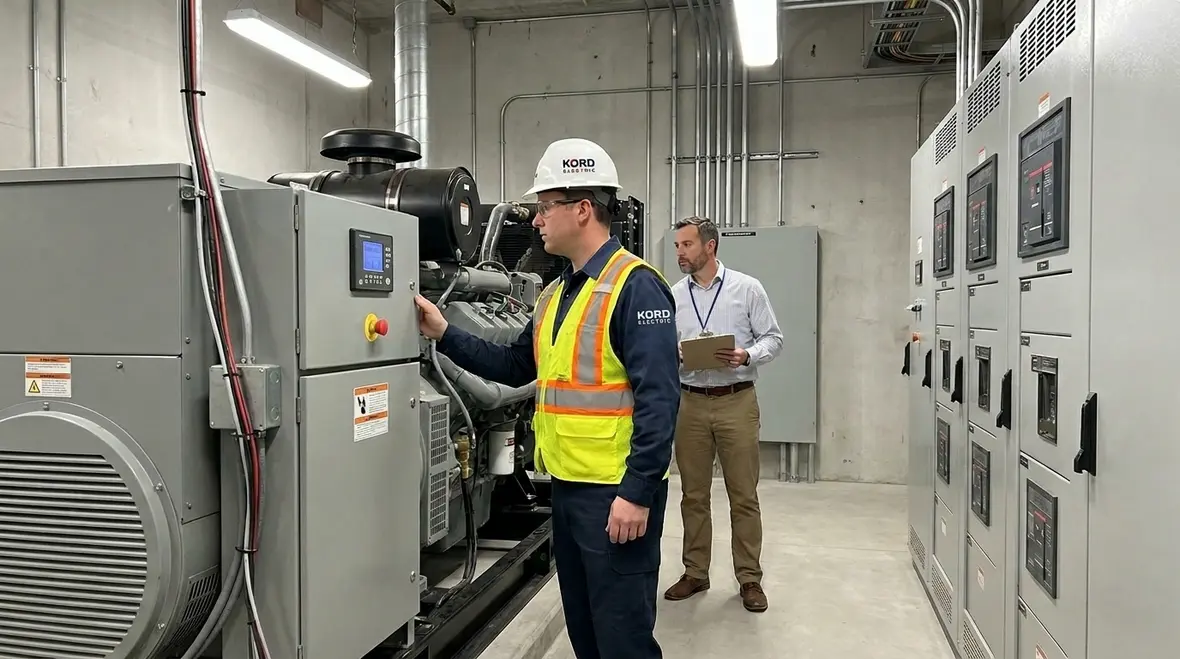
Emergency Electrical Systems for Commercial Buildings
Kord Electric designs and supports emergency electrical systems that help commercial and industrial facilities keep running when the lights should not go out. When utility power drops, fire alarms trigger, or critical equipment starts demanding more than the normal grid can give, these systems step in with steady force and calm timing. And yes, they do it with the kind of focus you usually only see in action movies, minus the explosions and hero music.
Our teams also explain the plan in plain language. In fact, our technicians walk owners and facility managers through what happens, when it happens, and why each part matters. As others in the industry often say, “power restoration is not luck.” We treat it as engineering, testing, and service discipline.
What emergency power does for commercial buildings
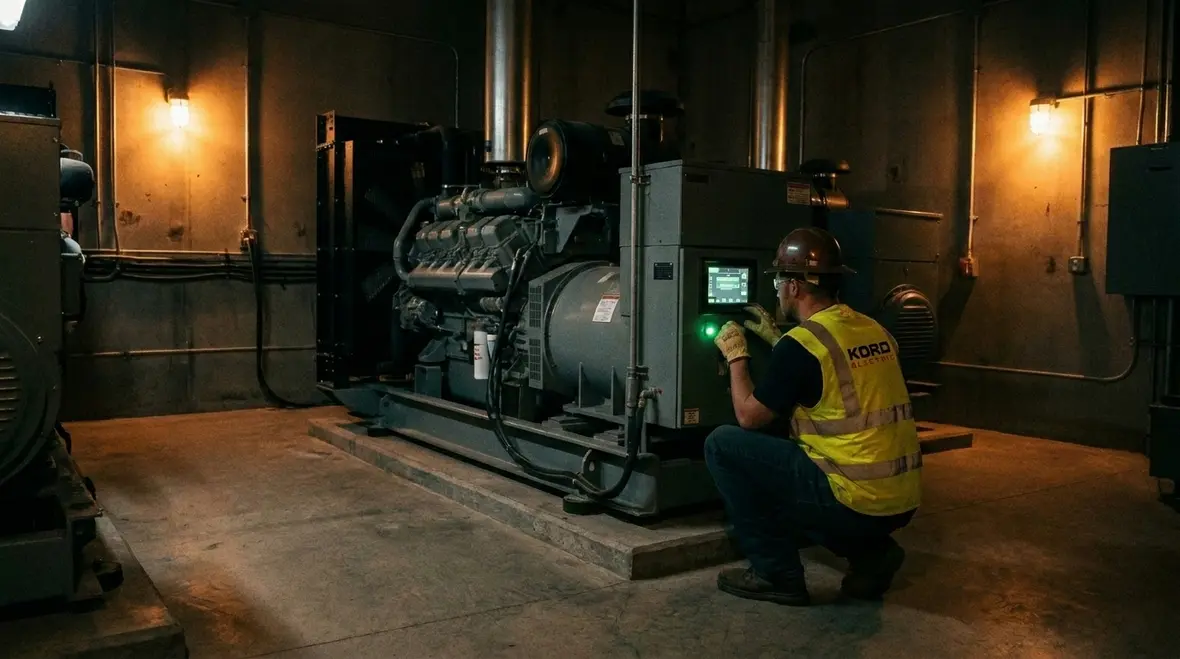
Emergency electrical systems protect commercial properties by keeping essential loads alive during abnormal events. To put it simply, they cover the moments when a building needs power most, even if the normal source fails. That includes lighting for safe movement, life safety systems, and power for key processes that prevent costly shutdowns.
In a commercial and industrial setting, the impact is not just comfort. It is safety, operations, compliance, and speed of recovery. Therefore, we help our clients plan for two realities at once: the event itself and the aftermath. For example, the system must handle the start up surge of equipment, while also supporting ongoing loads long enough for staff to respond.
Our expert service staff often points out that “emergency” does not mean “whatever works.” It means designed transfer and protected distribution that avoids chaos. A building should not feel like it is improvising. It should behave like a practiced team.
At Kord Electric, that practiced team mindset continues beyond the initial design. We help clients document which systems qualify as essential, how those circuits are fed, and what the recovery steps look like after an abnormal event. This structured approach also supports broader risk management conversations, especially for properties that depend on 24/7 uptime or have complex tenant obligations.
For commercial properties that want a wider strategy around reliability, owners often pair their emergency electrical systems planning with ongoing maintenance programs. That combination mirrors the thinking behind Kord Electric’s commercial and industrial electrical maintenance plans, which focus on long term stability instead of last-minute problem solving.
Standby power in action during outages
When utility power fails, emergency systems usually begin with a controlled transfer from normal power to a standby source. This transfer does more than switch wires. It reduces the risk of downtime and prevents sensitive electronics from going through unstable voltage swings.
At Kord Electric, our technicians focus on proper load selection and staged power delivery. That means we guide clients to decide what the building truly needs: egress lighting, fire pump power where applicable, alarms, smoke control where required, access systems, and critical mechanical loads. Then we design the electrical paths so those loads receive dependable power without overloading the standby source.
We also plan for the “long enough” part. In real outages, businesses do not always get power back in minutes. Some incidents run for hours. Therefore, standby systems should support sustained operation for the right equipment and the right duration, based on the facility’s risk and site conditions.
And to be frank, we have seen what happens when a facility tries to power everything “just in case.” That is not protection. That is a party invitation to overload. Our team helps clients avoid that trap.
We also talk through the human side of outages. When the building falls dark, people look for quick answers. Knowing which systems will stay powered – and which will not – prevents confusion. Property teams that have walked their standby power design with our technicians can explain the sequence clearly, which calms tenants and supports faster decision making.
For facilities with complex operations, this standby planning often connects directly to emergency electrical services support. When equipment fails in the middle of a larger outage, having a partner that already understands the building’s emergency electrical systems keeps diagnosis fast and focused instead of experimental.
How life safety circuits stay reliable
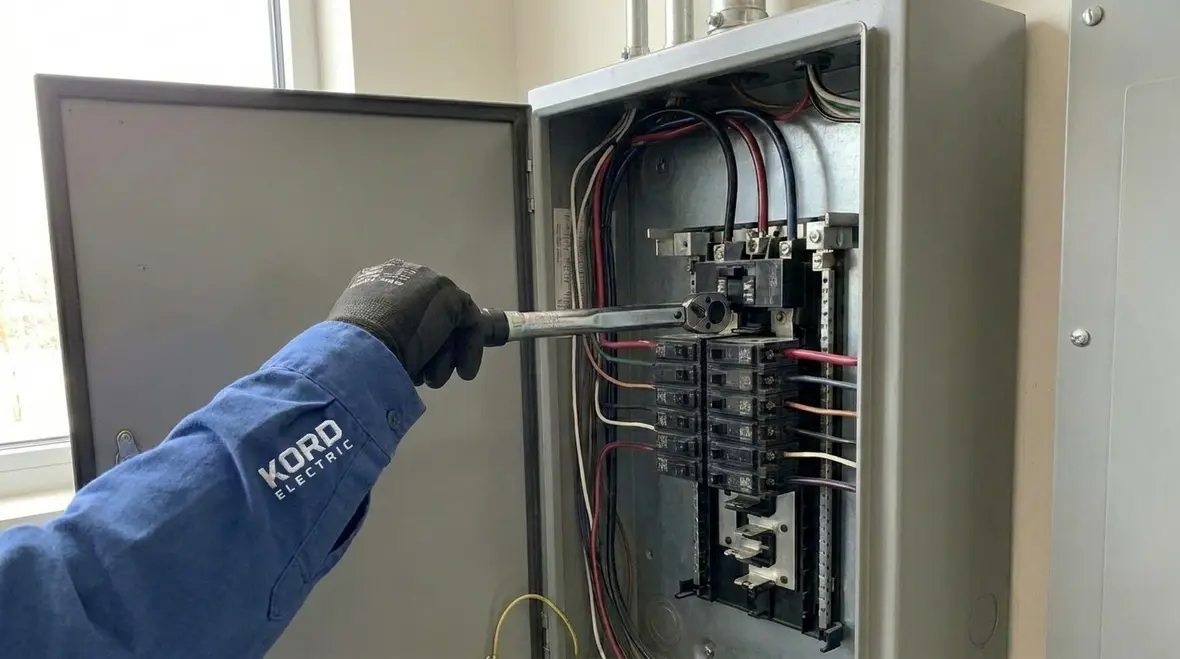
Commercial and industrial properties rely on life safety circuits that must work when people need them. Emergency electrical systems protect these circuits through dedicated design, correct protection devices, and clear labeling so that operation teams can act quickly.
Life safety loads typically include emergency lighting, exit signage, fire alarm systems, emergency communications, and in many cases certain smoke management functions. The goal is stable power with minimal interruption. Additionally, we coordinate how these systems integrate with the building’s normal electrical distribution so the emergency mode activates cleanly.
Our technicians explain this integration step by step. They show how components interact, why nuisance trips happen when protection is not tuned right, and how correct installation reduces failure risk. When facility teams understand the system, they also understand how to manage it during inspections and tests.
That is the quiet difference between “installed” and “protected.” One is a box on a wall. The other is a dependable chain of power, built to hold under stress.
We also talk openly about documentation. Life safety circuits are not the place for mystery breakers or faded panel labels. Our projects emphasize accurate as-built drawings, panel schedules that match reality, and clear tagging so that anyone opening a door in an emergency can see which circuits matter most.
For large properties, this attention to life safety circuits often pairs with broader electrical preventive maintenance, where regular inspection and testing confirm that the protection you think you have is still there. Over time, that discipline does more than pass inspections. It protects people.
Emergency lighting and exit guidance that actually helps
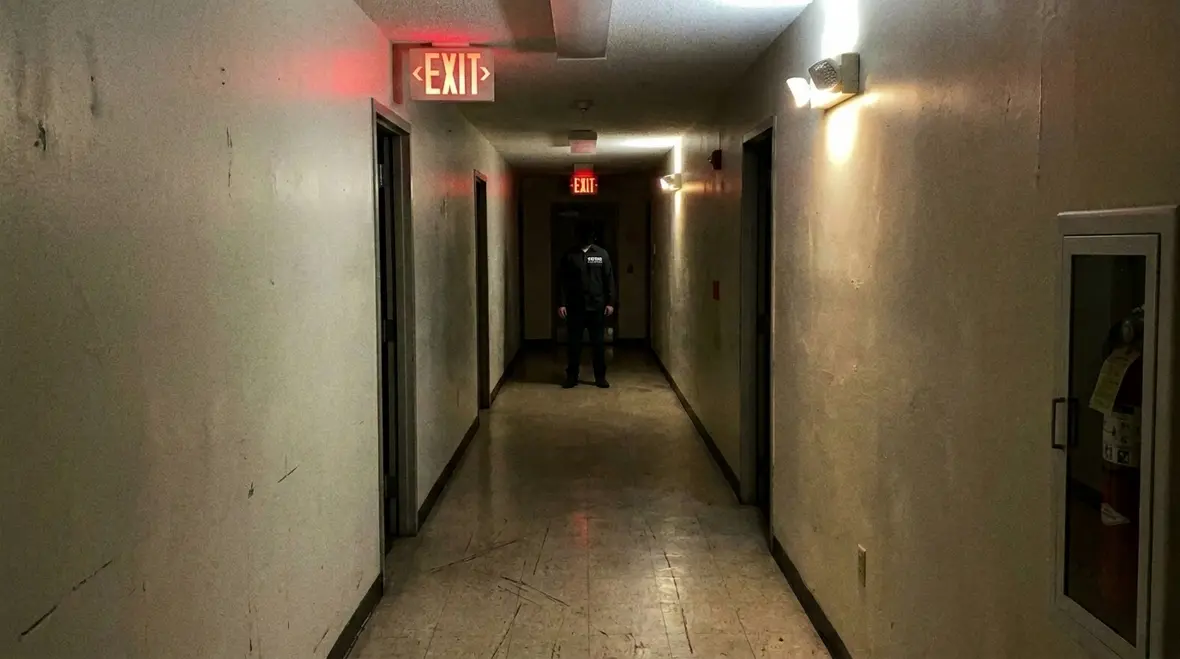
Emergency lighting is one of the most visible forms of protection, and it matters because it guides people during low-visibility moments. Yet the value goes beyond visibility. Proper emergency lighting also supports safe evacuation routes, reduces panic, and helps responders navigate the facility.
Kord Electric focuses on placement, circuiting, and performance testing for emergency lighting and exit guidance. We help clients ensure that the illumination covers required paths and that the system operates as intended during events. Because in the real world, a sign that works only sometimes is not a safety feature. It is a rumor.
We also pay attention to how emergency lighting works alongside other systems. For instance, during an event, fire alarm activity may direct staff and occupancy behavior. Therefore, emergency lighting should remain consistent so it does not fight the building’s safety strategy.
Our team guides owners through maintenance planning so emergency lighting does not fade into the “we’ll check it later” category. That category is where failures like to hide, like a villain in a sitcom who always returns one season later.
Emergency lighting design also connects naturally with broader lighting installation services. Many facilities upgrade their general lighting and emergency systems together, taking advantage of new fixture technology, better energy performance, and more reliable power paths in the same project window.
For property teams, that combined approach limits disruption and turns one round of planning into multiple layers of benefit: safer egress, better day-to-day illumination, and a clearer picture of how all lighting circuits behave when emergency electrical systems activate.
Power quality, transfer switches, and sensitive equipment
For many industrial operations, the emergency challenge is not only keeping power on. It is keeping power clean enough for equipment to function safely. Emergency electrical systems must handle transfer timing, inrush current, and voltage stability, so sensitive loads such as process controls, IT infrastructure tied to production, refrigeration systems, and key automation do not fail during switchover.
Transfer switches play a central role. They manage the transition from the utility source to the emergency source without creating unstable conditions. As a result, proper selection and installation help reduce risks like device resets, motor stress, and unintended shutdowns.
Our expert service staff often helps clients identify which loads are truly sensitive. Then we design distribution so those loads receive proper protection and, when needed, conditioned power. This is where many facilities underestimate risk by treating all loads the same.
Also, we plan for repeat events. A system that performs during one test but fails during a longer interruption defeats the whole purpose. Therefore, we recommend service cycles that include checks of connections, battery systems when applicable, controls, and load tests based on the facility’s real operating needs.
One of the best lines our technicians use is simple: “Your building does not care how good the paperwork looks. It only cares how the electrons behave.” We like that because it is true and it keeps everyone awake.
For facilities wrestling with recurring voltage swings, nuisance trips, or equipment resets, the answer is often a blend of power quality improvements and better emergency electrical systems design. That is why many commercial and industrial operators combine their emergency upgrades with targeted voltage troubleshooting and mitigation.
When that work is planned together, transfer switches, distribution equipment, and protective devices all point toward the same outcome: stable power when it matters, and predictable behavior when the grid does something unexpected.
Testing, maintenance, and code based readiness
Emergency electrical systems protect commercial properties most when they are ready, not when they are brand new. That is why Kord Electric builds an ongoing maintenance and testing mindset into our work for commercial and industrial facilities.
Testing confirms that transfer operations work, that standby sources start correctly, and that connected loads draw power within safe limits. Maintenance also reduces hidden failure causes like loose connections, worn components, degraded controls, or battery deterioration for systems that use them.
Our technicians explain test schedules in a business-friendly way. We coordinate with facility operations so tests occur with minimal disruption. Then we document results clearly so facility managers and stakeholders can see trends, not just one-time snapshots.
We also help clients understand how these efforts support compliance expectations and reduce liability risk. Because when an emergency hits, the last thing a property team needs is confusion. They need a system that behaves the same way every time.
For many major property buildings, we set up service plans that account for uptime expectations and tenant requirements. And if the facility runs around the clock, we adjust our approach so protection does not come at the cost of operations.
This mindset closely aligns with Kord Electric’s broader preventive maintenance offerings, which focus on catching issues before they turn into outages. When emergency electrical systems and preventive maintenance share the same playbook, buildings move from “hoping it works” to “knowing it has been tested.”
Emergency Electrical Services for property teams who need answers
When commercial and industrial properties face power risk, property teams want clarity fast. Kord Electric supports that need by delivering emergency electrical services with a focus on how the system performs under real conditions. We bring a practical process that starts with understanding the facility’s load priorities, goes into proper design and installation, and then continues with maintenance and readiness work.
Our expert service staff does not just talk about components. They explain workflows. They show how power transfers work, how controls respond, and what facility teams should monitor. In other words, we help others build confidence that their building has a plan.
If you want to move from “we have a system” to “we have a system we can trust,” we recommend a site-focused evaluation. We can also review existing setups and help with upgrades when the current configuration no longer matches the building’s needs or risk profile.
To keep it light, even superheroes need checklists. Power protection is the checklist that never gets applause, but it saves the day. Usually without anyone noticing.
For properties that want a direct path to help when something goes wrong, Kord Electric’s dedicated Emergency Electrical Services page outlines how our team responds, what the process looks like, and how we stabilize systems while keeping code compliance in view.
Pairing that on-demand response with well designed emergency electrical systems gives commercial and industrial facilities a complete strategy: protection before the incident, support during it, and guidance after it so the same failure does not return for an encore.
FAQ
Ready to protect your building’s critical power?
If your commercial or industrial facility needs dependable protection, Kord Electric can help you build confidence in your emergency electrical systems. We work with property teams on design support, service readiness, testing, and maintenance plans that keep systems reliable when the stakes are highest. Reach out to our team for a site-focused evaluation and a clear path forward. We will explain the next steps in plain language, and we will make sure your building’s power plan is ready before anyone needs it.
For facilities that also want to modernize infrastructure beyond backup power, Kord Electric provides a full range of commercial and industrial services – from lighting upgrades to preventive maintenance and EV charging projects – so your building’s electrical strategy stays aligned with how you actually operate day to day.
Whether you are dealing with aging equipment, planning a major upgrade, or simply ready to stop wondering what happens when the grid misbehaves, our team can connect the dots between emergency electrical systems, everyday reliability, and long term system health.
If your current setup feels like a patchwork of fixes instead of a plan, that is the perfect time to talk. We will meet your facility where it is today and help you map a path toward the kind of quiet confidence that comes from knowing your critical power is ready.
To explore additional ways to strengthen your infrastructure beyond emergency power alone, you can also review Kord Electric’s preventive maintenance and service offerings, which are built for commercial and industrial properties that cannot afford trial-and-error with their electrical systems.


