Emergency Power System Compliance: Commercial Code & Testing Requirements
Kord Electric understands that Emergency Power System Compliance: Commercial Code & Testing Requirements is not a checkbox. It is the line between a brief outage and a real safety problem for people, systems, and property in commercial and industrial facilities and major property buildings. Therefore, we guide owners through the right code paths, the correct equipment choices, and the proof that the system works when it must. And yes, we do explain it plainly. Our technicians and expert service staff talk through the steps in real language, not like a manual written by someone who never had to fix anything after lunch.
What emergency power systems must protect in commercial buildings
When the lights go out, commercial and industrial facilities still have responsibilities. Elevators, fire alarms, emergency lighting, and certain life safety loads need power on day one and during a real outage. Therefore, compliance starts with identifying what must run, what must start automatically, and what must meet a required duration. In practice, others often treat emergency power like a single device. In reality, it is a system of transfer equipment, generators or batteries, controls, and load management that all have to behave the same way every time.
Our approach begins with a focused conversation. We ask how the building operates, what critical systems serve tenants or customers, and which areas people rely on during an evacuation. Then we connect that understanding to the code based requirements for emergency and standby power arrangements. That means we align electrical design with real usage, not guesswork. If someone tells us, “It is probably fine,” we politely remind them that probability does not keep doors open during an emergency. Pop quiz for safety: probability also does not stop smoke alarms from going quiet.
Emergency power transfer and starting sequences that pass inspection

Compliance depends heavily on transfer and starting behavior. In many systems, the emergency source starts automatically, reaches stable output, and then transfers loads within the required time limits. However, the timing alone does not satisfy authorities. Inspectors and engineers also look for the right controls, proper labeling, and correct function testing.
Here is where our technicians shine. They do not only install and walk away. They explain how the transfer switch handles normal power loss and return, what happens to the loads during transition, and how the system prioritizes equipment. Consequently, building owners and facility managers can make decisions with clarity.
Common real world issues include nuisance starts, missed load pickup, and incorrect settings that only show up under test conditions. Therefore, we plan for the sequence, document it, and confirm it with practical testing. And yes, sometimes a system behaves like it is “thinking about it.” Unfortunately, codes do not accept “thinking” during an outage. They want action.
Commercial code expectations for emergency and standby arrangements
Commercial and industrial facilities usually rely on emergency systems to support life safety functions, and standby systems to keep operations running. Even though these terms sound similar, the requirements follow different paths. That is why Kord Electric treats Emergency Power System Compliance: Commercial Code & Testing Requirements as a full framework, not a single spec sheet. We align the design to the correct classification and load grouping, then we map those items to the inspection process.
In our work, we often refer to the guidance we publish for building owners on the emergency power topics covered in the National Electrical Code related to emergency systems. Our team uses that same structure to help owners understand what inspectors typically ask for: system arrangement, equipment listings, the right conductors and transfer methods, and clear documentation. Then, we connect those items to what you can actually see during testing.
Also, we do not recommend “minimum compliance” thinking. A system that barely meets limits can still fail under maintenance delays or aging equipment. Instead, we design with real operating needs and with a test plan that keeps the system ready over time. For a deeper look at how broader emergency power planning and code driven decisions fit together, many facility teams also review Kord Electric’s NEC focused guidance for building owners, such as our articles on NFPA 70A vs NEC for commercial electrical compliance and on emergency power generator planning, which connect everyday decisions to inspection expectations.

If you are a building owner or facility manager who wants that code conversation tied directly to emergency power, it can also help to read related pieces like Kord Electric’s coverage of NEC emergency power requirements for building owners, where we frame code language as a practical roadmap instead of a puzzle.
How testing evidence proves the system works when it counts
Testing turns compliance from a promise into proof. Authorities often look for documented results, proper frequencies, and correct procedures. However, the details matter. A test that runs for the wrong duration, targets the wrong load set, or ignores condition limits can create a paper win with a real world loss.
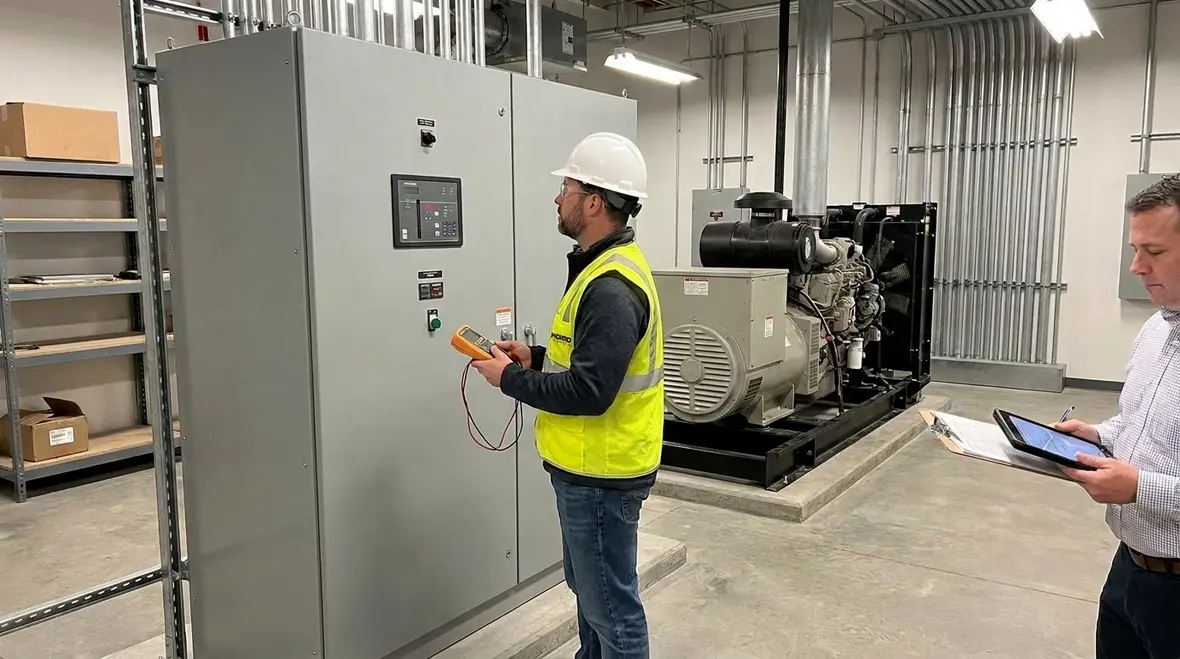
Our expert service staff builds testing around your system’s actual configuration. They explain what each test is trying to validate. For example, they confirm that the emergency source starts as intended, that transfer occurs at the right moment, and that the selected loads remain within acceptable performance ranges. Then we review results and identify any drift, weakness, or recurring issues.
Next, we support owners with the documentation needed for inspections and internal records. Therefore, you can track patterns across seasons, not just survive one annual event. Because if you only look once per year, your system might be broken in April while the paperwork still looks cheerful in December. That is not a strategy. That is a sitcom plot, and safety deserves a better ending.
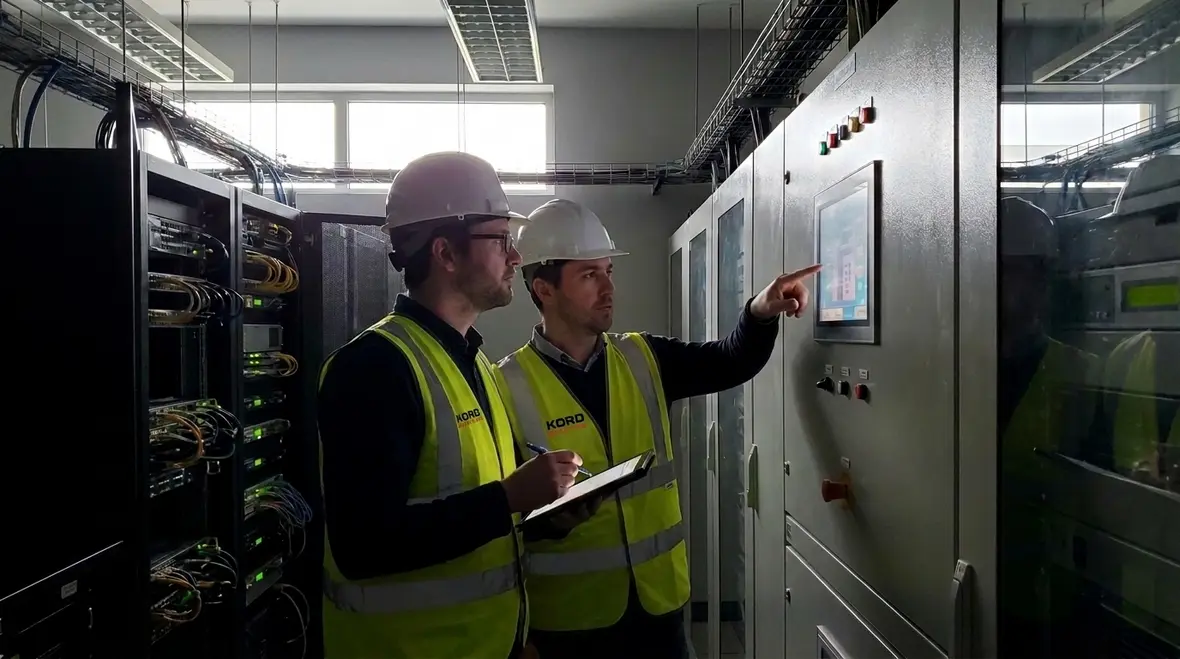
For commercial property teams that want to see how this kind of testing fits into a bigger reliability picture, Kord Electric’s coverage of emergency power systems for businesses and our emergency power for business continuity design article show how routine tests, system upgrades, and documentation all work together to keep critical operations steady during unplanned outages.
Maintenance plans that reduce failures and keep compliance steady
Commercial and industrial facilities do not enjoy downtime, and neither does a building emergency system. Still, even strong equipment needs care. Fuel systems need attention, batteries need monitoring, and controls need checks. Consequently, maintenance planning becomes part of compliance, not an extra task.
Kord Electric helps owners set up realistic service intervals and response steps. We also explain what facility teams can do between visits, when to notify us, and which signs suggest a system needs attention. Then we coordinate the work so it does not interfere with tenant operations or production schedules.
Our process stays practical. If a test result shows a trend, we do not bury it. We discuss it, we recommend actions, and we verify the outcome. That keeps the emergency power system reliable, and it keeps the documentation clean for future reviews. In other words, we help you avoid the classic problem where everything “looked fine” until the day it mattered.
Owners in Los Angeles County often pair these maintenance plans with broader electrical troubleshooting and preventive maintenance programs so that emergency power issues get spotted during everyday service, not just during the big annual test. That way, you are not depending on luck and one calendar reminder to keep a critical system alive.
Documentation, labeling, and site readiness during inspections
Compliance also relies on what people can quickly verify. Inspectors often want clear labeling, readable signage, and accessible equipment. Therefore, Kord Electric focuses on the details that reduce friction on site. Our technicians ensure that equipment is labeled properly, that the system is laid out in a way that supports safe access, and that records match the installed configuration.
We also support training. Our expert service staff can walk your facility managers and electricians through the system’s basic behavior and the meaning of test records. As a result, the building team understands what the documentation says and how it connects to real performance.
When documentation and physical conditions align, inspections run smoother. And when they do not, everyone wastes time. Nobody wants that. Even paperwork can get tired. We prefer to make it easy for everyone involved.
If your team wants to connect these inspection details to broader commercial electrical compliance, Kord Electric’s guidance on NFPA 70A vs NEC offers additional context on how documentation, labels, and as built conditions support both code language and real world safety.
Emergency Power System Compliance: Commercial Code & Testing Requirements for major properties
Major property buildings often include complex loads, shared mechanical systems, and multiple tenant operations. That complexity makes emergency planning more than a generic template. It calls for a clear load plan, correct system sizing, and testing that reflects the actual building configuration.
For these projects, Kord Electric helps owners and facility teams align life safety and critical operational needs with the right emergency arrangements. We help ensure the system handles the transition correctly, that equipment choice supports the building’s scale, and that testing proves the system can carry the required load under the defined conditions.
In short, our work treats Emergency Power System Compliance: Commercial Code & Testing Requirements as an ongoing program for commercial and industrial facilities and major property buildings. We do not stop at installation. We support the building so it stays ready, test after test, season after season. For owners who are coordinating broader reliability work, it can be helpful to connect this program to resources like Kord Electric’s blog on NEC emergency power requirements for building owners and to related planning guidance such as Emergency Power Systems for Businesses: Backup Power & Continuity and Commercial Emergency Power Generator Planning.
If your facility operates in Los Angeles County and you want this kind of comprehensive support tied directly to local code expectations and inspection practices, you can also explore Kord Electric’s dedicated Los Angeles County commercial and industrial electrical services, which integrate emergency power, testing, maintenance, and troubleshooting into a single service relationship.
FAQ
Conclusion
Emergency power systems protect people and keep critical systems alive, and that is why Kord Electric treats compliance as a real program, not a one time task. Our technicians and expert service staff walk your team through the emergency power requirements, align documentation with the installed system, and test so you can trust it during a real outage. If you manage a commercial or industrial facility or a major property building, call Kord Electric to review your system and build a testing plan that stands up to scrutiny.
To see how Emergency Power System Compliance: Commercial Code & Testing Requirements fits into your wider reliability and code strategy, you can also explore related insights on the Kord Electric blog covering NEC emergency power requirements for building owners, where design, testing, and documentation all connect back to keeping people safe and buildings operational.