

Facility Power Redundancy Solutions for Uptime
Kord Electric knows that when a business loses power, the problem rarely stays electrical. It becomes production delays, spoiled inventory, shut down systems, and angry calls that start with “We thought this was scheduled.” That is why our Facility Power Redundancy Solutions exist. We help commercial and industrial facilities keep the lights on, keep systems running, and keep people calm during outages and switching events. And yes, we also explain what we are doing in plain language because nobody should need an electrical engineering degree just to sleep at night.
Facility Power Redundancy Solutions for building continuity
In major property buildings, power redundancy is not a luxury. It is how a facility protects uptime and safety. When one component fails, the next one must take over without creating chaos. Therefore, our team designs redundancy with a clear goal: critical loads should ride through disturbances, and non critical loads should not cause a full system collapse.
We typically help others think in layers. First, we reduce the chance of failure through strong maintenance practices. Then we limit the impact of failure with backup and distribution strategies. Finally, we verify the plan with testing and documentation, because a redundancy plan that nobody checks is like a fire drill nobody participates in.
How we map critical loads to the right backup
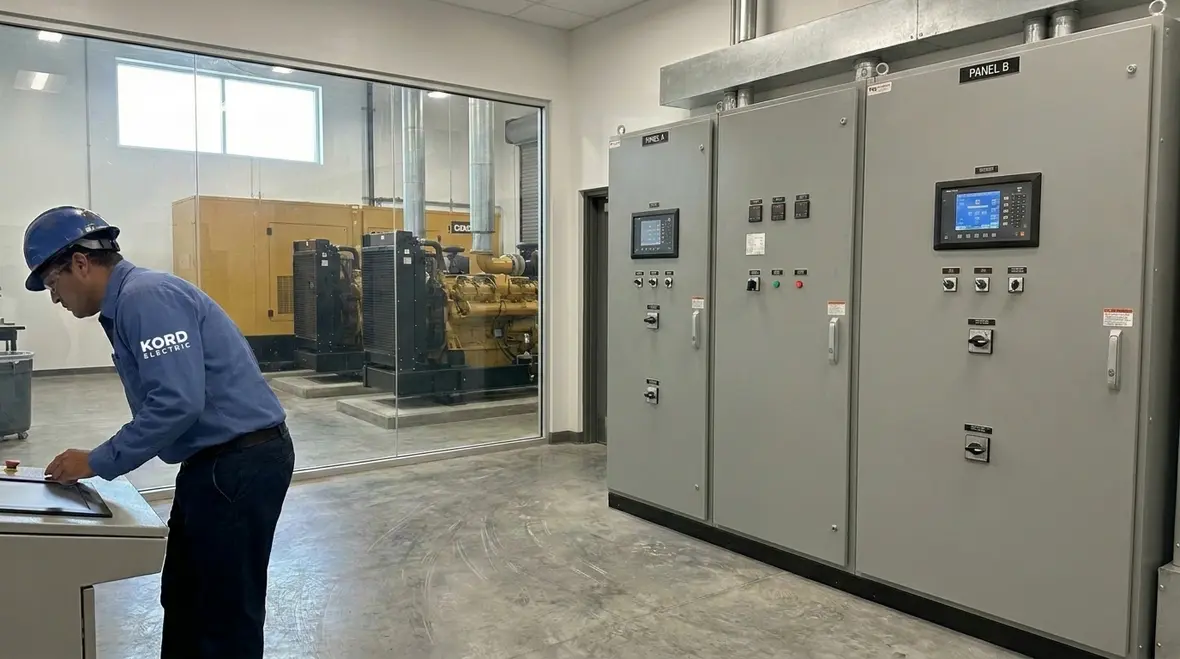
We do not treat every circuit the same. Instead, we help our clients sort loads by risk and mission. Hospitals and data centers are obvious examples, but manufacturing plants, logistics centers, office campuses, and mixed use major properties also carry loads that must stay alive. For instance, a failure in a ventilation system can trigger safety shutdowns. A failure in building management controls can create problems that last longer than the original outage.
As our technicians assess the facility, they identify which systems must run during transfer events and which can wait. Then we group loads into critical, essential, and deferred categories. After that, we align the groups with the best redundancy approach.
Meanwhile, we also account for starting currents, voltage dips, and sequence of operations. In other words, we plan for how equipment behaves, not just how it should behave on paper. This is where facilities often get surprised. A generator can be present and still fail to carry the load if the startup sequence runs unmanaged. We prevent that with proper controls and load management.
Second source power: generator strategy that actually supports uptime
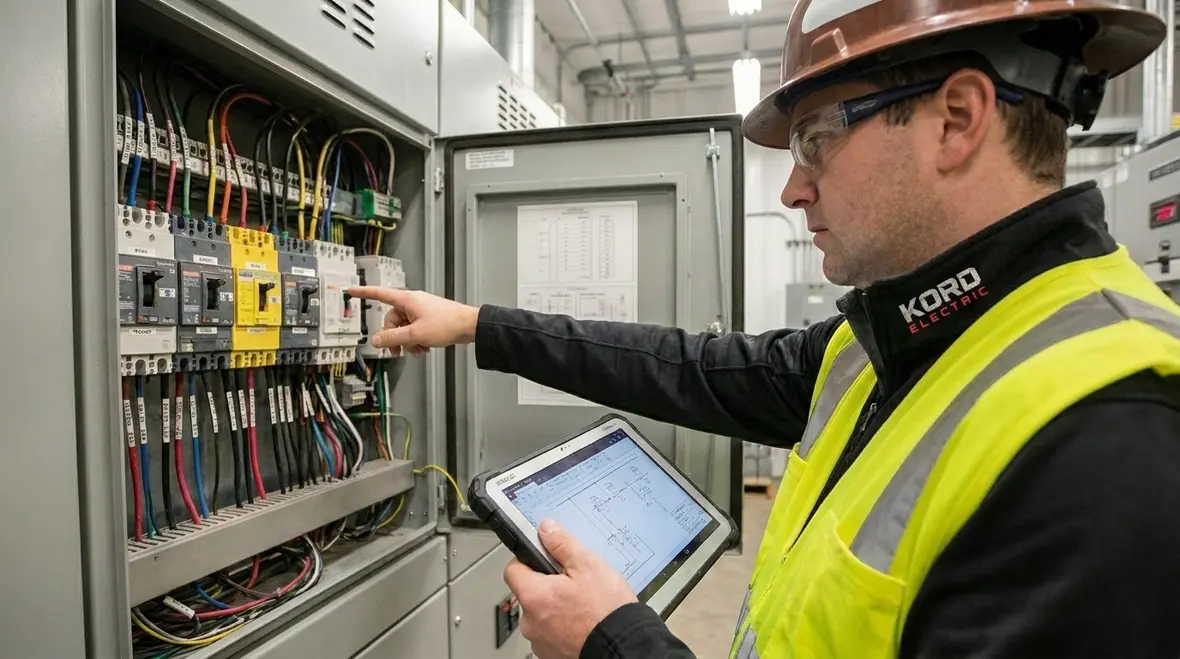
Many commercial and industrial facilities choose generator backed systems. However, a generator is not one device. It is an entire power path with fuel readiness, switchgear coordination, transfer timing, and control logic. Kord Electric helps facilities build a generator strategy that supports real operations.
We align generator size and runtime with the facility’s load profile. Then we help others confirm that the facility can start and stabilize equipment under load. As a result, the system handles common events such as utility instability, short outages, and longer utility interruptions.
We also focus on transfer scheme design. For some facilities, an automatic transfer switch handles the job. For others, we recommend more advanced architectures that reduce interruption time for sensitive equipment. And yes, we make sure the transfer does not create unintended backfeed paths. That is the kind of “surprise feature” nobody wants.
Switchgear, ATS, and coordination: the quiet heroes
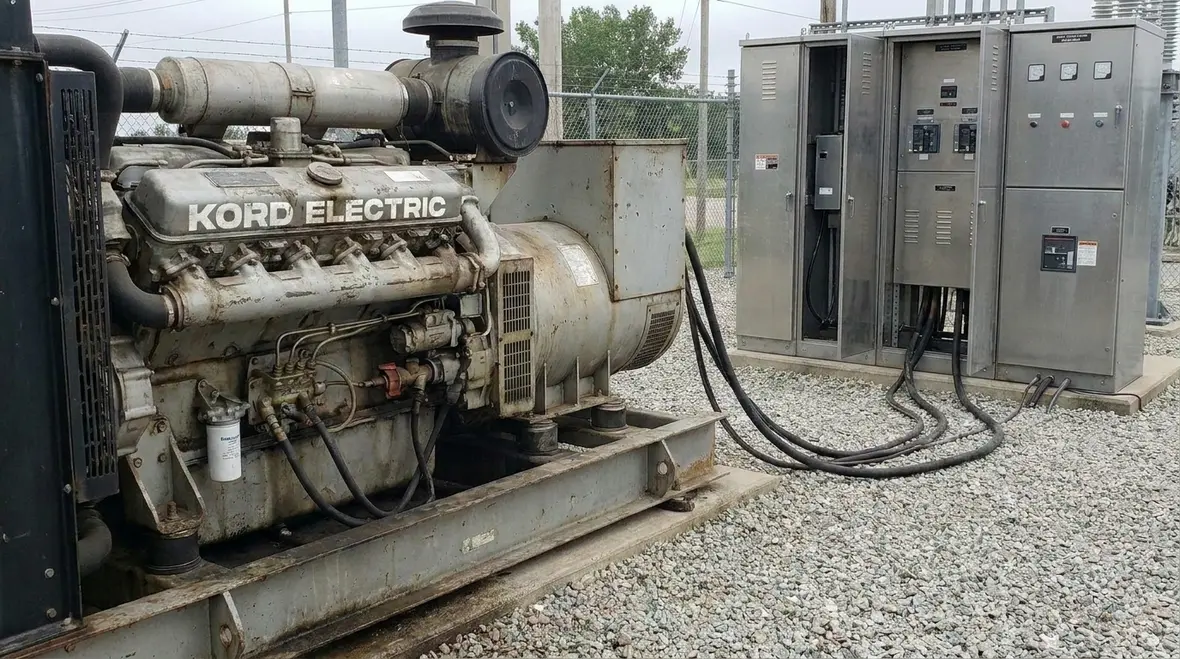
Switchgear and transfer equipment determine what happens in the first seconds. Those seconds decide whether a facility stays online or resets critical systems. Therefore, coordination matters. We work with our clients to ensure breakers, relays, and transfer devices act in the correct order.
Our expert service staff explains how protective devices isolate faults and how the redundancy plan reroutes power. We do not hide the details behind jargon. We explain the logic, because when facility teams understand the plan, they respond faster during alarms and after an event.
In practical terms, we look at settings, interlocks, and time delays. We confirm that utility and backup sources coordinate properly. We also review alarms so that operators receive clear signals instead of a wall of notifications. And finally, we verify that the system design supports safe maintenance windows, because planned downtime should not feel like a disaster.
Maintenance that protects redundancy, not just equipment
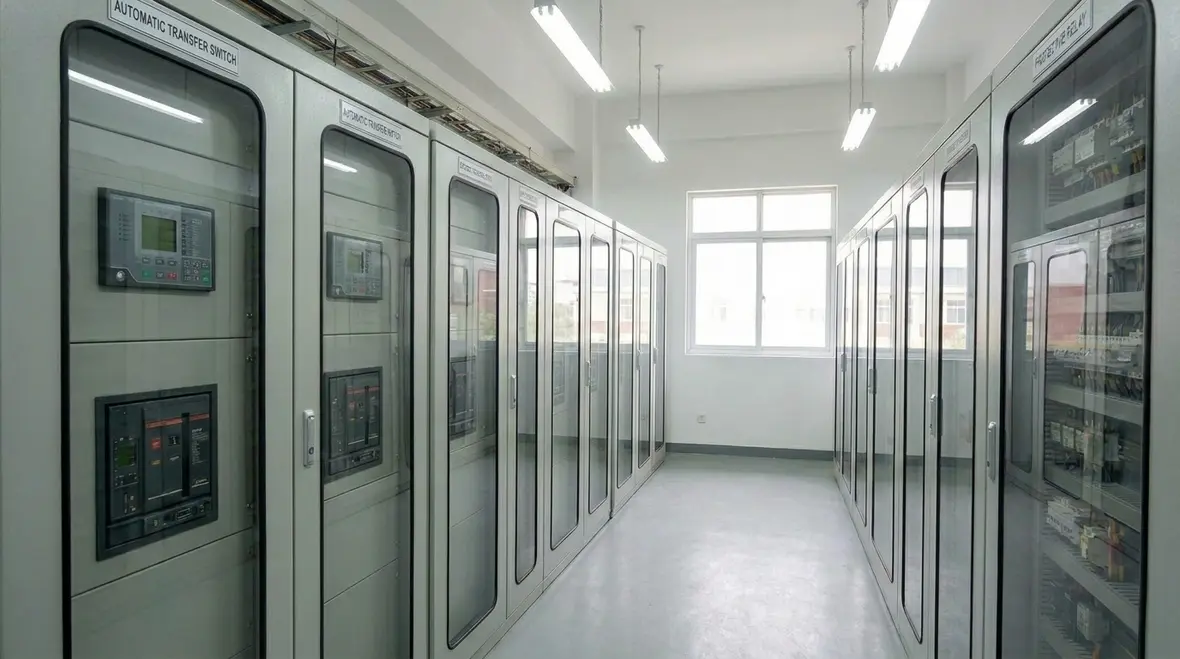
Redundancy only works when it stays ready. That is why we build maintenance plans around the same goal as our Facility Power Redundancy Solutions: continuity. Our preventive maintenance approach focuses on the systems that keep backup power dependable, including transfer devices, battery systems for controls, load banks when needed, and the parts that can quietly drift out of tolerance.
For those who want specifics, Kord Electric supports clients with an electrical preventive maintenance program. We follow the logic outlined in our dedicated service for electrical preventive maintenance, where preventive work helps reduce unexpected failures and keeps systems responsive when they are needed most. During service, our technicians check connections, test components, inspect protective devices, and document findings so facility owners can track readiness over time.
To keep things clear, we explain what we find and what it means for continuity. If a component shows wear, we do not just replace it and walk away like a microwave repair guy. We explain the risk to redundancy and we confirm the corrective action aligns with the facility’s load plan.
Testing, commissioning, and drills for power events
Even well designed redundancy needs verification. That means testing under realistic conditions and confirming that the control logic behaves exactly as intended. We help facilities plan tests that support schedules, limit downtime, and still prove performance.
We also recommend commissioning checks for major projects and upgrades. When controls, switchgear, and backup sources interact, small settings changes can create big outcomes. Therefore, we confirm sequences, verify protection behavior, and ensure that transfer timing matches the expectations of sensitive loads.
Then we help others run drills and readiness reviews. Think of it like a fire drill, but for power. Nobody should find out their backup plan does not work during a real outage. That is not “learning.” That is “paying tuition.”
Dual layer redundancy: combining power resilience with distribution stability
Many facilities gain the best continuity results by combining redundancy at more than one layer. First, they protect generation and transfer readiness. Second, they stabilize distribution behavior across the building. That means coordinating feeders, panelboards, and voltage quality so the facility does not experience recurring dips or nuisance trips during transfer.
In some cases, we support clients with a dual layer approach that includes both backup source continuity and improved distribution coordination. It is like having both an umbrella and a backup plan for the umbrella, because weather happens. And power events happen too.
For those managing multiple buildings or a major campus, we also consider how redundancy affects coordination across the property. As a result, one site’s event does not unnecessarily cascade into other sites, and the entire portfolio remains more stable.
FAQ for commercial and industrial power redundancy
Ready for dependable uptime?
Kord Electric helps commercial and industrial facilities build and maintain power continuity with Facility Power Redundancy Solutions that stay dependable under real conditions. We assess critical loads, coordinate transfer and switchgear behavior, and support preventive maintenance based on proven practices. If you want fewer surprises and calmer operations, we will review your current setup and recommend the next steps for uptime and readiness. Reach out to us now so we can schedule an evaluation and set your continuity plan in motion.
For facilities across Southern California, our Los Angeles County commercial and industrial electrical services support everything from redundancy planning and voltage stability to troubleshooting and upgrades, so your continuity strategy connects directly to field ready service.
If your site is experiencing recurring voltage swings, nuisance trips, or sensitive equipment alarms, pairing Facility Power Redundancy Solutions with dedicated support for voltage fluctuations in commercial and industrial facilities helps stabilize both the backup strategy and the day to day distribution behavior that your teams rely on.


