

Film Studio Electrical Requirements in Studio City
Film Studio Electrical Requirements in Studio City California: What Kord Electric Builds Around
In Studio City, the film production schedule moves faster than a zip line in a Marvel trailer, and electrical must keep up. That is why film studio electrical requirements california matter from day one. We at Kord Electric plan power, lighting, and safety systems so productions can roll without surprise shutdowns, flicker, or overloaded circuits. Others may rush the setup, but we take the quieter, smarter path. Because when a soundstage fills with cameras, generators, screens, and specialty lighting, the electrical load can spike before anyone even yells “action.”
Third party contractors sometimes treat studio power like a generic commercial install. We do not. We treat it like a mission-critical system for a commercial and industrial facility, with clear load paths, disciplined wiring practices, and practical testing. Our technicians and expert service staff explain what they find, why it matters, and how the solution supports safe production.
Electrical Load Planning for Soundstages and Production Loads
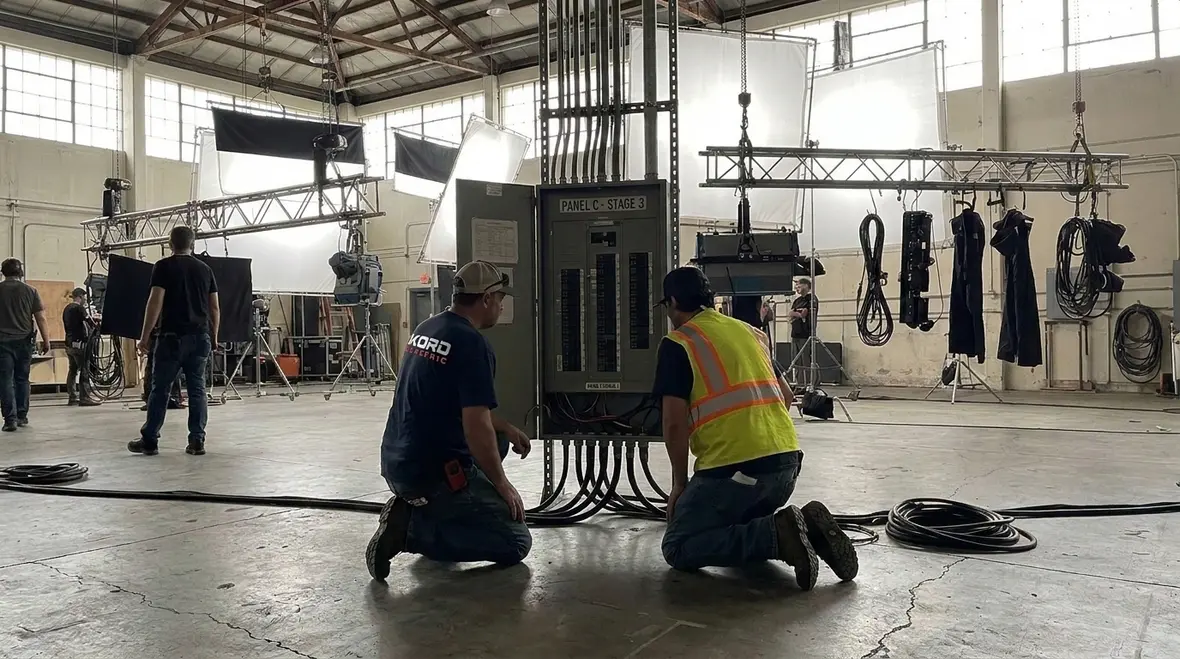
First, we assess what the studio will actually use, not what the building once used in a sleepy past life. Then we map expected loads into a plan electricians can follow under pressure. Film productions often add equipment daily, so we design with flexibility. That means we account for stage lighting, grip power, video walls, warehouse charging, HVAC support, and back office loads. We also plan for temporary power needs, because productions rarely behave like steady utility customers.
When we talk with studio managers and electricians on set, we ask focused questions and then translate answers into safe electrical sizing. Next, we check panel capacity, conductor sizing, feeder routes, and voltage drop. If any part risks overheating or voltage sag, we correct it early. After all, dimmer scenes are fine, but dimming the wrong circuit is not part of the script.
At Kord Electric, our technicians do more than “connect and hope.” They verify loads and inspect terminations so the system holds up through long hours, heavy camera days, and last minute changes. And yes, we explain the reasoning in plain language, because nothing builds trust like a professional team that can show its work.
For production and facility teams across the region, we also connect studio power planning with broader Los Angeles County electrical services so stage builds, panel upgrades, and troubleshooting share one coordinated roadmap instead of scattered fixes.
Panel Systems, Feeders, and Backup Power That Holds Up
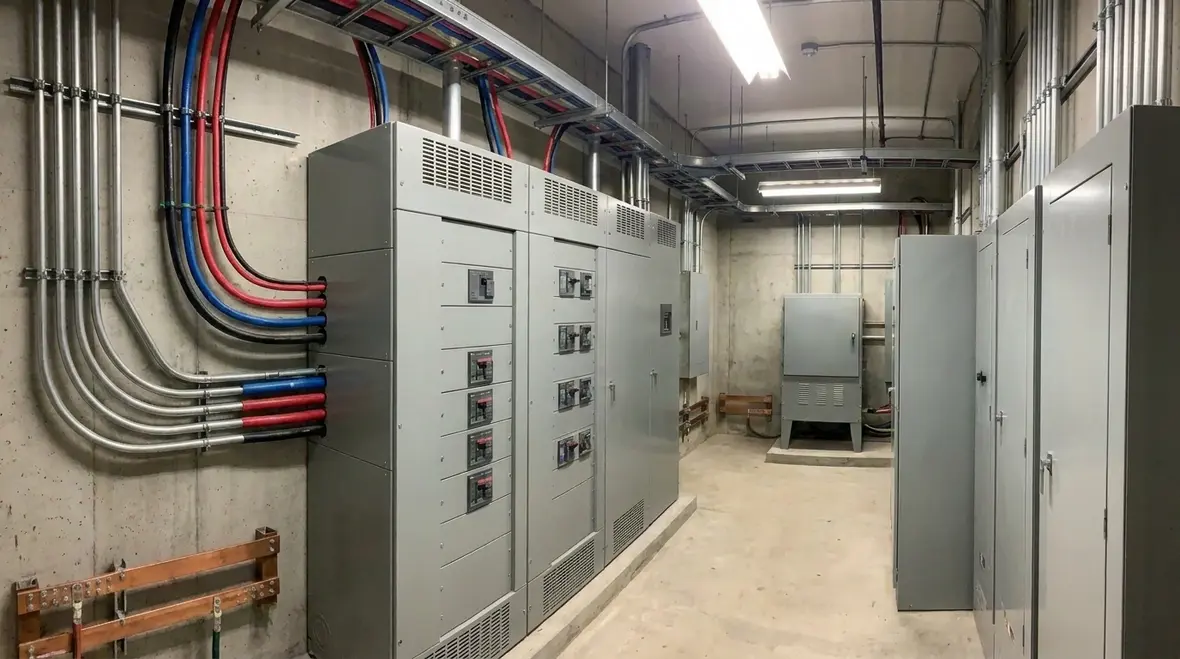
Then we look at distribution, because good staging depends on reliable power delivery. We evaluate main switchgear, subpanels, feeder conductors, and grounding. In studios, power distribution often faces uneven loads. One area might handle high wattage lighting while another runs small devices for video playback. If a system is not balanced, it can overwork components and cause nuisance trips.
We also plan for backup and continuity where it counts. Some critical elements like network gear, control systems, and safety equipment need stable power. Meanwhile, other loads can tolerate controlled shutdowns. Therefore, we structure circuits with sensible priorities so the studio can keep operating when utility conditions change. That approach reduces downtime and prevents a chaotic restart that eats call time.
Our expert service staff breaks down options and tradeoffs with the studio team. If the production needs short transfer times or specific voltage stability, we address it. If the studio can stagger noncritical loads, we design for that too. In short, we keep the system practical. Not theoretical. Not “in a perfect world.” Studio City does not run on perfect worlds.
When panel upgrades, switchgear changes, or new stages appear on the horizon, we fold them into a larger plan so your film studio electrical requirements california stay aligned with permitting, inspections, and long term reliability instead of one-off work orders.
Lighting Distribution, Dimming Circuits, and Safe Temporary Power
Lighting is where productions feel the voltage first. Even when total load looks fine, poor distribution or wrong circuit setups can cause flicker, inconsistent dimming, or tripped breakers during rehearsals. So we design lighting distribution with proper circuit grouping and correct wiring practices. We also consider dimming control requirements so the behavior matches the director’s vision, not the laws of physics.
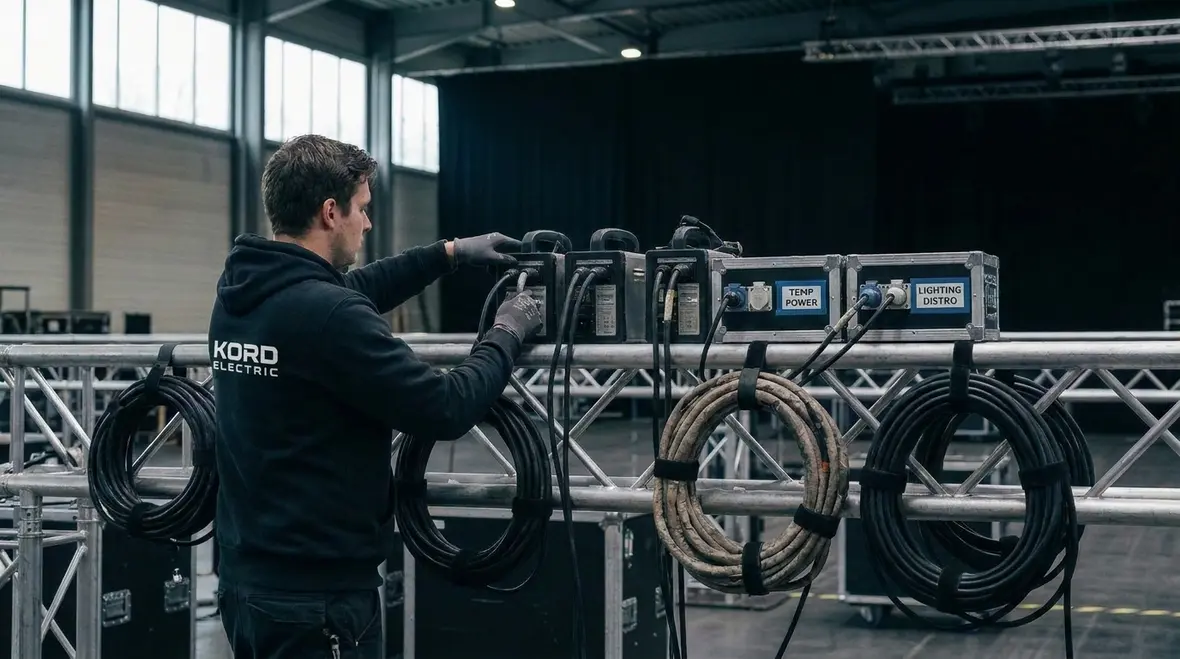
Temporary power matters just as much. Stage setups change: truss moves, extra fixtures appear, and power demands shift with camera angles. We help studios manage this by planning how temporary feeds connect to permanent infrastructure. That means safe access points, correct overcurrent protection, and clear labeling. We also ensure cables run safely and do not create trip hazards or overheating risks.
If someone tells you, “We will just run it from whatever outlet we find,” we calmly disagree. Kord Electric supports commercial and industrial facilities and major property buildings, and we build systems that keep safety and performance consistent. Our technicians then walk the team through the process, including what can change safely and what should not be modified during production.
For complex lighting rigs and video walls, we also coordinate with dedicated lighting installation services and power quality strategies so dimmers, drivers, and controls stay stable across long shoot days instead of drifting into mystery flicker territory.
Electrical Safety, Grounding, and Code-Ready Documentation
Safety is not a checkbox for us. It is the foundation that keeps the crew confident and the building compliant. We focus on grounding, bonding, equipment ratings, and protection devices. Proper grounding protects both people and gear, and it helps stabilize the system during normal operation and faults.
In a studio environment, safety risks can multiply quickly. A busy set has traffic, equipment racks, cable runs, and frequent power connections. Therefore, we build a plan that supports safe workflows. We also verify that protection devices match the load characteristics so breakers trip for the right reasons, not because the system runs like a tired bicycle.
Additionally, we help studios maintain code-ready documentation. That matters when inspections happen, when contracts require proof of compliance, or when facility teams need traceable system details. We explain what is documented and why, so the studio team understands the “why” behind the paperwork, not just the “what.”
When Studio City productions expand into multi-building campuses or shared facilities, we can also align those safety practices with coordinated Los Angeles County electrical services so grounding, labeling, and maintenance stay consistent from one stage to the next.
Soundstage Communications Power, Data Rooms, and Load Separation
Studios rarely rely on power alone. They depend on stable data and communication systems. Even though these are not always powered like heavy equipment, unstable power can create glitches that look like software issues. That is why we separate loads thoughtfully. We keep equipment that needs clean power away from noisy switching circuits when possible. Then we verify grounding and bonding practices to reduce interference and protect sensitive devices.
In many major properties, data rooms become the quiet backbone. Therefore, we evaluate circuits serving networking gear, access control, surveillance, and production monitoring systems. We also consider the power demand for displays, encoders, and playback stations. In Studio City, production timelines make it tempting to treat data power as “small stuff.” We treat it as big stuff because it affects the entire shoot.
Our approach stays business casual in tone but serious in execution. We communicate with facility managers and production staff, and our technicians explain power separation in a way that makes sense. When a studio team understands how loads interact, they make better decisions during future upgrades and set changes.
We also tie clean power and load separation into broader smart building and energy management strategies so studio offices, edit bays, and stages can share infrastructure without stepping on each other’s circuits.
Case Planning in Studio City: Phased Work That Avoids Production Chaos
Productions hate downtime, and so do we, because nobody wants to pause shooting to “fix something small.” However, electrical upgrades need to happen. So we plan projects in phases that align with production windows and facility access limits. We schedule work around set builds, rehearsals, and post production needs where possible.
First, we coordinate access to equipment rooms, cable paths, and staging areas. Then we confirm that work does not conflict with fire lanes, material storage, or security requirements. Next, we test and document after each phase so the studio can trust every step. Finally, we align cutover timing with production schedules, so the transition feels calm rather than like a surprise scene change.
At Kord Electric, we also plan for future growth. Studios expand. They add soundstage volume, new production bays, and more high performance equipment. We design with room to grow, so upgrades do not require disruptive rewiring every time a new camera system arrives. And yes, we make a joke sometimes: if your electrical system cannot handle the next generation of gear, that is not “future proofing,” that is “future panic.”
When a facility is ready to scale up, we can connect those phased projects with specialized commercial services across Los Angeles County so power, lighting, and preventive maintenance all follow the same playbook instead of separate scripts.
FAQ for Film Studio Electrical Requirements
Ready to Upgrade Your Studio Power Without Losing Shoot Time?
Kord Electric helps Studio City studios run power like it is supposed to run: reliable, safe, and built for real production loads. We plan feeders and panels, manage lighting distribution, support safe temporary power, and verify grounding and protection so your crew can focus on the story. Our technicians and expert service staff explain each step in plain terms, so your facility team stays in control. If you want film studio electrical requirements california handled the right way, contact Kord Electric today and schedule an assessment.
If your facility manages multiple stages or properties across the region, you can also connect this work with Kord Electric’s broader commercial services in Los Angeles County so panel upgrades, troubleshooting, and preventive maintenance all support the same production goals.
When you are ready to line up studio power with your shooting schedule, we can walk the site, review your current loads, and map out practical steps that keep your operations steady while upgrades move forward.


