Grounding vs Bonding in Commercial Buildings
Kord Electric often hears the same confusion from building owners: grounding vs bonding, and why their electrical system behaves like it is “mysteriously fine” until it suddenly is not. In plain terms, grounding gives fault current a safe path into earth, while bonding connects metal parts so they stay at the same electrical potential. Both matter, yet they do different jobs. And yes, even the most expensive switchgear can look brave while doing the wrong thing. That is why our team explains it clearly, step by step.
Why grounding and bonding matter in commercial buildings
In commercial and industrial facilities, electrical systems run for years, move loads around all day, and face harsh realities like moisture, vibration, and long cable routes. Therefore, small design errors can show up later as nuisance tripping, damaged equipment, corrosion on metal surfaces, or shock hazards that no one wants to “discover during a routine day.”
In addition, many businesses connect multiple building systems: power distribution, generators, HVAC controls, fire alarm panels, data networks, and metal piping. As a result, voltages can appear where people do not expect them. When grounding vs bonding gets handled incorrectly, those unexpected voltages can travel through unintended paths like conduit, structural steel, or cable shields.
Our technicians and expert service staff at Kord Electric focus on making sure the facility’s protective system works as designed. We check how current moves during fault conditions and how metal parts connect under normal and abnormal operation. Then we help owners understand the difference between “it works” and “it works safely, reliably, and predictably.” To see how this ties into broader hidden risks inside commercial buildings, many owners also review Kord Electric’s guide on hidden electrical hazards that build up behind walls and inside panels.

How current chooses paths during a fault
When an electrical fault occurs, the system tries to route current in the path with the least resistance. However, “least resistance” does not mean “safest.” Without proper bonding, metal enclosures and exposed parts can float at a different potential than equipment housings. Consequently, a person who touches multiple metal parts could experience a dangerous difference in voltage.
Grounding helps by directing fault current to earth so protective devices can operate. Bonding helps by connecting conductive parts so they rise and remain at the same potential. In other words, grounding controls where fault current goes, while bonding controls what surfaces share electrical potential.
We have seen facilities where bonding connections were skipped, tightened “later,” or replaced with nonconductive parts without updating the grounding plan. Later, the equipment still ran, but the protective devices did not clear faults quickly. And that is the problem, because time matters when people and equipment are at risk.

Bonding details that protect staff and equipment
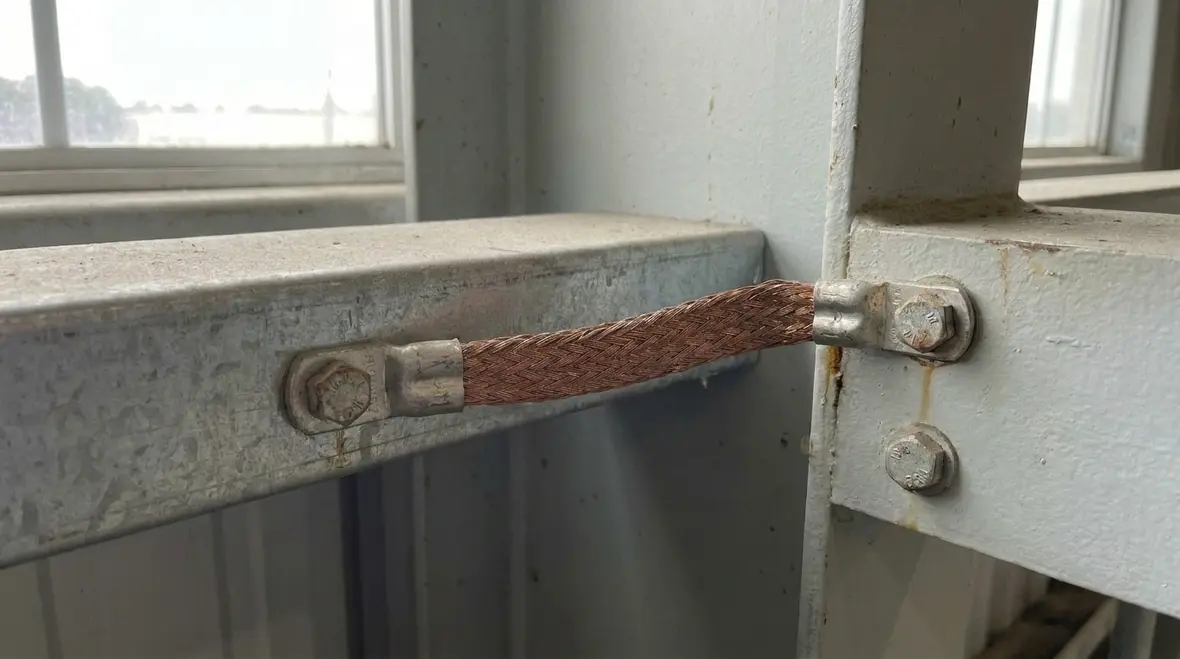
Bonding is not one generic task. It is a set of connections that owners and contractors must treat with respect. These connections include metal raceways, cable shields when required, electrical enclosures, structural steel where appropriate, piping systems, and service equipment components. When bonding is incomplete, current can take ugly detours.
Also, bonding must account for changes over time. Facilities add equipment, reroute cables, replace panels, expand offices, install new generators, or add battery backup systems. Therefore, the bonding network can become outdated unless anyone documents the electrical grounding plan and updates it after work.
Our expert service staff explains this in a way that makes sense on site. We walk through where bonding jumpers belong, how to verify continuity, and why corrosion and paint can interfere with connections. We do not just tell owners to “tighten everything.” We help them verify performance, because a bright, shiny bolt can still fail if the connection path is wrong.
For teams looking at bonding from a fire safety angle, Kord Fire’s article on fire safety electrical panel bonding for fault clearing shows how these same bonding principles help reduce arcing, heat, and electrical fire risk inside panels and metallic raceways.
Grounding systems in large facilities: what changes and what stays steady
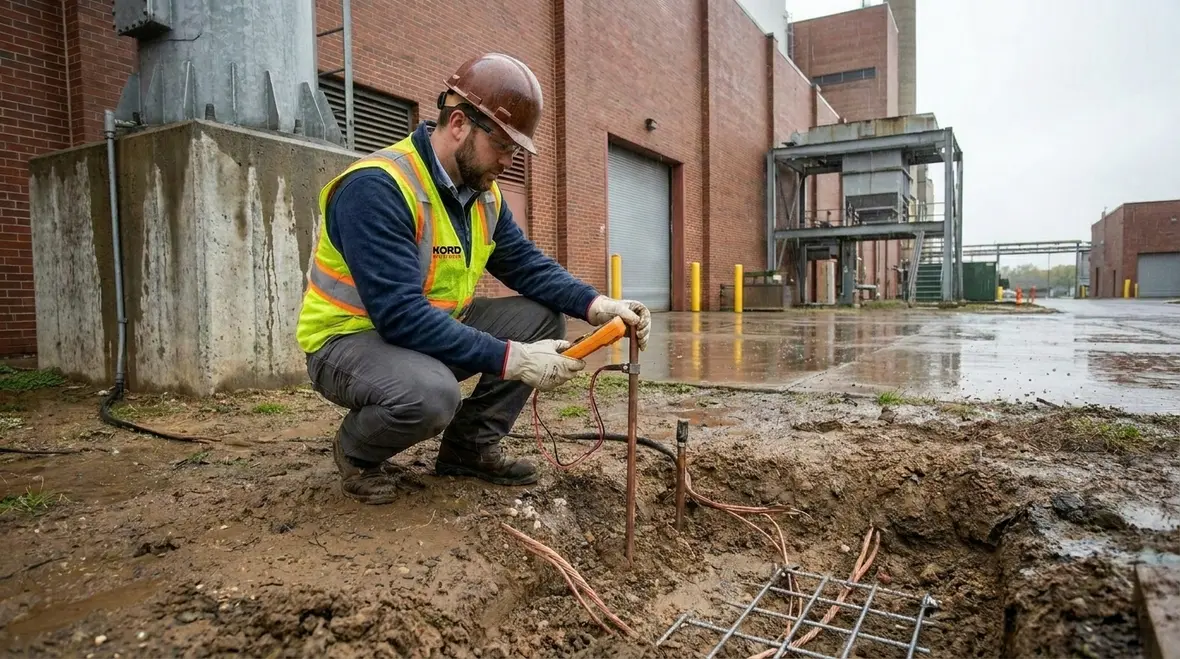
Grounding in large facilities often involves multiple conductors, electrodes, building steel, and equipment connections. Even if the building has a “main grounding point,” the system still must manage the behavior of fault current across long runs. Additionally, soil conditions, moisture, and temperature can influence earth contact.
As the facility grows, the grounding grid or electrode system may need extension or re-evaluation. If a new generator pad gets poured far from existing electrodes, the grounding relationships must remain consistent. Otherwise, the new equipment can create potential gradients that place nearby metal parts at different voltages.
So, instead of treating grounding like a one-time project, we help owners manage it as an active system. Our technicians review current paths, inspect bonding and grounding components, and advise on upgrades based on how the facility operates today, not just how it looked during commissioning. We keep the process practical and focused on commercial and industrial work, where reliability is not optional.
In critical environments like data centers and fire pump rooms, that active view of grounding and bonding is especially important. Kord Electric’s work on data center electrical distribution design, along with Kord Fire’s guidance on fire pump electrical requirements, both highlight how stable grounding and bonding support protective device performance and control system reliability across high-stakes facilities.
Common mistakes we find during inspections
During our service calls and walkthroughs, we often see patterns. Not always the dramatic failures from movies, but the slow issues that build up like dust behind a server rack.
Here are frequent problems that impact safe operation:
Missing or loose bonding jumpers between equipment enclosures, raceways, or structural steel
Painted or oxidized connection points that prevent proper conductivity
Inconsistent grounding connections after renovations or tenant improvements
Incorrect assumptions about cable shields and where they must connect
Generator and service interconnection issues where grounding relationships do not match the facility design
Improper bonding around coax, fiber interfaces, or control cabling, where people mix up ideas and accidentally create noise paths
To be clear, these mistakes do not always cause immediate downtime. However, they can increase the risk of shock, damage surge protection, affect communications stability, and lead to repeated nuisance trips. And honestly, no one wants a power problem that acts like a haunted house. It is supposed to behave like an engineering system, not a mystery novel.
Owners who want a broader view of how these issues fit into everyday risk often find it helpful to pair this discussion with Kord Electric’s breakdown of hidden electrical risks in commercial buildings, which walks through how seemingly minor issues inside panels and conduits evolve into serious hazards over time.
Verification and documentation: the part people skip
After installation or upgrades, verification matters. A facility might look correct, yet the connections could be intermittent due to corrosion, poor contact surfaces, or wrong routing. Therefore, owners should treat verification as a planned activity, not a surprise emergency.
Our technicians use practical checks to confirm that protective systems work as intended. We look at physical connection integrity, continuity where appropriate, and how the grounding network connects across equipment boundaries. Then we help owners document what exists and what changed. Documentation becomes critical when maintenance crews, electricians, or facility managers plan future work.
In addition, good records help with compliance readiness and reduce confusion during expansions. When the next project arrives, the team does not have to guess which bonding points were updated last time. Instead, everyone uses the same baseline. That keeps the work smooth, lowers risk, and protects the business from avoidable delays. For many facilities, pairing these practices with a structured electrical preventive maintenance program creates a consistent rhythm for inspections, testing, and documentation.
Frequently asked questions about grounding vs bonding
Grounding vs bonding questions show up on almost every walkthrough and upgrade conversation. Below are straightforward answers that align with how our technicians design, install, and service commercial and industrial systems.
Choosing the right service approach with Kord Electric
When owners treat grounding vs bonding as an afterthought, the electrical system pays the bill later. Meanwhile, when they manage it as a deliberate protective strategy, the facility gains safer operation and more stable performance. At Kord Electric, we keep the process clear and practical. Our technicians and expert service staff explain what we find, why it matters, and what steps reduce risk. If you want a confident plan for your commercial or industrial facility, contact us today and let us help you tighten up the safety where it counts.
For many properties, the next best step is pairing a grounding vs bonding review with a broader electrical preventive maintenance program. That combined approach helps catch hidden electrical risks, keeps documentation current, and supports long term reliability across panels, switchgear, generators, and critical loads.
If your facility is planning larger upgrades—such as rewiring aging infrastructure, modernizing a data center, or preparing for future expansions—Kord Electric’s commercial electrical services team can help you align grounding, bonding, and distribution design into one coherent plan instead of a patchwork of short term fixes.
The goal is simple: a commercial or industrial electrical system that behaves like an engineered asset, not a mystery. Grounding vs bonding done right is one of the quiet foundations that makes that possible.