Warehouse Efficiency with Industrial Lighting Controls
How Kord Electric’s industrial lighting controls efficiency guide changes warehouse performance
In the first 100 to 150 words, we start with a promise we can measure. Kord Electric uses an industrial lighting controls efficiency guide to help facilities cut wasted electricity, reduce maintenance calls, and keep light levels steady where workers actually need them. That guide is not a brochure fantasy. It is a practical path we give to facility teams and building owners, and our technicians walk it step by step. In this article, we focus on optimizing warehouse operations with automated industrial lighting controls, especially for commercial and industrial sites and major property buildings. Because a warehouse should not feel like a dim arcade game, with lights that never know what’s happening.
Now, let’s talk about what changes when lighting becomes smarter, not louder.
Why warehouses lose money in plain sight
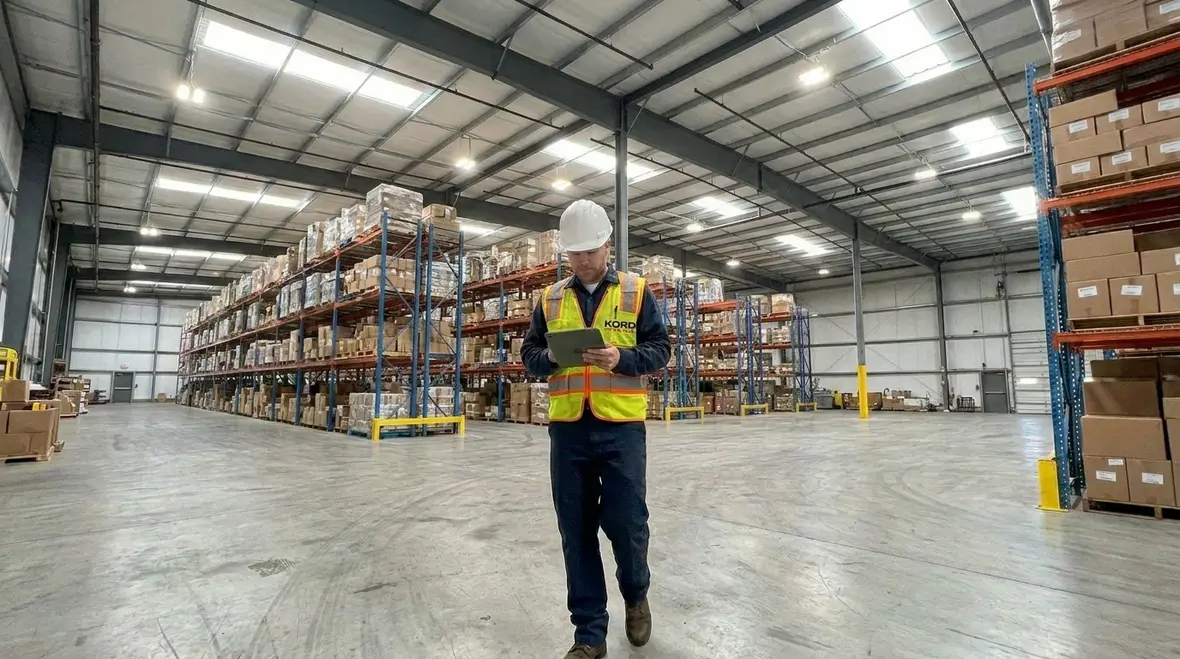
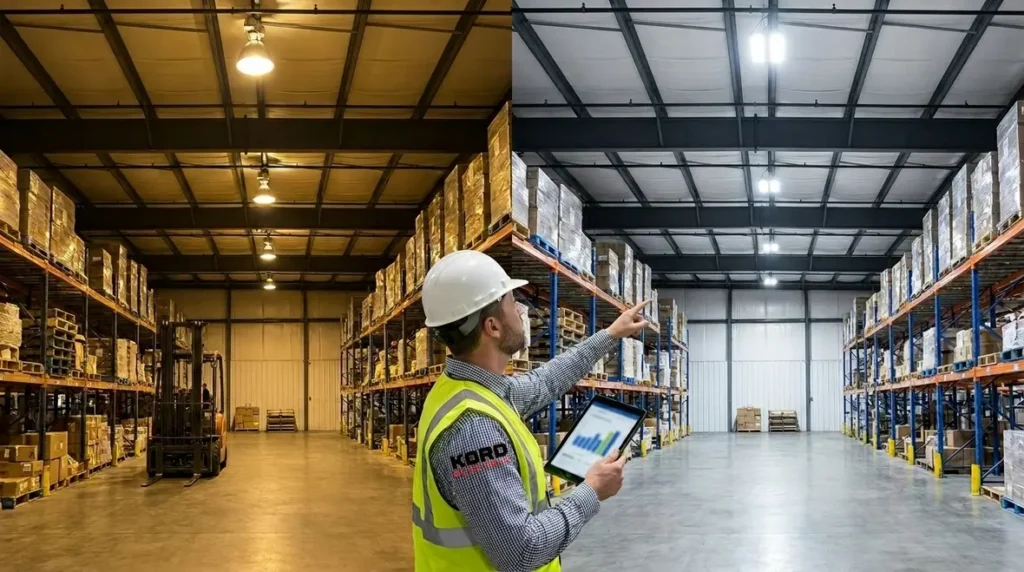
Warehouses usually run on a strict rhythm: forklifts move, shifts overlap, loading doors open, and aisles fill and empty all day. However, lighting systems often ignore that rhythm. Lights stay on in empty zones. Brightness stays constant when it does not need to. And when glare or poor uniformity appears, workers change behavior, not just posture.
That is where automation helps. When we align lighting output with real activity, facilities stop paying for light that goes nowhere. Also, there is a hidden cost: frequent lamp or fixture failures from heat stress and uneven usage patterns. Meanwhile, some teams try to “solve” the problem by turning everything off, which creates safety risk and slows work. In other words, the old approach swings between wasted energy and avoidable friction, like a pop song that never ends.
This is also where smart industrial lighting and control design connects with broader efficiency planning. When Kord Electric reviews a site, we are not just hunting for kilowatt hours in a spreadsheet. We look at how tasks flow, how workers move through aisles, and where bottlenecks hide in dark corners. That is the same mindset we bring to related projects like industrial lighting layout optimization for production efficiency and broader commercial upgrades. When lighting behavior follows the real work instead of ignoring it, efficiency gains tend to arrive quietly but stay for the long run.
How automated industrial lighting controls map activity to real lighting needs
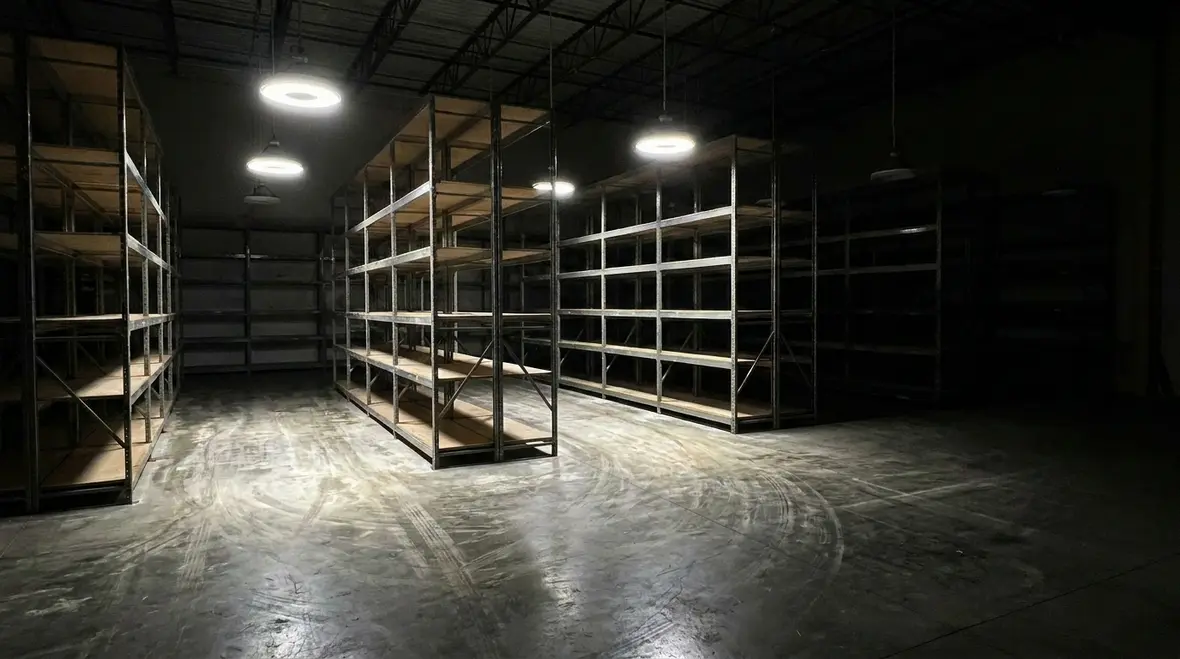
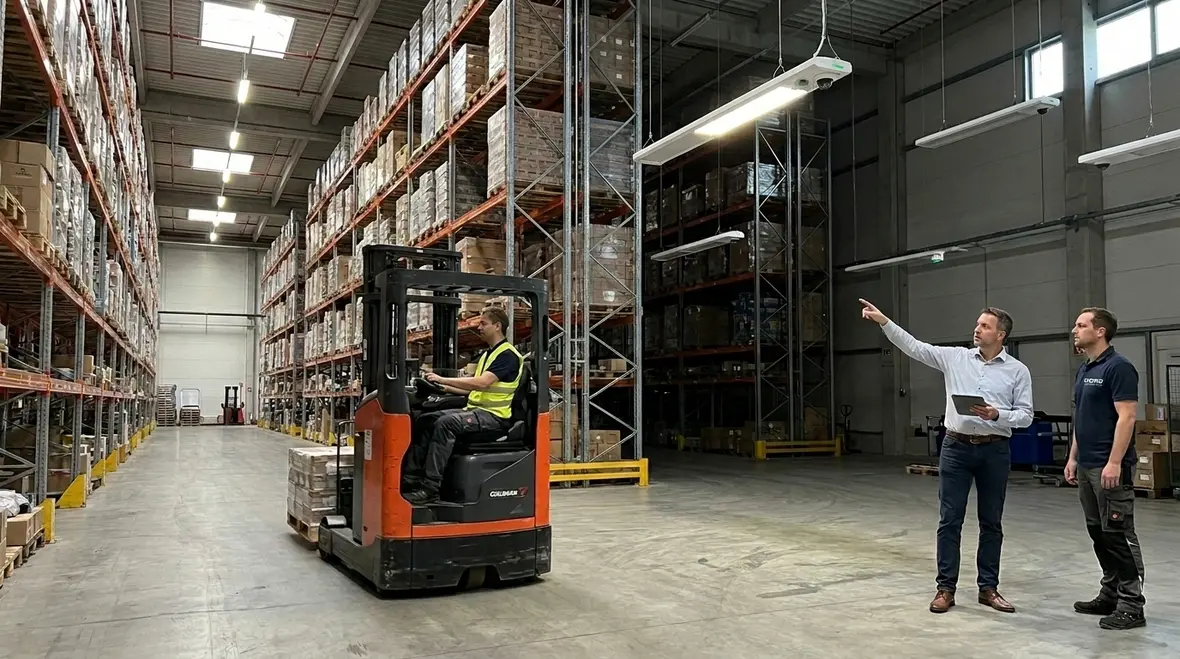
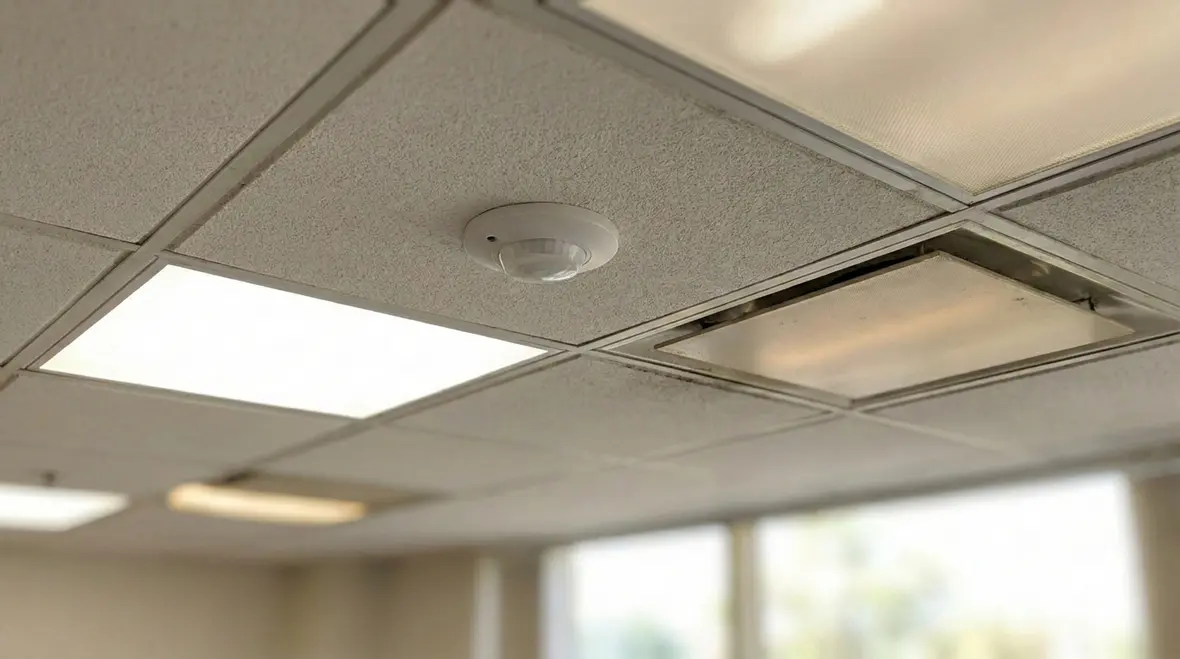
Automated systems change the lighting workflow from static to responsive. We typically see sensors, schedules, and zone control work together so the warehouse gets the right light at the right time. Instead of treating the building like one big bulb, the system treats it like a set of zones, each with its own needs.
For example, motion detection and occupancy sensing help reduce lighting output in low activity aisles. Daylight harvesting uses available sunlight to dim fixtures near skylights or high windows. Photocells and dimming controls maintain target illumination so the floor stays consistent, not patchy. And when doors open for receiving, the system can bring lighting up to safe levels quickly, then step it back down after activity ends.
To facility managers, the biggest win is operational calm. Lighting stops being a background issue and starts behaving like a dependable teammate. And if someone jokes that controls are “too smart,” our service staff usually responds, with a straight face, that “too smart” is better than “too dark.”
There is also a deeper, long term benefit. When automated lighting controls are designed alongside code requirements and retrofit planning, they make it easier to pass inspections, qualify for incentives, and document savings. In California, that often includes projects shaped by standards like Title 24. Kord Electric’s team regularly helps warehouse operators think through controls and dimming in the context of code compliance and ROI, as covered in our California Title 24 Lighting Retrofit ROI guide. When activity based controls and regulatory expectations align, the warehouse lighting system stops being a cost center and starts behaving like a measured upgrade.
Zone-based control improves safety, picking speed, and compliance
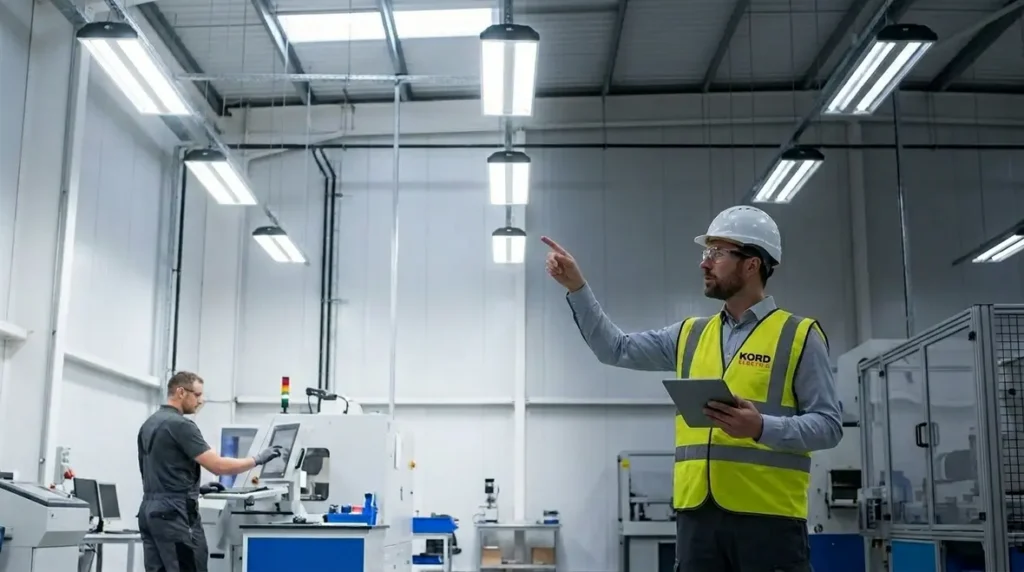
Warehouses care about more than energy savings. They care about visibility, safety, and consistent performance across shifts. With zone based control, Kord Electric helps align illumination with traffic patterns such as pallet staging, order picking routes, packing lanes, and maintenance areas.
When lighting levels match task needs, workers spend less time adjusting their focus. Picking and sorting become more efficient because the visual cues stay stable. In addition, consistent lighting helps reduce mistakes caused by low contrast and uneven coverage.
Furthermore, many commercial and industrial facilities must meet safety and operational standards. Automated controls support documented schedules, controlled settings, and predictable light behavior. We also design systems so they can be tested and maintained without guesswork. Our technicians explain setup choices in plain language, so teams understand what is happening and why, instead of treating the system like a mysterious black box that only techs can touch.
Zone based control also supports lighting code and workplace safety expectations. For example, separating egress paths, loading docks, and general storage areas into distinct lighting zones makes it easier to keep required illumination in critical paths while trimming waste in lower priority spaces. Our blog on workplace lighting safety hazards that hurt productivity explores how poor visibility quietly undermines both morale and output. When controls, zoning, and fixture layout work together, the safety conversation becomes easier to win with inspectors and with your own workforce.
Industrial lighting controls efficiency guide in practice for warehouses

Our industrial lighting controls efficiency guide does not start with hardware. It starts with observation. We review how the facility actually operates, then we match control strategies to real use. That means we look at occupancy patterns, shift changes, door cycles, ambient daylight, and how each area performs during peak operations.
Next, we select the right control method for each zone. Some areas need frequent occupancy changes and fast response. Other areas need steady brightness and careful dimming. Meanwhile, high bay areas and dock spaces often demand a different approach than office support areas. When we coordinate these zones correctly, the facility achieves both savings and stable lighting performance.
We also plan for future change. Warehouses reconfigure racks, add staging zones, and shift workflows. Our approach supports adjustments without forcing a complete system rebuild. As a result, the building does not fall back into wasted light whenever operations evolve.
And yes, there can still be a little humor. In one facility, a manager told us the lights finally “stopped acting like they were paid hourly for being on.” That is exactly the goal.
The same playbook we use for controls in warehouses also applies to other large commercial and industrial projects, from manufacturing floors to multi building campuses. That is why Kord Electric builds the industrial lighting controls efficiency guide around repeatable steps: site evaluation, layout and zoning, control selection, commissioning, and training. If you are mapping out a broader upgrade, articles like our lighting installation code compliance guide and California commercial lighting code guide for 2026 can give additional context on how design and compliance overlap with real world warehouse work.
Smart controls reduce maintenance, not just electricity
Energy savings matter, but operational cost matters too. Automated controls reduce wear by limiting unnecessary run time. When fixtures do not operate at full output in empty zones, heat and stress drop. That helps extend fixture life and reduces unplanned outages.
Additionally, modern systems make it easier to spot issues early. When teams can track device status and control events, failures become visible sooner. Instead of discovering a dead section during a peak rush, the facility can act before it becomes a problem. That improves uptime for shipping, receiving, and production schedules.
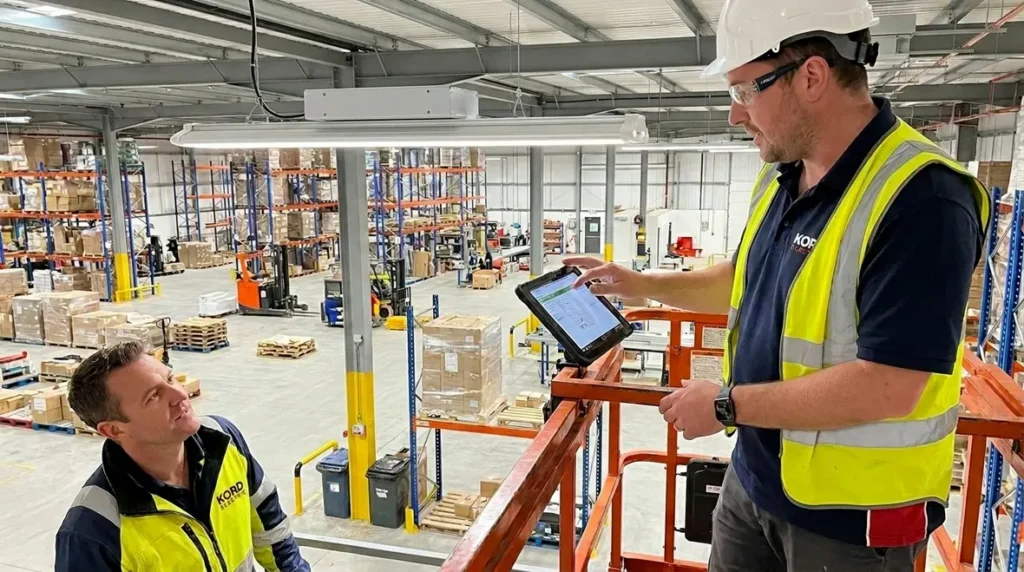
Our technicians and expert service staff stay involved beyond installation. We help train site teams on what to watch, how to verify settings, and how to interpret common events. Then, if adjustments become necessary, we make updates with minimal disruption. We keep it business casual in tone and serious in execution.
Because lighting interacts with other building systems, good controls design often pays off in ways that are hard to see in a single line item. Fewer outages mean fewer rushed service calls and less time chasing ladders, lifts, and spare parts. When lighting is stable and predictable, safety programs, quality inspections, and even production meetings become easier. It is a quiet upgrade in the same spirit as structured maintenance programs and NFPA 70B focused electrical work: disciplined, methodical, and aimed at reducing surprises rather than chasing them.
Designing the right system for major property buildings and industrial sites
Commercial and industrial facilities are not one size fits all. Major property buildings often include multiple tenant zones, shared corridors, dock areas, and sometimes attached offices. Lighting controls must handle complexity while staying easy to operate.
For these sites, we focus on scalable zone design. Kord Electric coordinates control points so the system manages both large areas and detail spaces without conflicting rules. We also consider how controls interact with fire systems, emergency lighting requirements, and the facility’s overall building management practices. Safety functions remain clear and separated, because “smart” never means uncertain when people’s work depends on reliability.
We also take commissioning seriously. During commissioning, our team verifies sensor coverage, dimming ranges, and response times. We test scenarios such as door open events, low occupancy periods, and typical shift turnover. Then we document the results so stakeholders understand how the system performs. That reduces friction when new staff arrive, because nobody enjoys a scavenger hunt just to figure out why lights behave a certain way.
In many major properties, lighting controls are deployed alongside broader industrial lighting and power upgrades. When we pair a thoughtful controls strategy with services like lighting installation services, industrial electrical work, and preventive maintenance, the building gains a more resilient backbone. Instead of juggling separate projects that never quite match, stakeholders get a coordinated system that supports tenants, warehouse operators, and property managers at the same time.
FAQ about automated warehouse lighting controls
Have another question? Our team at Kord Electric can help commercial and industrial facilities and major property buildings with a tailored lighting control plan.
Call Kord Electric for a warehouse lighting control upgrade
Kord Electric helps commercial and industrial facilities optimize warehouse operations with automated industrial lighting controls that reduce waste, improve visibility, and lower maintenance headaches. Our technicians and expert service staff explain the choices clearly, then commission the system so it performs during real shifts, not just on paper. If your warehouse still runs lights on fixed schedules while aisles sit empty, it is time for a smarter approach.
If you are planning a broader upgrade or new build, pairing industrial lighting controls with professional lighting installation services gives your facility a stronger foundation. From evaluation and layout to installation, controls integration, and testing, Kord Electric’s team designs systems for warehouses, campuses, and other large properties that need consistent performance and clear documentation.
Contact Kord Electric to schedule a site assessment, review your current system, and get an efficiency focused plan that fits your warehouse and your operations.
To learn more about our full range of commercial and industrial electrical services, visit the Kord Electric home page or reach out directly to start a conversation about your facility.