How to Safely Maintain Commercial Lighting Systems
At Kord Electric, we believe How to Safely Maintain Commercial Lighting Systems is not a “nice to have” task. It is part of keeping your building dependable, safe, and easy to run. In this guide, we explain how to maintain commercial lighting in a way that protects people, reduces downtime, and keeps energy use under control. We also outline what our team does when we take over preventive work, plus what our expert service staff tells clients before they touch a single fixture. And yes, we will keep it practical, because nobody wants their office lights to flicker like a bad live concert filter.
Why safe maintenance prevents costly lighting failures
In commercial and industrial spaces, lighting is not just decoration. It supports safety, work quality, wayfinding, and code compliance. When maintenance goes wrong, failures tend to show up at the worst times. For example, a driver glare issue in a loading area can slow deliveries, while an outdoor fixture that fails on a rainy night can turn a planned operation into an emergency call. Therefore, we treat maintenance like a steady process, not a last minute scramble.
Our technicians approach the job like it matters, because it does. First, we identify the lighting system type, including LED retrofit setups, high bay fixtures, exit lighting, and parking or exterior circuits. Then, we review the building environment, since dust, vibration, humidity, and temperature swings affect components differently. Next, we build a clear plan for inspections, cleaning, and parts replacement before failures spread.
And because we deal with major property buildings and commercial sites, we also know how equipment downtime impacts whole operations. So, we design maintenance windows that support your teams. If your schedule feels like a stack of spreadsheets, we can help you keep the lighting workload out of the way, not on top of it.
Start with a safety checklist before anyone opens a fixture
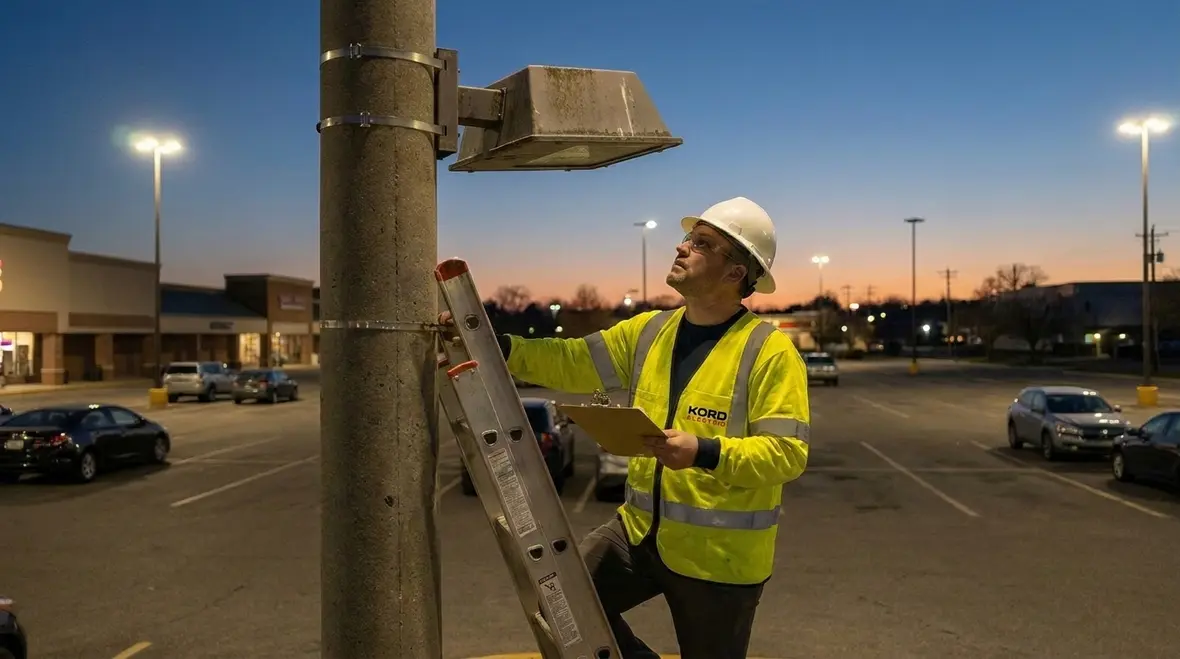
To follow How to Safely Maintain Commercial Lighting Systems, the first step is simple but strict: control the risk before we ever touch wiring, lenses, drivers, or housings. Others sometimes skip the basics and then act surprised when a panel is live. We do not do that. We follow a process that protects electricians, maintenance staff, and building occupants.
Here is how we structure a safety-first checklist for commercial and industrial lighting work
- Verify power status before opening any fixture. We ensure circuits are de energized and we confirm the absence of voltage with proper tools.
- Use correct lockout and tag procedures so the system cannot restart while someone is inside the housing.
- Check for heat and damage. If a driver or housing shows burn marks, we do not “test and hope.” We treat it like a problem that needs a proper fix.
- Control the work area. We set boundaries so people do not walk under ladders or into active repair zones.
- Inspect housings and lenses for cracks, water intrusion, and loose components. Damaged parts can fail fast once disturbed.
At Kord Electric, our expert service staff explains these steps to property managers and maintenance leads in plain language. That way, everyone understands why we ask for certain approvals, why we document conditions, and why we do not rush.
Maintain each fixture type the right way
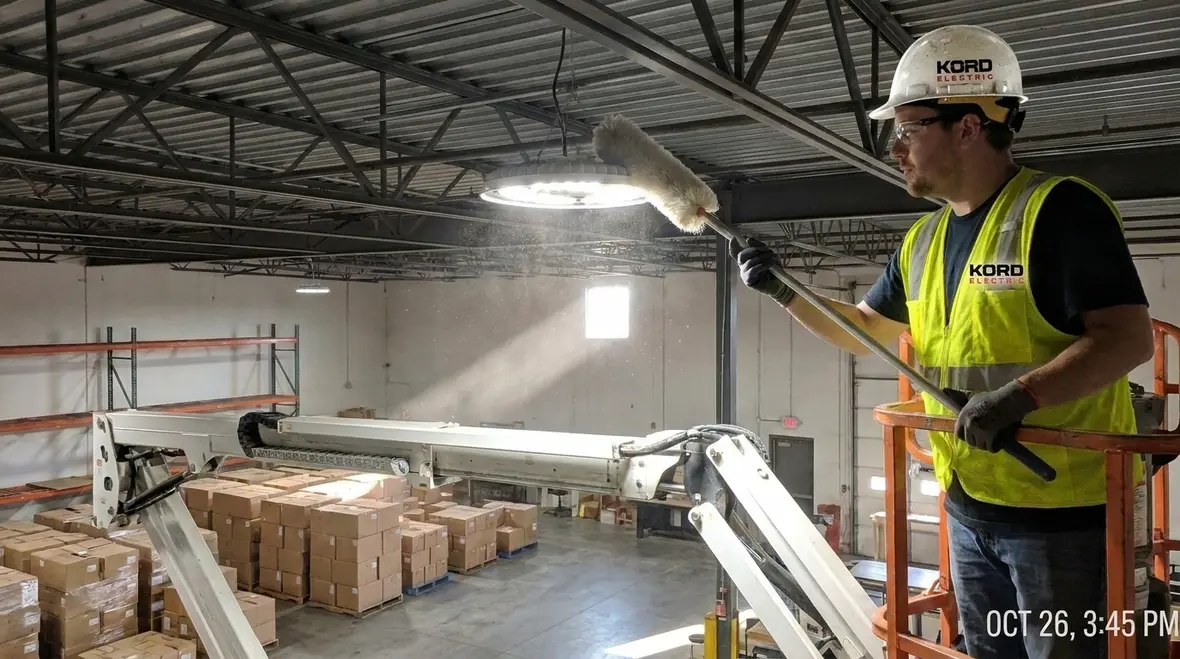
Commercial lighting systems are not all built the same. Therefore, safe maintenance requires fixture specific habits. If someone treats a high bay like a wall sconce, the result is a bigger mess than most sitcom plot twists. We make sure maintenance matches the environment and the fixture design.
High bay and warehouse fixtures
In industrial spaces, high bays face dust, vibration, and high ceiling access challenges. Our technicians inspect for lens clouding, gasket wear, loose mounting points, and heat stress at driver locations. In many cases, cleaning improves output and reduces hot spots, but we clean safely with the right method for the fixture rating.
Parking lots, canopies, and exterior fixtures
Outdoor systems need extra attention to moisture seals and corrosion points. We check for water intrusion, verify that protective covers stay seated, and confirm that connections remain secure. Then, we test controls and timers where they exist, since a faulty control can make lighting appear “broken” when the issue is actually switching.
Exit and emergency lighting
These fixtures carry safety responsibility. We inspect them on a schedule that aligns with your site needs and local expectations. More importantly, we verify performance rather than guessing based on appearance. If an emergency module acts strangely, we treat it as urgent, not “someday.”
Office and common area LED systems
For interior LED systems, we look for flicker sources, driver issues, and sensor or dimming faults. We also confirm that occupancy controls and daylight harvesting settings remain correct as furniture layouts change. In commercial buildings, people move, space changes, and settings drift. We prevent that drift from becoming customer complaints.
If you are planning a lighting upgrade or new layout, pairing this maintenance mindset with a solid design process makes each fixture easier to care for over time. Resources like Kord Electric’s commercial lighting installation planning guide help connect day one design choices to years of safer, simpler maintenance.
Control your inspections with real documentation
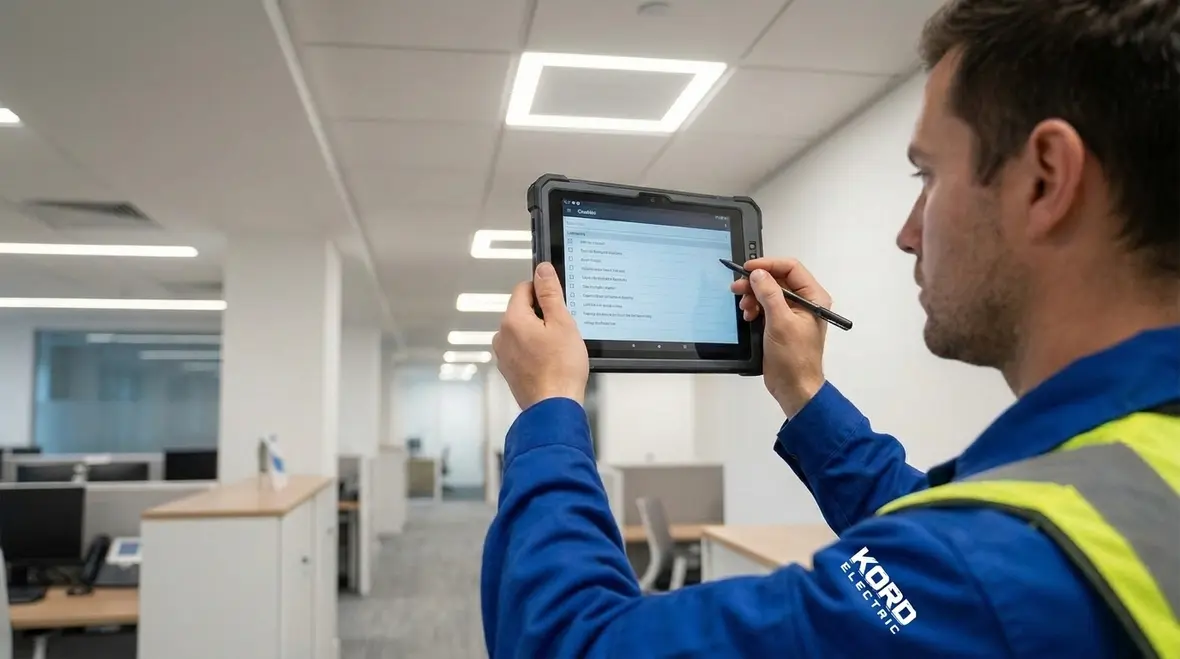
Safe maintenance becomes easier when you can track what happened, when it happened, and what was found. So, we emphasize documentation during every visit. Others might log a quick note and leave it at that. We prefer clarity, because it helps you plan budgets and protect operations.
Our technicians record conditions during inspections, including signs of heat, damaged lenses, corrosion, failing drivers, and loose components. Then we attach photos where needed and we create a summary you can share internally. That way, building teams do not have to guess. They can see what we saw and understand the next steps.
Additionally, we coordinate maintenance across the site. If a circuit serves both indoor work and exterior safety lighting, we plan the work so we do not cause unnecessary disruption. We also time repairs to reduce the chance of repeat access, since ladder time, lift time, and shutdown coordination all cost real money.
Reduce fire and shock risk with smarter routines
When lighting systems fail, the failure can create risks beyond darkness. Damaged insulation, overheating connections, and deteriorated parts can raise safety concerns. Therefore, we build routines around risk reduction and clean workmanship.
First, we focus on connection integrity. We check terminations and mounting areas, then we confirm that connections remain tight and properly protected. Next, we verify that drivers and control devices run within expected limits. If a fixture shows repeated driver failures, we do not just swap parts. We look for the cause, such as heat buildup or an electrical condition.
We also manage cleaning in a way that does not create new issues. For example, harsh solvents can harm lens coatings, and improper pressure can damage housings. Our expert service staff uses safe cleaning methods suited to the fixture materials and the rated environment.
Now, let us address the part nobody likes to admit: some facilities “maintain” lighting by ignoring it. That is like running a gym by only replacing the mirrors. The lights still look fine, until they do not. Our preventive approach helps you avoid surprise outages and keeps your electrical work in a calmer, more controlled rhythm.
If your team also needs help aligning lighting safety with your broader electrical strategy, Kord Electric’s commercial and industrial maintenance planning resources connect lighting checks, panel health, and emergency readiness into one coordinated plan.
Use preventive maintenance schedules that match your building
A helpful schedule does more than set dates. It reflects how your site operates. For example, an industrial warehouse with heavy dust load needs different cleaning and inspection timing than a corporate lobby. In a major property building, occupancy patterns and nighttime operations also shape when we can safely work.
That is why we align the maintenance plan to your real needs. We review your lighting layout, your control system setup, and your fixture mix. Then we recommend inspection and service intervals that balance safety, performance, and cost. We also include recommendations for targeted replacement when components show wear patterns rather than random failures.
Based on our proactive commercial maintenance tips, we often start by doing a baseline walk through. From there, we set priorities. For example, we focus on high impact areas first, such as exits, emergency paths, and loading zones. After that, we move into general areas and hard to access sections.
To support your operations, our technicians also explain what they find in ways that make sense to site teams. If you have ever tried to decode a maintenance report like it was written in a secret language, you will appreciate how we translate findings into action.
For facilities across the region, tying these schedules to broader service coverage keeps everything moving in the same direction. Kord Electric’s Los Angeles County electrical services support commercial lighting inspections, repairs, and upgrades as part of complete electrical care for busy properties.
When your plan calls for more than maintenance and you are ready for new installs or targeted upgrades, Kord Electric’s dedicated lighting installation services help align long-term maintenance needs with every new fixture, control, and circuit you add.
FAQ: Quick answers for commercial lighting safety
Final word: keep your building bright and protected
If you want a calm, safe approach to How to Safely Maintain Commercial Lighting Systems, start with a plan that fits your building. At Kord Electric, our technicians and expert service staff help commercial and industrial facilities reduce risk, prevent outages, and keep lighting performing as intended. Do not wait for flicker to become a full outage. Contact us to review your current system, then we can recommend a preventive maintenance schedule built for your site. Let us handle the lights before the lights demand attention.
To see how lighting maintenance, installation, and control strategies work together across large properties, explore related insights on the Kord Electric blog. From automation to layout optimization, these resources help you keep every circuit, panel, and fixture working in the same safe, efficient direction.
When you are ready to connect this guidance to a specific facility, Kord Electric’s team can coordinate lighting inspections, targeted repairs, and upgrades under one service umbrella so your commercial lighting stays dependable instead of disruptive.