Identifying Electrical Panel Overload Signs
At Kord Electric, we see the same pattern in commercial and industrial buildings: the electrical panel looks “fine” until it suddenly does not. When identifying electrical panel hazards shows up, it rarely arrives with a neat warning label. Instead, it appears as heat, smells, odd sounds, and behavior that makes staff uneasy, even if nobody wants to call it what it is. In offices, warehouses, and major property buildings, these early electrical panel overload signs often start small. Then, they escalate quickly, like a sitcom character who swears they will handle it “this time,” right before the plot collapses.
Now, we will walk through what early warning signs look like, why they happen, and how our technicians help you spot problems before they turn into downtime, equipment damage, or worse. We explain it in plain language, and yes, we do it slowly enough that your facility manager can sleep afterward.
What overload looks like in a commercial office before failure
Overload happens when the panel and its circuits carry more current than they were designed to handle. As a result, components heat up, protection devices trip more often, and insulation ages faster. Eventually, the panel can begin to misbehave in ways that are easy to ignore when everything else seems busy.
Here are the first signals that our expert service staff often hears about after the fact, but which appear in the day to day life of a building:
- Frequent breaker trips that seem to happen during the same hours, such as morning HVAC start up or after lunch when printers and kitchens run together
- Flickering lights that come and go, especially near panels or large power draw areas
- Buzzing or crackling noises from the enclosure, which can suggest loose connections or worn components
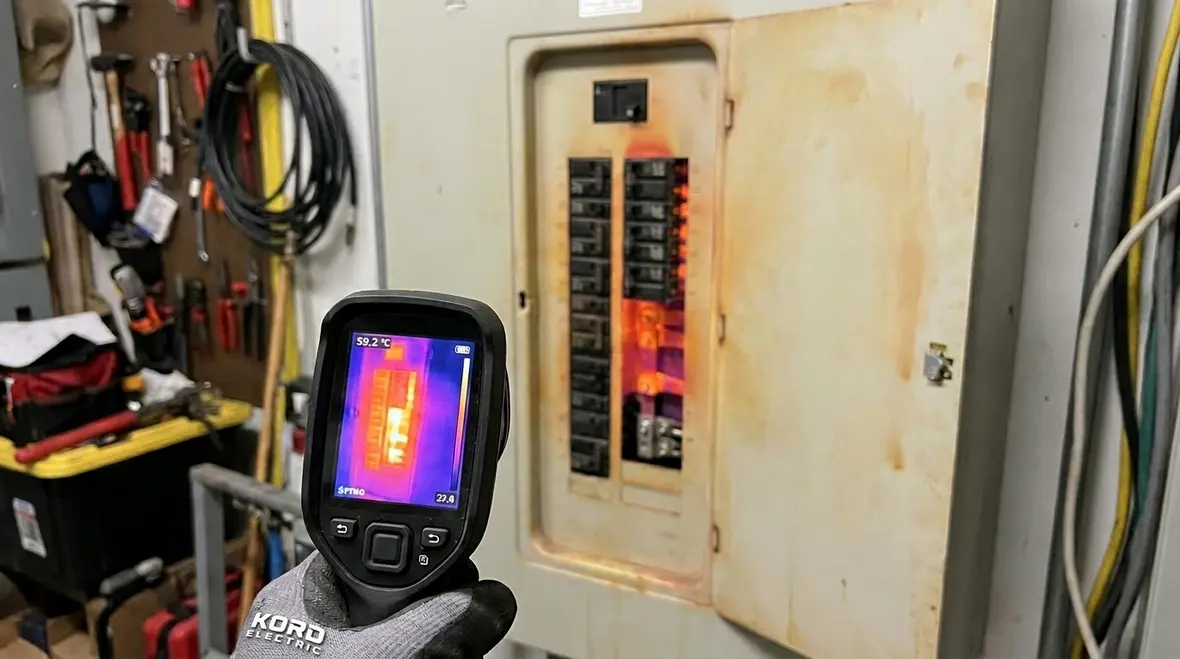
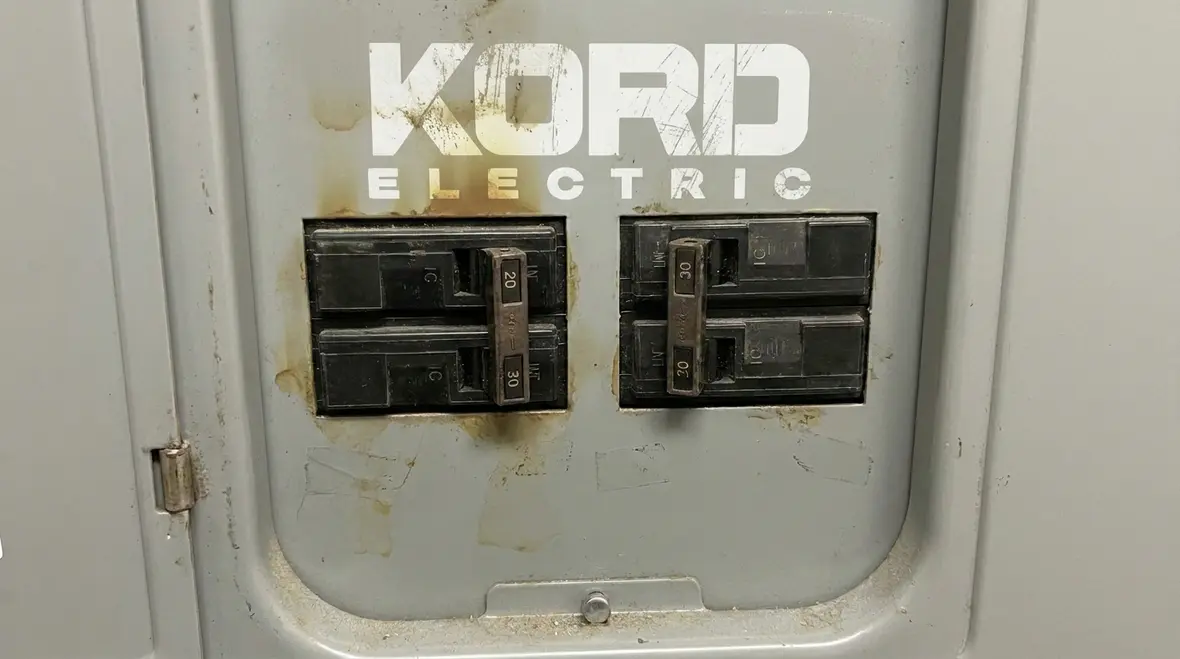
- Warm or hot panel surfaces, including discoloration on the dead front or around cable entry points
- Burning or “hot dust” smells, a clear clue that something is heating beyond what it should
Just as important, the building may show “soft” symptoms first. For example, others may report that equipment runs less reliably, and maintenance notices small delays that feel unrelated to power. However, our experience in commercial and industrial facilities shows that power stress rarely stays hidden for long.
Why office loads overload panels so easily
Offices carry changing loads. In the morning, HVAC and lighting start. Later, copiers, coffee machines, charging stations, and IT gear increase demand. Then, a tenant adds a new workstation, a contractor installs temporary equipment, or a conference room adds audio visuals. Each change adds draw, and the panel does not always get a proper load review.
In addition, building owners sometimes assume that because power works today, it will keep working tomorrow. That assumption can get expensive. Loads rise, power quality shifts, and panel components age. Furthermore, if circuits share loads without proper balancing, one section of the panel can take more strain than others.
Our technicians often explain this with a simple idea. Panels are like a busy restaurant kitchen. If more orders come in than the kitchen can handle, the line cooks do not “try harder.” They overheat, wear out, and eventually stop working. Electricity behaves the same way. And when the panel gets overloaded, identifying electrical panel hazards becomes more urgent, not less.
If your building is already juggling growth, tenant changes, and new equipment, it can help to think about overload risk the same way you think about overall electrical planning and budgeting. In the same way our electrician cost LOS guide for commercial facilities breaks down costs in plain terms, we break down how each added load, circuit change, or new device quietly reshapes what your panel is being asked to handle every day.
Common panel hazards our technicians look for on site
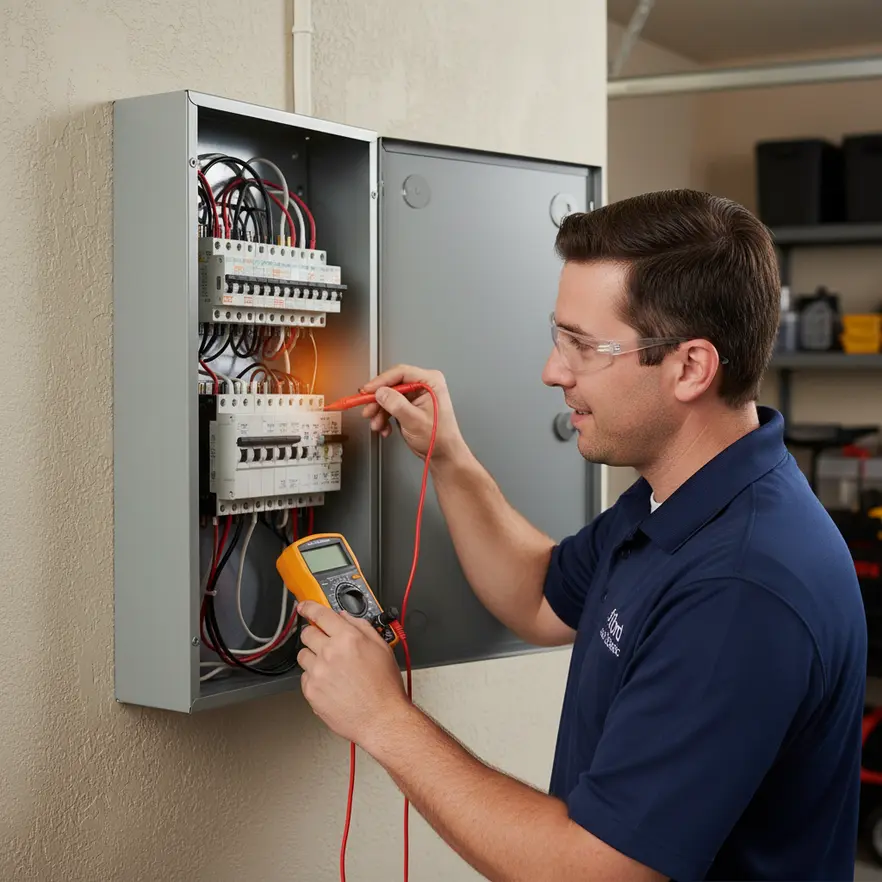
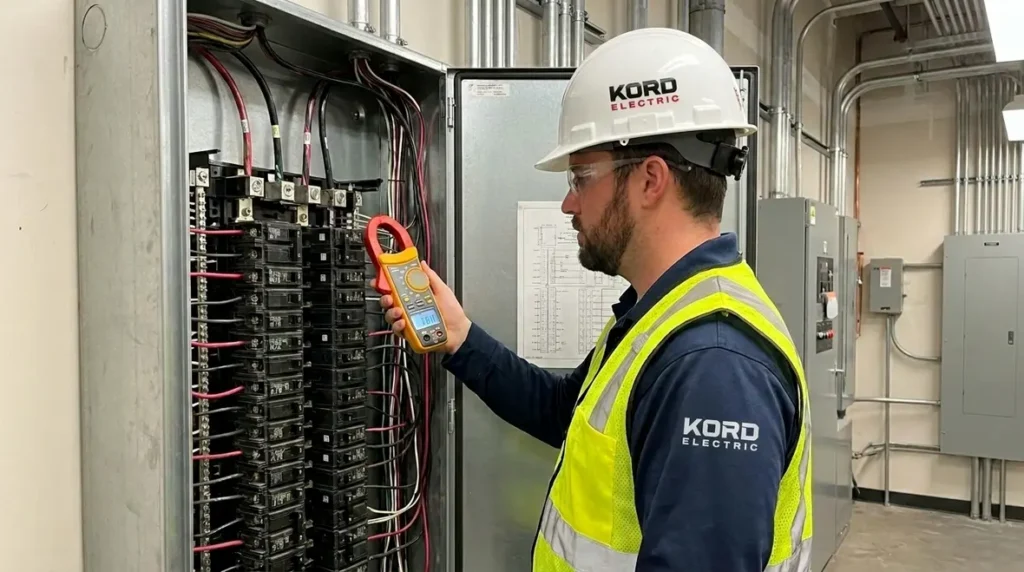
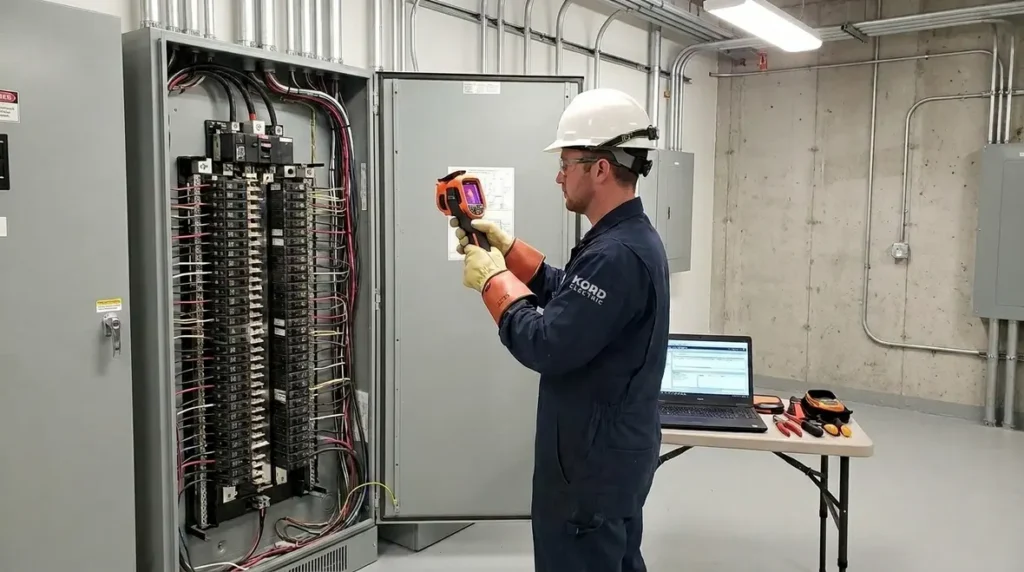
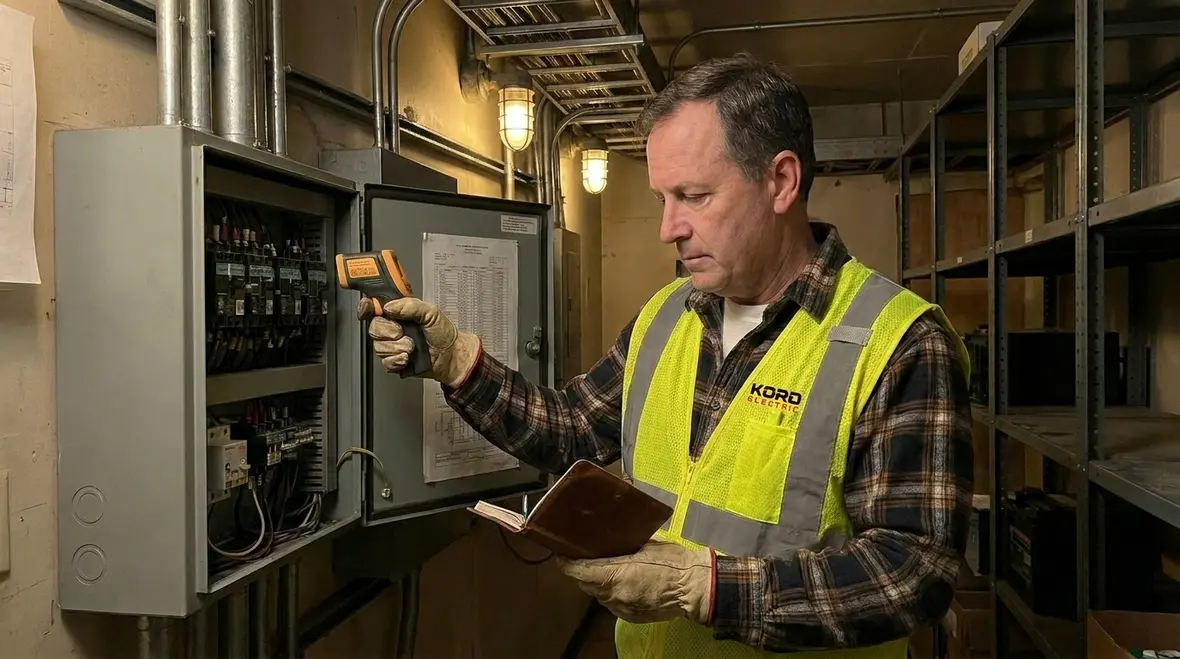
When our team arrives, we do not only check whether breakers trip. We also look for the physical signs that show where stress is happening and how severe it has become. That is how we help others avoid guessing, because guessing is how small problems become large invoices.
We typically watch for these panel hazards in commercial and industrial panels, especially in major property buildings where changes pile up over years:
- Loose or overheated connections at lugs and bus bars, which may show dark marks or heat staining
- Degraded insulation near cable entry points
- Moisture or condensation inside enclosures, which can worsen corrosion and increase resistance
- Dust buildup that traps heat, especially around ventilation gaps
- Signs of past arcing, including pitting or char marks, even if the equipment still runs
- Improper labeling or missing covers that hide circuit changes and make future troubleshooting harder
Also, we remind facility staff that a panel does not have to be “sparking” to be in danger. A modest rise in temperature over time can accelerate failure. So, when others notice the enclosure feels unusually warm, that is not a comfort feature. It is a warning. And yes, it is the electrical equivalent of noticing the smoke alarm chirp and thinking, “Later.”
These are also the moments when code and safety standards matter most. Overloaded panels, improper wire sizing, and unauthorized circuit modifications are all common compliance problems, especially as facilities expand and change. Those issues show up not just as inconvenience, but as violations of the same national electrical code rules that are meant to keep people and property safe.

Labeling, documentation, and future troubleshooting
One subtle hazard we often see is poor or outdated panel labeling. When circuits have been repurposed, extended, or quietly tied into other loads, the written labels no longer match reality. That mismatch slows down troubleshooting, makes emergency response harder, and increases the chance that someone will switch the wrong breaker at the worst possible moment.
Clear, standardized labeling turns a stressed panel into a readable map instead of a guessing game. When labels and schedules match the real wiring, our technicians can trace overload patterns faster, isolate affected circuits safely, and plan corrections without wandering from room to room hunting for mystery loads.
How to spot overload during daily office routines
It is easy to ignore panel issues when nobody wants to interrupt operations. However, offices offer daily patterns that can reveal overload risk, if staff know what to watch.
Here is what others can track without touching anything dangerous. Then, our technicians can confirm the cause with proper tools and inspection:
- Time based trips, such as breakers that only trip after certain equipment runs
- Temperature feedback, like “the panel room gets hot” or “the cabinet near the ceiling feels warm”
- Real load changes, such as after adding space heaters, new kitchen appliances, or expanded IT gear
- Hallway lighting changes when large motors start, which can hint at voltage drop or unstable power draw
- Unusual HVAC cycling, because motors that start and stop under stress can add strain
Additionally, we recommend that facility teams log events. For example, note the day and time of breaker trips, and write down what was operating. Transitioning from “we think it might be the panel” to “we have a pattern” makes troubleshooting faster. And it keeps electricians from performing the electrical version of guessing a celebrity in a dark movie theater.
If those patterns show up alongside other issues like recurring power failures or unexplained equipment resets, it may also be a sign that your building’s overall electrical system is running too close to its limits. That is why many facility managers combine overload investigations with a wider look at distribution, backup power, and how existing panels support modern commercial electrical systems.

When everyday complaints point to electrical stress
Not every overload sign sounds like a breaker snapping off. Sometimes, it sounds like everyday complaints: “The lights in that wing always seem dimmer,” or “The copier dies every time the microwave runs.” Those comments are not just annoyances. They are field notes from the people who live with your power system every day.
We encourage facility managers to treat those notes as data. When your staff can point to specific rooms, times, or equipment that behave oddly, it helps us trace whether the problem is a failing device, a stressed circuit, or a panel that is quietly carrying more than its share. That collaboration beats waiting for a full blackout to reveal the same information all at once.
What caused the overload and how to stop it
Once a building shows early warning signs, the next question is not “Will it work longer?” It is “What changed, and why?” In commercial and industrial facilities, overload often comes from a few common causes.
Our expert service staff typically investigates these drivers:
- Growth in equipment load from tenant build outs, new production gear, or expanded IT and lighting
- Hidden circuit additions made by past contractors without a full load review
- Worn breakers that trip sooner than expected or fail to protect properly
- High resistance connections that heat up under load, which can mimic overload symptoms
- Poor panel balancing that pushes one bus or phase harder than others
Now, our team also considers the broader picture of commercial and industrial electrical planning. In the same spirit as our guide for estimating electrician costs for commercial facilities, we treat inspections and upgrades as part of a controlled plan, not a random reaction. If the building needs a load study or targeted corrections, we explain what we recommend and why, so owners can budget with confidence rather than panic.
Then we discuss solutions that reduce risk without creating new issues. That can include tightening and term checks, replacing worn components, upgrading panel capacity when justified, improving circuit distribution, and correcting labeling for future work. In short, we help others restore reliable power and protect critical systems.
For many commercial and industrial facilities across Los Angeles County, tackling overload is also the right moment to think bigger about the system as a whole. Combining corrective work with planned upgrades, such as dedicated circuits for new equipment or improved distribution for lighting and HVAC, often yields a more stable and resilient power backbone for the building.
From “temporary fix” to long term reliability
Temporary workarounds are appealing in the moment. Someone resets a breaker, swaps a device, or moves a plug to a different outlet and decides the issue is “handled.” The problem is that electrical overload rarely stays satisfied with temporary solutions. If the underlying load problem is not addressed, the stress simply moves somewhere else in the system.
Our approach is to map the whole story: what was added, when it was added, and how it changed the power profile of the space. That way, when we recommend a panel upgrade, circuit reconfiguration, or targeted breaker replacement, it is based on a clear path toward long term reliability instead of a quick reset that simply buys time.
Why timely action saves money in major property buildings
When overload issues keep running “until it breaks,” the cost usually grows. First, the panel may damage connections and bus bars. Next, downtime hits operations. Then, replacement repairs expand, and staff lose time. Furthermore, emergency work often costs more and can disrupt tenant services.
We also know that office staff want safety, but they also want continuity. So, we focus on early detection and controlled repairs. Our technicians work with facility schedules, document findings, and provide clear next steps. That way, building teams can plan upgrades with less stress.
| Early sign | What it may indicate |
| Warm panel enclosure | Potential high resistance connections or sustained overcurrent |
| Breaker trips during peak use | Overload, circuit imbalance, or failing protective components |
| Buzzing or crackling sounds | Loose connections, arcing risk, or component failure |
| Burning smell | Overheating insulation or connections requiring urgent action |
Finally, we keep the tone practical. Electrical risk does not improve because people get used to it. It only improves when identifying electrical panel hazards leads to proper inspection and the right corrective work.
For property teams responsible for multiple sites across Los Angeles County, that also means choosing partners who can respond quickly, understand commercial infrastructure, and support everything from overload diagnostics to broader system upgrades. When you align panel health with a larger service strategy, you are not just surviving the next breaker trip—you are actively protecting operations, tenants, and equipment.
Planned service vs. emergency scrambling
There is a simple financial reality at work here. Planned service is almost always less expensive than emergency scrambling. When we inspect panels on your schedule, we can coordinate shutdowns, stage materials, and phase work to avoid disrupting your most critical operations. When a failure forces the schedule, everything becomes harder, faster, and costlier.
By acting on early overload signs, you essentially trade one big unknown for a series of smaller, predictable projects. That trade is good for budgets, good for safety, and good for the people who rely on your building’s power to simply “work” every day.
FAQ
Call Kord Electric before the problem escalates
When early warning signs show up, we urge you to act while the fix stays simple. Kord Electric sends expert technicians to inspect panels, identify stress points, and recommend the right corrective work for commercial and industrial facilities. We explain findings clearly, so building teams can plan with confidence instead of improvising under pressure. If your office has warm panels, breaker trips, or odd sounds, call us now. Let’s keep your power steady, reliable, and boring in the best possible way.
For property managers and facility teams across the region, that support extends beyond a single overload call. Our Los Angeles County commercial electrical services cover inspections, panel upgrades, distribution improvements, and ongoing maintenance designed specifically for high demand environments. When you are ready to move from “we hope it holds” to “we know it is ready,” we are here to help.
Whether you are dealing with recurring trips, unexplained panel heat, or just a growing sense that your building has quietly outgrown its electrical backbone, treating overload signs as a starting point—not an afterthought—will always pay off. The sooner identifying electrical panel hazards becomes part of your regular facility playbook, the more predictable and resilient your power system becomes.