Troubleshooting Commercial Lighting Systems Guide
At Kord Electric, we support the kind of commercial lighting control systems that keep large facilities running on schedule, safely, and without drama. When an office park, warehouse, school building, or hospital floor shifts from “on time” to “on a guess,” the fix starts with troubleshooting commercial lighting systems. In our experience, the fastest route to stable lighting comes from a disciplined process, clear documentation, and technicians who actually talk through the problem instead of tossing parts at it like it is a random game show. And yes, we promise to explain what we find in plain terms, because the only thing that should be dim is the suspense, not the lighting.
Quick symptom scan for lighting control faults
We begin with what the building tells us. First, we look for patterns. For example, if lights fail only after a time schedule runs, the issue usually lives in control logic or network settings. If the problem follows a specific zone, we suspect wiring, load connections, or device pairing. And if occupancy sensing causes flicker, we check sensor settings and interference sources.
Next, our expert service staff confirms whether the complaint matches the controls panel history. Therefore, we review logs, schedules, and error codes before we open a single cover. This step saves time, because guessing is fun in movies, but it is expensive in real facilities.
When we arrive, we also ask targeted questions, such as whether the malfunction started after any rewiring, tenant work, or equipment upgrades. If the site recently experienced electrical system work, the odds rise that a change affected the control circuit or load wiring. For facilities managers, this is the moment where we slow down, explain what we are seeing, and map the next tests so the team is not left guessing.
Verify power, grounding, and load wiring before logic changes
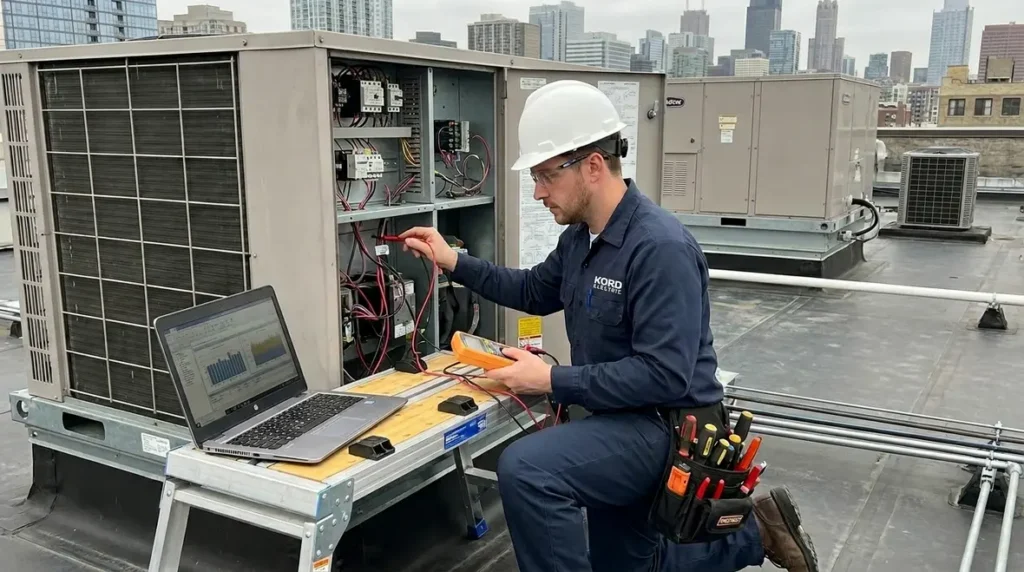
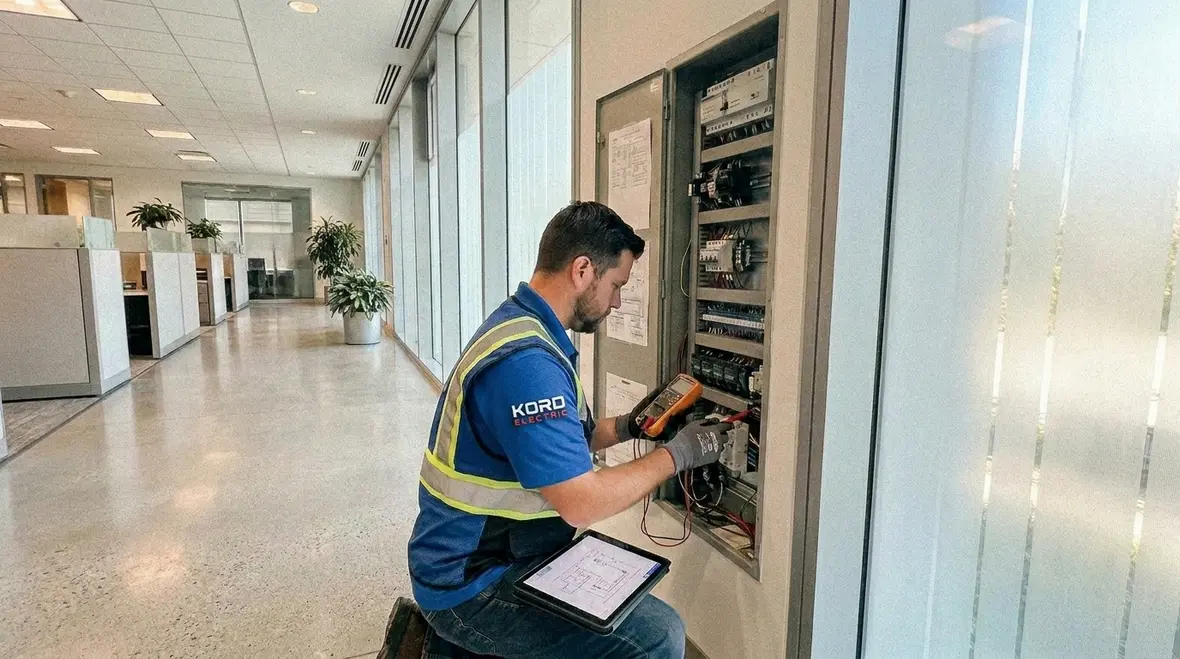
After the symptom scan, we move to fundamentals. Even advanced lighting control systems depend on solid power and correct wiring. So, we confirm line voltage, low voltage control supply, and proper grounding at the panel and distribution points. Then, we inspect load wiring for loose terminations, damaged conductors, and signs of overheating.
At this stage, we follow a simple rule: if the power path is unstable, the control path will look guilty. In other words, a “smart” control can still behave poorly if a dimmer or relay does not get clean input. Also, we check for shared neutrals or incorrect grounding practices, because those issues can create ghost behavior like lights turning on when they should not, or staying on longer than expected.
If the building has undergone recent commercial electrical work, we treat the project like a clue trail. For instance, Kord Electric’s rewiring cost guide for commercial electrical systems highlights how facility rewiring often touches multiple layers of distribution. While that guide focuses on cost planning, it also reminds us of a real-world fact: wiring changes can ripple into controls, even when the installer aims for “exact match.” That is why our technicians document wire paths, label circuits, and confirm device compatibility before making any logic updates.
Test sensors, switches, and dimmers with a tight method
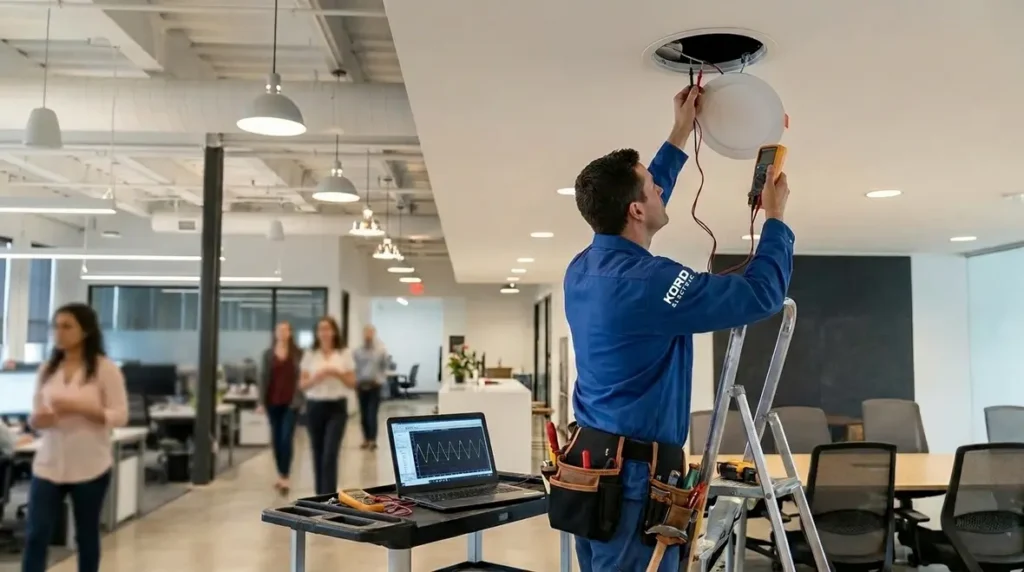
Now we go to the devices that actually “make” the lights do things. We test occupancy sensors, daylight sensors, switches, and dimmers using a repeatable approach. First, we isolate the device from the broader network, when possible. Then, we verify settings, sensitivity levels, coverage patterns, and timing values like timeout and fade rates.
Next, we confirm compatibility between control devices and the fixtures they feed. For example, some dimmers and drivers require specific dimming methods or minimum load. If the facility uses mixed LED drivers, the system might flicker or refuse to dim smoothly. Therefore, we check fixture wattage, driver type, and dimming rating, not just the label on the ceiling.
We also observe whether the issue is tied to environmental factors. In practice, sunlight glare can confuse daylight harvesting. Moreover, moving air, vibration, or mechanical changes can cause sensor misreads. Our team looks for those causes, then adjusts settings in a controlled way.
And yes, sometimes a sensor problem is as simple as someone painted around it during a remodel. We have seen stranger things, but usually not on a schedule. Still, we inspect for physical damage, misalignment, and blockage.
Diagnose network and controller settings without guesswork
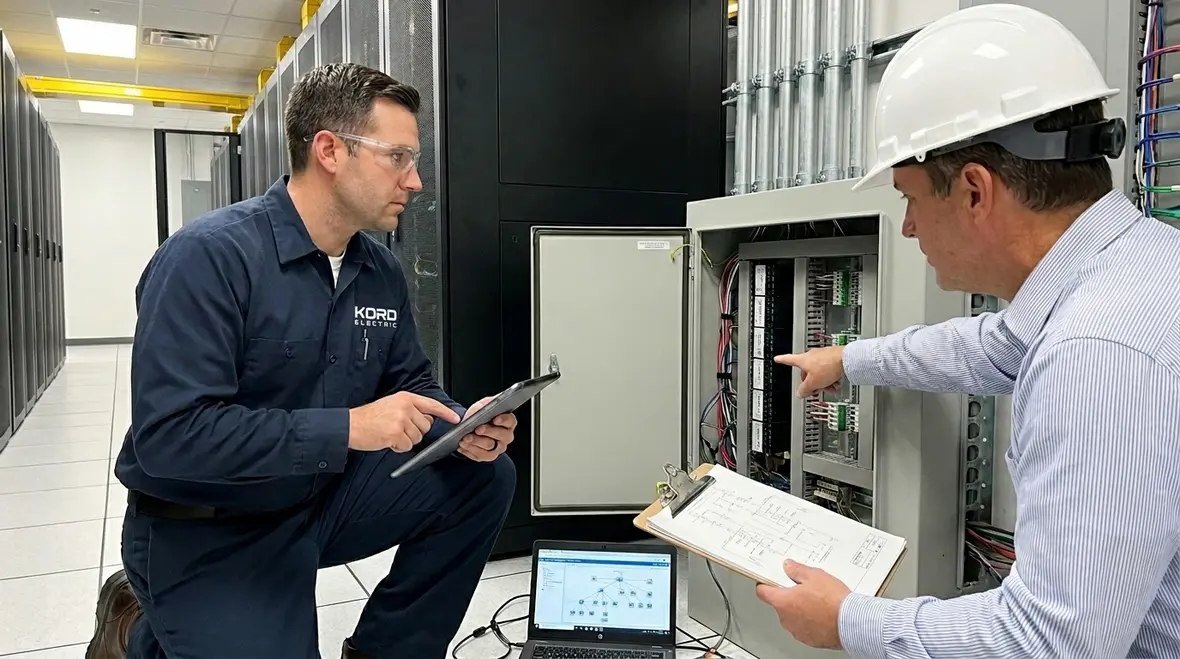
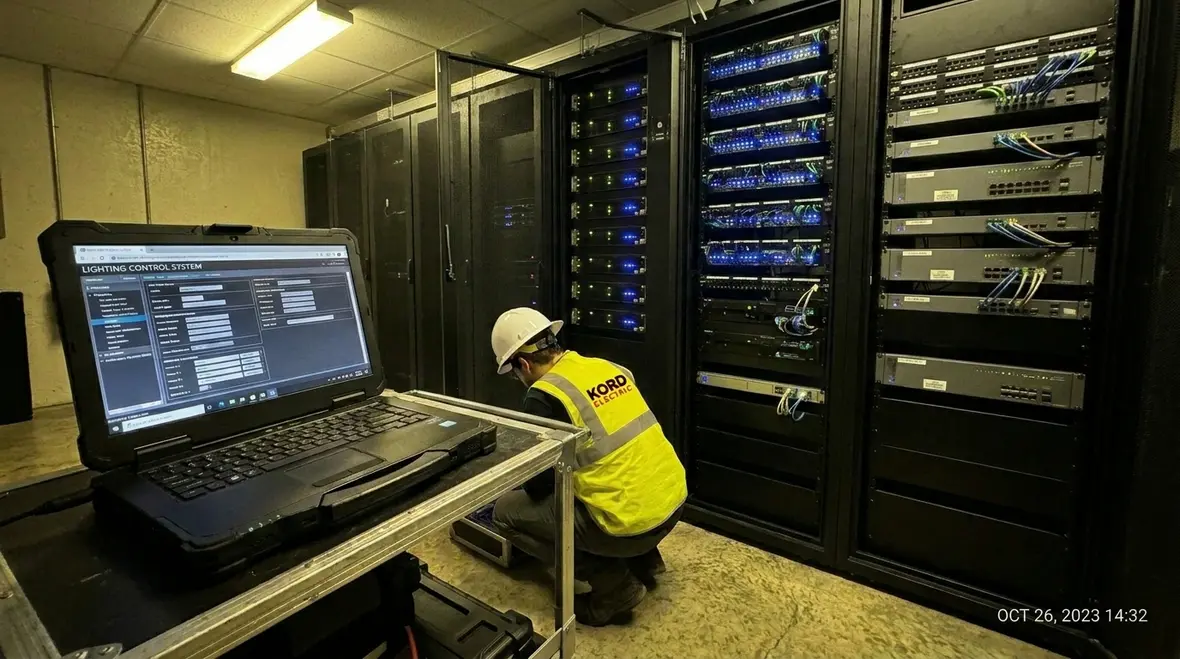
When devices test clean, the fault often shifts to controllers, wiring topology, or network settings. Many facilities now run lighting control over centralized systems that coordinate zones, schedules, and overrides. So we start by confirming controller status and communication health. Then we check IP settings, device discovery, firmware versions, and whether any unit lost connection after an infrastructure change.
To move with confidence, our technicians verify point mapping and control relationships. In other words, we confirm that the sensor points control the expected loads, and that the dimming commands match the correct zone. If a configuration drift occurred after a software update or a reset, lights can behave inconsistently across floors.
At the same time, we review group logic. Many facilities have scenes like “cleaning mode,” “after-hours,” or “security standby.” If a scene uses a schedule override and someone adjusted a timer earlier, the lights may respond late or never. Therefore, we inspect the event sequence and priority rules. That is how we stop the system from “winning” by accident.
Our expert service staff explains what we change and why, and we document the changes so your facility team can track outcomes over time.
Inspect control panel, relays, and contactors for hidden faults
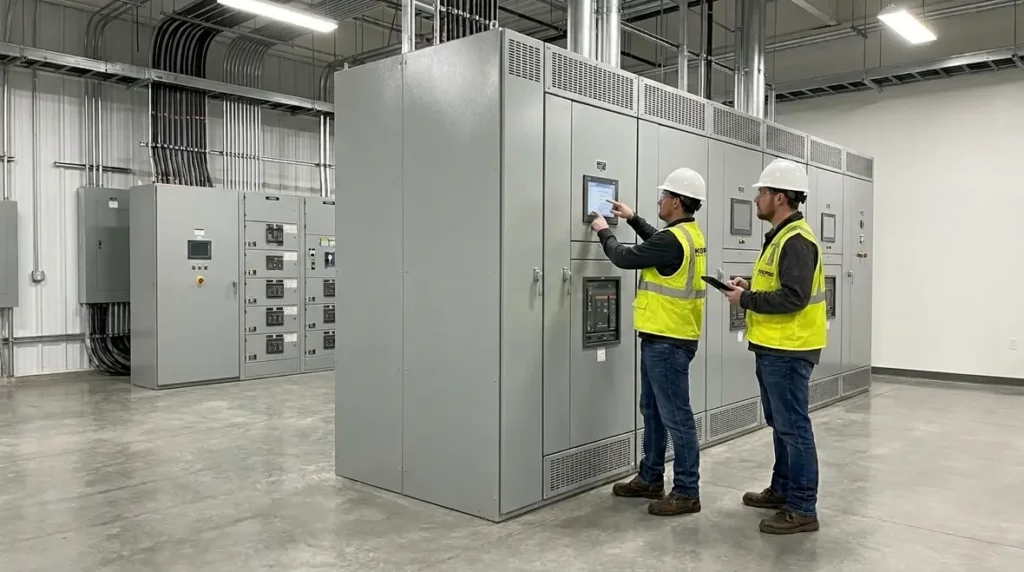
Even when the logic seems correct, hardware can fail quietly. So we inspect the control panel for relay wear, contact oxidation, and contactor coil problems. We also check for nuisance alarms and intermittent faults that appear under load.
We verify proper tightening torque where feasible, because a slightly loose terminal can heat up under duty cycles. Also, we check for moisture intrusion, dust buildup, and improper ventilation. In industrial spaces, the panel may live in an environment that tries to collect problems on purpose. Consequently, physical conditions matter as much as electrical ones.
If the system includes power supplies for low voltage components, we check their output stability. A weak supply can cause sensors to report errors, and the controller might react unpredictably. Then, we test for ground faults and insulation issues, especially on longer runs.
When we find wear, we advise on repair versus replacement based on the site’s operating needs. We do not force a full rebuild if a targeted correction solves the issue, and we align with facility uptime goals for commercial and industrial locations.
Document the fix and plan prevention for the next failure
Once the system behaves correctly, we do not simply “walk away.” We document the root cause, the tests performed, the parts replaced or adjusted, and the exact settings that restored stable operation. Then we confirm outcomes by running the system through the same triggers that caused the problem, such as occupancy events and scheduled transitions.
Next, we recommend prevention steps that fit real facility schedules. That could include firmware checks, periodic sensor calibration, tightening verification during maintenance windows, and labeling updates so future work does not scramble wiring routes. We also encourage consistent change control, because a lighting system is like a good playlist. If someone edits the track order without telling you, the party starts late.
For major property buildings and industrial facilities, we also help teams plan when rewiring or upgrades are truly required. As our rewiring cost guide emphasizes for commercial electrical systems, planning connects scope, time, and budget. Therefore, our troubleshooting process feeds into long-term improvements, not just short-term relief.
FAQ
Why Kord Electric handles these issues differently
When other teams treat lighting control like a mystery box, we treat it like a system. We check the electrical path, validate device behavior, confirm controller logic, and then we explain the results clearly to your team. Meanwhile, our expert service staff uses documentation so your facility knows what happened and what to expect next. We do not rely on luck, and we do not chase symptoms without checking causes.
If you need help with troubleshooting commercial lighting systems across offices, warehouses, campuses, or industrial sites, we are ready.
Schedule a service call for stable control and reliable lighting
If your facility lighting behaves inconsistently, we can help you regain control fast. Kord Electric brings a methodical troubleshooting process for commercial and industrial lighting systems, backed by technicians who explain what they find and why. Reach out to us for a site assessment, device and wiring verification, and a plan to prevent repeat failures. Then you can get back to running your building, not your lights, one incident at a time. Call us today and let’s restore calm, steady illumination.
For facility teams planning broader upgrades beyond troubleshooting, you can also explore our dedicated lighting installation services for commercial and industrial buildings to see how new systems, retrofits, and controls work together with disciplined diagnostics.
If your property is located in Southern California and you are coordinating work across multiple facilities, Kord Electric also provides comprehensive Los Angeles County electrical services to keep large portfolios operating safely and consistently.
When you are ready to move from recurring lighting issues to a long-term stability plan, our team can pair troubleshooting commercial lighting systems with planned upgrades, code compliance support, and proactive maintenance so your building feels less like a guessing game and more like a system you can trust.