Commercial EV Charger Installation Costs Guide
Commercial EV Charger Installation Costs: what to expect for a real site plan
At Kord Electric, we help commercial and industrial facilities plan commercial ev charger installation costs the way a good contractor should: with clarity, math, and fewer surprises than a sitcom plot twist. In most projects, the total cost depends on the charger type, the electrical upgrades needed, the distance from power, and how ready the site already is. Still, when our expert service staff reviews your plan, we break the numbers into pieces you can understand, so you can budget confidently and schedule wisely.
And yes, we still explain it in plain language, because nobody wants to read an electrical scope like it is a legal thriller. Now, let us get into the estimating and site prep details that shape the final price.
Estimating commercial EV charger setup for your budget
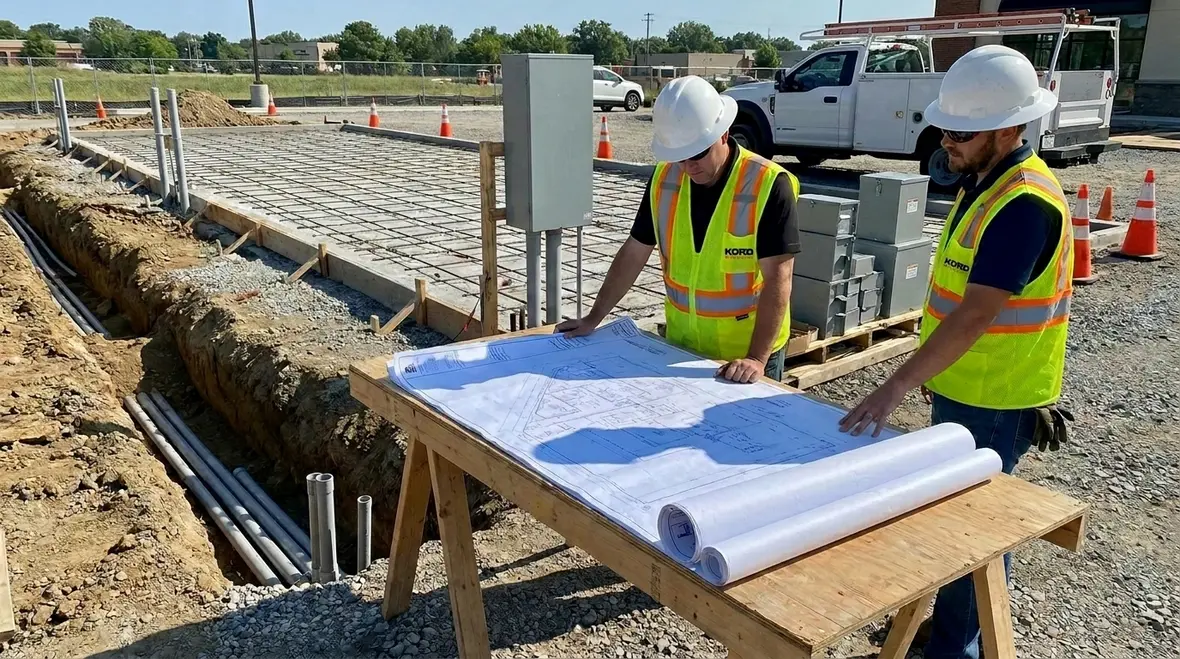
Estimating starts with site reality, not a guess. First, we confirm the building load profile and the available capacity in the service equipment. Then we map where chargers will sit, how many parking spaces they will serve, and how the charging schedule fits your fleet, employees, or visitors. After that, we translate these findings into a cost range that matches what a commercial property owner actually faces.
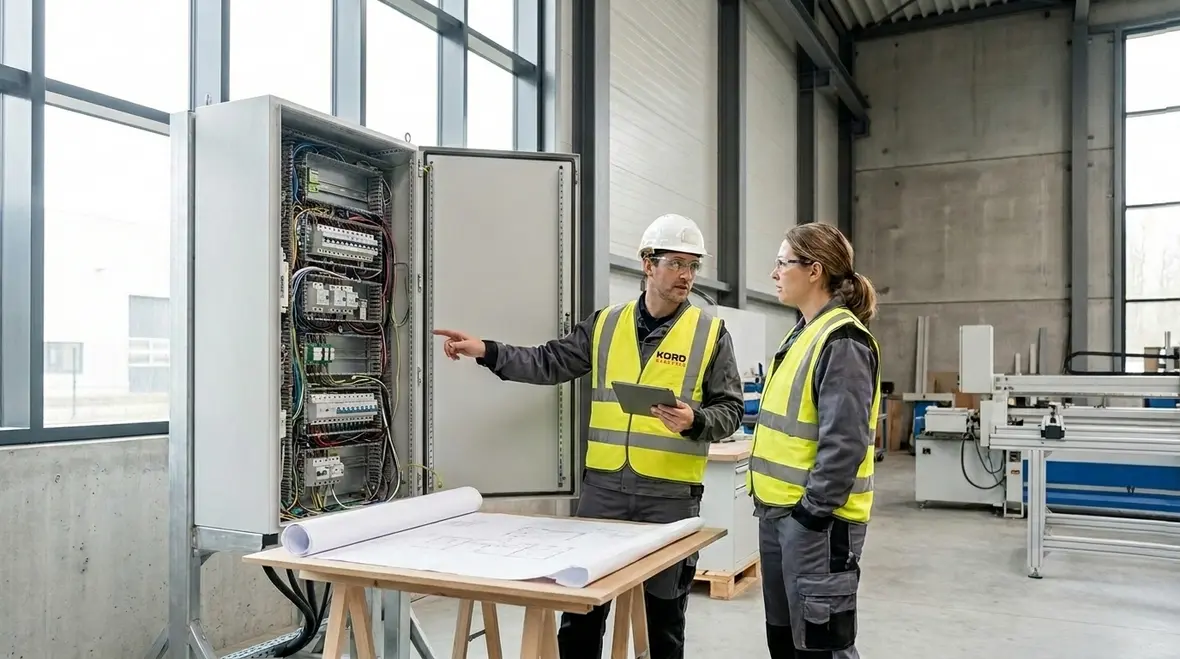
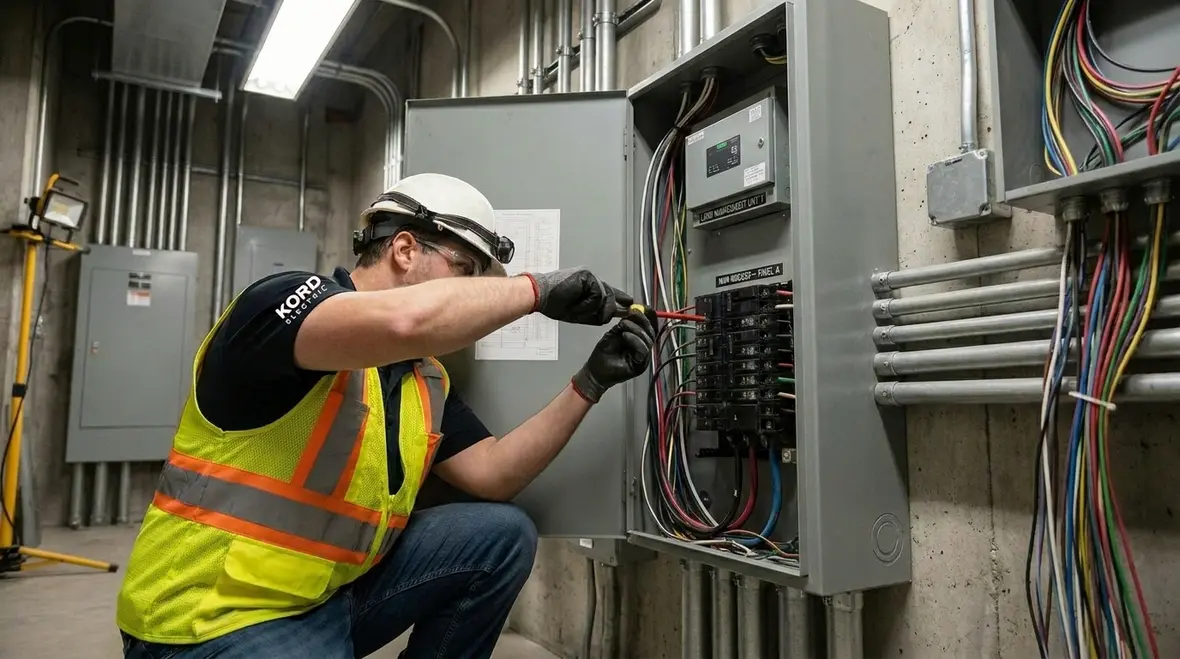
To keep the process smooth, our technicians gather a few core inputs early. They review panel schedules, transformer ratings, conduit routes, and any existing spare circuits. Additionally, they check if the site already has the right meter approach, load management, and grounding details. If not, we plan upgrades in the estimate, instead of tacking them on later like a last minute “addendum” fee that nobody asked for.
As a useful reference point, Kord Electric’s blog on commercial electrical systems for modern buildings emphasizes that electrical planning works best when it treats the building as a whole, not as a set of isolated tasks. We follow that approach for charging too, because a charger is not just hardware. It is part of your electrical system.
Why site prep changes the final price more than people think
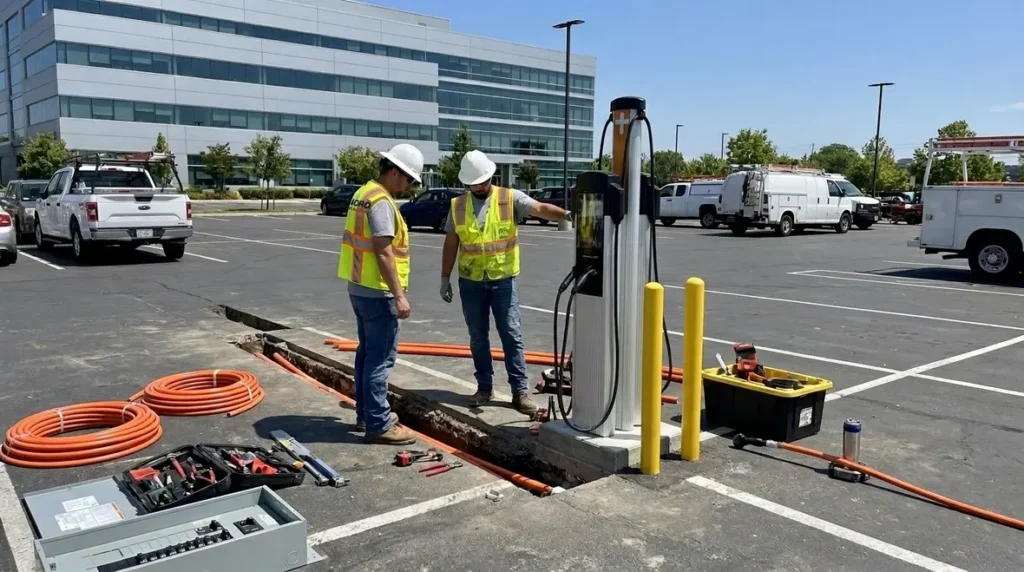
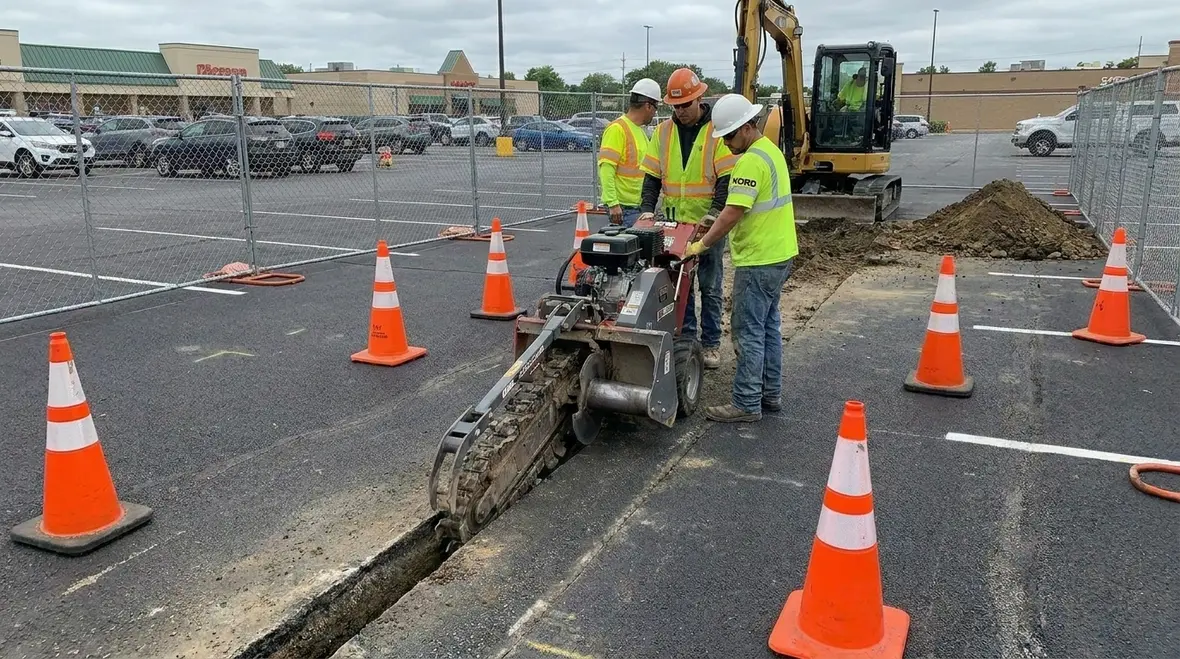
Site prep can quietly move a project from “straightforward” to “well, we did not budget for that.” Therefore, we evaluate conditions like pavement type, curb lines, drainage paths, and the ease of running conduit from electrical rooms to the charging location. We also look at whether trenching is needed and whether the parking area allows work windows that will not disrupt operations.
In many major property buildings, the charging stations must integrate into existing layouts. That means we may need to coordinate with property managers, security teams, and facilities staff. We plan around real access routes, vehicle traffic flow, and inspection timelines. And while that may sound like project management fluff, it directly affects labor hours and scheduling, which then affects commercial ev charger installation costs again.
Here is what we typically include in site prep costs for commercial and industrial jobs:
- Civil and pathway planning for conduit routing, trenching, or boring where needed
- Surface restoration after conduit installation, including patching and sealing
- Electrical room access checks for panel work clearances and equipment placement
- Signage and parking layout coordination so vehicles and cables work safely together
When the site has clean conduit pathways and predictable access, costs stay controlled. However, when the site hides utilities or requires additional restoration, we adjust early and keep your plan realistic. We prefer truth over optimism. Optimism does not pass inspection, but solid drawings do.
Power supply, load management, and electrical upgrades
Commercial chargers rarely fail because the charger itself is broken. They fail, instead, because the power pathway was not planned. For that reason, we focus on supply, distribution, and demand. First, we confirm the service capacity, then we study how other building systems share load. Next, we design the branch circuits and feeders that match your charging goals.
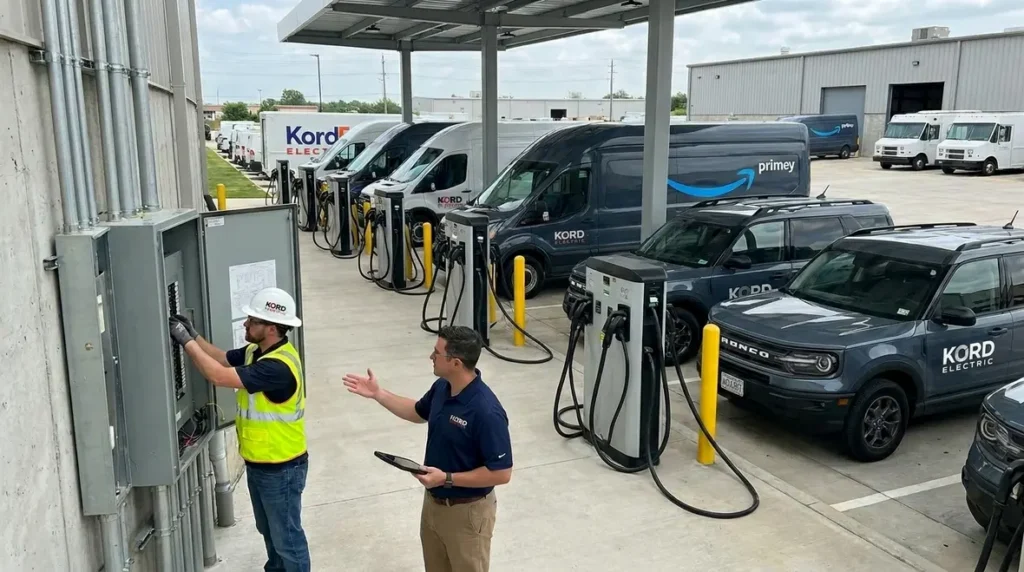
If your building needs upgrades, we estimate them as part of the scope. That can include new breakers, panel space changes, transformers, metering adjustments, or load management systems. Load management often becomes a smart option for properties that want to add chargers without upgrading the whole utility service. It schedules charging output so the electrical demand stays within safe limits.
During planning, our expert service staff explains the “why” behind each decision. For example, they may clarify that adding chargers without load management can trigger capacity issues or force a later and more costly redo. It is like adding more people to a meeting room and then acting surprised when the fire marshal shows up. We want you to avoid that moment.

Equipment selection and how it impacts total cost
Charger hardware selection affects budget, but the real story is how the hardware aligns with your property’s charging patterns. A site that serves short-stay visitors may need different features than a location that supports workplace charging for hours. Also, higher output chargers can improve charging speed, yet they may increase electrical requirements.
When Kord Electric estimates equipment and installation together, we consider:
- Charger level and output based on expected dwell time and vehicle needs
- Number of ports at each station and how future expansion might work
- Safety features like surge protection and proper grounding
- Communication and controls so you can manage access and usage
We also align equipment choice with the electrical system design. For instance, a balanced design prevents the “great charger, wrong circuit” scenario that can turn a smooth rollout into a frustrating delay. Our technicians plan so the installation, controls, and wiring all work as one system, not as a stack of parts that hope for the best.
Scheduling, permits, and inspection readiness for commercial sites
For commercial and industrial facilities, the timeline matters as much as the price. Therefore, we coordinate the schedule around business hours, tenant needs, and any safety constraints on the property. We set up a sequence that usually follows: survey and design, materials procurement, electrical rough-in, final connections, testing, and inspection support.
Permitting and inspections can vary by city and by the facility type. Consequently, we prepare documentation early and keep it consistent with the electrical plans. Then we test and verify before the inspector arrives, because passing inspection is not a vibe. It is a checklist, measured in real numbers.
Our team also handles details that protect the site. We verify cable routing, labeling, and circuit identification. We confirm grounding and bonding. And we make sure the installation does not create trip hazards or interfere with vehicle movement. In other words, we build it so it works now and stays reliable later, like a good forklift that nobody notices until it is gone.
If needed, we also discuss ongoing service considerations, so operations teams know what to expect after installation. That matters in big properties where uptime affects leasing, employee retention, and tenant satisfaction.
Dual view: a side by side of cost drivers in real projects
To help property owners compare estimates, Kord Electric often breaks cost drivers into two buckets: electrical needs and site conditions. Here is a quick dual view that teams commonly use during budgeting.
|
Electrical system cost drivers
|
Site prep and civil cost drivers
|
FAQ: commercial EV charger installation and estimating
Conclusion: let’s build the right plan, then the right chargers
When a facility owner budgets for charging, they deserve more than a ballpark number. Kord Electric helps commercial and industrial sites plan power, design safe wiring pathways, and prepare the site so the installation stays on schedule and passes inspection. If you want realistic commercial ev charger installation costs and a site plan your team can trust, contact us now. Our technicians and expert service staff will walk the process with you step by step, so your chargers launch without drama, and without the “surprise” cost you never wanted.
If your facility operates in or around Los Angeles, you can also align your planning and maintenance with regional support through Kord Electric’s dedicated Los Angeles County electrical services, so your charging plans connect smoothly to the rest of your commercial electrical work.
Ready to move from ideas to a buildable plan? Our team can help you tie EV charging into your broader electrical strategy, from service capacity and load management to labeling, maintenance, and future expansion, so your project works as well on paper as it does in the parking lot.