
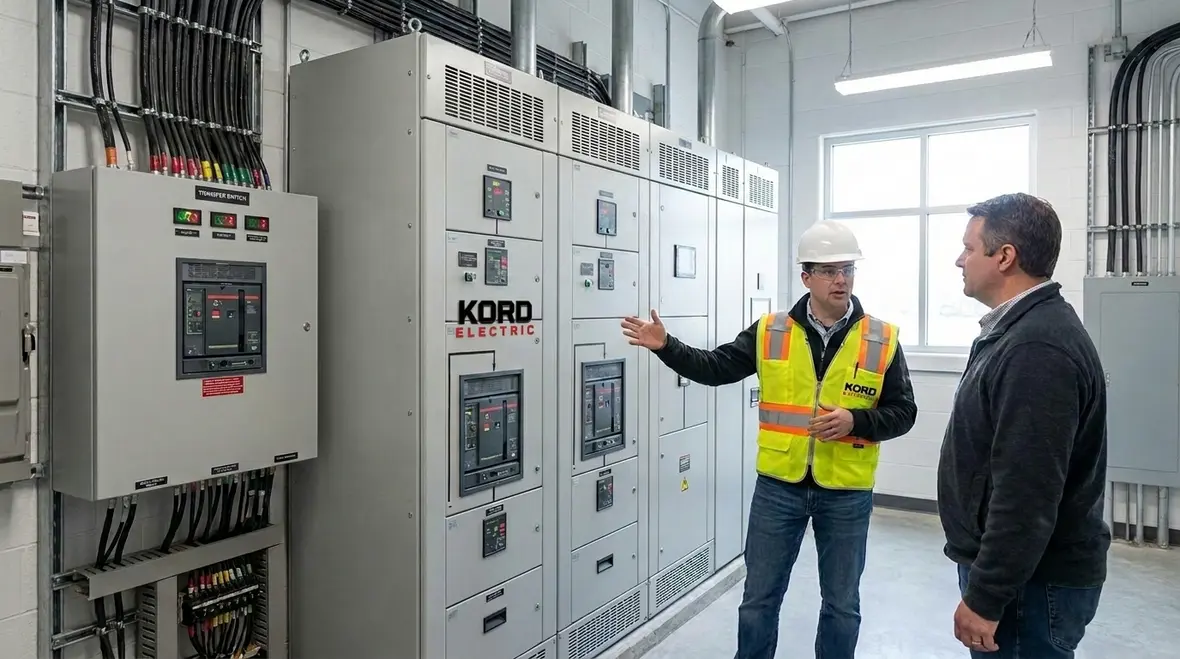
Industrial Electrical System Redundancy Guide
Industrial uptime does not happen by accident. At Kord Electric, we design and maintain industrial electrical system redundancy that keeps critical operations running even when something fails. And we do it with a calm, methodical approach, because the last thing you want during a power problem is a “surprise, we’ll figure it out” moment. In other words, we build systems that keep producing, keep lighting, keep cooling, and keep you compliant, even when reality decides to throw a curveball.
In this guide, third person perspective or not, the message stays steady: commercial and industrial facilities rely on electrical designs that can absorb faults without shutting down. Next, we explain how to maximize redundancy, what to prioritize, and how our expert technicians help you make decisions that actually hold up in the field.
What “redundancy for uptime” really means in practice
When facility leaders hear the word “redundancy,” they often picture a second breaker, a second panel, or maybe a second generator. However, true redundancy in an industrial electrical system goes deeper than “more gear.” First, it means you can transfer loads without creating a long outage. Then it means faults do not spread into other circuits. Finally, it means maintenance tasks do not force full downtime.
Our expert service staff explains it this way: redundancy is not just backup power. It is the ability to keep processes stable while electrical components age, drift, or fail. So, instead of betting everything on one path, you build multiple paths with smart protection, clear switching, and tested procedures.
And yes, sometimes people ask us, “Can we just oversize everything and call it redundancy?” We smile, because that is like saying “I’ll double the pizza toppings and hope the meeting ends.” Oversizing helps, but it does not replace proper architecture and switching strategy.
Design approaches that strengthen an industrial electrical system
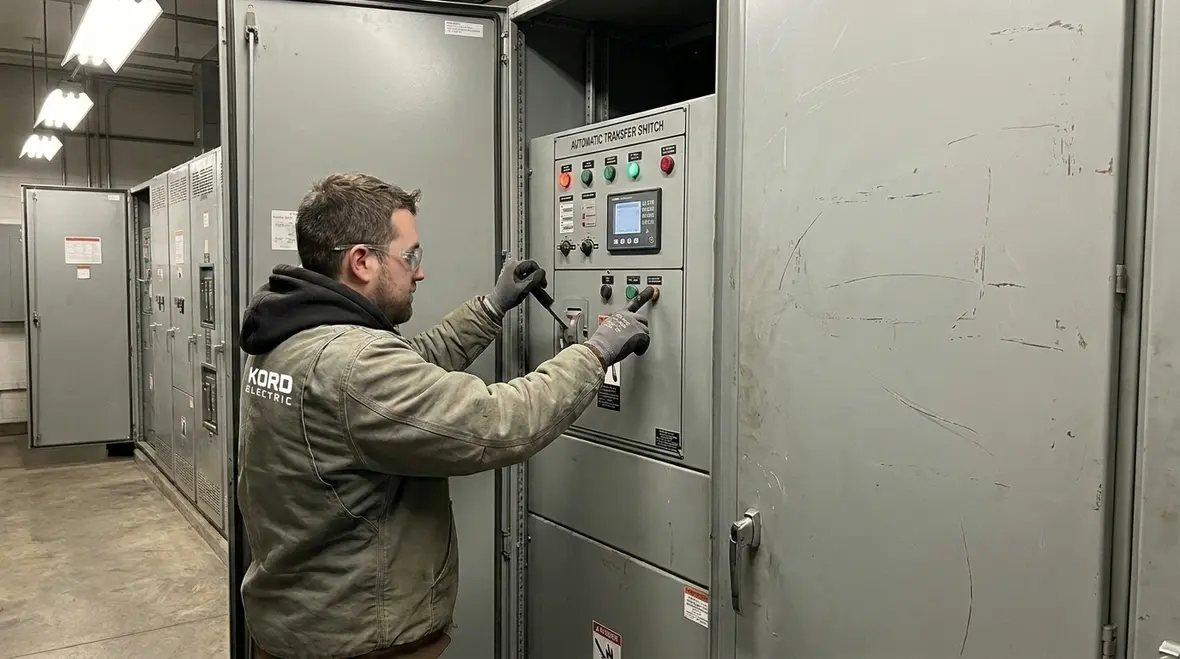
To maximize industrial electrical system redundancy, we start with a clear load map and failure analysis. Then we select an approach that matches the risk level of each system. For example, a fire pump circuit does not get the same redundancy treatment as a noncritical building receptacle circuit.
Common redundancy methods include:
- Dual feed for critical electrical loads, using separate sources or utility services where feasible
- Selective coordination in protective devices, so faults get isolated quickly without knocking out healthy sections
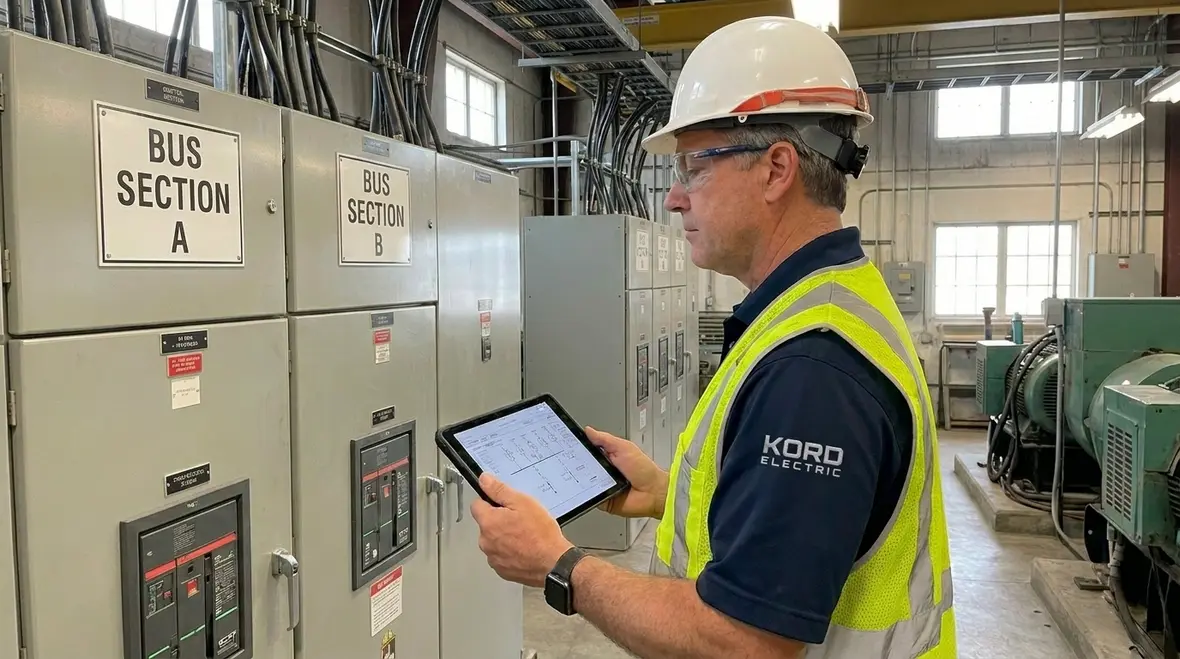
- Segregation of pathways using bus sections, transfer switches, and clearly defined tie points
- N+1 or N+N arrangements for switchgear components where load continuity matters
- Maintenance-friendly design, such as breakers and sections that can be serviced without shutting down the whole system
At Kord Electric, we do not treat these as checkboxes. Instead, we help others choose a plan that fits the site’s power quality needs, space limits, and operating requirements. As a result, redundancy becomes a usable system, not a decorative one.
Critical loads, protection settings, and the weak links
Once the design is in place, the next step decides whether redundancy performs during real events. Therefore, we focus on three areas: critical loads, protection, and interlocks.
First, we prioritize critical loads. We help facilities define which circuits must ride through disturbances, which must transfer instantly, and which can wait. Then we align protective device settings with that priority. If protective coordination is wrong, the system can still fail through cascading trips. In other words, redundancy does not help if protection shuts down both paths.
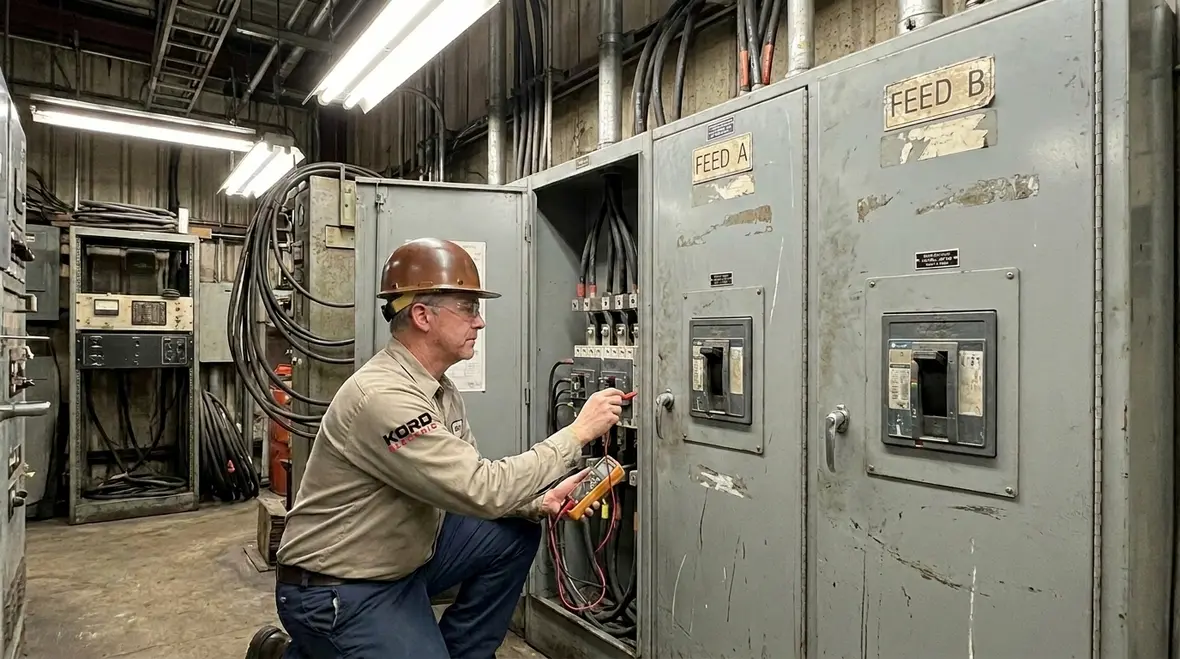
Second, we validate protection logic. Our technicians confirm that relay settings, breaker timing, and selectivity studies match the equipment installed in the field. Also, we verify that interlocks and switching controls prevent unsafe backfeeding.
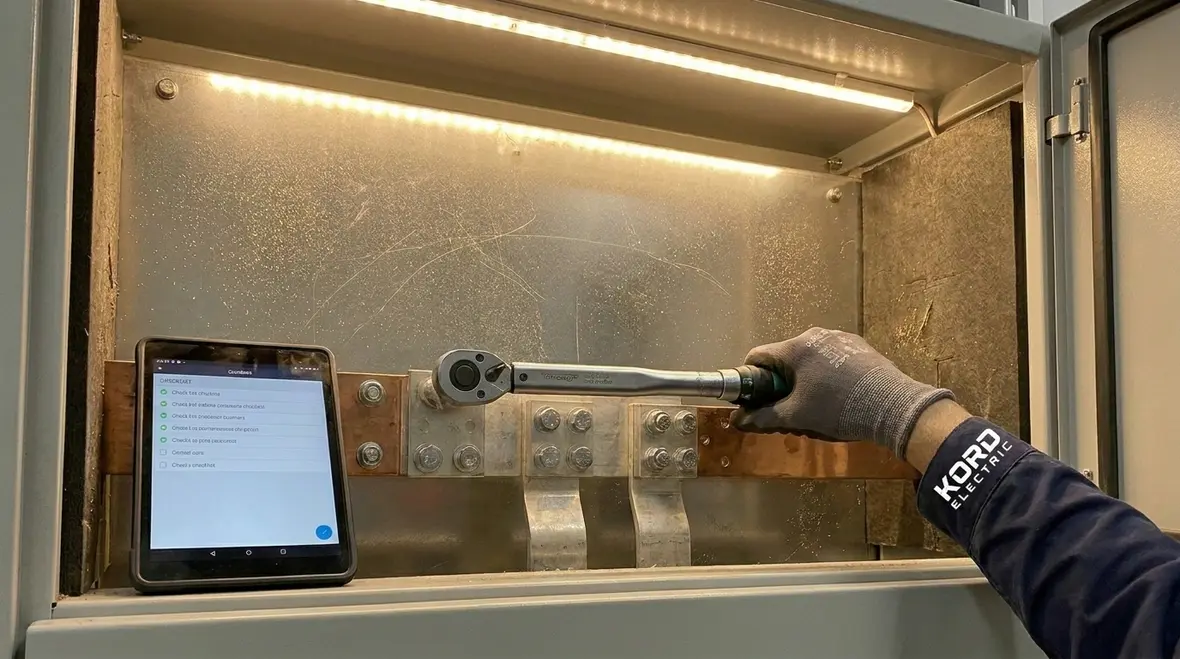
Third, we identify weak links that quietly undermine uptime. Loose terminations, corroded contacts, overheated bus connections, and outdated control wiring can reduce the reliability of even the best design. So we inspect and document those points before a failure forces the issue.
Switching schemes that keep power flowing
Industrial downtime often happens during transfer, not during the original power event. That is why switching schemes matter. When a utility source drops, the system needs to move loads to a healthy source safely and quickly. Additionally, the sequence must protect both people and equipment.
In many commercial and industrial facilities, we see switching options like:
- Automatic transfer switches for defined loads, with tested timing and stable control logic
- Source transfer with interlocked switchgear, designed to avoid simultaneous source connection
- Breaker-to-breaker transfer strategies for certain bus and transformer arrangements
- Load shedding logic that prevents overload during emergency operation
Our expert service staff spends time explaining how these strategies behave in different scenarios, such as short outages, voltage dips, and partial equipment failures. Then, we confirm that operations teams understand what will happen and when. Because if nobody knows how the system reacts, it might as well be a magic trick performed during a blackout.
Also, we make sure the switching plan matches your real operating patterns. A facility that frequently starts large motors needs different assumptions than one with steady loads. Transition timing and ramp behavior can make or break performance.
Maintenance and testing that keeps redundancy honest
Redundancy only works if you maintain it. Over time, components drift from their ideal state: contacts wear, relays age, control power fluctuates, and protective elements lose calibration accuracy. Therefore, a strong maintenance and testing plan becomes part of the redundancy strategy, not an afterthought.
We recommend a practical testing rhythm for major systems, including:
- Protective device checks, including functional tests and documentation of trip behavior
- Inspections of terminations and bus connections, with attention to torque history and heat indicators
- Generator and transfer testing, performed in a way that confirms actual load handling
- Control power verification, since misbehavior here can derail the entire switching plan
- Thermal and vibration checks for switchgear and critical assemblies when applicable
To help people plan the financial side of upgrades, some teams also reference our internal guidance on commercial electrical rewiring costs. For example, our article on rewiring cost guidance for commercial electrical systems can support budgeting conversations. Still, we emphasize that redundancy upgrades should align with the condition of existing equipment and your operational priorities, not just the price tag.
And yes, we know testing sounds boring. But so does replacing a failed controller at 2:00 a.m. So we try to trade “boring” for “no drama.”
Risk planning, documentation, and compliance for major buildings
Uptime depends on more than equipment. It depends on clear documentation, trained personnel, and a risk plan that considers how failures cascade across a major property.
We help others build documentation that actually gets used. That includes one-line diagrams that match reality, relay settings records, switching sequence notes, and maintenance histories. Then we align these documents with operating procedures for critical events.
Next, we support compliance needs that accompany industrial and commercial work. Redundant systems involve multiple layers, and each layer needs proper labeling, testing proof, and safe installation practices. So we focus on the complete electrical system, not isolated components.
Finally, we train in plain language. Our technicians explain the “why” behind the sequence, and we describe what operators should expect. In the end, that reduces confusion and speeds recovery, which means less downtime and fewer expensive surprises.
FAQ
Conclusion: Build redundancy that holds during real events
Industrial uptime comes from engineering decisions, not wishful thinking. At Kord Electric, we help others maximize industrial electrical system redundancy with smart design, correct protection settings, safe switching, and disciplined maintenance. We bring expert technicians who explain the sequence in clear language, so your team understands what happens when the grid changes. If you run a commercial or industrial facility where downtime costs real money, contact us today for a redundancy assessment and a plan you can trust.
To keep redundant systems performing the way they were designed, many facilities also build a structured electrical preventive maintenance program around their critical switchgear, transfer equipment, and distribution paths. Pairing industrial electrical system redundancy with ongoing maintenance and testing helps protect uptime, extend equipment life, and keep your building prepared for real-world events.


