
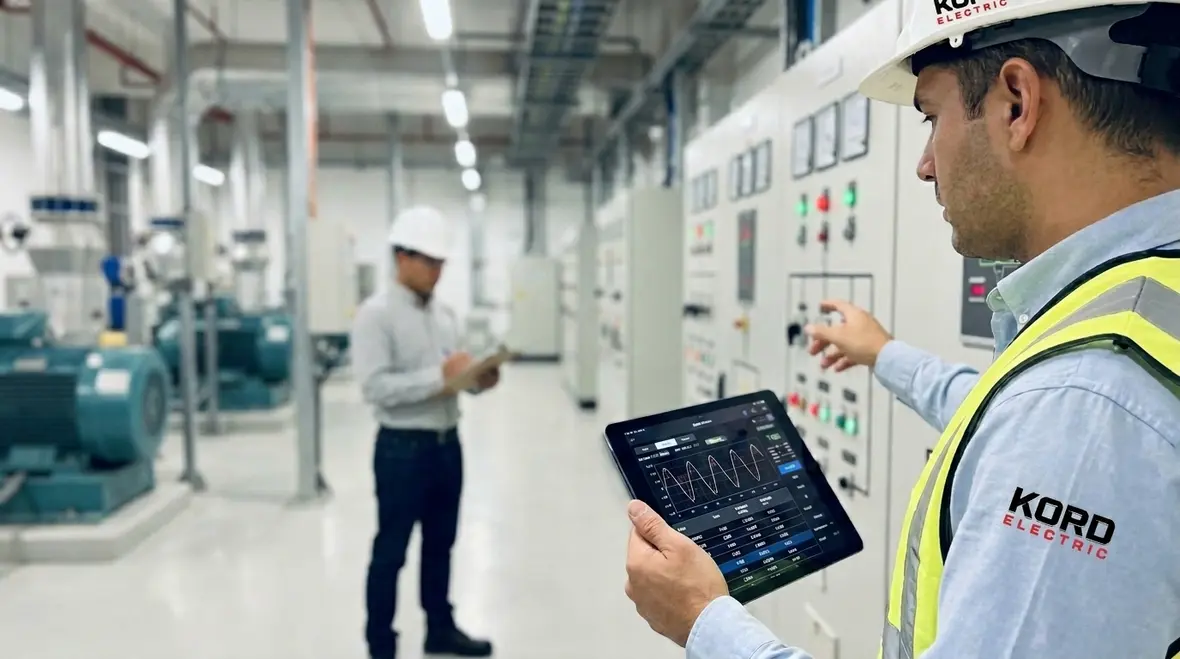
Industrial Facility Power Quality Solutions
At Kord Electric, we focus on Industrial Facility Power Quality Solutions that help commercial and industrial facilities run cleaner, steadier, and more reliably. In modern plants and major property buildings, the electrical system does not just “deliver power” anymore. Instead, it protects equipment, improves uptime, and supports the production schedule that pays the bills. When power problems show up as flicker, heat, stalling drives, or nuisance shutdowns, the cost is rarely obvious at first. However, the impact grows fast, like a sitcom plot that keeps getting darker. Our team, including experienced technicians and expert service staff, explains what happens, why it happens, and how we fix it without guesswork.
Why power quality decides industrial uptime
Most people think electricity is simple: the lights turn on, the motors turn, and everyone goes home. In commercial and industrial facilities, that story breaks quickly. First, power quality issues can start small. Then, they grow through repeated stress on sensitive loads like variable speed drives, PLCs, control systems, and rectifiers. As a result, maintenance frequency rises, scrap increases, and production slows. Even when the system still “works,” the wear adds up.
Furthermore, poor power quality does not hit every device the same way. Some loads react instantly. Others hide the damage until a failure event forces an emergency repair. That is why we treat Industrial Facility Power Quality Solutions as a production reliability strategy, not a band aid.
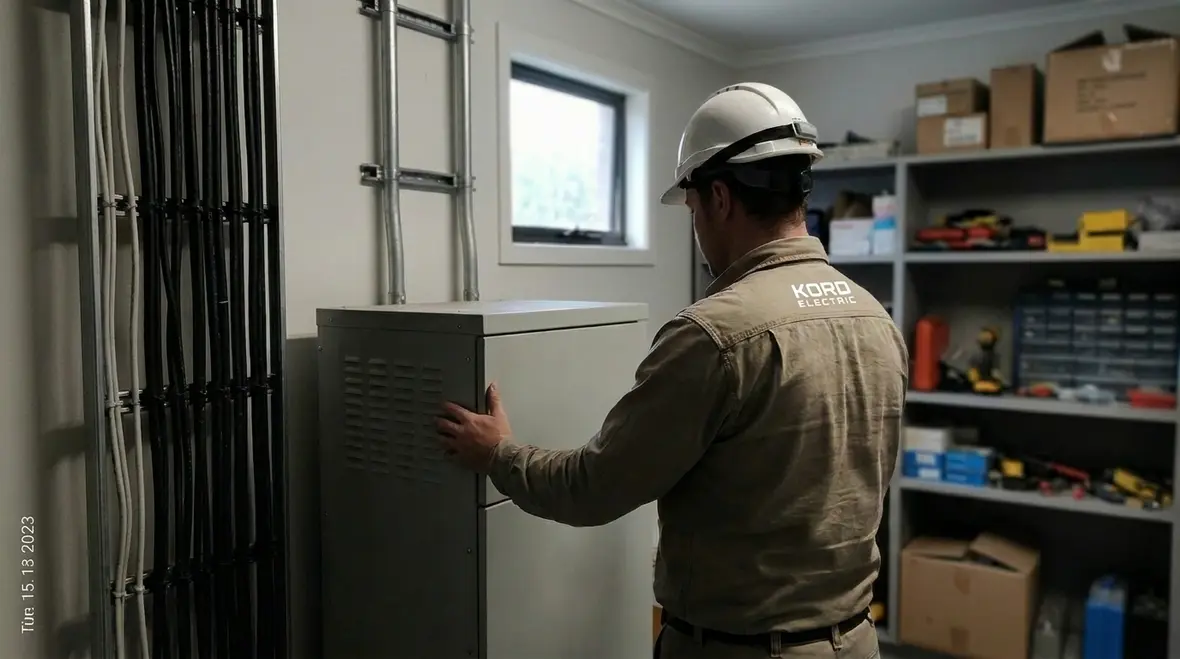
How disturbances enter modern electrical systems
Industrial environments create disturbances even when nobody “breaks” anything. For example, starting large motors, running welding equipment, switching capacitor banks, or using high power drives can introduce voltage dips, transients, harmonics, and imbalance. Meanwhile, a facility’s utility supply changes too, based on load patterns across the grid. Therefore, the facility electrical system must handle both internal and external stress.
In addition, older distribution gear, loose connections, and aging transformers can make disturbances worse. At Kord Electric, our technicians review the full path from utility service to distribution panels to critical branch circuits. Then they map the trouble spots by timing and load behavior, because “maybe” is not a plan.
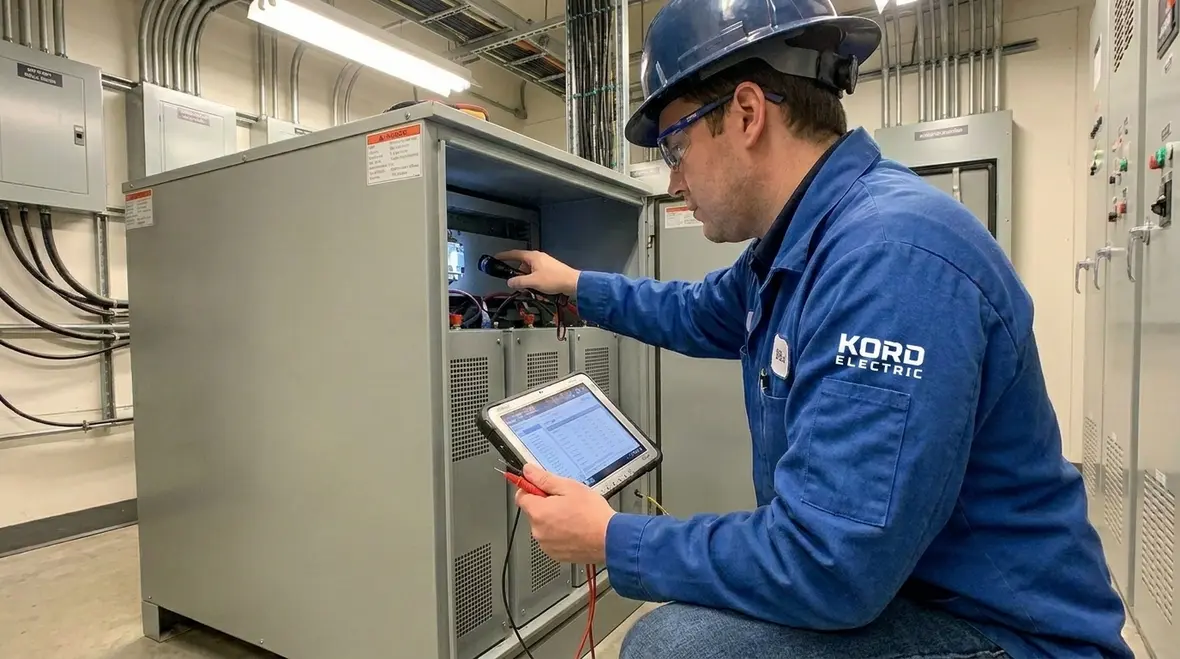
Voltage stability and the equipment it protects
Stable voltage matters because many industrial loads depend on predictable waveform behavior. When voltage dips occur, drives may trip, controls may reboot, conveyors may slow, and process equipment may misread signals. Also, repeated dips can shorten component life. To solve this, we design and install solutions that keep voltage within usable limits for critical systems.
One common approach we discuss with clients uses monitoring and targeted mitigation. Instead of pouring money into a full system replacement, our expert service staff helps others prioritize the areas that create the biggest risk to uptime. So, if a process line uses sensitive automation, we focus on that segment first. If the bottleneck is upstream, we address the source with the right protective and conditioning strategy.
And yes, we explain it in plain language. When we show a customer a waveform capture, we do it slowly. Not because we enjoy the suspense, but because understanding helps them plan. Like a good movie, the details matter.
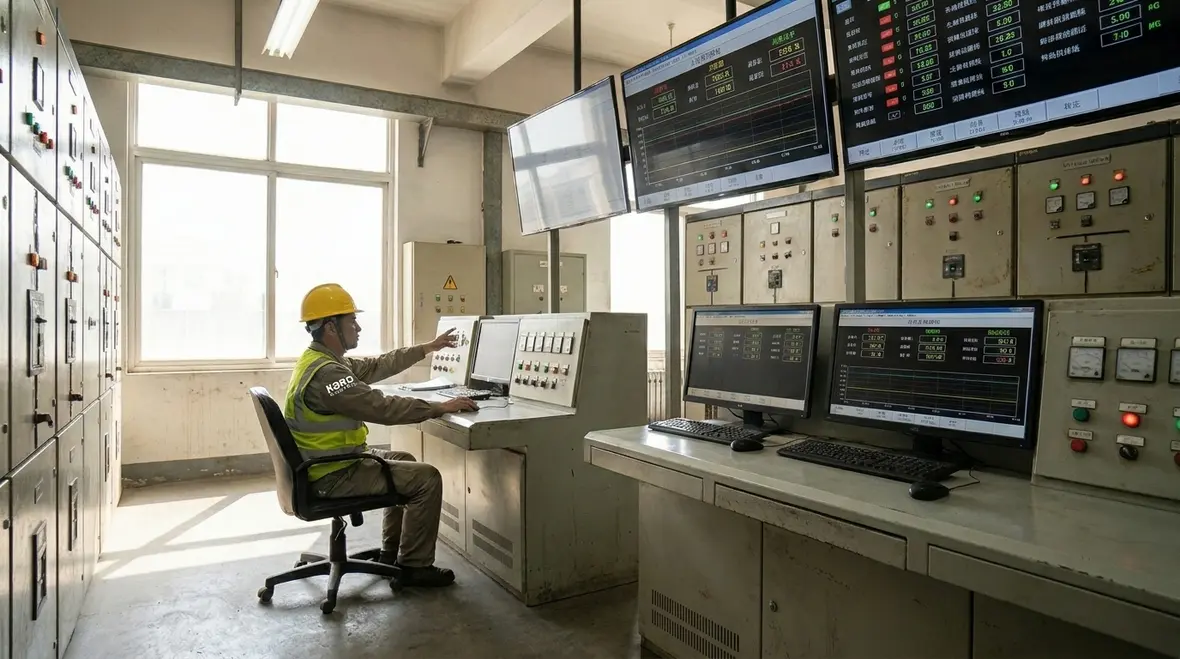
Harmonics and why they turn efficiency into a leak
Harmonics often cause issues that look like “mystery problems.” Equipment runs, but efficiency drops. Transformers run hot. Conductors show unexpected heating. Breakers trip more often than expected. You may also see higher neutral current in systems with nonlinear loads. In industrial settings, these symptoms connect to non linear power consumption from drives, UPS systems, rectifiers, and some power supplies.
To manage this, Kord Electric evaluates the harmonic profile and then selects mitigation that fits the facility. We prefer solutions that match the load type and the system design. Therefore, our work typically involves engineering choices, not guesswork. In practice, we may add harmonic filtering or use system designs that reduce harmonic impact at the source and in distribution.
For major property buildings that also include offices, retail, and parking operations, harmonics can spread across multiple tenant loads. That is why our commercial electrical systems approach takes a building wide view when the scope requires it. The goal stays the same: improve performance and reduce avoidable losses.
Reliable distribution for modern buildings and facilities
Commercial and industrial electrical systems must coordinate power distribution, controls, grounding, and protection so the entire facility behaves as a dependable whole. In modern construction, more loads rely on electronics, and more processes run around the clock. That means the electrical design must support both normal operation and unexpected events.
In the related article from our blog about commercial electrical systems for modern buildings, we explain how electrical systems must serve real business needs, not just code checklists. We highlight how thoughtful planning supports reliability, and how proper coordination limits nuisance problems. The same mindset guides our Industrial Facility Power Quality Solutions work for factories, warehouses, campuses, and major property buildings where downtime hurts.
Also, when we coordinate distribution, we reduce stress on critical equipment. When protection and grounding stay correct, disturbances do less damage. And when we set up the system with proper monitoring, teams catch problems before they become failures.
Monitoring, testing, and the calm confidence of real data
Our technicians do not walk into a facility and “eyeball” the issue. First, we gather data through testing and observation. Then, we analyze patterns tied to specific operating cycles, such as shift changes, equipment startups, and process switching. Next, we connect the dots between electrical events and operational symptoms. That is how we avoid misdiagnosis.
Moreover, when we recommend solutions, we explain what the change will do and what it will not do. That honesty builds trust. It also keeps budgets aligned with results. And if a client wonders whether mitigation makes sense for their exact load profile, our expert service staff provides a clear breakdown.
Sometimes, the funniest part of the process is when we hear, “We thought it was a PLC issue.” Then we show the electrical trace that proves it was voltage stability. The PLC still gets the blame in stories, but in real life, electricity usually tells the truth first.
Planning an upgrade that fits business timelines
Upgrades can disrupt operations, so we plan for the real world. We help clients schedule work around production needs, and we coordinate with facility teams and other contractors when required. Because in commercial and industrial environments, the building does not stop just because a project starts. Therefore, we plan outages carefully and define boundaries so critical systems stay protected.
Then we focus on integration. Power quality work must work with existing distribution gear, protection settings, and control systems. If changes fight the current design, the result can be more headaches, not fewer. Our approach emphasizes clean integration and tested performance.
Finally, we document the work so other teams can maintain it. That includes clear guidance for future troubleshooting. It also helps property owners and operations teams plan long term, instead of living in reactive mode.
FAQ
Our next step is simple, and it starts with your facility
If your facility runs sensitive process equipment, variable speed drives, or building systems that cannot afford interruptions, Kord Electric can help. Our technicians and expert service staff review the electrical system, capture real data, and recommend Industrial Facility Power Quality Solutions built for commercial and industrial realities. Contact us to schedule a power quality assessment and get a clear plan you can act on. Let’s reduce risk, protect uptime, and keep production moving. Nobody wants electricity playing plot twists.
To explore how ongoing maintenance supports power quality, you can also review our electrical preventive maintenance services, which align closely with reliability and uptime goals for large commercial and industrial facilities.
When you are ready to move from “we think there is an issue” to a clear, data driven plan, our team is ready to help with assessment, design, and implementation that fits your schedule and operational priorities.
For facilities experiencing voltage instability, nuisance trips, or unexplained equipment shutdowns, our dedicated voltage fluctuation repair services provide focused diagnostics and corrective solutions that integrate naturally with broader Industrial Facility Power Quality Solutions.


