Preventing Electrical Fires in Commercial Buildings
Electrical fires do not start with drama. They start with small failures that people ignore until the smoke alarm finally gets the last laugh. That is why Preventing Electrical Fires in Commercial Buildings must be treated like a daily discipline, not a once-in-a-while inspection. In large commercial facilities and industrial properties, the risks grow as equipment, wiring length, and operating hours increase. So, we build prevention around real-world site conditions, not generic checklists. Meanwhile, our technicians and expert service staff walk through the details with our clients, because clarity beats guesswork every time. And yes, we still hear the classic “it worked last month” line. Electricity does not care about last month.
Assess the risk like you mean it
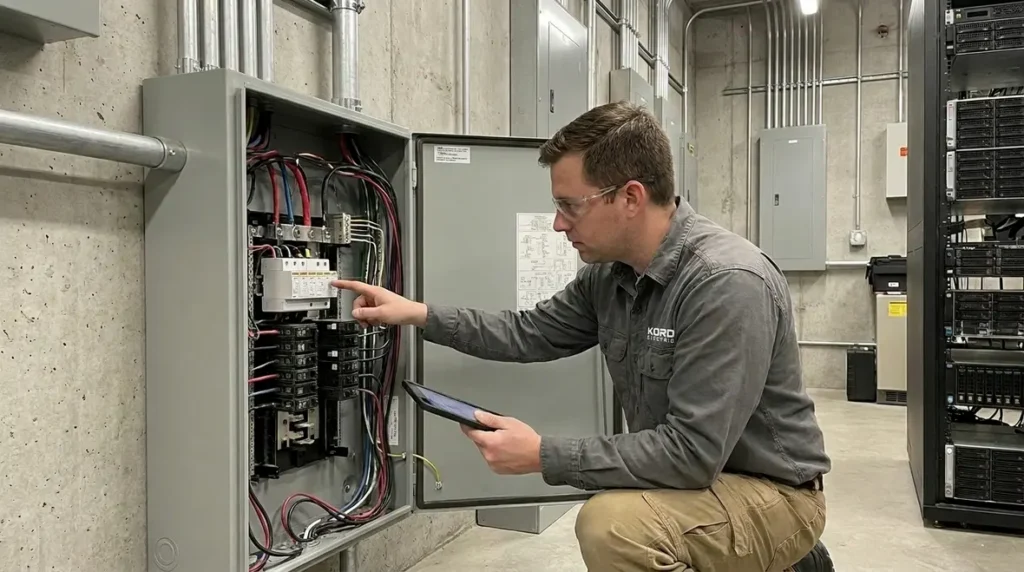
To prevent fires in a major property building, we first map what could fail and where heat, dust, moisture, or vibration live. Then, we connect those risk points to the electrical system design. Many facilities assume that if the panels look clean and the lights turn on, everything is fine. However, our field team knows that faults often begin inside connections, breakers, and overloaded circuits long before any obvious sign appears.
So we start with load and environment awareness. For example, in commercial spaces with changing tenants or new equipment, the demand profile shifts. Even when a facility manager believes the electrical capacity matches the current plan, small additions can push components toward overheating. Moreover, older installations may have wiring types that handled the original load well but do not match modern HVAC, refrigeration, servers, and charging equipment.
Next, we look at the “life story” of the facility’s power system: installation age, maintenance history, and how often equipment is moved or upgraded. As a result, the assessment becomes practical. It highlights what needs attention now, what needs monitoring, and what should be scheduled for replacement before it becomes a fire event.
Keep heat under control with inspections that go beyond the cover
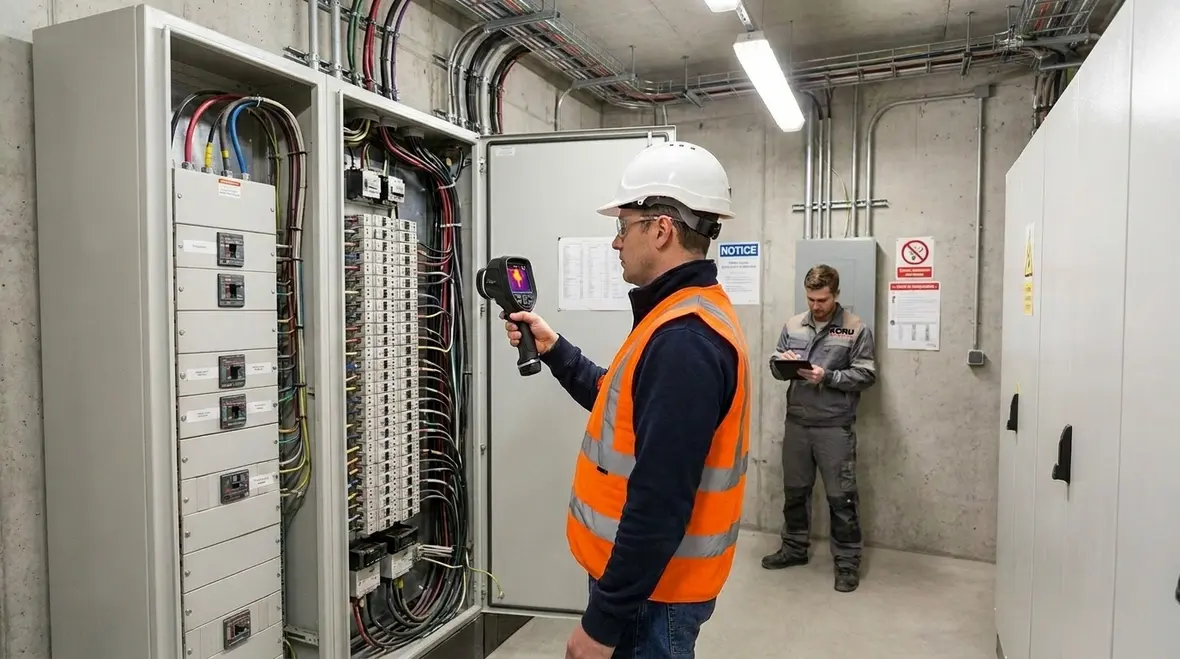
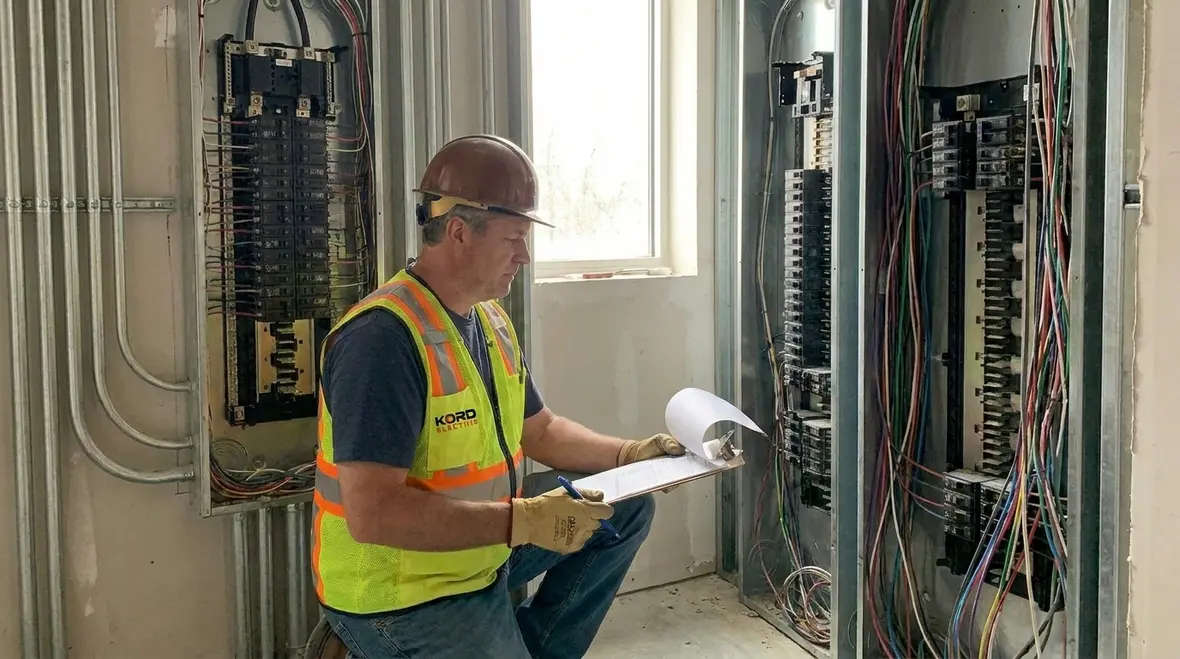
Thermal damage does not show up all at once. It accumulates, and it loves hidden locations: behind panels, inside junction boxes, at terminations, and around bus bars. Therefore, Preventing Electrical Fires in Commercial Buildings requires inspections that verify connection integrity and detect hot spots before they escalate.
Our expert service staff often explains what they find in plain language. They do not just report numbers. They explain the “why” behind the readings, because a facility team can only act fast when it understands what the electrical system is telling them. For instance, a slightly elevated temperature at a breaker termination can point to loose connection, contamination, or damage. And if that connection keeps cycling under load, it can degrade until insulation fails.
We also recommend that facilities treat inspections as a living routine. After renovations, after major equipment changes, or after disturbances like floods or roof leaks, it makes sense to recheck relevant sections. In other words, the system never stops aging, and prevention should never go on vacation.
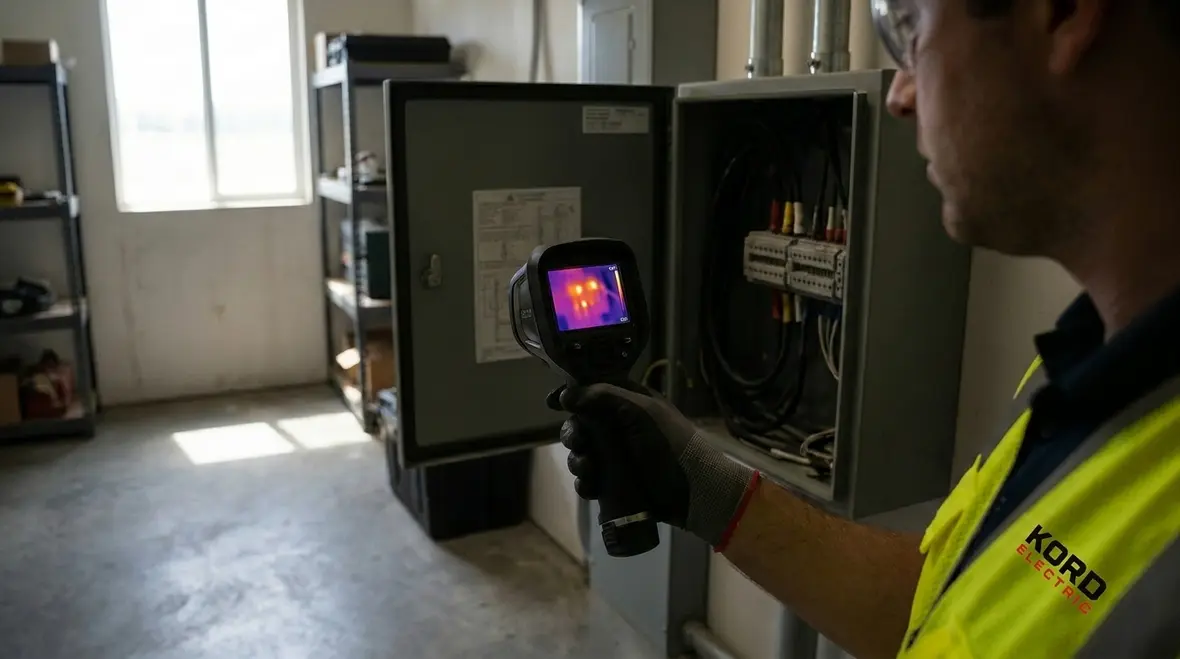
Stabilize power quality and reduce overheating from voltage issues
Even when the facility has the right cable size and breaker ratings, unstable power quality can drive extra stress. Voltage sags, surges, and inconsistent supply conditions can cause equipment to draw current in ways that increase heat at certain components. That is why our team includes power quality review as part of a serious fire prevention plan.
On our site, we cover how voltage fluctuations affect commercial and industrial systems, because they can turn normal operation into a slow burn. When voltage swings happen, motors and electronic equipment may operate less efficiently, and sensitive controls can behave unpredictably. Meanwhile, stressed components can experience higher losses at terminations and connections, which raises temperatures where ignition risks grow. For teams that want to dig deeper into this topic, our dedicated service insight on voltage fluctuations in commercial and industrial facilities walks through how we diagnose and correct instability before it becomes a fire or downtime event.
Our technicians explain this clearly during site visits. They connect the dots between what the facility sees day to day and what the electrical system experiences during peaks, load changes, or utility events. Then, we recommend steps that match the situation, such as targeted monitoring, protective devices where appropriate, and upgrades that support stable operation.
And look, voltage problems are like that guest who always shows up late. They may not cause the whole party to collapse, but they absolutely disrupt the rhythm, and eventually something trips. Electricity trips too, just in less polite ways.
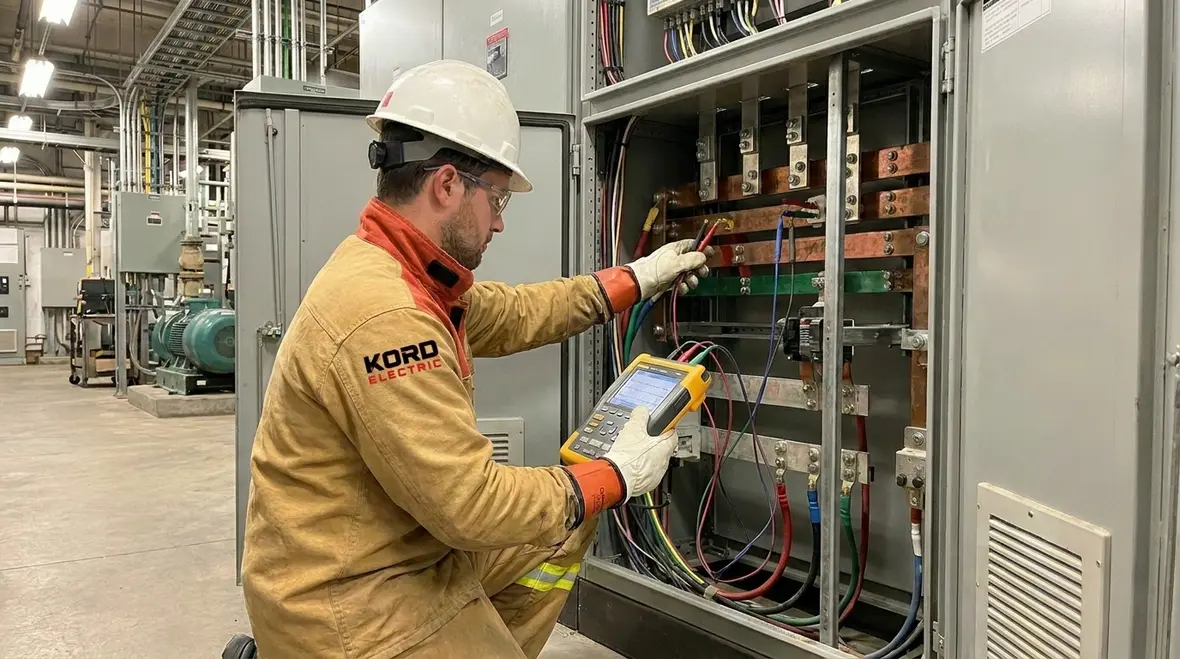
Prevent overloads by controlling demand and designing for growth
Overload is one of the most common paths to overheating. It happens when circuits run beyond what they can safely handle for long periods, or when loads vary in a way the original design never anticipated. Large commercial facilities often expand in phases, and power distribution plans may lag behind those real changes.
So we help clients establish demand awareness. That means checking actual load patterns, not just nameplate ratings. We also review how circuits share loads, how power feeds route through the building, and whether flexible uses like coworking areas or event spaces create unpredictable spikes.
Then we address capacity in a practical sequence. First, we identify where overload risk exists. Next, we rebalance circuits where possible, update load schedules, and verify that breakers and protective devices match the load behavior. Finally, we support improvements like panel upgrades, new feeders, and revised distribution where the building truly needs it.
In the end, we aim for a system that can handle the building’s daily reality, including peak hours and maintenance modes. Because if the electrical design only survives on paper, it is not a safety plan. It is a hope plan.

Manage wiring and connections with disciplined maintenance
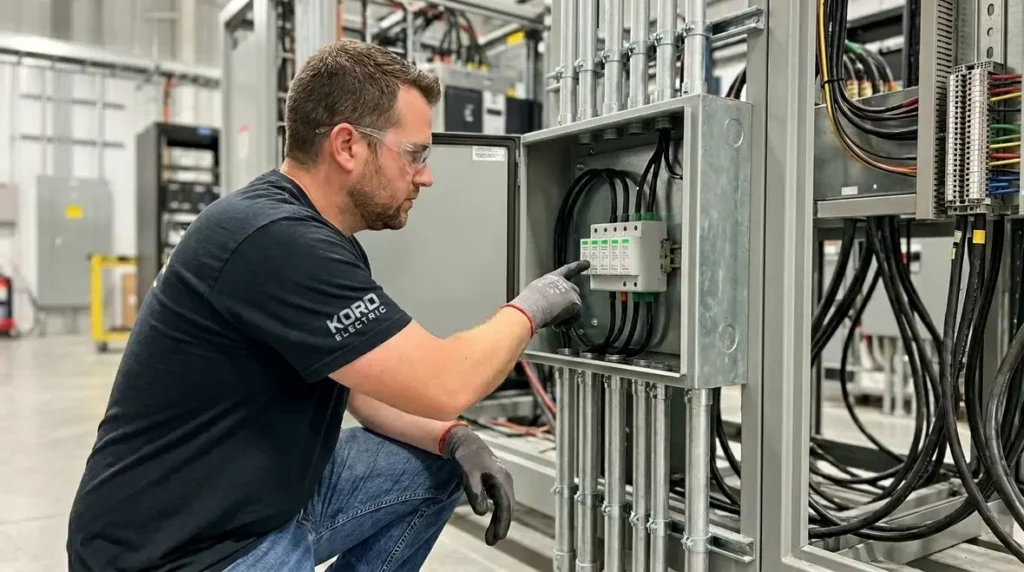
Electrical fires often begin at points where current concentrates: connections, splices, terminations, and places where vibration or temperature cycles loosen components. Over time, dust accumulation, moisture intrusion, and chemical exposure can also worsen insulation and contact surfaces.
Our technicians emphasize that maintenance must be consistent and targeted. We do not just tighten things randomly. We verify the connection condition, check torque where appropriate, and confirm that devices are installed correctly for the environment. We also advise how to reduce future stress, such as sealing enclosures, improving airflow in electrical rooms, and controlling humidity where it matters.
For facilities with high foot traffic or equipment movement, we also recommend protecting cable routing and preventing mechanical strain. A cable that gets rubbed or bent repeatedly can degrade. Then, one day, the system “mysteriously” fails. Mysteries are great in detective shows. In power systems, we prefer explanations.
Finally, we support a documentation approach. Our service staff records what we find and what we fix. That way, future inspections build on history instead of starting from scratch each season.
Use protection planning that matches commercial and industrial needs
Protection devices work best when they are selected and coordinated correctly. In large facilities, a common mistake is assuming that simply having breakers or fuses automatically provides safety. In reality, protective settings must match the electrical system’s design, and coordination should help prevent faults from turning into extended overheating.
So we review how devices respond to faults, including short circuit and overload conditions. We also look at whether the building has the right layers of protection for each area, especially where critical operations run continuously. For example, a data-heavy floor or a cold storage wing cannot treat power faults casually because downtime and heat exposure both become serious risks.
Our expert service staff helps facilities understand what changes they can make without disrupting operations. Sometimes the best approach involves scheduling improvements during off-peak windows, upgrading specific sections rather than the entire system, and ensuring that protective device behavior aligns with real load conditions.
And if anyone says, “We’ll deal with it later,” we remind them that later is when small problems grow teeth. Electricity grows teeth fast.
Training, labeling, and response plans that reduce human delay
Even the best electrical system can fail if the facility team cannot act quickly and correctly. Therefore, we help organizations reduce human delay through clear labeling, written procedures, and training on how to respond to warning signs. This matters most in commercial and industrial properties where multiple contractors, vendors, and maintenance teams work under pressure.
Our technicians explain practical steps: what to document during inspections, how to interpret abnormal smells or sounds, how to handle abnormal circuit behavior, and when to stop operations and call for service. Then we coordinate with facility managers to ensure response actions align with the site’s operational needs and safety requirements.
We also recommend disciplined access control to electrical rooms, so unauthorized changes do not creep into the system. A building that stays organized prevents mistakes that lead to overheating and hidden faults.
In short, prevention is not only hardware. It is also the people who manage that hardware. And yes, we are the “boring adults” who make sure the adults stay safe.
FAQ
Bottom line from Kord Electric
Large commercial facilities deserve a prevention plan that treats electrical safety as ongoing work, not a one-time task. At Kord Electric, our technicians and expert service staff help you assess risk, stabilize power quality, manage overload, and inspect connections in ways that actually reduce fire likelihood. If you want a practical roadmap for your building, contact us for a service visit. We will explain the findings clearly, recommend next steps, and help you protect the people and operations that keep your facility running.
If your facility is already dealing with unstable power, nuisance trips, or unexplained equipment shutdowns, pairing a fire prevention strategy with our dedicated voltage fluctuation diagnostics and repair service helps stabilize your system from the ground up. From there, our broader commercial and industrial electrical services give you a clear, staged path from “we think we are fine” to “we know we are protected.”
When you are ready to move from reactive fixes to a proactive plan for Preventing Electrical Fires in Commercial Buildings, our team is prepared to walk the site, document the risks, and design improvements that fit your budget and your operating schedule.