

Industrial Machinery Power Connectivity Guide
At Kord Electric, we use an industrial machinery power connectivity guide to help teams wire heavy equipment in a way that supports safe operation and fewer downtime surprises. That guide starts with a clear path from the service to the machine control panels, and it keeps the basics steady: correct conductor sizing, proper termination, correct grounding, and clean labeling. From there, our process goes deeper than “it fits.” We check how power flows during normal running, during starting surges, and during faults. And yes, we explain it in plain language, because nobody deserves to stare at a wiring diagram like it is a cursed relic from a sci fi movie.
In this article, third person readers will see the best practices that experienced Kord Electric technicians apply on commercial and industrial facilities and major property buildings. They also learn how we connect the dots between wiring methods and the hidden electrical risks found in real job sites, including those that show up in commercial spaces long after the installer leaves.
Industrial machinery power connectivity guide: how it starts the right way
The first best practice is to treat the industrial machinery power connectivity guide like the foundation, not a checklist. Others often begin with the machine spec sheet and then improvise the rest. We avoid that. Our technicians build a complete wiring plan that includes the equipment nameplate data, voltage and phase, maximum operating current, starting method, and the expected duty cycle.
Next, the team maps the path from source to load. Then, they confirm where switching happens, where protective devices sit, and where control wiring separates from power wiring. After that, they verify that the panel layout supports safe access and proper segregation. This is important because heavy industrial machinery draws current in bursts, and those bursts stress wiring, breakers, and terminations. In other words, “it worked once” is not a test plan.

For facilities that want a deeper look at how wiring choices and everyday operations intersect, Kord Electric’s article on hidden electrical risks in commercial buildings shows how small oversights can grow into serious issues behind panels, ceilings, and walls when loads increase and maintenance falls behind.
Run power like a system, not a set of wires
When teams wire heavy machinery, they often think in parts. Kord Electric thinks in systems. Therefore, we focus on how power behaves at the moment the machine starts and when it returns to steady operation. Motor starting and drives can create voltage dips, current spikes, and heat buildup at connections.
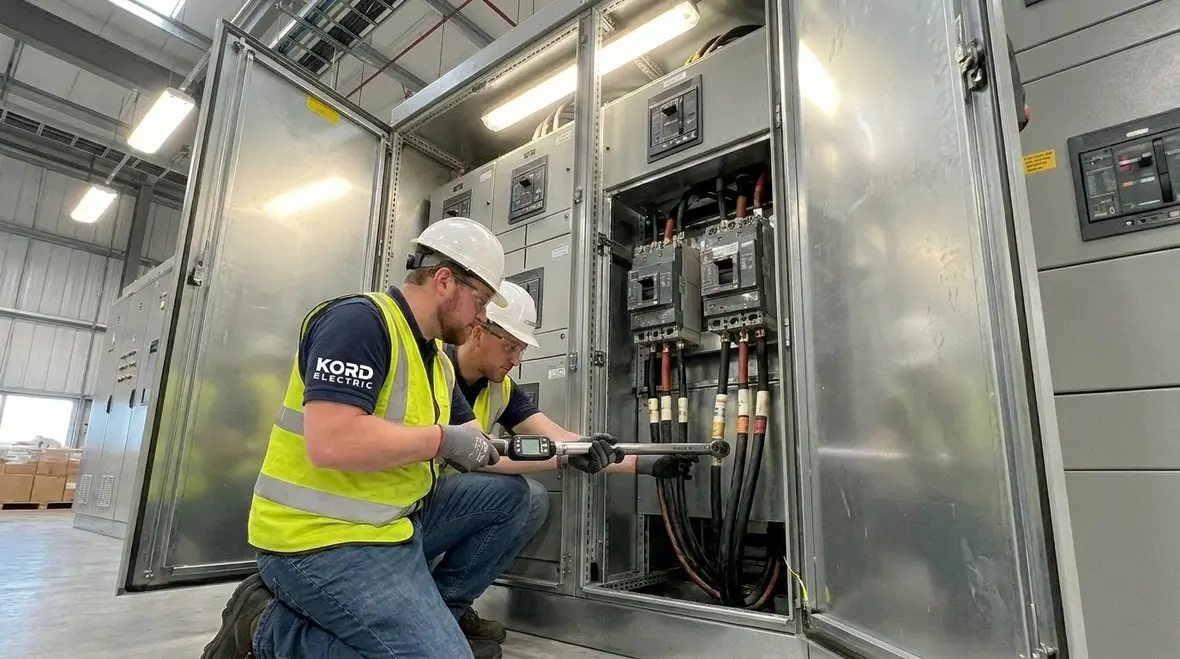
To manage those realities, technicians follow several practical rules. They choose conductor sizes based on load current and installation conditions, including ambient temperature and conduit fill. They use the correct insulation rating for the environment. They keep conductor lengths as designed and avoid unnecessary splices in critical paths. And they torque terminations to manufacturer values. That last point matters more than people admit. A loose connection does not always fail instantly. Instead, it can heat up quietly until it becomes a problem with a short fuse and a long repair schedule.
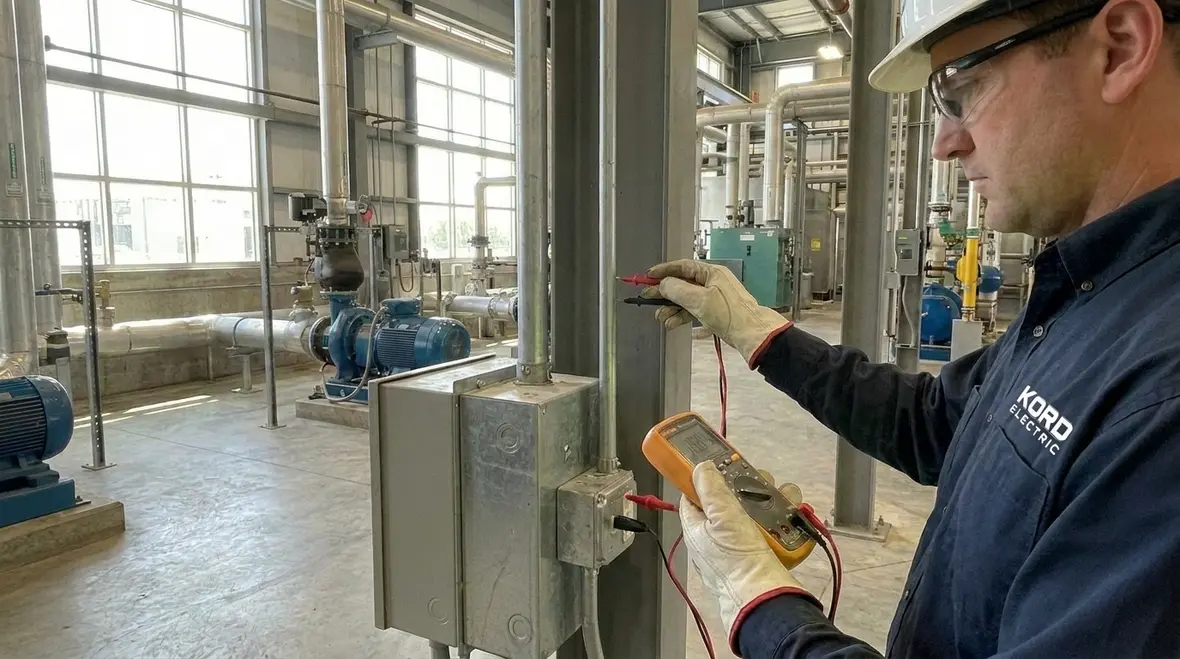
Also, they verify phase rotation and polarity where applicable. In industrial settings, an error there can cause erratic behavior, nuisance faults, or damage over time. So, we make sure commissioning includes electrical checks and functional checks, not only “power is on.”
Grounding, bonding, and fault protection that actually hold up
Grounding and bonding must do real work during faults, not just exist on paper. Our expert service staff explains that equipment grounding reduces shock risk and helps protective devices clear faults. Meanwhile, bonding ensures connected metal parts stay at the same potential, which supports safe clearing when something goes wrong.
To keep this reliable, technicians inspect grounding paths, confirm bond points, and verify that metallic conduits and enclosures form continuous conductive paths where required by code and design. They also confirm that ground conductors connect to proper terminations and that they avoid paint, corrosion, and mismatched hardware that break electrical continuity.
Fault protection ties into this. Circuit breakers and fuses need coordination with the machinery’s protective requirements and the downstream components. Therefore, teams check time current curves, verify the interrupting rating, and ensure the protective device clears within safe limits. If a device trips too late, heat and damage escalate. If it trips too early, production stops. Kord Electric treats coordination as a business issue, because downtime costs more than good planning.
Hidden electrical risks in commercial buildings that can also hit industry
Even in heavy industrial environments, wiring errors and aging conditions can create the same hidden dangers found in commercial buildings. In our reference material about hidden electrical risks in commercial buildings, one theme stands out: problems often start small and spread through heat, moisture, loose connections, and poor maintenance practices.
That same pattern shows up on industrial jobs. For example, improperly sealed enclosures can let moisture enter, which then reduces insulation performance and increases leakage current. Over time, vibration can loosen terminations, especially where torque procedures were rushed. In addition, wire insulation can degrade when conduits run near heat sources without proper clearance or insulation rating. And if crews skip labeling or use unclear labeling, troubleshooting becomes guesswork, not diagnosis.
So, Kord Electric addresses these risks with targeted inspections. We check termination condition and look for signs of overheating at the panel and within machine enclosures. We verify routing so cables avoid sharp edges and stress points. We also confirm that cable glands and strain reliefs fit correctly, because mechanical stress can damage conductors long before anyone sees smoke.
Here is the truth, delivered calmly: electrical risk rarely announces itself with a drumroll. It usually shows up when the facility needs the machine most, which is exactly when nobody wants a surprise.
Control wiring and power segregation for fewer nuisance problems
Heavy industrial machinery often uses a mix of motor power conductors, control wiring, sensors, and communications. Therefore, good wiring practice includes segregation and careful pathway planning. When control wiring runs too close to high current wiring, it can pick up noise. That noise can create false signals, trigger faults, or cause inconsistent output from relays and drives.
To reduce those issues, technicians follow separation rules that match the design and code requirements. They route control circuits away from high current paths and keep signal conductors separated from power conductors where required. They also manage shield termination for instrumentation and communication cables based on the manufacturer’s instructions and the project grounding plan.
Then they ensure that control devices receive stable power. Some facilities assume “voltage is voltage.” In practice, control transformers, low voltage power supplies, and protective devices must match the system design. Kord Electric’s team checks for correct control voltage, verifies that fuses and breakers align with the load, and confirms that wiring supports safe operation during switching.
Because yes, nothing kills momentum like a machine that faults because a sensor is picking up interference from a nearby feeder that was routed like it was an afterthought.
Terminations, labeling, and commissioning that support long life
After wiring, many teams stop when the lights turn on. Kord Electric keeps going. We treat terminations, labeling, and commissioning as part of the installation, not as optional extras.
First, technicians inspect each termination point. They confirm conductor preparation, ensure the correct lugs and connectors match the conductor type, and verify torque values. Then they confirm that wire management prevents strain and protects insulation at entry points. Next comes labeling. Clear labeling helps maintenance teams identify circuits, disconnects, and machine interlocks quickly and safely. It also reduces the chance that future work connects to the wrong panel or device.
Finally, commissioning validates that the system works as designed. That means functional tests of contactors and interlocks, checks of protective device operation, verification of phase and control logic, and review of any alarms or faults. Our expert staff then explains what they found and what they recommend for ongoing maintenance, because training prevents small errors from becoming recurring problems.
In major property buildings and commercial and industrial facilities, these steps protect schedules and protect people. And frankly, it also makes the next troubleshooting call faster, which is a win for everyone’s sanity.
Maintenance habits that keep wiring safe after installation
Best practices do not end at turnover. Heavy industrial machinery requires periodic checks that confirm electrical performance remains stable over time. Kord Electric recommends maintenance focused on hot spots and failure points: panel terminations, enclosure integrity, cable routing, and protective device condition.
Technicians also check for signs of overheating, corrosion, and insulation damage. They verify that barriers and covers remain in place. They confirm that cable entries remain sealed and that strain reliefs keep conductors from rubbing or pulling. In facilities with frequent vibration or moisture exposure, these tasks matter even more.
Additionally, we encourage crews to follow lockout and safe work procedures. Maintenance becomes a safety practice, not a guess. When companies invest in good maintenance, they reduce the chance of hidden electrical risks turning into visible downtime.
To keep things simple, our staff provides clear guidance on what to check, how often to check it, and what to do when they find irregularities. That coaching reduces friction between maintenance teams and operations, which is good for production and good for safety.
FAQ
What is included in Kord Electric commissioning for machinery wiring?
Commissioning includes electrical checks, functional testing of interlocks and control logic, protective device verification, phase checks, and documentation so maintenance teams know what was verified. That final pass connects the industrial machinery power connectivity guide to the real behavior of drives, starters, sensors, and safety circuits once the machine begins operating under load.
What maintenance should commercial and industrial facilities plan for?
Facilities should schedule periodic inspections of terminations, enclosures, cable routing, and protective devices, with attention to overheating signs and moisture or corrosion effects. Many teams align these tasks with structured programs like Kord Electric’s commercial and industrial electrical maintenance plans so inspections, testing, and labeling updates stay on a predictable schedule instead of waiting for a failure to force the next visit.
Request a safe, well documented installation
In commercial and industrial facilities, heavy machinery wiring should be built like it will be serviced and tested for years. At Kord Electric, our technicians plan the full power and control pathway, verify grounding and fault protection, and commission the system so it performs under real conditions. If a project needs dependable wiring, clear labeling, and expert support for commercial and industrial facilities and major property buildings, reach out to Kord Electric today. We will review your setup, discuss risks, and set a practical plan to keep production running.
For organizations operating in Southern California, our dedicated Los Angeles County electrical services team supports everything from new machinery connections to upgrades, troubleshooting, and emergency response so that industrial machinery power connectivity decisions stay aligned with local conditions and real-world production demands.
If your facility is planning a new production line, a machinery move, or a panel upgrade, this is the moment to go beyond “it should work” and insist on a documented, system-focused approach. An industrial machinery power connectivity guide turns into long-term value when combined with solid commissioning, clear labeling, and maintenance that does not wait for alarms.


