
Industrial Power Quality Assessment Services
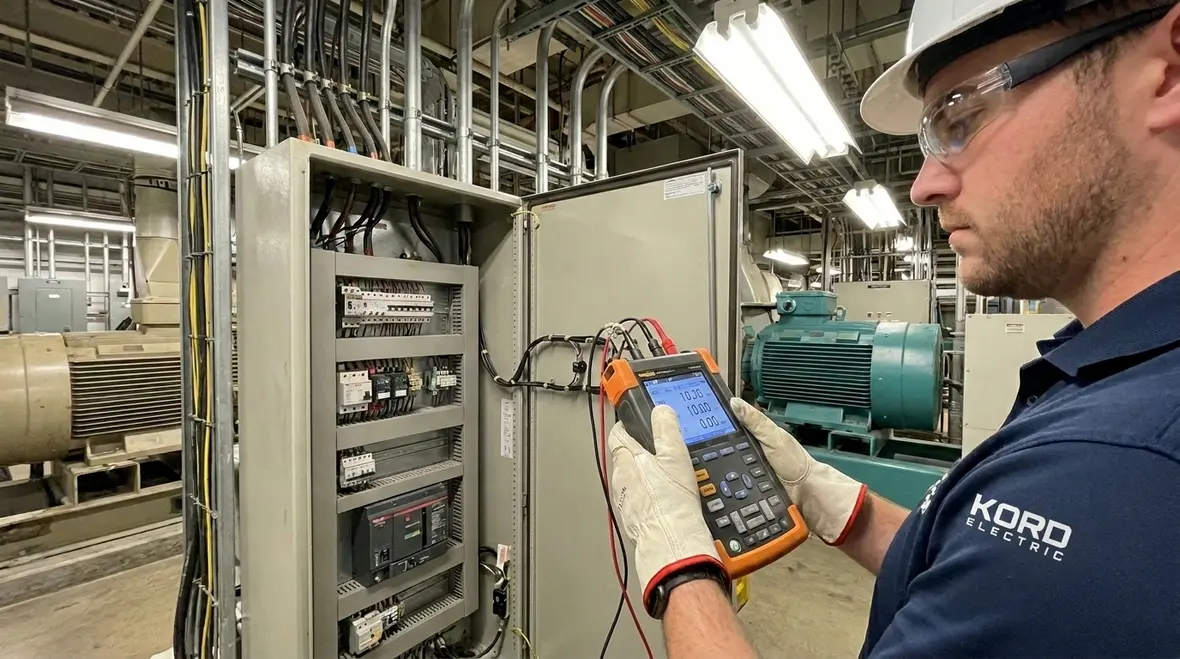
Kord Electric delivers industrial power quality assessment services designed for commercial and industrial facilities and major property buildings. When we run these assessments, our technicians look beyond the simple “power is on” assumption. They check how voltage behaves, how often it drifts, and how equipment reacts over time. As a result, facility managers get clarity on what the grid is doing inside their walls. And yes, we have seen some plants treat voltage like a rumor: everyone heard it, nobody measured it. We prefer measurements. They calm down the whole operation.
How power quality issues quietly damage production
Third party equipment does not fail politely. It fails in stages, and then it fails loudly. When a facility experiences unstable voltage, short interruptions, or sudden surges, motors, drives, welders, HVAC units, and controls often feel it first. Then the symptoms show up later as downtime, slower output, nuisance alarms, or component burnout. In other words, the plant keeps running, but it quietly wastes money.
That is why our industrial power quality assessment focuses on real conditions. We compare what the facility expects with what actually arrives at switchgear, distribution panels, and critical loads. Consequently, we can connect causes to outcomes. For example, voltage fluctuations can push variable speed drives into fault cycles and cause torque variations that wear mechanical parts faster. Likewise, electronics in controls may suffer from stress that shortens service life, even when no single event looks dramatic on the surface.
Our expert service staff explains findings in plain language and in the language of operations. So the conversation does not stay trapped in technical jargon. It turns into decisions. If your facility stays focused on throughput, we help keep electrical stability on the same priority list.
Voltage fluctuations hit motors, drives, and control systems
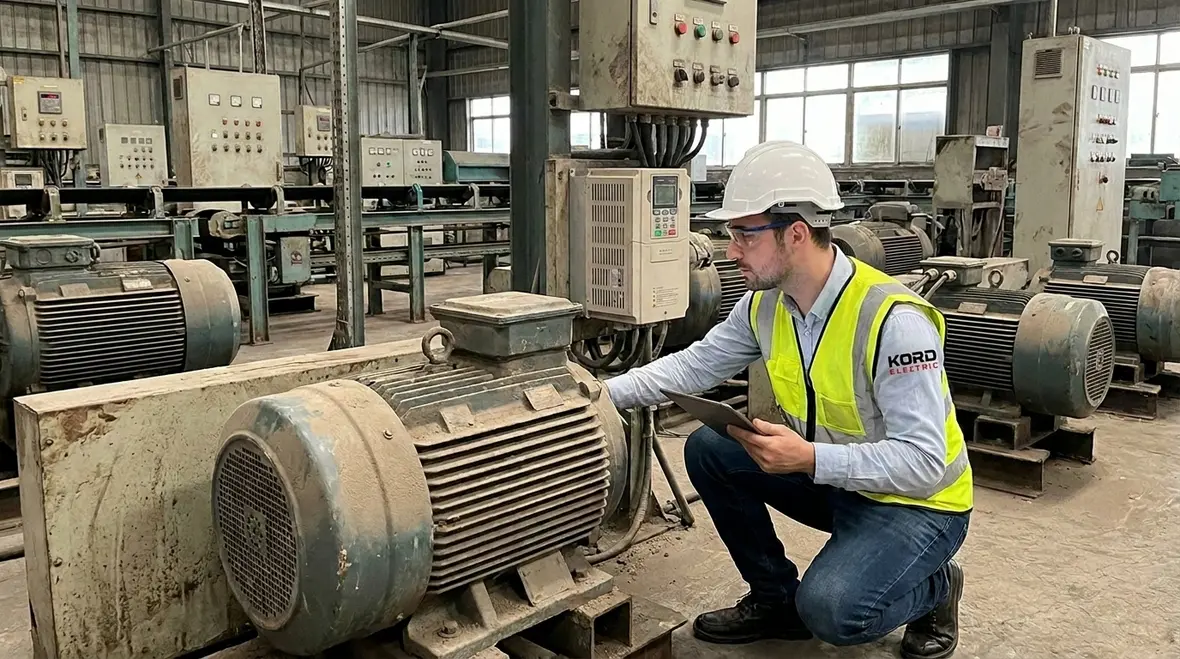
For commercial and industrial sites, voltage fluctuation is not a rare “maybe” problem. It is often a predictable consequence of load changes, utility behavior, transformer performance, and power factor issues. Kord Electric reviews the pattern and timing, then we help you understand where the instability originates and where it lands.
In the Kord Electric resource on voltage fluctuations in commercial and industrial environments, we explain how variations can affect equipment behavior. We also describe the practical impacts, like flicker, overheating, and inconsistent performance in sensitive systems. Moreover, these effects can show up differently depending on the equipment. A motor might run hot and age faster, while a PLC might see intermittent faults that come and go like a pop quiz you never studied for.
When our technicians perform an assessment, they capture electrical behavior during typical operations, not just during idle periods. Then, they interpret results against the realities of your production schedule. Therefore, you get a power quality snapshot that matches how the facility truly operates, not how it hopes it operates.
What a regular industrial power quality assessment prevents
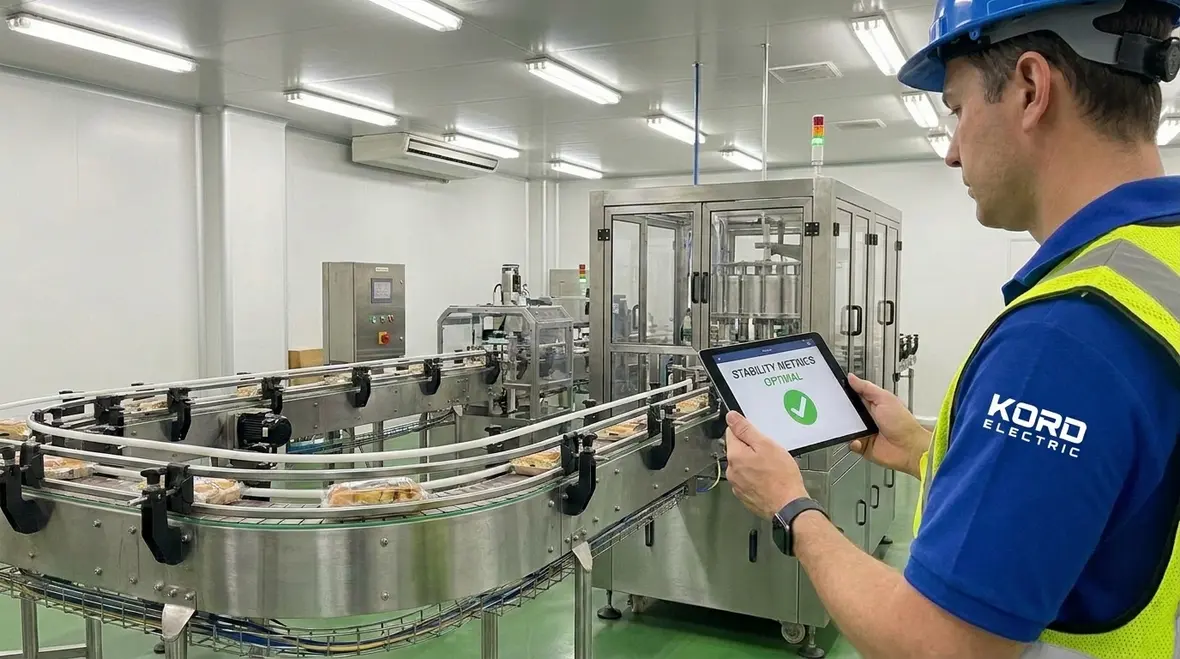
Think of power as the foundation that holds every workflow steady. When the foundation shifts, you can still move around, but you feel it in the way chairs wobble under your weight. A regular industrial power quality assessment helps you catch the shift early. It prevents surprises that force expensive shutdowns, rush procurement, and emergency labor.
We typically see three categories of prevention opportunities. First, we reduce unexpected downtime by identifying instability tied to load events and distribution weaknesses. Second, we improve equipment reliability by spotting stress factors that shorten component life. Third, we protect continuity for critical processes where even small variations matter.
In addition, our expert service staff helps customers connect findings to maintenance planning. That means you do not wait for the next failure. Instead, you schedule targeted corrections while the facility can still operate with control and confidence. And yes, that planning is less stressful than explaining to leadership why the line stopped “for no reason.” Power quality rarely has no reason. It just hides it well.

Why assessments matter more for commercial buildings and major properties
Major property buildings and commercial facilities run on blended loads. You might have chillers, elevators, data rooms, tenant panels, lighting systems, and backup power that all interact. Even when each subsystem works, the combined effect can create electrical stress in the distribution network.
As occupancy changes through the day and seasons shift HVAC behavior, electrical loads swing. If the distribution system does not manage those swings cleanly, the building experiences instability. Then occupants feel it as flicker, inconsistent temperatures, or comfort complaints. Facility teams feel it as calls, troubleshooting, and repeat visits.
We serve commercial and industrial facilities, and we structure assessments around the complexity of these buildings. That means we consider how the site’s load profile changes across operating modes. Consequently, our industrial power quality assessment helps property managers and facility leaders protect uptime across multiple tenants and critical systems.
We also account for how people perceive risk. In most buildings, it is not just about the equipment. It is about trust. When we present results and explain what they mean, decision makers can act quickly and communicate confidently. Our technicians keep the message clear, because clarity prevents costly delays.

How our technicians measure, analyze, and explain findings
Measurements matter, but interpretation matters more. Our approach blends field data with engineering logic, and we bring it back to the people who run the building. Our technicians start by understanding your critical loads and your operational realities. Then, we plan measurement points that match how power flows through your system.
Next, we capture relevant electrical behavior long enough to reflect normal operations. We look for patterns and events, not just averages. After that, our team analyzes the data to identify likely contributors such as imbalanced phases, poor connection integrity, upstream voltage variability, harmonic distortion, or transformer and feeder stress.
Then we explain the results. Our expert service staff does not hand over a report and vanish. Instead, we walk through what we found, what it means for your equipment, and how it aligns with your maintenance and capital planning. Therefore, the assessment becomes actionable.
And if someone in the room wants a quick metaphor, we offer one. Power quality is like a kitchen thermometer. You can cook all day, but if the heat swings, the dish never lands right. You can hide the issue for a while, but eventually the problem shows up in the final product.
Common correction paths after an assessment
When Kord Electric completes an industrial power quality assessment, we help facilities choose correction paths that match the problem and the budget reality. We avoid vague recommendations. We focus on solutions that reduce risk and improve performance where it counts.
Depending on findings, correction strategies can include operational adjustments, targeted electrical upgrades, and improved monitoring. For example, facilities may need better power factor support to stabilize system behavior, or they may need load management changes during peak demand. In other cases, the issue may sit in distribution hardware, such as connections that degrade over time.
We also evaluate whether the facility benefits from surge protection improvements and coordination updates for sensitive electronics. Additionally, if harmonic influence plays a role, we can recommend measures that address distortion at the right points in the electrical chain.
Most importantly, we help customers plan these actions in a way that respects uptime. Our technicians coordinate with facility teams so corrections do not create new disruption. Thus, facilities can improve power quality without shutting down production or disrupting tenants more than necessary.
Teams that want to pair corrective work with long-term planning often integrate these findings into broader programs like structured electrical preventive maintenance for commercial and industrial facilities. That way, improvements made after one assessment become part of an ongoing strategy instead of a one-time fix.
Featured snippets FAQ
Why wait for the next outage to learn the lesson?
Power quality problems rarely announce themselves with a siren. They build slowly, and then they cash in on your downtime. Kord Electric can run an industrial power quality assessment that measures real conditions, identifies the causes, and supports practical corrections for commercial and industrial sites and major property buildings. Our technicians and expert service staff guide you from data to decisions. If you want fewer faults and calmer operations, contact Kord Electric today and let us help your facility run on stable power.
If your operations sit in or around Los Angeles County and you are juggling voltage issues, unexplained trips, or aging distribution, you do not have to solve it alone. Kord Electric provides dedicated Los Angeles County electrical services built around industrial timelines, blended commercial loads, and real-world power quality concerns.
For facilities ready to connect findings from an industrial power quality assessment to a broader reliability strategy, it can also help to review related guidance on topics like hidden electrical risks, emergency power failures, and broader system troubleshooting across large buildings. When those insights combine with targeted on-site measurements, your power system stops feeling like a rumor and starts behaving like a measured, managed asset.
When you are ready to move from “we think power is fine” to “we know what our power is doing,” Kord Electric is ready to help with industrial power quality assessment services that align with your production schedule, your risk profile, and your long-term maintenance planning.


