
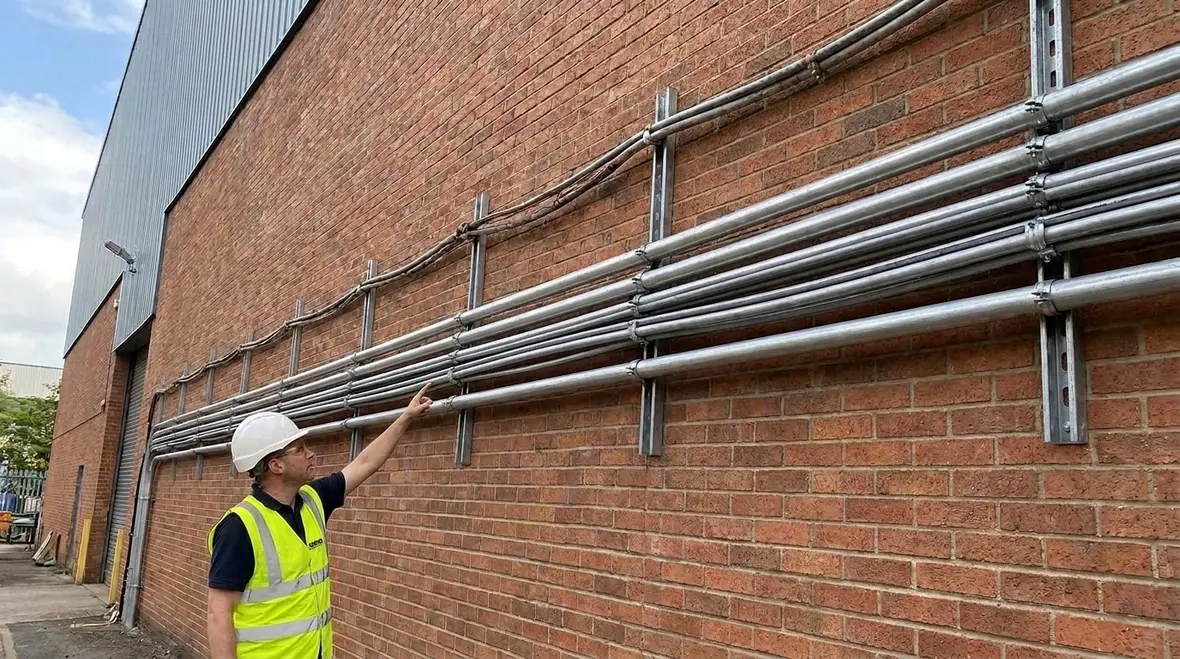
NEC Attachment to Buildings Requirements 225.16
When we handle electrical installations for commercial and industrial facilities, and for major property buildings, we treat NEC attachment to buildings requirements with real care. In the first place, NFPA 70 Section 225.16 focuses on how certain cables and raceways attach to buildings, especially where they must stay secure and protected. That may sound like paperwork, but it is not. If an attachment fails, the consequences are not just a nuisance, they can become a safety issue and a costly repair. Fortunately, our team at Kord Electric explains the rule in plain language, and our technicians walk through what it means on site, step by step.
Now, let’s slow down and cover the essentials in a calm, practical way. Think of it like a sitcom plot, where the “small wiring detail” prevents the season finale from going sideways.
NEC Attachment to Buildings Requirements: What NFPA 70 Section 225.16 Demands
NFPA 70 Section 225.16 sits inside the wider NEC framework that governs how power leaves one structure, crosses space, and reaches another without turning into a long-term liability. In simple terms, the section puts structure around how conductors and raceways attach to buildings so they stay supported, protected from physical damage, and ready for inspection. It is one of those rules that rarely shows up in glossy project photos, but it definitely shows up in inspection notes and long-term maintenance stories.
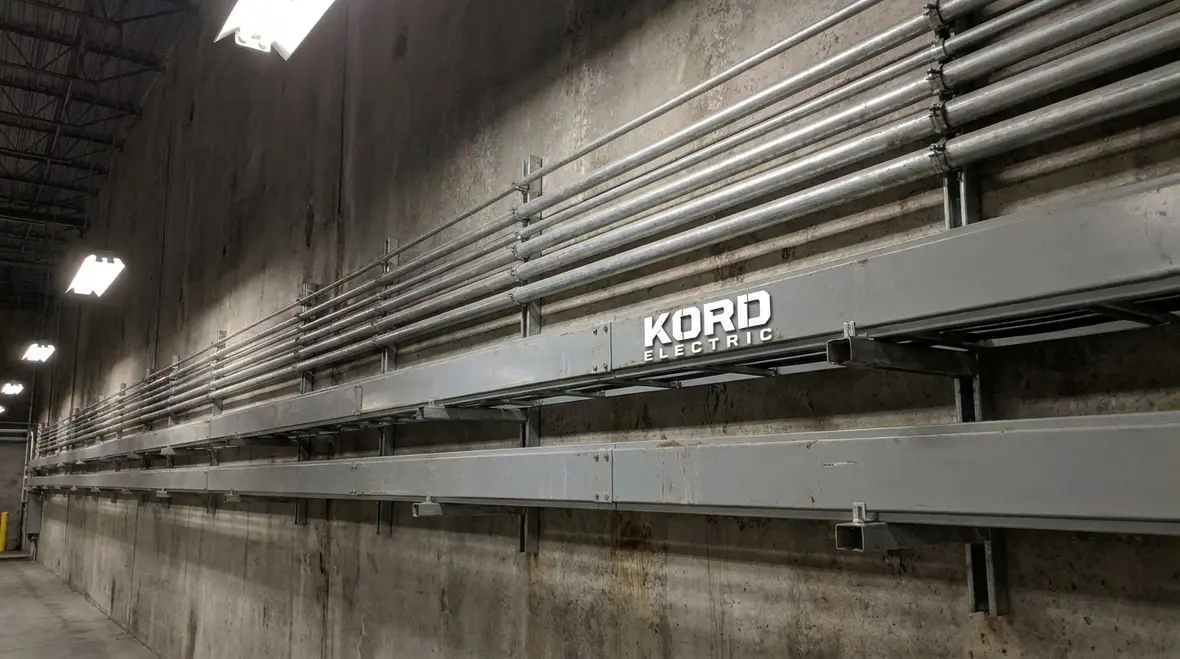
When Kord Electric designs or installs systems that rely on building-mounted raceways, cable trays, or other supported wiring methods, our team starts by mapping where the attachment happens, what the structure is made of, and how the load behaves over time. That way, we are not just “getting power from A to B.” We are meeting NFPA 70 expectations while keeping technicians, facility staff, and equipment safer over the life of the building.
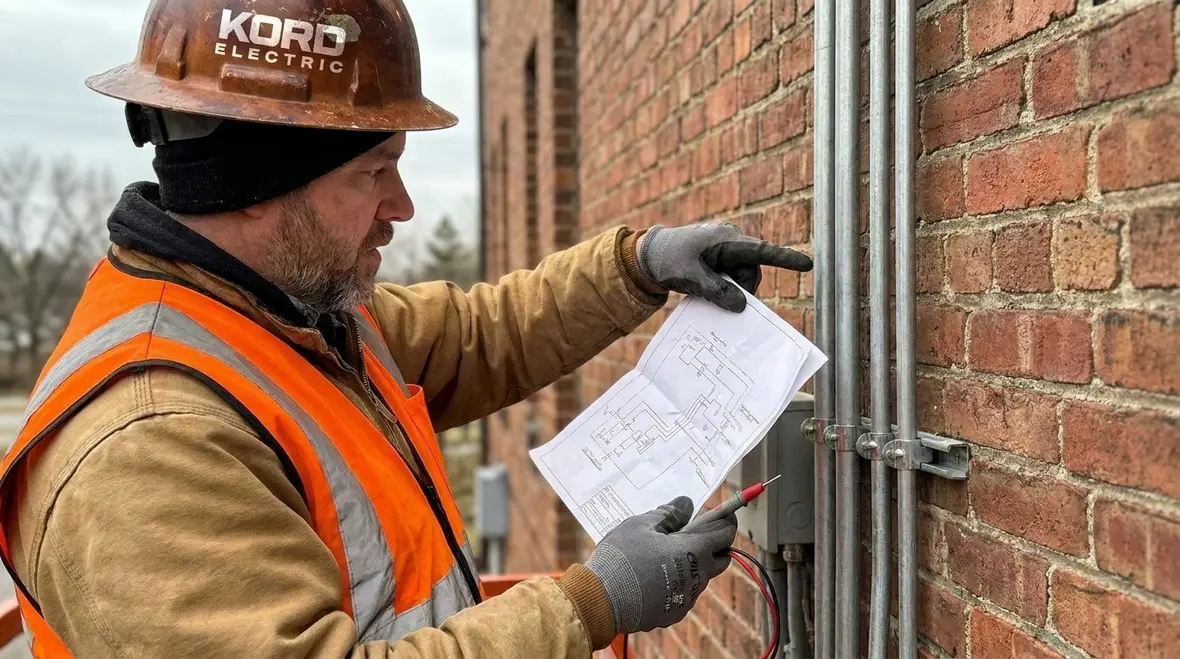
In projects where Section 225.16 intersects with other rules for outside branch circuits and feeders, we also draw on our broader NEC background from resources like our National Electrical Code planning guides on the Kord Electric blog and companion NFPA 70 overviews from Kord Fire Protection. We treat those as reference material, then adapt them to each jobsite’s actual structure, loads, and risk profile.
Why Section 225.16 Matters for Commercial and Industrial Buildings
Our expert service staff often hears the same story from building owners. “We have always done it this way.” However, the code does not care about tradition. It cares about hazards. In turn, Section 225.16 supports safe attachment practices for power and related electrical systems, which is especially important where buildings face vibration, weather exposure, impact risks, and long cable routes.
Furthermore, commercial and industrial facilities face unique loads and conditions. Elevated walkways, moving equipment, frequent service access, and dense building utilities make proper attachment critical. As a result, we plan routes and attachment points with more than convenience in mind. We plan for durability, inspection readiness, and clean installation that holds up over time.
And yes, we have seen attachments that looked fine from ten feet away. Then inspectors asked for the details, and suddenly everyone learned what “not up to spec” feels like. That is why we address it early, and why we connect these NEC attachment to buildings requirements to larger themes like commercial electrical system reliability, fire prevention practices, and code upgrade planning across our projects.
For owners and managers, the section also matters because it ties directly into liability and downtime. A failed attachment that leads to damaged conductors or equipment is more than a repair ticket. It can become a compliance issue, a safety investigation, or a business interruption story that nobody wants to retell. Treating 225.16 properly from the start helps keep those outcomes in the “fictional episode” category.
Where attachment rules meet real building behavior
Modern facilities move. Not literally, but structurally and operationally. Tenants change, equipment gets upgraded, and exterior conditions shift. We respect that reality when we apply Section 225.16. Instead of treating attachment as a fixed, one-time decision, we look at how the building will behave through seasonal expansion, long-term settling, and routine maintenance.
Attachment Strength, Support, and Damage Prevention
Section 225.16 requires that attachments support the installation and protect conductors and raceways from physical damage. Therefore, technicians must choose the right method and locate it where the structure can hold the system reliably. In other words, this rule targets the “how” of fastening, not just the “where” of placement.
Next, we pay attention to mechanical stress. As building components expand and contract with temperature changes, and as cables experience tension from installation, attachments must remain stable. If you attach to a weak surface or use the wrong fastening style, you create a slow problem that can worsen under service vibration.
We also prevent damage from things like abrasion, sharp edges, and unintended contact during maintenance. To make sure everything stays protected, our team uses careful routing and appropriate hardware. Additionally, we verify clearances so that future work does not turn a safe run into an accident waiting to audition in a dramatic scene.
Structural evaluation before we attach
Before we ever hang a raceway or cable assembly onto a wall, parapet, or support frame, we confirm what that surface can handle. That includes checking material type, fastener compatibility, edge distances, and any existing penetrations. We pair those checks with load considerations so that each attachment matches both the NEC language and the real structural capacity of the building element.
Hardware selection, spacing, and protection details
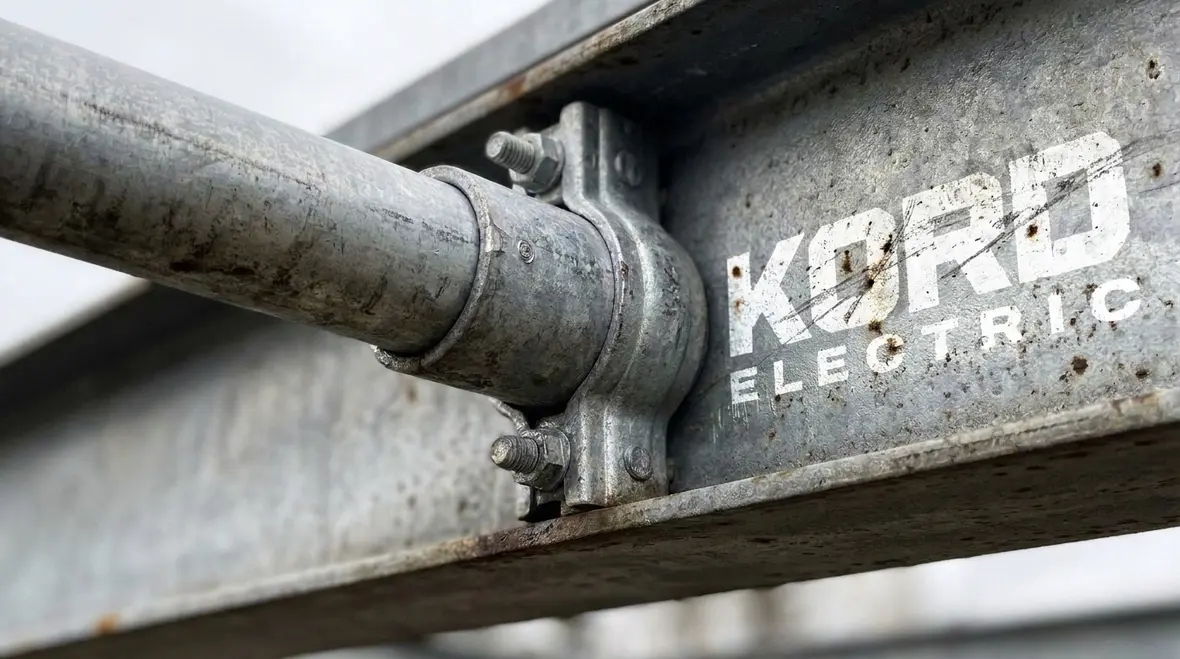
The right anchors, hangers, straps, and brackets make the difference between a compliant installation and an early callback. Our technicians match fastener materials to building substrates, confirm corrosion resistance for exterior or humid locations, and follow proper spacing and support requirements from both the NEC and manufacturer instructions. We also add protection where needed, such as grommets, bushings, or guards, so sharp corners, roof edges, ladders, and service equipment do not become damage points.
Routing, Clearances, and Practical Install Decisions
Even with strong hardware, a bad route can defeat the best plan. For that reason, we design and install with routing and clearances in mind. We keep cable and raceway paths away from areas likely to get struck, snagged, or exposed to repeated access. Then we coordinate with other trades so that attachment points do not get blocked or altered after the fact.
Moreover, we treat overhead and exterior routing differently because exposure changes the risk profile. Wind, moisture, and outdoor debris all matter. As a result, we select methods that keep the attachment secure and help prevent deterioration or loosening.
When we explain these requirements to facility managers, we translate the code into jobsite language. For example, we show how spacing of supports and how the chosen attachment method affects strain. Then we confirm that technicians install it so that the system remains compliant during inspections, not just during installation day.
Coordinating with other building systems
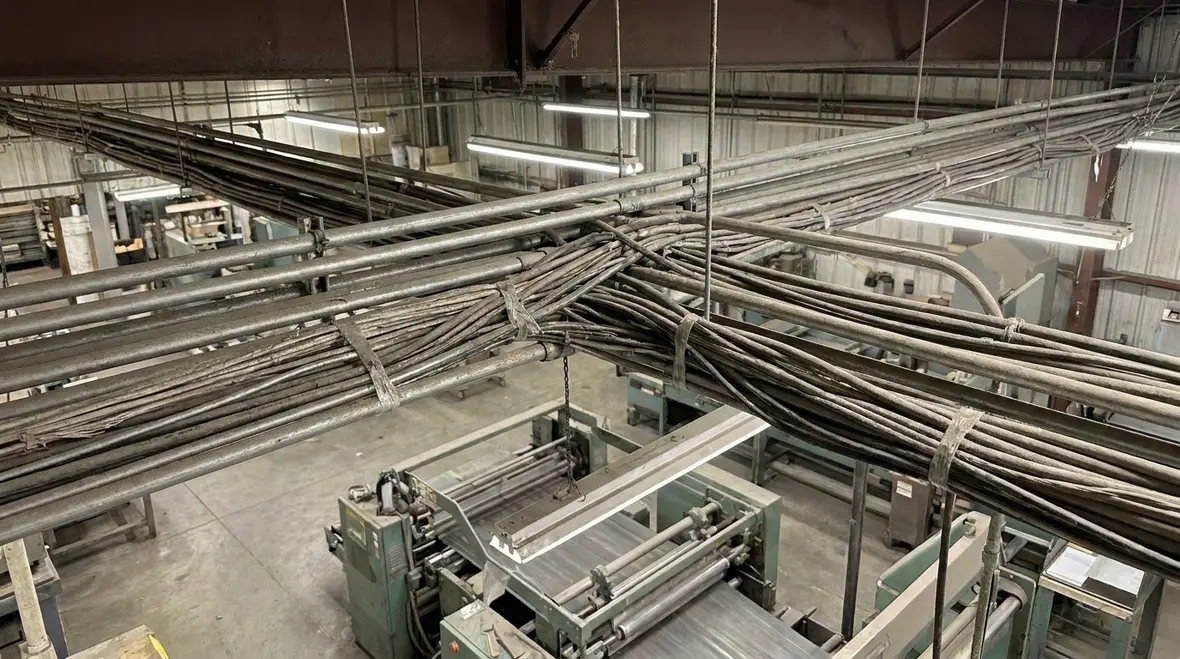
Cables and raceways never live alone. They share space with mechanical lines, fire protection piping, data systems, and architectural features. We coordinate attachments so future sprinkler work, duct changes, or façade repairs do not force someone to cut, bend, or move supported electrical runs in a way that violates NEC attachment to buildings requirements or damages the system. That coordination mindset also aligns with best practices for fire prevention in commercial electrical systems, where clearances, heat sources, and accessible pathways all matter.
Inspection Readiness: How We Prepare Before the Official Walkthrough
Commercial and industrial work does not allow surprises. Therefore, we treat inspection readiness like part of the installation, not something to fix later. Our process includes planning attachment locations, confirming support adequacy, and reviewing the installation method before we close up or move on.
In addition, we coordinate documentation where required. Our technicians maintain clear records of installation choices so that building owners and facility teams can explain the work confidently. We also align with the broader NEC framework used for commercial and industrial facilities, including related sections that often show up during plan review or field verification.
Also, we know the inspection process can feel like a pop quiz from a professor who never blinks. So, we reduce confusion by making sure the attachment details match what the inspector expects to see. We support that effort with supplemental resources like our NFPA 70 overview articles and code upgrade consulting pieces on the Kord Electric blog, so owners have context, not just code numbers.
Mock inspections and checklist-driven reviews
Before the official walkthrough, we often run our own structured reviews. We walk the attachment routes, confirm fascia and wall penetrations, verify that straps and brackets are spaced correctly, and make sure protective features such as guards or sleeves are in place where needed. That way, by the time the inspector arrives, the attachment choices already tell a story of deliberate, code-conscious design instead of last-minute improvisation.
Common Mistakes We See and How We Prevent Them
In our experience serving major property buildings, the same mistakes tend to repeat. First, people attach to surfaces that cannot safely support the electrical system. Second, they use hardware that does not provide the required stability. Third, they route cables in ways that invite abrasion or impact, then they act surprised when the damage shows up later.
However, we do not just point fingers. We correct these issues during planning and installation. For instance, we verify structural surfaces, we use attachment methods suited to the environment, and we secure the system so it does not shift under normal movement. Additionally, we confirm that the installation does not conflict with other building elements that will come later.
Finally, we teach the “why” to help teams stay consistent. Our expert service staff explains how these decisions connect to NFPA 70 compliance and to safe, long term performance.
Examples of issues that trigger corrections
- Raceways loosely strapped to aging masonry where anchors have pulled out over time
- Cables draped across rooftop edges without proper supports or edge protection
- Attachments placed too close to expansion joints without accommodating movement
- Supports mounted where other trades later need access, leading to unplanned removals or relocations
- Outdoor conduits supported in ways that allow wind or thermal movement to stress terminations
How Kord Electric Supports Ongoing Compliance for Major Projects
At Kord Electric, we support commercial and industrial facilities with electrical work that stands up to real-world use. Then we back it with technicians who explain what we do and why it matters. That matters because compliance is not a one-time task. It is a living part of operating a facility.
When we handle attachment to buildings requirements for relevant systems, we apply a methodical approach. We plan the route, select proper support, ensure protection from physical damage, and verify that the installation aligns with NFPA 70 expectations. Afterward, we help facility teams understand what they need to monitor during maintenance.
So, whether you manage a manufacturing site, a logistics facility, a multi-tenant building, or a major property complex, we build for reliability. And if you ever wondered who to call when someone says, “It will probably be fine,” we will gladly be the calm voice that turns probably into properly.
Linking attachments to bigger system planning
Attachments do not exist in isolation. They connect directly to system design, fire prevention strategies, and long-range maintenance. That is why we also encourage facility teams to explore topics like building electrical system design and electrical infrastructure upgrade planning on our blog. These resources show how individual details, such as NEC attachment to buildings requirements, plug into a broader plan that makes inspections smoother and operations more predictable.
For facilities across the region that want a partner who understands both code language and day-to-day operations, our dedicated Los Angeles County electrical services bring design, installation, and troubleshooting together under one roof, with field-proven crews who know how to keep attachments and the systems they support working as intended.
FAQ: NEC Attachment to Buildings Requirements and NFPA 70 Section 225.16
Request a Compliance Focused Review From Kord Electric
If you operate a commercial or industrial facility, or you manage a major property building, you do not need guesswork. You need a team that installs correctly and explains the details so your staff can maintain confidence over time. Kord Electric can review attachment methods, support choices, routing decisions, and inspection readiness for your project. Contact us to schedule a compliance focused consultation, and we will help you move from “looks fine” to “verified and built to last.”
Next steps and related code resources
For a deeper dive into how NEC rules shape real-world design and maintenance, you can explore our National Electrical Code articles on the Kord Electric blog and companion NFPA 70 overviews on Kord Fire Protection. Together, these resources turn abstract rules into practical decisions about routing, attachment, labeling, and ongoing inspection readiness for complex facilities.
Sources and further reading: Kord Electric blog on NFPA 70 and NEC concepts, KordFire resources on NEC background, and related code education resources.


