
NFPA 70 Section 225.14 Open Conductor Spacings Rules Explained
NEC open conductor spacings rules in plain terms for commercial and industrial owners
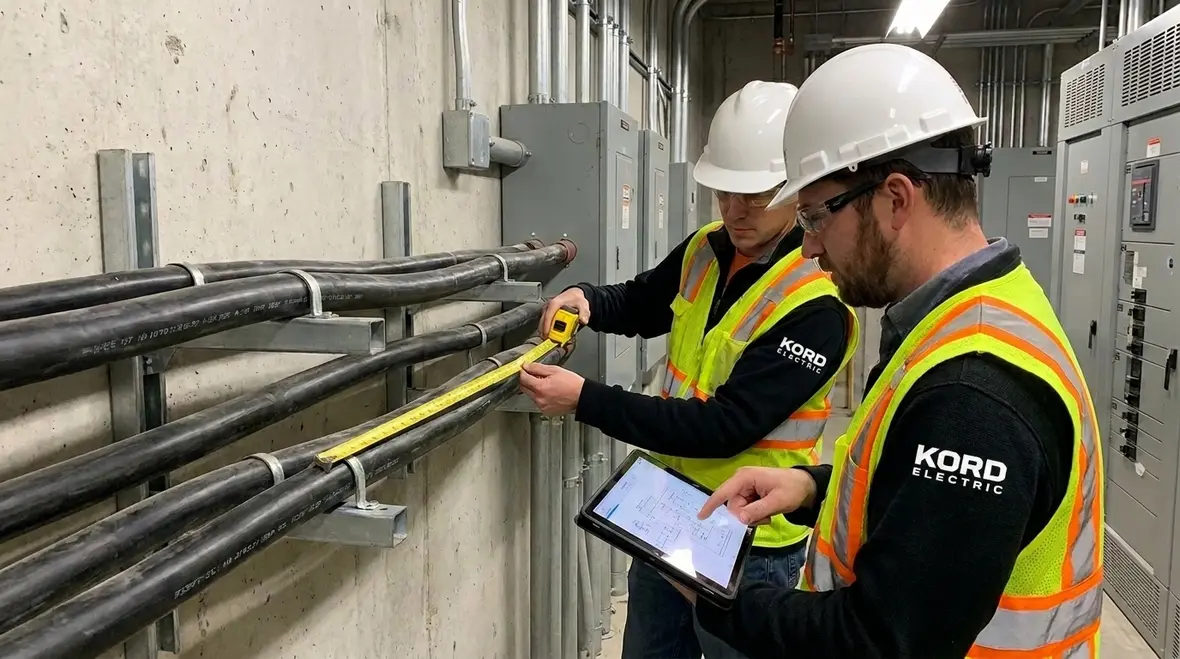
In the first stretch of any electrical design review, one item quietly causes trouble when it is ignored: NFPA 70 Section 225.14, the open conductor spacings rules. In short, these rules tell installers how to keep open conductors far enough apart and positioned correctly so faults do not jump from one conductor to another, or from a conductor to grounded metal. As we at Kord Electric explain to our clients, the spacing numbers do not exist to make life harder. They exist because electricity does what it always does, it follows the easiest path, even when that path was not invited to the job site. And yes, we have seen delays happen because a detail that seemed “small” turned into a whole redo. Our goal is to help your team avoid that kind of surprise.
What Section 225.14 actually protects and where it shows up
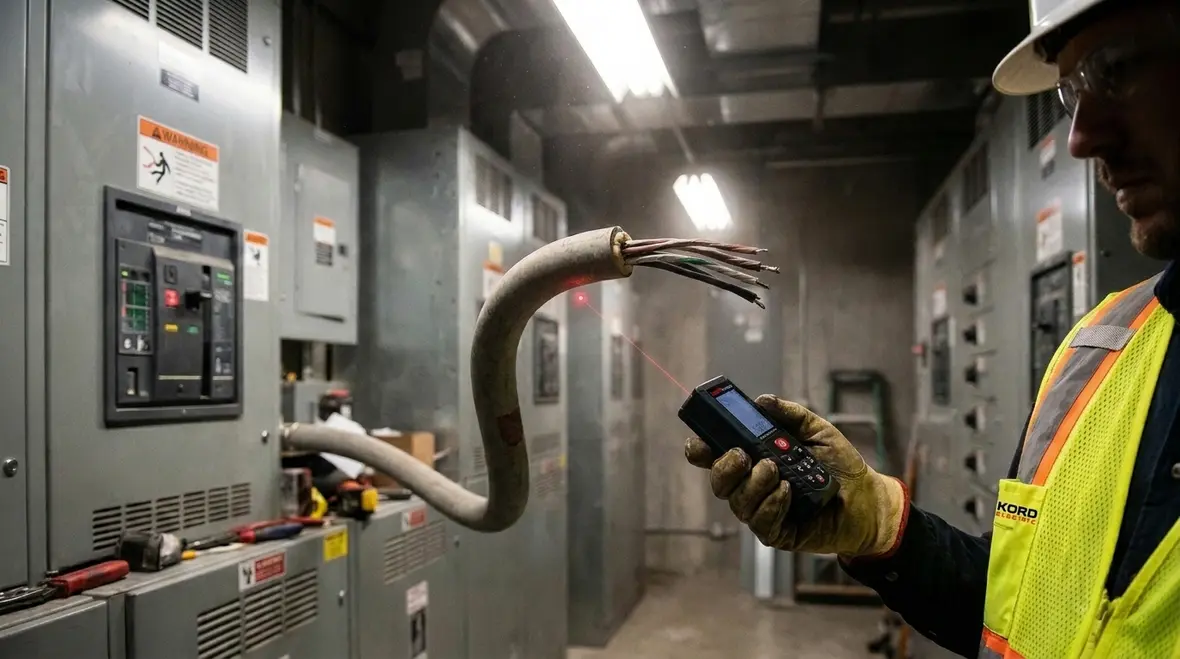
Section 225.14 sits in the NEC framework to manage risk where open conductors exist. In commercial and industrial work, that can include feeders and branch circuits that run in open air or in ventilated spaces, and systems mounted where conductors are not fully enclosed like inside rigid conduit. As a result, the conductors face real world conditions: vibration, building movement, routine maintenance, and the simple fact that people bump things. Therefore, the open conductor spacings rules focus on preventing electrical flashover and limiting the chance that phase to phase or phase to grounded parts will become a conductor’s new favorite hobby.
We also make sure our clients understand an important point our technicians often repeat during walkthroughs: spacing is not only about distance. It is also about the arrangement of conductors. For example, a correct distance between two conductors does not fix a bad routing path that pulls them too close at a bend. Then again, if a contractor treats a wire like spaghetti on a busy lunch break, the layout will drift and the spacing can degrade over time.
Key spacing concepts our expert service staff reviews on site
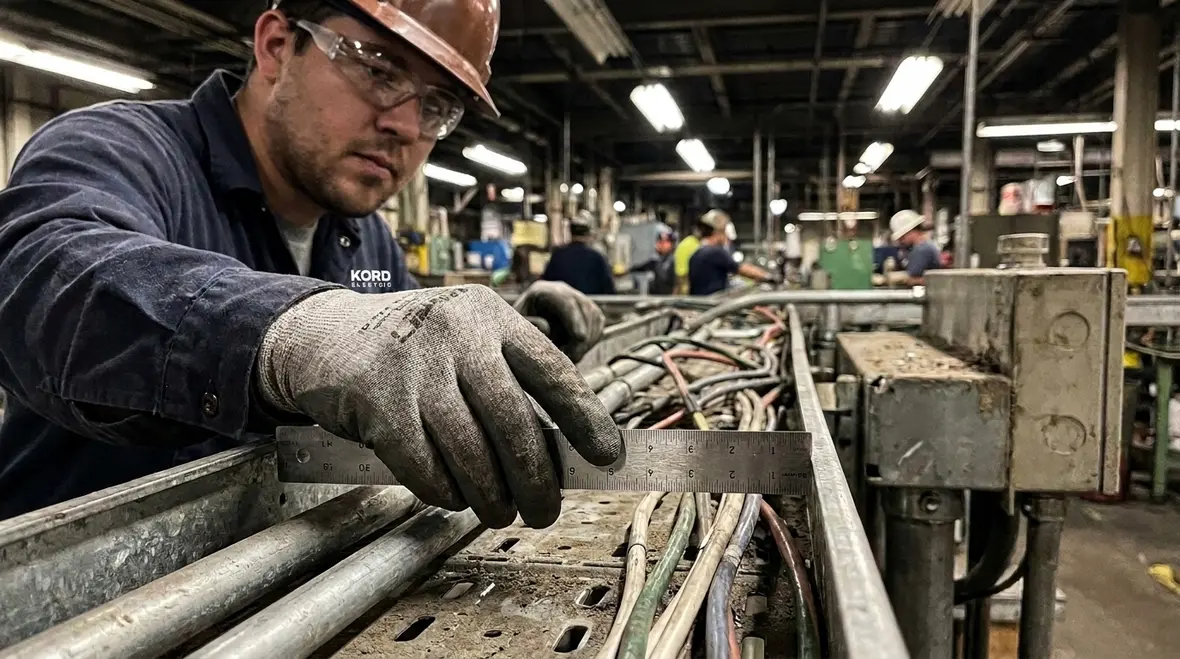
Our experience with major property buildings has taught us to slow down and verify the basics before the checklist, because the basics prevent the expensive surprises. When our technicians review open-conductor work under NFPA 70 Section 225.14, they typically focus on these themes first.
- Conductor separation: We confirm the minimum distance between conductors in the open, not just at one point. We check straight runs and transitions.
- Clearance to grounded metal: We verify spacing to enclosures, structural steel, racks, and other grounded parts. When metal gets close, insulation does not magically get stronger.
- Support and routing: We examine how the conductors are held. Supports must prevent sag, sway, or movement that reduces spacing after installation.
- Impact from installation choices: We look at work practices such as cable routing near openings, cable trays, and field modifications that can shift conductor positions.
In practice, teams often want to “move fast and trust the drawings.” However, drawings do not feel vibration, humidity, or the occasional forklift bump. So, we combine plan review with field verification, and we explain what we see in clear terms our clients can use in coordination meetings.
How we measure distances without guesswork
Once the concept is clear, the next step is measurement. We have learned that contractors sometimes treat spacing like a vague target, similar to estimating time by the length of a song. The real work requires actual measurement and confirmation at the locations that matter.
Our technicians follow a consistent approach that includes:
- Identify conductor type and location: We confirm the installation qualifies as open-conductor work under the NEC context you are using.
- Locate all relevant points: We measure at straight sections, bends, and points where conductors could move.
- Verify against the required open-conductor clearances: We check separation between phases and between conductors and grounded metal parts.
- Document field conditions: We capture what is installed, because inspections and closeout teams care about reality, not hope.
Then, we compare those results to the applicable NEC requirements. If the design intent needs adjustment, we help the electrical contractor choose a method that preserves safety without turning the job into a redesign marathon. And if your facility operates on a tight schedule, we also plan around shutdown windows so you do not pay for downtime twice.
Design coordination for commercial electrical systems
In a commercial or industrial facility, this topic rarely lives in isolation. It connects with raceways, support systems, equipment clearances, and the realities of space coordination in mechanical and electrical drawings. Therefore, we advise owners and design teams to treat the open spacing requirements as an early coordination item.
Here is how Kord Electric usually approaches coordination for major property buildings:
- Early layout review: We review routes and conductor positions during design so teams do not discover conflicts after steel and major equipment go in.
- Support strategy: We align conductor support methods with spacing needs, since support spacing and conductor position are linked.
- Change control: We set a clear process for field changes so spacing does not drift when routing gets “optimized” during installation.
- Cross discipline checks: We coordinate with mechanical and structural teams so grounded steel and brackets do not end up too close to conductors.
We also use plain language in meetings. For example, when someone says, “It will be close but probably fine,” our technicians respond like calm professionals, not like the guy who brings a chainsaw to a knife fight. “Probably fine is not an inspection standard.” We help teams translate NEC requirements into real world layout decisions.
For owners and facility teams who want more context on how these decisions connect to the broader rulebook, we often reference our companion NEC resources such as Understanding NFPA 70: The National Electrical Code Explained for 2026. That way, the NEC open conductor spacings rules you apply under Section 225.14 plug into a bigger, clearer picture of how the code protects your building.
Common failure points we see during inspections
Even careful teams can stumble. Yet many issues repeat, because the same root causes keep showing up. Below are frequent failure points we watch for, especially in fast moving construction phases and in retrofit work.
- Conductor sag or movement: Support spacing or tie methods allow conductor position changes that reduce the required open distances.
- Field routing changes: Crews reroute to avoid obstacles without re checking clearances at bends and transitions.
- Metal proximity surprises: Grounded racks, frames, or structural members get closer than planned, especially near equipment rooms and transfer areas.
- Inconsistent installation quality: Some sections get supported correctly, while others receive shortcuts. That inconsistency can create local spacing violations.
- Documentation gaps: If the installed layout does not match the submitted plans and notes, the inspection story becomes harder to defend.
When our expert service staff spots these, we explain the “why” and the “how to fix it,” not just the “what is wrong.” That way, the contractor knows what to correct on the next pass, not what to guess later.
Where AFCI, coordination, and other code topics fit in
Owners sometimes ask how open conductor spacing relates to other NEC topics. Our answer is simple: spacing rules help manage physical fault risk, while other parts of the NEC address protection, arc prevention, and system behavior. For that reason, even a well protected circuit can still become unsafe if conductors are positioned too close. Therefore, we encourage design teams to treat electrical safety as a layered system: spacing supports physical safety, protection supports fault response, and coordination supports maintainable operations.
And because we serve commercial and industrial facilities and major property buildings, we also consider practical operation. For example, if a facility has frequent maintenance access, our approach helps ensure spacing remains stable through routine work. Nobody wants to redesign wiring every time someone opens an access panel. We aim for long term compliance with fewer surprises.
Frequently asked questions
How we help teams comply without slowing the entire project
In the real world, schedule pressure is real. However, compliance is still non negotiable. Our technicians at Kord Electric help commercial and industrial teams keep work moving by clarifying requirements, checking layouts early, and supporting safe installation practices. We explain the code like it is meant to be understood, step by step, in the language project teams use daily. If you are planning a major property upgrade, retrofit, or new build, we can review your open conductor layouts and help coordinate fixes before inspectors arrive. And yes, we can do it without turning your schedule into a sitcom where everyone panics in the last five minutes.
Because open conductor spacing decisions tie directly into the broader NEC framework, our work on Section 225.14 often overlaps with consulting on code upgrades, equipment layout, and inspection readiness. For owners planning wider improvements, it can be helpful to connect these efforts with broader services such as Los Angeles County electrical services for commercial facilities, so spacing corrections, distribution upgrades, and long-term maintenance support all move in the same direction.
CTA: Talk with Kord Electric before spacing becomes a costly redo
If your project involves open conductors, spacing verification cannot be an afterthought. Kord Electric supports commercial and industrial facilities with expert field checks, clear explanations, and practical coordination for major property buildings. Our technicians help you confirm compliance with NFPA 70 Section 225.14 open conductor spacings rules, document the installed conditions, and reduce the chance of rework. Contact Kord Electric today to schedule a review and keep your electrical work safe, efficient, and inspection ready.


