
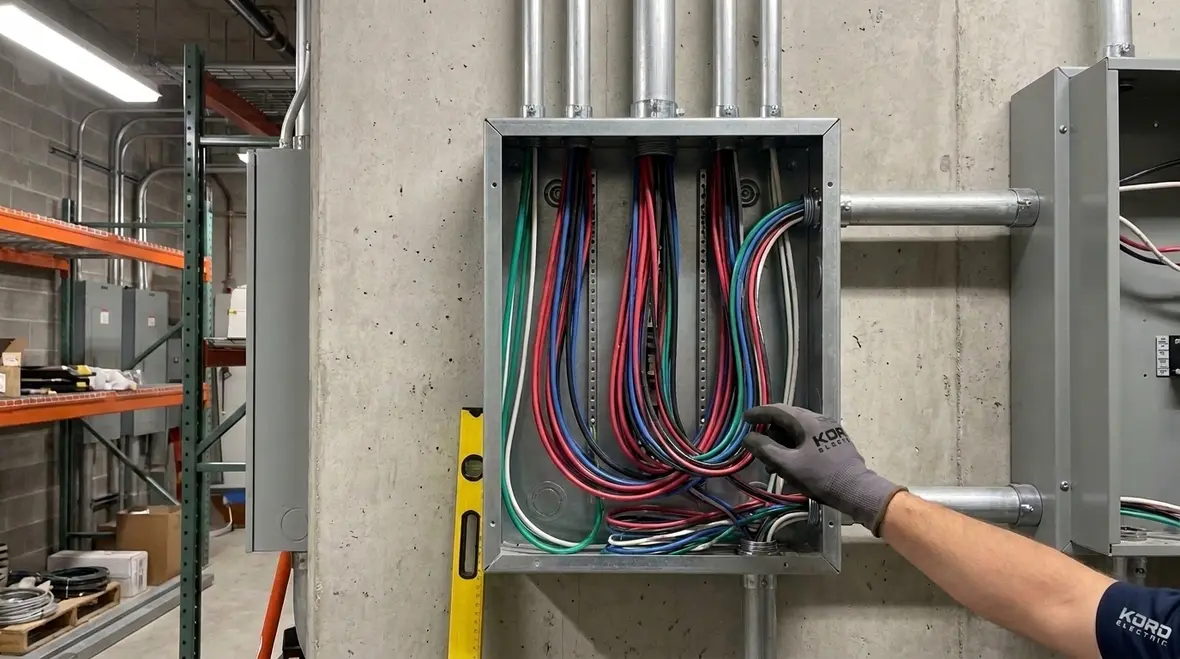
NEC Pull Box Sizing and Junction Box Sizing Explained
NEC pull and junction box sizing, explained by Kord Electric
At Kord Electric, we start every commercial and industrial job with a simple question: are the pull and junction boxes sized the right way under NFPA 70 Section 314.71? We apply NEC pull box sizing early in the planning stage, because box volume and conductor fill affect how safely wires can be pulled, how heat dissipates, and how future maintenance stays possible. Then, we confirm the details with our expert service staff and our technicians, who explain the “why” behind the rules, not just the “what.” After all, nobody wants to wrestle a bundle of conductors like it is a scene from a bad sitcom. We do it clean, measured, and by the book.
In many ways, this approach mirrors how we handle broader code topics across our projects. For teams who want a wider perspective on how NFPA 70 shapes commercial and industrial work, we often pair box sizing discussions with resources like our internal guides on what the National Electrical Code expects from building electrical systems, conductor protection, and long-term maintenance planning.
Why Section 314.71 matters in commercial electrical rooms
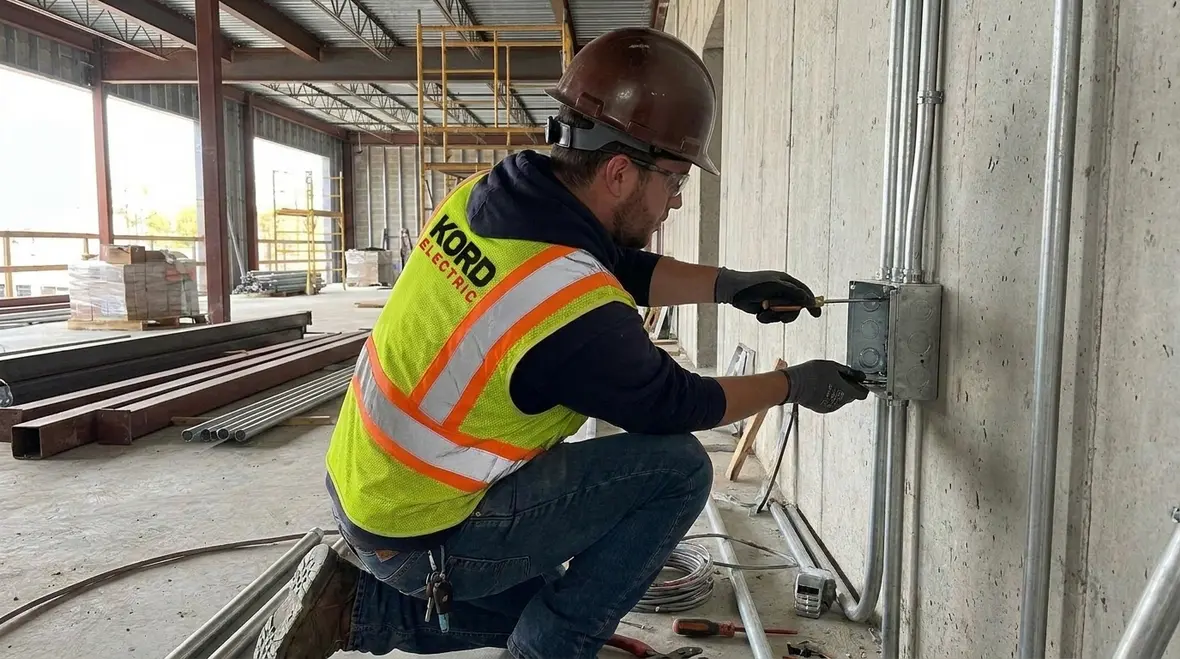
Section 314.71 governs how we size pull and junction boxes for conductor fill. In large facilities, this matters because the electrical room is rarely calm. Crews add circuits over time, controls change, and troubleshooting happens under real constraints like access, heat, and time. Additionally, conduit runs rarely stay “easy.” When boxes run too small, conductors fight the process. As a result, installers use more force than they should, insulation can be stressed, terminations suffer, and inspectors notice.
Moreover, conductor fill connects directly to safety. When boxes get packed beyond the NEC rules, cables can overheat during peak loads. Therefore, we treat sizing like a design input, not an afterthought. We also coordinate with the project team so the box type, wiring method, and future expansion match the plan.
If you have ever watched someone try to fit one more item into a trunk, you already understand the problem. In electrical work, though, “one more” can turn into a compliance issue. Instead of hoping the trunk will close, we verify that conductor counts, box volume, and operating temperature expectations stay aligned with NFPA 70 requirements for commercial and industrial properties.
Step by step: how we apply conduit and conductor fill rules
Our technicians explain the sizing method in the same order they work in the field, and that is how we train our teams. First, we identify what the box is used for: pull box or junction box. Next, we determine the wiring method and count the conductors that enter the box. Then, we use the volume allowed by the NEC tables based on conductor size and insulation type.
After that, we calculate whether the total conductor fill fits within the box volume. If it does not, we do not “make it work.” We correct the plan by selecting a larger enclosure or adjusting the conduit and conductor grouping approach. Finally, we document the selection so the job stays traceable from design through closeout.
In other words, we follow a clear flow. We measure once, we verify the counts, and we avoid guesswork. And yes, we check again at rough in, because electrical work has a way of humbling confident assumptions. On projects where service equipment or load calculations are already in focus, we align this workflow with related NFPA 70 topics, so box sizing supports the same disciplined thinking used for specific purpose load calculations and minimum unit load rules.
We also align pull and junction box sizing with broader system design conversations. When our teams review overall building electrical system design and planning for commercial facilities, they consider how conductor routes, panel locations, and equipment clearances will affect box placement and volume choices. That way, NEC pull box sizing is not an isolated step. It becomes part of a reliable, predictable power plan from day one.
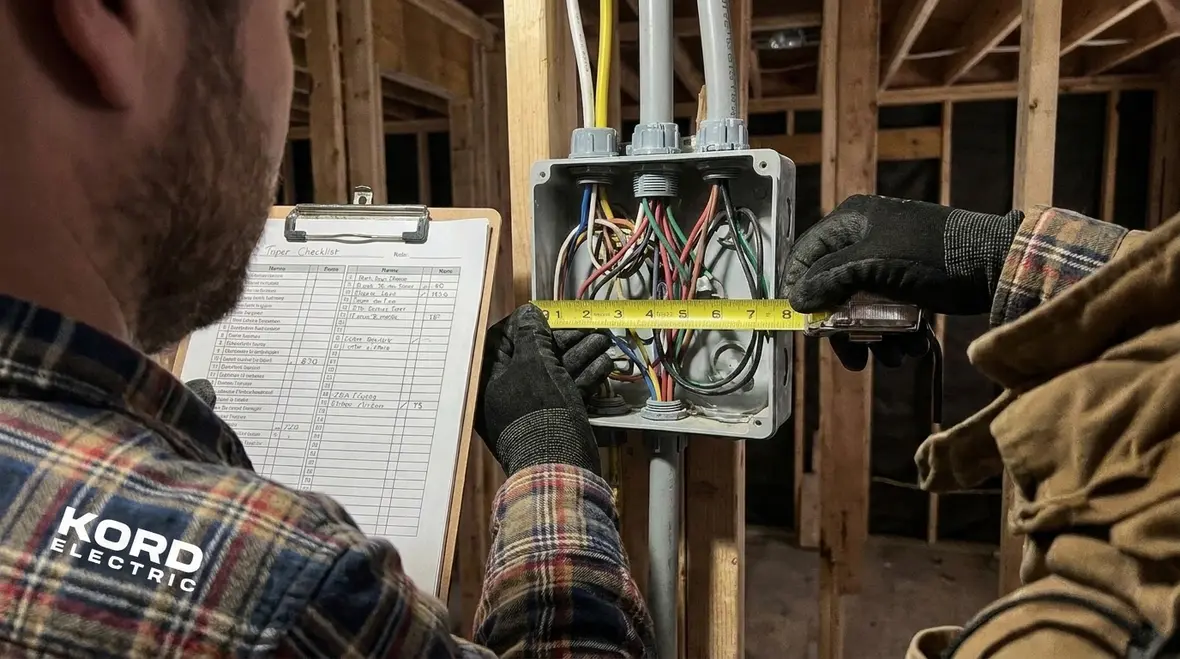
Counting conductors correctly for NEC pull box sizing
Conductor counting is where jobs either stay smooth or spiral into rework. We help clients avoid surprises by focusing on accurate conductor quantity and correct conductor type. So we ask the right details early, such as whether conductors are counted per phase circuit, whether neutrals and grounding conductors apply as expected for the specific wiring scheme, and whether splices occur within the box.
Then, we check insulation type and conductor material so we use the proper adjustment rules. Even minor miscounts can push conductor fill over the NEC limit. Consequently, the box that passed on paper fails on site.
Our expert service staff often explains it this way. If the conductor count is off, every later step becomes fantasy math. If the conductor type is off, heat and handling behavior do not match the assumption. Therefore, we treat counting as a quality control checkpoint, not an administrative task.
We also connect conductor counting to related NEC topics that property teams frequently ask about. For example, when we review how specific purpose load calculations under NFPA 70 Section 120.4 affect panel sizing and feeder planning, we highlight how the same discipline applies at the box level. Accurate counts, realistic assumptions, and honest margins keep conductors within safe temperature and fill limits.
Junction box and pull box differences that affect sizing
In many commercial and industrial buildings, teams mix pull boxes and junction boxes across conduit systems. However, they do not always require the same practical approach in the field. Pull boxes typically help crews pull conductors over longer distances or around bends. Junction boxes typically handle connection points and splices. And because those functions differ, the conductor layout inside the enclosure can also differ.
We ensure the box selection matches the installation intent. That means we consider how the conduits enter the box, how many conductors need to pass through, and how installers will access the conductors for terminations. Additionally, we think about future servicing. A larger box may seem like extra cost today, yet it often reduces service disruption later when electricians add or modify circuits.
To keep the work calm, our technicians explain the practical side of compliance: the goal is not only meeting the rule, but making the installation durable, serviceable, and safe. That same approach guides our work with NEC service equipment barriers, minimum unit load rules, and other NFPA 70 topics that shape how electrical rooms behave under real-world conditions.
On new builds, we often review junction and pull box strategies alongside broader design resources so project teams can see how each decision fits into the entire electrical system. When a facility team reads through our guidance on building electrical system design for commercial facilities, for example, they will see the same theme: use code rules as a planning tool, not just a checkbox at the end.
Common mistakes we see during commercial electrical inspections
Even strong teams make mistakes. We see recurring issues, and we address them early through design review and jobsite checks. First, we often find boxes selected without a full conductor count. Teams sometimes count conduits instead of counting conductors, which creates a mismatch with NEC conductor fill calculations.
Second, we see insulation type errors. If the insulation rating or conductor classification is guessed, the volume calculation becomes wrong. Then, the box may look “close enough,” yet it does not meet the NEC limits.
Third, we see misalignment between drawings and field conditions. Sometimes conduit offsets change, additional conduits get added during coordination, or equipment revisions add circuits. When that happens, the box size choice must be revisited.
Fourth, we see “compression” thinking. Crews may try to cram more conductors than rules allow, or they may force conductors into position. That can damage insulation and complicate troubleshooting later, which always feels like paying for last year’s problems with this year’s budget. We do not do that.
Our inspection teams also coordinate box sizing findings with broader commercial electrical compliance goals. On Los Angeles County projects, for instance, we align NEC pull box sizing with local inspection expectations so property managers avoid last-minute surprises. That coordination work sits alongside our wider Los Angeles County electrical services, which support everything from troubleshooting to panel upgrades and system planning.
How we coordinate NEC pull box sizing in major property projects
At Kord Electric, we serve commercial and industrial facilities and major property buildings. Those projects involve many trades, tight schedules, and long-term maintainability goals. Because of that, we coordinate sizing work like part of the project timeline, not as an optional task.
We work closely with designers, electrical contractors, and facility teams to align box selection with conductor counts, conduit routes, and device requirements. Then, we plan for access and maintenance. We also train our technicians and expert service staff to communicate sizing outcomes clearly, so the whole team understands why a box changes from one size to the next.
For example, we might recommend a larger enclosure when future expansion is likely, such as in warehouse and data heavy environments. We also consider how cable pulls happen. If the pull path needs more careful conductor handling, the box selection must support orderly wiring, not a last minute shove-fest.
And if someone says, “We will just make it fit,” we smile the way a pro smiles at a new apprentice. Then we do the math and show them the reason behind the rule. In many cases, we will point the project team toward related NEC resources, such as detailed explanations of how the National Electrical Code operates for 2026, so everyone sees the bigger picture behind each dimension and detail.
On major properties where electrical upgrades, panel changes, and new equipment installs are already in motion, we link NEC pull box sizing to long-range service planning. That often includes reviewing broader Los Angeles County electrical services for commercial facilities, so the same crews who size boxes properly can also support inspections, repairs, and future expansions with a consistent, code-grounded strategy.
NEC pull box sizing FAQ
Next steps with Kord Electric
If you are planning a commercial electrical system, do not leave pull and junction box sizing for the last minute. We at Kord Electric review conductor counts, confirm enclosure volume needs, and help your team install safely and smoothly under NFPA 70 requirements. Our technicians and expert service staff explain the reasoning in plain terms, so your project stays buildable and inspection ready. Contact us to discuss your facility and wiring plan, and we will help you size boxes right from the start.
For teams who want to see how individual NEC topics fit into the bigger picture, we also recommend reviewing our broader National Electrical Code explanations and project-focused guides on commercial electrical compliance, building electrical system design, and panel upgrades. When those resources are paired with disciplined NEC pull box sizing, facility owners gain a clear map from early planning through long-term service and expansion.
If your property is located in the region, our dedicated Los Angeles County electrical services for commercial facilities can support everything from NEC pull box sizing and junction box planning to troubleshooting, upgrades, and scheduled maintenance. That way, the same team that helps with design and code interpretation can also stand beside you during inspections, repairs, and future projects.


