
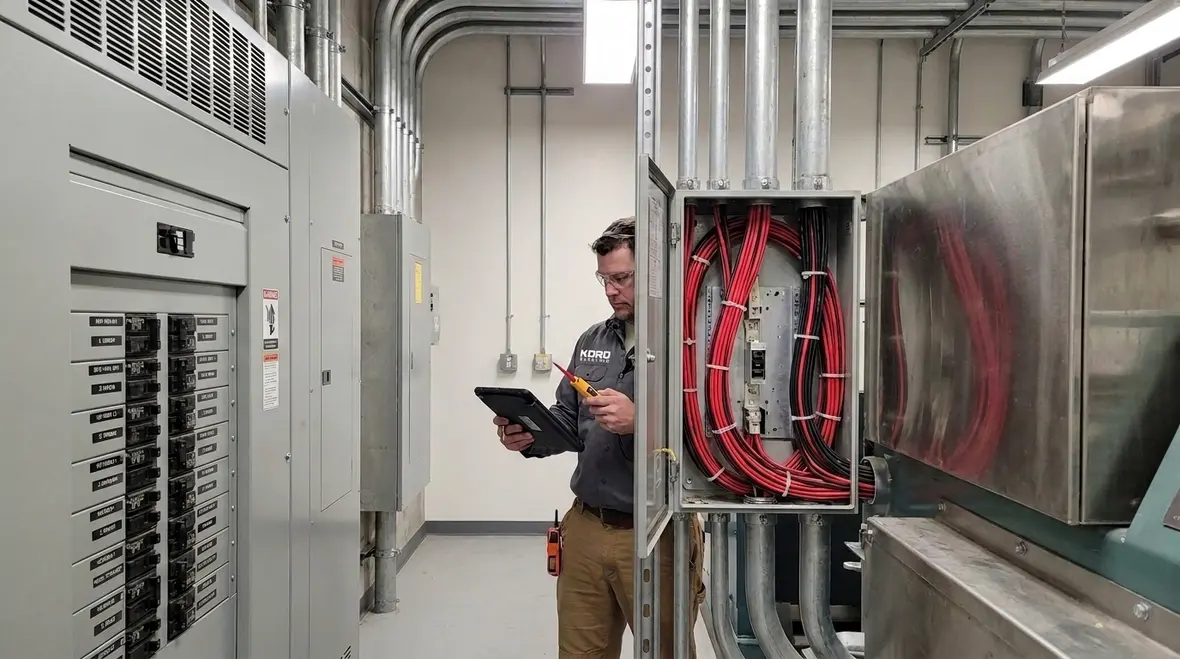
NEC Section 665.5 Dielectric Heating Output Circuit
NEC Section 665.5 dielectric heating output circuit is one of those phrases that sounds like it belongs in a secret lab, but it actually matters in the real world. At Kord Electric, we work with commercial and industrial facilities and major property buildings, so we see how quickly a small electrical detail can turn into a big operational problem. In this article, we explain how the National Electrical Code supports safe designs for dielectric heating systems, how inspectors read these rules, and how our technicians approach the job with careful testing and clear documentation. And yes, we promise not to make you suffer through pure theory like it is a rerun of a bad sitcom. We will keep it business casual, practical, and grounded in the NEC framework.
Why NEC rules matter to commercial dielectric heating systems
When facilities use dielectric heating, they often rely on equipment that demands stable electrical performance. Therefore, the wiring, overcurrent protection, disconnecting means, and grounding practices must match what the NEC expects. Even if a system “seems to work,” we treat safety as the baseline, not the bonus level.
Our expert service staff explains it simply: the NEC is not written to slow projects down. Instead, it provides a common language for designers, electricians, inspectors, and building owners. Because we serve commercial and industrial sites, we focus on how these requirements affect uptime, maintenance planning, and the ability to pass field inspection without last minute surprises.
For added context, we also align with the broader NEC guidance published in the Kord Fire resources, and we keep our internal standards consistent with the code cycle referenced in related updates. When facilities want a more general foundation before diving into specific rules like NEC Section 665.5 dielectric heating output circuit requirements, we often recommend pairing this discussion with education resources such as Understanding NFPA 70: The National Electrical Code Explained for 2026, which walks through how the code structure supports safe, long term planning.

In commercial and industrial properties, dielectric heating systems often sit at the intersection of production goals, process control, and life safety expectations. That is why we treat NEC direction as a framework for uptime, not as a set of abstract electrical trivia. If the output circuit does not support stable operation, facilities eventually feel it in maintenance costs, unplanned shutdowns, or uncomfortable discussions during inspections.
How dielectric heating output circuits get evaluated in the field
In practice, the way an inspector or lead reviewer evaluates dielectric heating wiring depends on how well the design supports safe operation. Consequently, we pay attention to how current flows, how heat affects materials, and how protective devices coordinate with the load.
Our technicians start by reviewing the drawings and the equipment data. Then, we compare the intended installation to what the NEC framework requires for a NEC Section 665.5 dielectric heating output circuit application. We verify conductor sizing, insulation suitability, and proper routing to limit stress points. We also check that disconnecting and control features support safe shutdown under expected conditions.
Now, here is the part people forget. Dielectric heating setups can behave differently from traditional heating loads. So we make sure the output circuitry is treated as part of a system, not as a box that you simply “wire up.” Our approach reduces rework, and it helps teams avoid the classic scenario where the equipment runs, but the documentation does not match the installed reality. Inspectors do not care that it powered on once like a microwave from a dorm room.
During reviews, we also align field expectations with code reading habits. Our team uses structured guides from resources like “How to Read NFPA 70: A Practical Guide to the National Electrical Code” to keep reviews consistent from one facility to another. That gives inspectors and internal reviewers the same thing they want from dielectric heating circuits: predictable behavior, clear labeling, and a transparent path from code text to installed hardware.
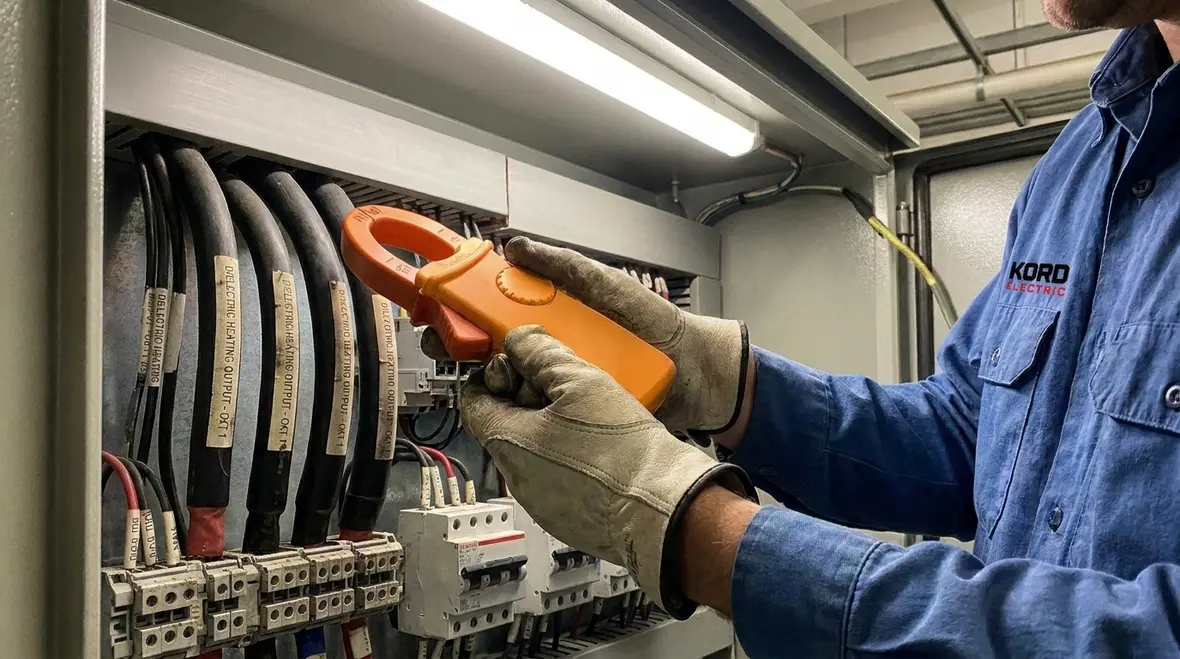
For facilities that operate under tight production windows, we often schedule walk throughs with operations and maintenance staff before final inspection. That gives everyone a chance to confirm access paths, identify where the dielectric heating output circuit intersects with other systems, and verify that field labeling tells a complete story.
Key safety elements behind NEC compliance
To keep things clear, we break compliance into a few practical safety pillars that our team implements on commercial and industrial sites. Each pillar supports safe use, safe maintenance, and reliable operation.
Conductor and insulation fit: We confirm that the insulation type and temperature ratings match the environment and expected electrical stress.
Overcurrent protection coordination: We ensure protection devices match the circuit characteristics so faults do not turn into equipment damage.
Disconnect and control clarity: We verify that shutdown methods remain accessible and function as intended for service work.
Grounding and bonding discipline: We follow correct bonding practices so fault currents have a predictable path.
Installation workmanship: We route, support, and terminate conductors in a way that maintains integrity under heat and vibration.
After that, we document what we did and why. Because when a building has multiple trades, different contractors, and fast schedules, strong documentation prevents confusion and speeds up future troubleshooting.
These same pillars appear across other NEC topics we handle, from feeder sizing to wiring on buildings. Articles like “NFPA 70 Section 215.4 NEC Feeder Minimum Rating Size” and “NFPA 70 Section 225.10 NEC Wiring on Buildings Code” reinforce the idea that safe output circuits do not exist in isolation. They are part of a much larger electrical environment that lives inside walls, above ceilings, and next to life safety systems that need power to function when conditions are at their worst.
When facility managers see these safety elements applied the same way on every project, they get something invaluable: predictability. Predictable design choices lead to predictable maintenance, which leads to fewer surprises on days when nobody has time for another outage.
Design and documentation steps we use before energization
Most problems do not show up during energization. They show up later, when someone tries to maintain the system and the record does not reflect what was installed. Therefore, we handle design review as a normal part of the job, not an optional extra.
Our process typically includes the following steps for major property buildings and industrial facilities:
Review of equipment nameplates, manufacturer instructions, and the electrical distribution plan
Confirmation of circuit routing paths, termination locations, and required supports
Verification of labeling, including circuit identification for safe troubleshooting
Check that grounding and bonding points align with the design intent
Pre energization testing plan aligned to field conditions
Then our technicians execute testing with an eye for both safety and practicality. We check continuity where required, inspect terminations for quality, verify protective device settings, and confirm that control pathways behave as designed. If something does not match the plan, we correct it before it becomes a maintenance headache. This is how we keep facilities running instead of turning electrical rooms into an ongoing mystery novel.
We also reference broader NEC application guides when dielectric heating systems interact with other specialized loads. Resources such as “2026 NEC Application Requirements Guide and NFPA 70 Scope” and “NEC 2026 Code Scope Explained From NFPA 70 90.1” help our teams align dielectric heating output circuit design with overall building scope, so the installation fits both the letter of the code and the way the facility actually operates day to day.
On projects in Los Angeles County and surrounding regions, we often wrap this stage with a coordination review tied to local enforcement and permitting expectations. That way, the NEC Section 665.5 dielectric heating output circuit details support a clean inspection path instead of a last minute scramble.
Testing, commissioning, and maintenance planning
Once the system installs correctly, commissioning becomes the next safety checkpoint. We treat commissioning as a process that must match both the electrical plan and the actual operating behavior of the dielectric heating equipment. In other words, we do not just “flip the switch and hope.”
Our expert service staff explains commissioning for facility teams in simple terms: you want proof that the circuit performs as expected under real conditions, and you want proof that protective systems respond the way the design requires. We coordinate commissioning steps so operations teams can plan downtime without drama.
For maintenance, we build schedules around the risk points we see most often. That means we focus on:
Terminations and connections that can loosen under thermal cycling
Protective devices that need verification against the expected coordination plan
Labeling and documentation updates after any changes
Inspections of grounding and bonding for long term integrity
We also help teams understand what to monitor between service intervals. This supports better decisions during downtime and reduces surprise failures. If your facility wants to improve reliability, this is where the quiet gains show up.
Our NEC oriented maintenance planning also draws from lessons we have written about in other environments, such as data centers and critical power systems. In those articles, we show how steady testing practices, clear labeling, and disciplined documentation protect uptime. The same mindset applies to dielectric heating output circuits, even if the equipment looks nothing like a server rack.
Common compliance mistakes we help teams avoid
Even capable contractors can miss details, especially when schedules tighten. So we share the mistakes we see most in commercial and industrial settings. We do not say this to shame anyone. We say it because prevention costs less than recovery, and recovery costs more than a “quick fix” ever should.
Common issues include these:
Mismatch between drawings and installed wiring: When labels and circuit identifiers fail, troubleshooting slows down.
Inadequate support and routing: Poor support can create stress points at terminations.
Grounding and bonding shortcuts: Missing or incorrect bonding paths lead to safety risks.
Overlooked insulation and temperature limits: Dielectric heating can influence the installation environment.
Unclear disconnect and service access: Maintenance becomes unsafe when access is blocked or mislabeled.
Our team corrects these early. And in the rare case where an equipment or site constraint changes the plan, we update documentation so the facility remains audit ready. That is the kind of discipline that keeps major property buildings compliant, steady, and ready for the next inspection window.
We also encourage facility leaders to treat NEC oriented articles as a cross check on their own habits. Guides such as “NEC Work Space Guarding Rules for Safe Electrical Work” and “NEC Dwelling Unit Load Calculation for Section 120.82” highlight how easily small oversights can grow into larger problems. The same pattern shows up with dielectric heating, where an overlooked routing detail or incomplete label can complicate every future service call.
How Kord Electric supports safe outcomes for facilities
At Kord Electric, we focus on commercial and industrial facilities and major property buildings. That means we bring process discipline, safety checks, and field experience to every dielectric heating related electrical scope we handle.
We also work in partnership with broader fire and electrical guidance sources across our related brands and communities. For example, our fire focused resources explain the NEC in a way that helps stakeholders understand the “why,” not just the “what.” We also stay connected with practical community knowledge through firepumps.org, which supports broader awareness of safe systems operation.
In short, we help teams build electrical systems that meet code intent and operate reliably. We document work, coordinate with stakeholders, and stand behind our installations with a service mindset. Because when your facility depends on uptime, “good enough” is not a business strategy. It is a future incident report.
For facilities across Los Angeles County that want this level of attention applied to all of their electrical systems, not just dielectric heating, our Los Angeles County electrical services offering outlines how we bring NEC aligned planning, installation, and commissioning support to commercial and industrial buildings throughout the region.
FAQ
Final thoughts and call to Kord Electric
If your facility uses dielectric heating equipment, you need electrical work that matches NEC intent and real field conditions. Kord Electric helps commercial and industrial teams design, install, test, and document the NEC Section 665.5 dielectric heating output circuit details that protect people, equipment, and uptime. Our technicians explain the requirements clearly, then we execute with disciplined workmanship and practical commissioning. Contact us to review your project and get a plan that holds up in the field and in the inspection room. Let us help you keep the power on and the risk low.
If you would like to go deeper into how NEC rules shape electrical design decisions beyond dielectric heating, you can also explore related resources on NFPA 70 scope, organization, and application planning across the Kord Electric and Kord Fire knowledge base. Together, these guides support safer decisions before, during, and after construction.


