
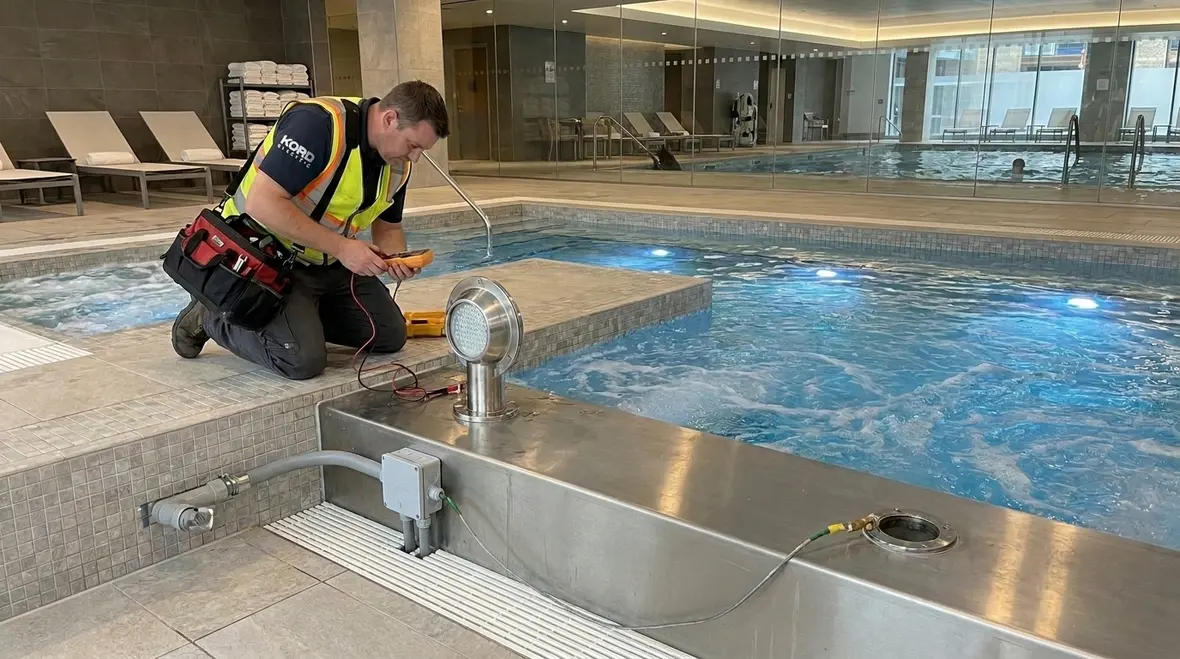
NEC Section 680.33 Spa Luminaire Installation for Commercial Lighting
Commercial and Industrial Spa Lighting Starts With NEC Section 680.33
When we look at life safety and electrical quality for commercial and industrial facilities, we start with the rules that protect people first. That is why we pay special attention to the NEC Section 680.33 spa luminaire installation requirements. These provisions guide how lighting is placed and supported for spa and similar water use areas, so the electrical system stays safe under real-world conditions. And yes, we have seen what happens when “close enough” turns into “oops.” Our technicians and expert service staff explain each step in plain language, because a building does not pass inspections on good intentions.
In this article, we walk through how the National Electrical Code fits the bigger safety picture, then we show how our teams apply those requirements during planning, installation, testing, and ongoing service. We also use real facility scenarios, because a mall, a hotel, a hospital, or a large property does not behave like a textbook.
Why the NEC Exists and How It Protects Large Facilities
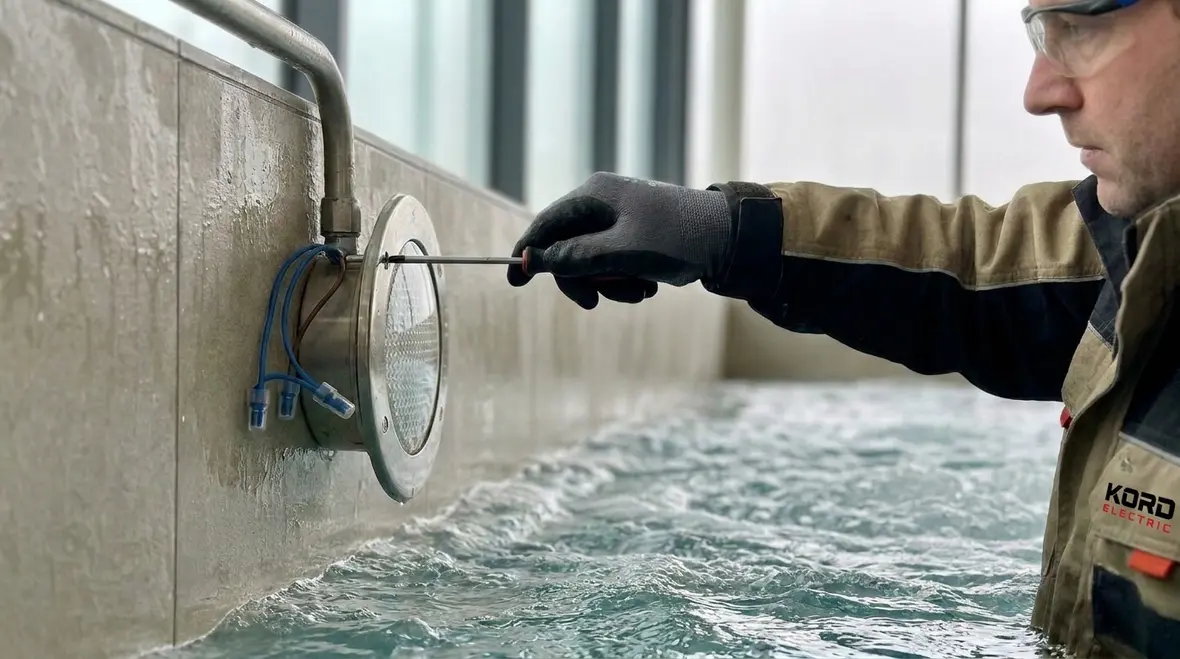
The National Electrical Code sets practical standards for safe electrical design and installation. More importantly, it gives inspectors a shared language. For commercial and industrial sites, that matters because multiple trades work in the same space, and the electrical system has to stay reliable for years. We follow NEC guidance because safety margins matter when equipment runs daily and people move through the building constantly.
Also, the NEC is not static. It evolves to address new products, better wiring methods, and lessons learned from incidents. Therefore, facility owners and property managers should expect that updates can affect everything from lighting layouts to grounding practices. Our expert service staff keeps track of code cycles and explains what changes mean for your building plan, so you do not get stuck in the last-minute scramble stage.
When we talk with commercial clients about spa and water-use lighting, we often connect those conversations to the broader electrical code picture. If you are already mapping out upgrades driven by NFPA 70 and the National Electrical Code for upcoming cycles, you can dig even deeper into how those shifts affect panels, feeders, and distribution by exploring our dedicated guide on understanding NFPA 70 for 2026, which walks through how code changes land in real buildings, not just plan sets.

NEC Compliance Meets Real Design: From Plans to Field
Plans look tidy, but the field has obstacles. So we treat code compliance as a process, not a stamp. First, we review the project scope with the electrical drawings and the site layout. Next, we coordinate with general contractors and other trades to confirm clearances, access routes, and how equipment will be mounted.
Then we verify equipment choices. We do not just ask whether a fixture works. We ask whether it works in wet locations, whether it supports correct bonding and grounding methods, and whether the installation method matches the NEC pathway for that environment. Finally, we test and document the results. That last step is not paperwork for paperwork’s sake. It helps the next team understand what was done and why.
When our technicians explain these steps, they keep it grounded. We point out what can fail during commissioning and how those failure points map back to code details. It feels like common sense, until you remember that common sense is usually what people borrow and never return.
In many large facilities, this plan-to-field process also interacts with broader system design decisions. For example, if your property is going through a major power infrastructure upgrade or a full building electrical system design project, the way you handle spa luminaires should plug into that same strategy for feeders, protective devices, and emergency power. Treating NEC Section 680.33 spa luminaire installation as part of the whole system, not a one-off detail, keeps your drawings honest and your inspection conversations short.
NEC Section 680.33 in Spa Lighting: What We Focus On
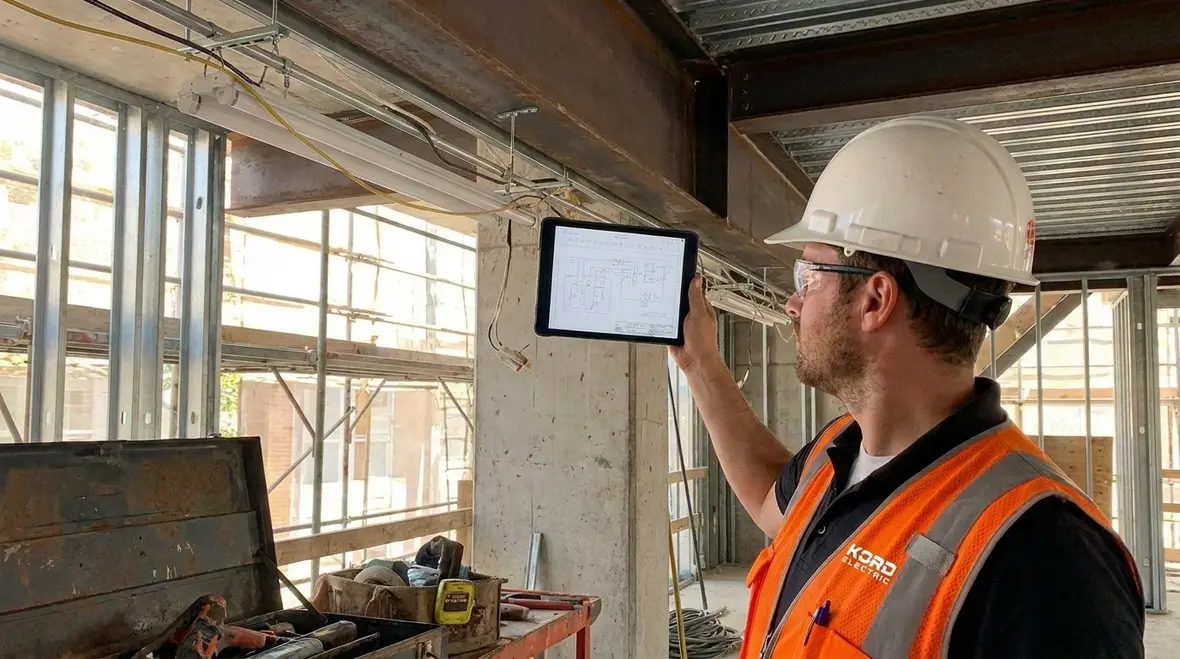
For spa and similar water use areas, NEC Section 680.33 spa luminaire installation focuses on the safe installation of luminaires in locations where water exposure creates added risk. In practical terms, we guide teams on correct fixture mounting, positioning, and the wiring approach that supports safe operation.
Our approach starts with site conditions. We evaluate the spa layout, the wet zone boundaries, and how occupants access the area. Then we confirm the luminaire selection and placement method. We also verify the installation includes proper electrical connections and uses suitable components for damp or wet areas, where applicable. If the building design includes barriers or covers, we make sure the lighting arrangement still meets code intent.
After installation, our technicians test the system using accepted commissioning practices. We also check that the installation details match the approved plan. This reduces the chance of costly rework once the inspection clock starts speeding up, like a streaming service cutting your favorite show short.
In commercial and industrial environments, this focus extends beyond a single spa room. Mixed-use properties may include hotel spas, rooftop wellness decks, therapy pools in healthcare facilities, or employee wellness areas in corporate campuses. Each of those zones has different usage patterns, cleaning routines, and circulation paths. Our teams account for all of that when we interpret NEC Section 680.33 spa luminaire installation requirements, so your lighting behaves safely whether the spa is quiet at dawn or packed on a Friday evening.
Bonding, Grounding, and Wet Location Safety for Pro Facilities
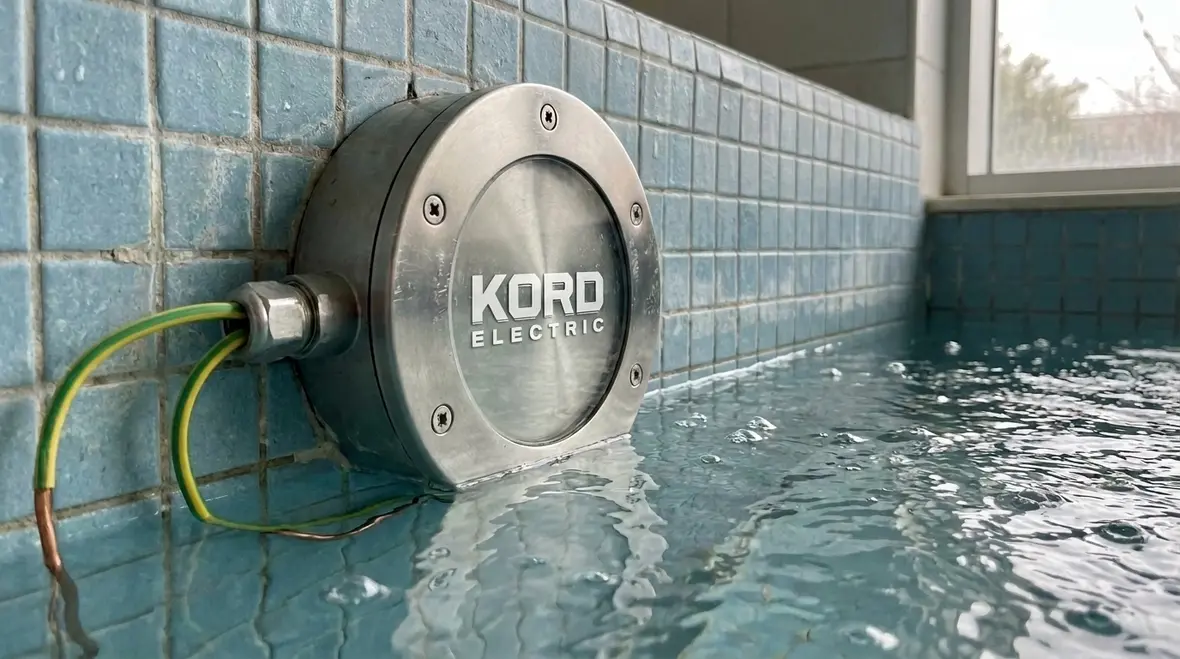
Lighting safety does not live in isolation. Even when the luminaire installation follows the rules, we must still support the full electrical safety chain. That means we focus on bonding and grounding, correct cable routing, and protection against the hazards that wet environments bring.
For commercial and industrial facilities, we watch for common issues that create delayed failures. For example, if connections loosen from vibration or thermal changes, the system can develop faults that appear later. Additionally, if metal parts near water are not properly bonded, the risk grows when a fault occurs.
To prevent that, our expert service staff checks how grounding paths work across equipment, enclosures, and nearby conductive components. We also ensure the wiring method and support system do not create stress points. In the real world, the smallest pressure on a cable can turn into a problem when someone adjusts a panel or performs routine maintenance.
And because we serve major property buildings, we plan around downtime. We coordinate testing windows and installation sequencing so the facility can keep operating. If you run a property at scale, you learn quickly that safety and schedule must share the same stage.
In some projects, spa lighting upgrades arrive alongside broader reliability work. When facilities start thinking about preventive maintenance or electrical asset management across the entire property, they often discover that the same discipline applied to grounding and bonding in spa zones can reduce nuisance trips, unexplained equipment behavior, and emergency calls in other areas too. That is why we fold spa luminaires into a larger conversation about electrical maintenance and risk reduction instead of treating them as a specialty corner that nobody visits until something goes wrong.
How NFPA 70 Changes Affect Planning for 2026 and Beyond
Electrical safety standards update over time, including the National Electrical Code referenced through NFPA 70. When the code shifts, facility teams need to adapt their design documents, procurement decisions, and installation practices. We treat these changes as part of project readiness, not as a surprise event.
Our technicians stay current on NEC themes and enforcement trends, then we translate them into practical next steps for commercial and industrial sites. That includes reviewing whether current equipment still fits the latest expectations, checking whether any installation rules influence the layout, and confirming that documentation will satisfy the inspection process.
We also help property owners understand how these updates affect long-term maintenance. For example, correct installation methods and clear documentation reduce future troubleshooting time. The goal is simple: fewer surprises for owners, faster response for maintenance teams, and safer operation for occupants.
If you want to see how this plays out beyond spa spaces, our in-depth overview on understanding NFPA 70 and the National Electrical Code for 2026 walks through how new requirements cascade through feeders, distribution equipment, and lighting strategies. Connecting that high-level view to the details in NEC Section 680.33 spa luminaire installation gives you a code roadmap that runs from your main service gear all the way to the glow above the waterline.
Code cycles, inspections, and spa upgrades
Commercial properties rarely get to shut down a spa area for weeks while teams experiment. When a new code cycle arrives, we help owners stage lighting and electrical work so it aligns with planned renovations, resurfacing, or mechanical upgrades. That way, NEC-driven changes feel like part of a smart project schedule, not an unwelcome surprise that arrives in the middle of peak season.
Dual Focus: Installation Quality and Ongoing Service for Owners
Commercial and industrial buildings do not just need great installations. They need dependable service after the work ends. That is where we bring the full Kord Electric service approach, and our broader fire and life safety team mindset from Kord Fire and sister resources, because buildings need both electrical safety and fire safety coordination.
During installation, we
- Confirm luminaire and wet area suitability before any wiring starts
- Coordinate mounting and routing so the installation matches NEC intent
- Test, document, and verify safe operation before turnover
After turnover, we
- Support troubleshooting with installation-ready records
- Perform service checks that help prevent long-term faults
- Coordinate with maintenance teams to keep systems running
For multi-site portfolios or large campuses, that dual focus often connects to a regional support model. The same technicians who commission a new spa luminaire installation can later return for electrical troubleshooting, preventive maintenance, or emergency repair work elsewhere on the property. That continuity makes it easier to trace issues, update documentation, and keep small findings from growing into unexpected shutdowns.
Owners who lean into that relationship also gain a clearer view of which upgrades matter most. We explain how targeted improvements in spa lighting, bonding, and control wiring can dovetail with larger investments in panels, feeders, or monitoring. Over time, that turns spa projects from one-off upgrades into part of a broader, campus-wide reliability plan.
Featured FAQ: NEC and Spa Lighting for Commercial Sites
Call Kord Electric for Spa Lighting That Passes and Performs
If your commercial or industrial facility includes spa or water use areas, we can help you build a safe, code-aligned electrical plan and deliver clean installation results. Kord Electric brings seasoned technicians and expert service staff who explain the details, coordinate the work, and confirm safe operation through testing and documentation. Reach out to us early in the project so we can prevent last-minute surprises, satisfy inspections, and keep your property running reliably. Your occupants deserve safe lighting, and your maintenance team deserves less chaos.
For properties across the region, that support extends beyond a single spa project. Our dedicated Los Angeles County electrical services for commercial and industrial facilities give you a single team that can design, install, troubleshoot, and maintain electrical systems across multiple sites. When spa lighting upgrades need to coordinate with panel work, power quality improvements, or emergency repairs, you will not be left stitching together three different contractors and hoping they get along.
We also recognize that electrical safety and fire protection do not live in silos. When spa lighting projects overlap with fire alarm circuits, emergency egress lighting, or other life safety systems, we work in step with fire protection partners to keep the entire plan aligned. That way, inspectors see one coordinated strategy instead of a patchwork of last-minute fixes.
If you are planning a new spa build, a renovation, or a code-driven upgrade, now is the right time to map out your NEC Section 680.33 spa luminaire installation strategy. The earlier we can review your drawings and site conditions, the easier it is to avoid design dead ends and construction delays. Together, we can help your spa lighting pass cleanly, perform reliably, and stay aligned with the evolving National Electrical Code.


