
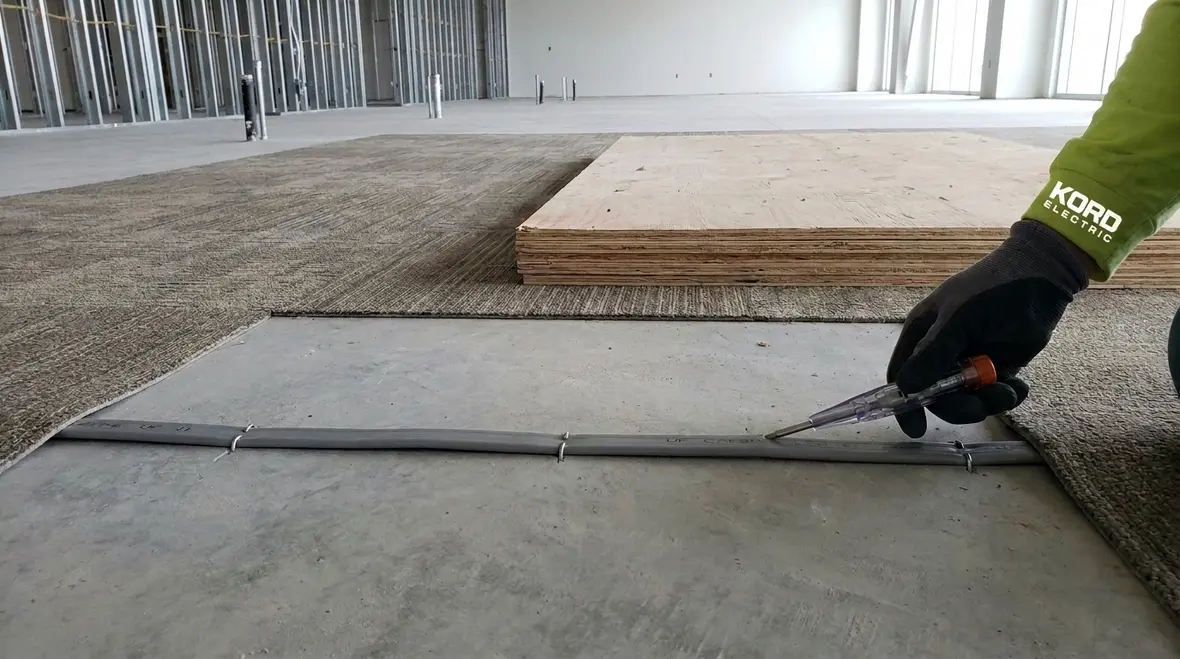
NEC UF Cable Floor Coverings Under Floor 324.41
Kord Electric helps commercial and industrial facilities protect their power systems, and we start by understanding how NEC UF cable floor coverings can be installed safely under indoor finishes. In practice, this means we look closely at NFPA 70 Section 324.41 and how UF cable behaves when it sits beneath floors, offices, and corridors that people actually use every day. And yes, we do hear the same joke from time to time: “If it is under the floor, it cannot cause trouble.” That is the kind of thinking that keeps electricians employed, but it is not how code or safety works. So in this guide, we explain the rule in plain terms, show what our technicians and expert service staff check on site, and help property teams avoid costly problems before they start.
To keep things calm and clear, we will follow the code idea step by step, then translate it into real inspection habits for major commercial and industrial buildings. We also align our guidance with the broader NEC updates discussed across our resources, including our NFPA 70 explainers and code focused fire and safety content from Kord Fire. For facility leaders who want a bigger picture of how the rulebook fits together, our dedicated article on Understanding NFPA 70: The National Electrical Code Explained for 2026 pairs well with this focused look at Section 324.41.
NFPA 70 Section 324.41: what the rule actually requires
Section 324.41 sets expectations for how UF cable can be placed under floor coverings. First, we need to understand the big point: UF cable is a type of nonmetallic underground feeder cable designed to resist moisture and direct burial conditions, but that does not mean every installation detail is optional. The code language aims to manage risk where the cable will not be easily seen, adjusted, or replaced after a finish gets installed.
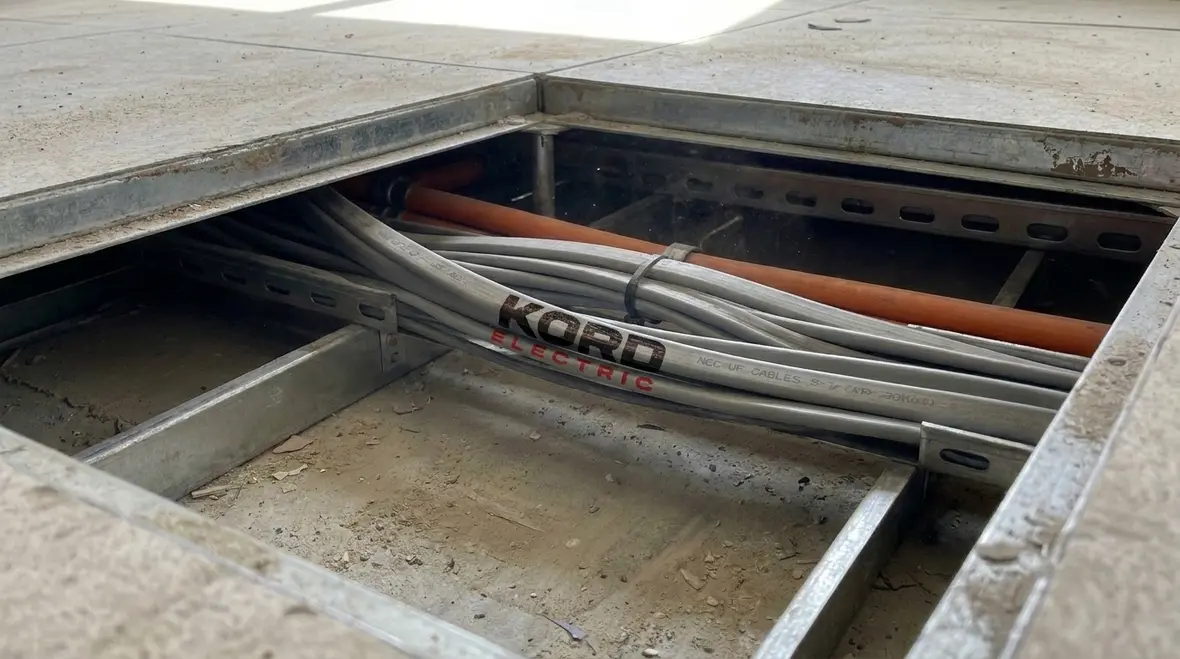
In our experience supporting commercial and industrial facilities, the common failure pattern looks like this: someone installs the cable where it will be difficult to access, the floor gets completed, then the cable later gets damaged by renovations, anchors, new equipment, or careless maintenance. After that, the building staff may find themselves troubleshooting a hidden fault, and the repair cost grows faster than the coffee tab at 2 a.m.
Therefore, when teams follow 324.41, they treat under floor placements as a controlled installation, not a “we will deal with it later” plan. Our expert service staff explains the rationale to facility managers: this section exists to prevent damage and limit risk when the cable is concealed.
How teams should plan UF cable routing under finished floors

Planning matters most before any concrete, tile, or raised floor system goes in. First, we help project leads decide where the cable route will run, where equipment connections will land, and where future access paths should remain possible. Then, we confirm the cable type, cable integrity, and the placement method so it fits the intent of NEC UF cable floor coverings rules.
Next, we advise facilities to map routes in a way that maintenance crews can use later. In other words, we do not just “run a cable and hope.” We document the route, note the destination devices, and capture key details for the building record. That small step later saves a lot of time when someone needs to trace a circuit without tearing up flooring.
Finally, we coordinate with general contractors and trades so the cable does not become a casualty during install. If someone drills near a path that was not clearly marked, the cable does not care that the punch list looked fine yesterday. Our technicians make it a standard practice to verify route location before the finish work starts, then recheck after changes.
We also fit these routing choices into the wider NEC picture. Articles like Kord Electric’s practical guides to NFPA 70 for commercial and industrial buildings help facility leaders see how under floor routing lives alongside requirements for grounding, overcurrent protection, and panel placement. When NEC UF cable floor coverings decisions match that bigger framework, the installation behaves like part of a system, not a one off guess.
Can UF cable sit directly beneath carpet and office finishes?
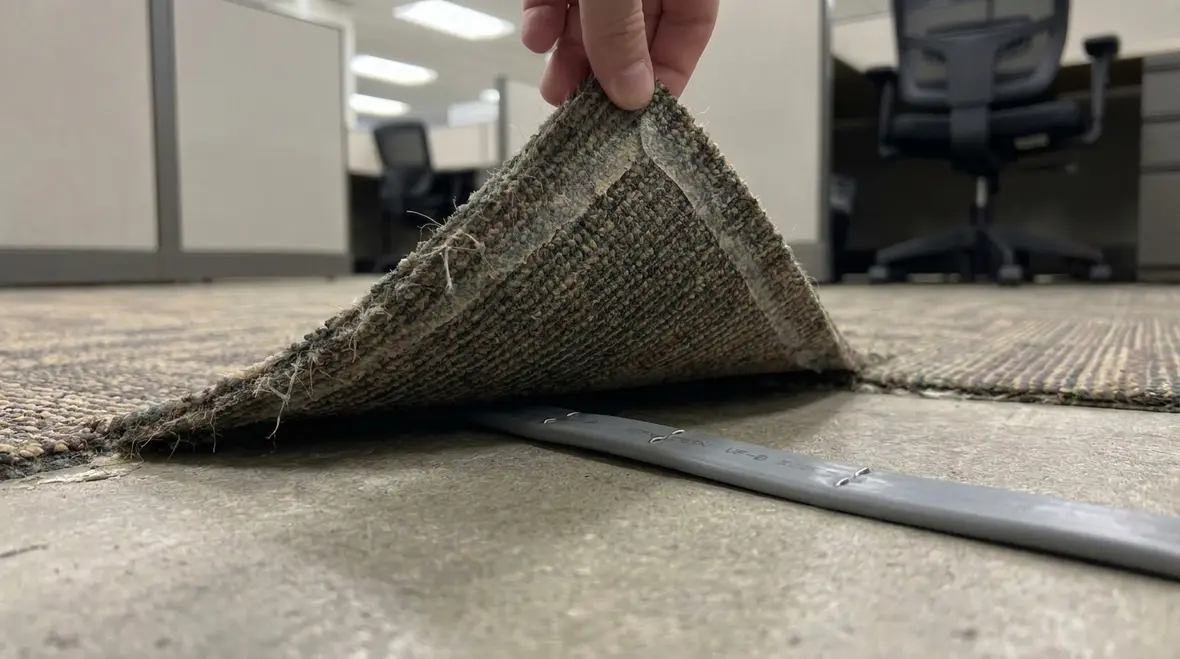
In many commercial spaces, the question becomes simple: can the UF cable be located under the kind of floor covering that the tenant will later build around? Under 324.41, the focus stays on whether the installation meets the requirements for use under floor coverings, including how the cable is protected and where it is placed. The code aims to prevent mechanical damage and to manage the conditions the cable experiences while concealed.
In practical terms, our expert staff looks at the flooring system and how it affects cable protection. For example, some floors include underlayments, adhesives, or moving components. Meanwhile, other spaces include hard surfaces where anchors and equipment legs can create stress points. Also, the building may undergo future reconfigurations, and those changes often happen without asking the electrician first.
So, we advise property teams to treat UF cable placement under finished areas as a controlled condition that must match the approved approach. If the installation cannot be verified with the right protections and placement details, we recommend alternative pathways such as conduits or accessible raceways where code allows. We keep it business focused: reduced risk now means reduced downtime later.
This is also where NEC UF cable floor coverings conversations intersect with other code focused planning topics. When facilities review broader NFPA 70 guidance, such as Kord Electric’s code overview resources and Kord Fire’s fire safety content, they see how under floor decisions affect arc fault behavior, fire loading, and emergency response. Under carpet is never “out of mind” if something goes wrong; it is just harder to reach.
Common installation mistakes we see in major buildings
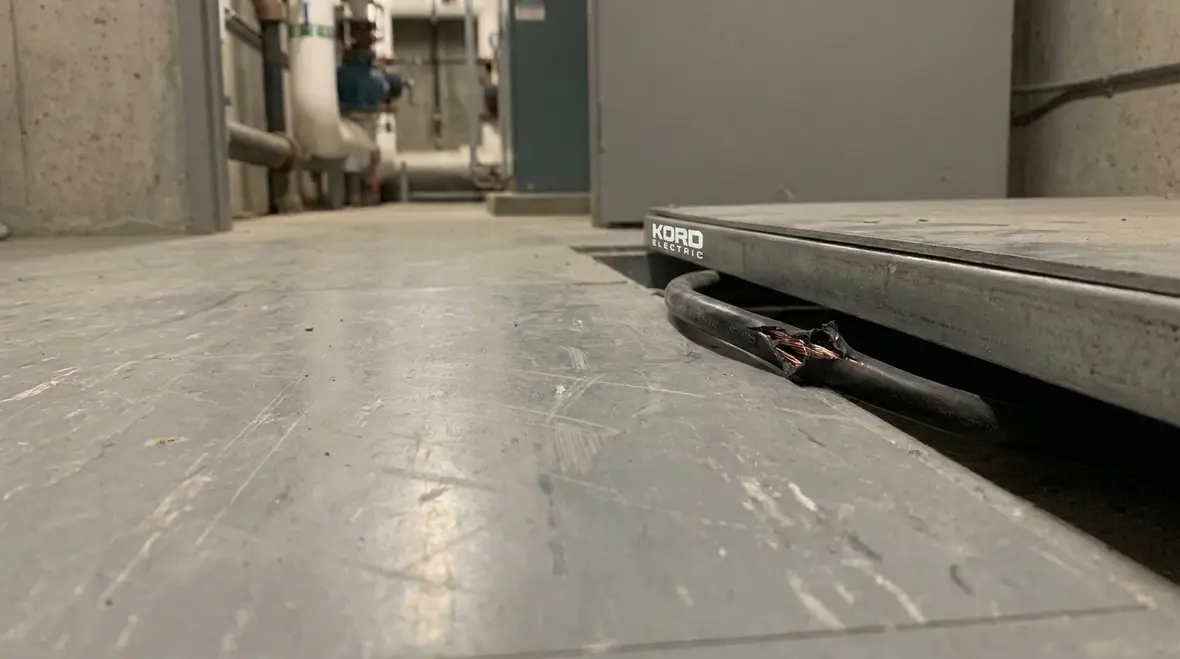
Even solid teams make mistakes, especially under schedule pressure. First, we see cables laid too close to edges or areas where later work commonly happens, like near door hardware, mechanical rooms, or renovation zones. Next, we see cable bends that exceed the practical handling limits during installation. Then, we see insulation or damage that occurs before the floor closes, and the problem gets discovered only when the circuit fails.
Another recurring issue comes from “inventory thinking.” Someone swaps in a cable that looks similar, but it is not the correct type or rating. Then, later, the cable gets concealed and no one can confirm what was installed. That is where our technicians step in and help facilities avoid unknowns by verifying cable labeling and installation conditions before concealment.
Also, teams sometimes forget moisture and temperature realities. Even in indoor commercial and industrial buildings, humidity, cooling cycles, and seasonal shifts can stress materials. If the placement method does not align with the intended under floor conditions, the cable can age faster than expected. As a result, we recommend careful checking of the installation environment and supporting documentation.
And yes, we occasionally hear the classic line: “It is under a floor, so it is safe.” We respond, politely at first and then with a little extra baritone authority, that electricity does not respect our optimism. It respects physics and code. That same attitude shapes how we approach other NEC topics, from feeder guarding to grounding of nonelectrical equipment, because every concealed decision shows up later in reliability statistics and inspection reports.
What our technicians verify before the floor gets closed
Our service model for Kord Electric focuses on verification. First, our technicians confirm the correct cable choice, including that it matches the intended system and that the cable is installed as required for use beneath floor coverings. Then, we check route continuity, secure placement, and protection against damage during and after installation.
Next, we verify that the installation plan supports future maintenance. We do not mean future maintenance that involves demolition. We mean access through planned pathways, labeling that makes sense, and records that the next team can read. Because in commercial life, there is always a next team. Tenants change, operations shift, and contractors rotate like a playlist you never asked for.
Then we explain what we found in plain language. Our expert service staff often uses a simple approach: show what the cable is doing, show where it travels, and show how the building can avoid stressing it later. If the facility wants to expand or modify in the future, we align installation routes with that reality instead of fighting it.
And we keep all of this aimed at commercial and industrial facilities and major property buildings. We are not trying to handle small, one off residential installs. We focus on the places where uptime matters, where compliance matters, and where repairs cost real money.
For property teams planning larger upgrades or renovations, this verification mindset fits naturally alongside services like electrical code upgrade consulting and commercial electrical load testing. When UF cable, feeders, raceways, and equipment grounding all move in the same NEC aligned direction, the building has fewer “mystery outages” and more predictable inspections.
Safety, compliance, and documentation for property teams
Safety and compliance go together, but documentation makes compliance usable. First, we recommend that property teams keep installation records tied to drawings and equipment lists. That way, if a tenant buildout later adds fixtures or new racks, the maintenance crew can see where the cable runs before they drill.
Second, we support a compliance mindset that goes beyond “it passed.” In real building operations, the question becomes: can we prove how and why the installation meets code intent? Our technicians help ensure the cable route details, device terminations, and installation conditions are clear enough to support inspections and future troubleshooting.
Third, we encourage training for facility staff. When teams understand why NEC UF cable floor coverings rules matter, they reduce the likelihood of accidental damage during normal work. For example, if an operations manager knows how cables can be concealed under finishes, they plan renovations differently. That is how we reduce downtime and avoid surprise callouts.
To support this broader compliance approach, Kord Electric works with code and safety knowledge that also appears in our Kord Fire resources, including national electrical code overviews and the way code updates affect fire and electrical risk planning. Then, we apply that knowledge to real installations on major buildings, where the stakes are high and the margin for error is low.
If you want to see how this under floor discussion connects to the larger code landscape, our NFPA 70 explainers on topics like feeder barriers, raceways to drain high voltage conductors, and grounding for nonelectrical equipment show how every segment of the electrical system depends on thoughtful, documented decisions. NEC UF cable floor coverings just happen to be the part that disappears under your shoes.
FAQ
Let us help you verify under floor cable compliance
When a facility hides UF cable beneath floor coverings, the project should not hide the details. Kord Electric helps commercial and industrial property teams plan, install, and verify NEC UF cable floor coverings requirements with documentation and technician level checks before finishes close in. If you manage a major building and want fewer surprises during renovations, troubleshooting, or inspections, contact us. Our expert service staff will explain what we see, what it means, and what action keeps your power system safe and reliable.
For organizations within Southern California and beyond, these under floor decisions often show up again when it is time for electrical infrastructure modernization, commercial load testing, or fire prevention reviews. That is why we treat NEC UF cable floor coverings as part of the same conversation we have about panel upgrades, feeder protection, and commercial electrical systems for modern buildings.
If your facility is planning a renovation, it can be helpful to pair this under floor review with structured electrical code upgrade consulting. Aligning NEC UF cable floor coverings choices with the rest of your project’s code strategy keeps inspection days calmer and reduces the risk of late stage design changes.
And for property teams running complex sites in Southern California, our dedicated Los Angeles County electrical services support everything from targeted NEC compliance checks to broader electrical planning. That way, under floor details, switchgear behavior, and fire safety all move in the same safe, reliable direction.
Dual column note for teams who like fast scanning:
What we verify
- Correct cable type and condition
- Routing integrity and protection
- Installation details before concealment
- Clear documentation for future work
Why it matters
- Less hidden damage risk
- Faster troubleshooting later
- Lower repair and downtime costs
- Cleaner inspection readiness
If you would like a deeper dive into the rulebook that shapes all of this, you can explore our NEC explainers, including our guide to the National Electrical Code for 2026, which walks through how NFPA 70 ties into everything from NEC UF cable floor coverings to high voltage raceways and fixed equipment grounding. Together, these resources and our field work keep your floors finished, your circuits stable, and your electrical inspections pleasantly uneventful.
When you are ready to turn that knowledge into a real project plan, our technicians and expert service staff are ready to help.


