
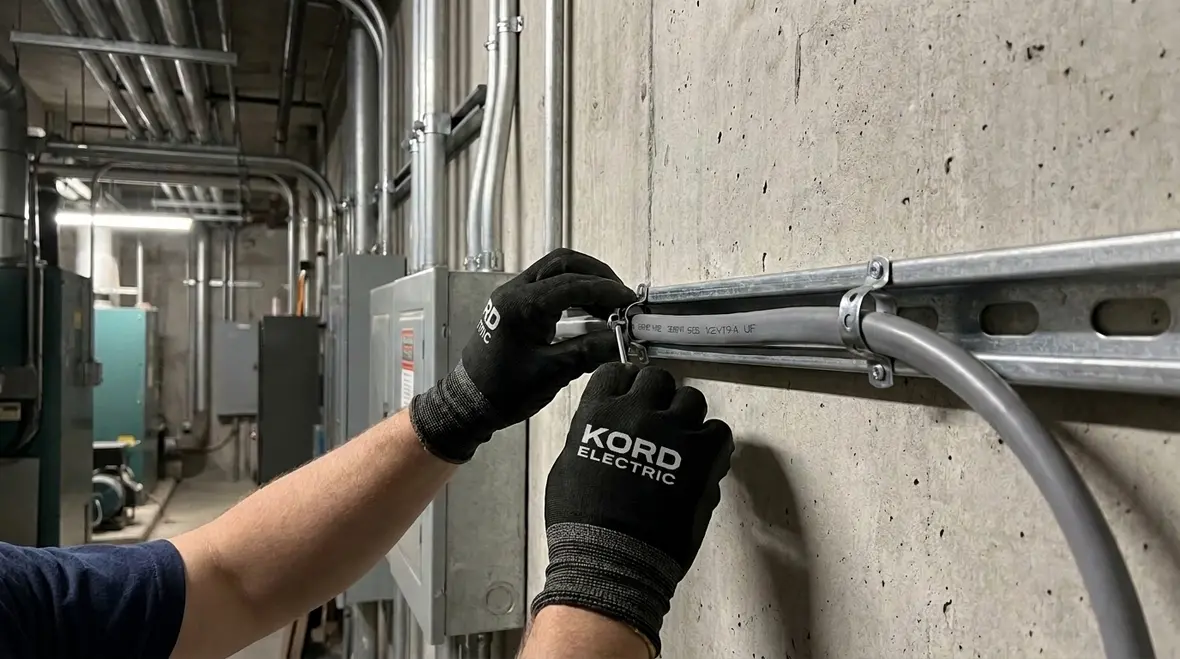
NFPA 70 324.30 UF Cable Securing Support Requirements
Kord Electric often gets called in when a site team wants UF cable to run clean, safe, and code right the first time. In our work, we see that NEC UF cable securing supporting is not a “nice to have” detail. It is the kind of requirement that keeps crews from chasing problems later, after the cable is buried under floors, tucked behind walls, or squeezed through tight plant rooms. And yes, people do try to “make it work” with improvised supports. That approach usually ends the way a sitcom ends: with a plot twist and a bill.
To help facilities teams, Kord Electric explains what NFPA 70 Section 324.30 requires, why those rules exist, and how our technicians verify compliance on commercial and industrial projects. We also outline practical installation steps, so your electrical system stays reliable, inspectable, and safe.
For facilities that want to connect these UF cable rules to the bigger NEC picture, Kord Electric also points readers to our broader resources like Understanding NFPA 70: The National Electrical Code Explained for 2026, which explains how the code shapes design, installation, and inspection across commercial and industrial buildings.
NFPA 70 324.30: what it demands in plain terms
In plain terms, NFPA 70 Section 324.30 focuses on how installers secure and support UF cable. The key idea is simple: once UF cable is placed, it cannot be treated like a casual extension cord. Instead, it must stay in the right position and remain protected from damage that can happen from movement, load, heat, or accidental contact.
Additionally, this section ties into the larger NEC theme for wiring methods: electrical systems must match the environment. Therefore, when conditions include vibration, physical stress, or routing through areas where people and equipment move, proper support matters even more. Kord Electric technicians approach this step like we do every other compliance task: slow down, follow the code path, and document what we do so inspections do not turn into a surprise meeting.
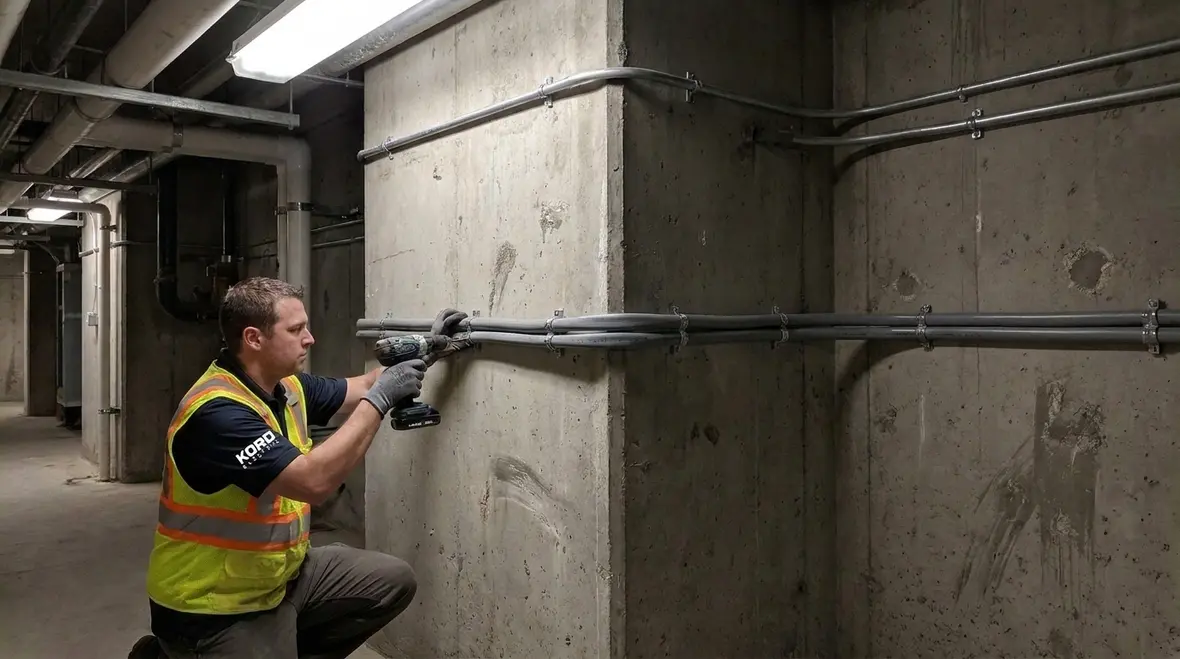
When teams understand that UF cable support is part of workmanship standards, not just appearance, they start to see why NFPA 70 repeats the same theme across articles and sections: protect conductors, avoid strain, and keep systems serviceable for their entire life, not just the first inspection.
Why proper securing and support prevents real world failures
Most problems linked to UF cable do not start as “electrical” issues. Instead, they begin as physical issues. Over time, cable can rub against surfaces, sag under its own weight, or shift because a route was planned without considering movement. Then, insulation can wear faster than anyone expects, especially in commercial and industrial settings where carts, lifts, and maintenance work create constant micro disturbance.
Moreover, poorly secured cable can create stress points at bends and entry points. Those stress points often behave like the weak links in a chain. As a result, the system becomes harder to troubleshoot, and repairs may involve more demolition than your schedule can afford. In our experience at Kord Electric, facilities teams appreciate when we show the “cause and effect” story clearly during the walkthrough. Our expert service staff explains what inspectors look for, and we connect that to what actually happens in the field.
This is also where broader workmanship standards like those in NFPA 70 Section 110.7 come into play. When UF cable is supported with the same care as terminations, grounding, and equipment placement, you reduce the number of weak points that can quietly grow into outages, nuisance trips, or safety issues months or years after the original job is closed out.
When you look back at a failure report, the story is usually boring: a cable rubbed here, sagged there, or pulled tight around a corner until the insulation gave up. Proper NEC UF cable securing supporting practices are the quiet fix that keeps those stories from ever getting written.
Routing and placement: how technicians plan before they fasten
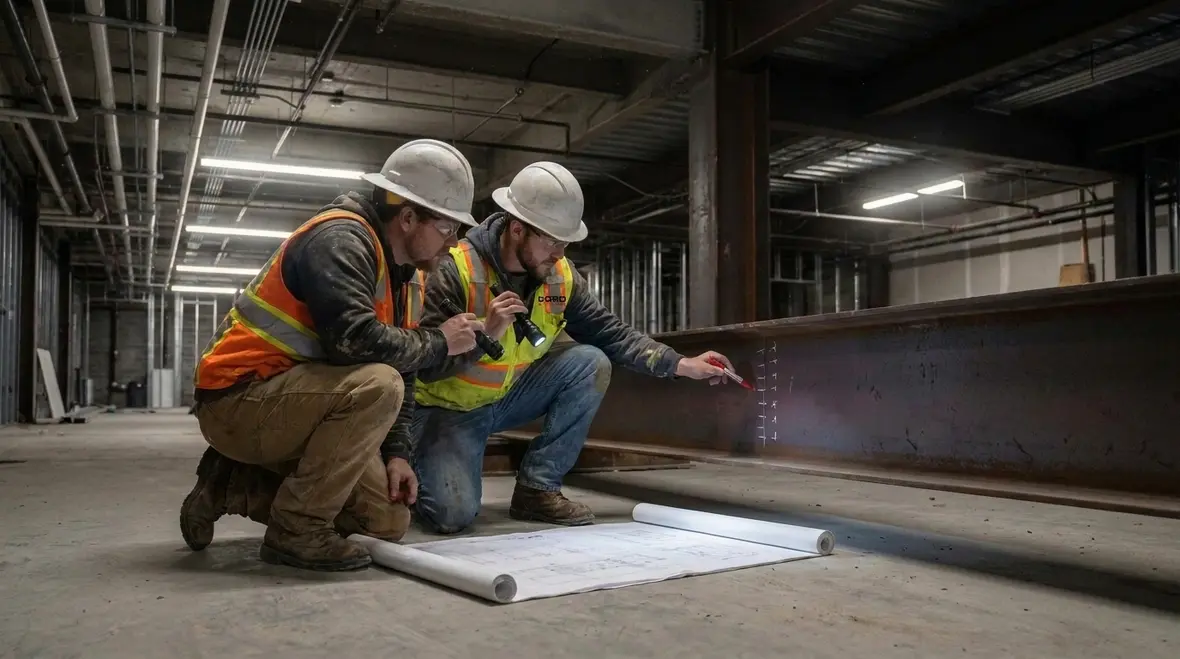
Before we install or verify cable routing, Kord Electric looks at how the cable will travel and what it will face. First, we review the path length, the route geometry, and the locations where the cable may cross structural members or pass near equipment. Then, we check whether the cable will run where it can be struck, where it will sit close to heat sources, or where it may be exposed to moisture or ongoing washdown.
Next, our technicians map support points based on the project layout. Even when installers want to move quickly, we keep the plan front and center. This prevents the classic mistake: fastening the cable at convenient spots instead of planned points. And in the real world, “convenient” and “code compliant” are often strangers, like two celebrities who never meet at the same event.
For complex projects, we often coordinate routing and support with other disciplines. If mechanical or process lines share the same corridor, we plan clearance and support so UF cable is not the last-minute guest squeezed into leftover space. That planning mindset helps when the Authority Having Jurisdiction walks the site and compares real routing against NFPA 70 expectations for safe, accessible wiring methods.
By treating routing and placement as part of design, not just installation, Kord Electric helps facilities avoid the reroute conversations that usually start with “we had to move that because there was no room left.” Planned support spacing, clearances, and protection keep UF cable out of those last-minute compromises.
How we interpret securing and support on site
When Kord Electric works under NFPA 70 rules for wiring methods, we treat Section 324.30 as a structure, not a checklist. Therefore, we focus on three outcomes: the cable stays secure, it remains supported against damage, and it avoids unnecessary strain.
To do that, our teams typically select appropriate fasteners, clips, and mounting methods that hold the cable reliably. Then, we position them so the cable does not pull tight at bends or create sagging spans. We also verify that any transition points, like where the cable enters an enclosure or follows a change in direction, receive proper attention. If the route changes, the support strategy changes too. That approach keeps the cable aligned and reduces stress during thermal expansion and vibration.
Finally, we remember this is a commercial and industrial job, not a home remodel. Facilities often require clear labeling, clean routing, and documented install practices that support long term maintenance. Our expert service staff explains those expectations in a way that helps facility managers and electrical contractors coordinate work without rework.
On many projects, we also tie this work to related planning for future upgrades and code updates. When a facility knows that UF cable routes are already supported correctly and documented, it becomes easier to adapt when new equipment, new feeders, or new NEC guidance shows up in the next project cycle.
Common field mistakes we help facilities avoid
Many issues show up because installers rush through securing and support, or because they assume that UF cable is durable enough to “handle itself.” In reality, UF cable can still be damaged by abrasion, compression, or movement. So, we address the most common mistakes we see.
- Skipping support intervals: when cable is left to “span” too far, sagging and stress points form.
- Using the wrong type of fastener: not all clips grip the cable the same way, and some do not hold under vibration.
- Fastening too close to bends: this can create strain at tight corners instead of distributing it.
- Routing through high traffic zones without added protection: then physical contact becomes inevitable.
- Ignoring environmental risks: if the route faces moisture or heat, support and protection need to match the location.
To be fair, some teams make these mistakes because schedules run tight. Yet, when we step in early, we help them correct the course before the installation becomes permanent. That often saves money on labor and downtime, not to mention the time wasted explaining the issue to the next trade that arrives like it just got a “turns out it was your fault” message.
We also see hidden risks when UF cable support is treated differently from other wiring methods. The same care you would apply to tray cable, MC, or MV circuits needs to show up here too. When facilities adopt a consistent standard, inspectors notice, and trouble calls tend to quiet down.
Commercial and industrial compliance: what Kord Electric documents
On major property buildings, compliance needs to survive beyond rough inspections. Kord Electric helps clients keep the system maintainable. First, we ensure the securing and support approach aligns with NFPA 70 requirements for UF cable. Then, we focus on how the install will look and function during future service.
Next, we coordinate with facility teams so our documentation matches how they manage assets. This matters because industrial sites often use a maintenance system where technicians need to identify circuits quickly. Therefore, we verify that the cable route is clear, support points remain visible when possible, and install practices support safe access.
And yes, our technicians also explain these choices to the people on site. When a facility manager asks why we chose a specific support method, we do not hide behind buzzwords. We explain how it connects to reliability, safety, and inspection readiness. It is like having a calm guide in a theme park maze, except the prizes are fewer failures and fewer emergency calls.
For additional NEC context, Kord Electric also points teams to code guidance and related explanations published through our resources, including our NEC overview and related materials on wiring methods, workmanship, and AHJ enforcement. Those references help clients understand how Section 324.30 fits into the bigger NEC picture, and how different wiring methods connect to inspection expectations.
If your facility is planning a larger upgrade or renovation, this UF cable work also ties neatly into broader Los Angeles County electrical services support from Kord Electric, where our team coordinates code consulting, installation, testing, and documentation across the entire project scope.
FAQ: quick answers for featured snippets
Call Kord Electric for code verified UF cable support
Kord Electric helps commercial and industrial facilities install and verify UF cable securing and support so the work matches NFPA 70 Section 324.30 and real site needs. Our technicians take a careful, documented approach, and our expert service staff explains the “why” so your team understands what matters during inspection and future maintenance. If you want a calmer install process and fewer surprises later, contact Kord Electric today. We will review your route, support plan, and compliance needs with a steady hand and a clear checklist.
Whether you are planning a focused UF cable run or a broader electrical upgrade, we align our work with NFPA 70 and your facility’s operational reality. From support spacing and fastening hardware to labeling, documentation, and inspection readiness, our goal is simple: keep your wiring methods clean, compliant, and ready for the next phase of your building’s story.


