
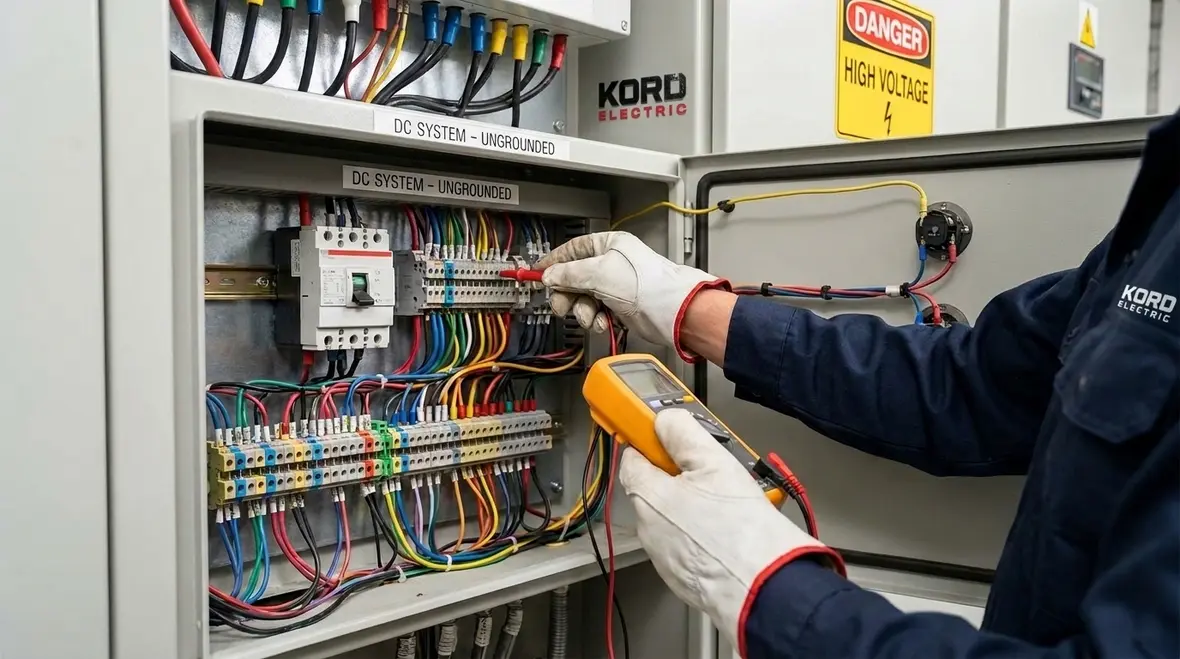
NEC Ungrounded DC Systems for Commercial and Industrial Facilities
NEC ungrounded DC systems in commercial and industrial facilities
At Kord Electric, we service commercial and industrial facilities, and we plan electrical safety the way others plan their coffee. In the first 100 to 150 words, the point is simple: NEC ungrounded DC systems can be used for separately derived DC power, and they come with clear rules in NFPA 70 Section 250.169. When other providers treat this topic like a bedtime story, our expert service staff treat it like a job site reality. We explain what the code requires, we confirm the design intent, and then we help your team keep the system safe and reliable. Yes, electricity is serious. However, the work does not have to feel like a tax form written by lightning.
In commercial and industrial buildings, DC power increasingly supports controls, storage, and specialty equipment. That means ungrounded DC operation cannot live in the fine print. It should show up in design meetings, commissioning checklists, and maintenance planning. Our technicians treat NEC ungrounded DC systems as living systems that need clear intent, careful installation, and honest feedback when conditions change. That is how facilities turn a complex code topic into a predictable, maintainable part of the electrical infrastructure.
What NFPA 70 Section 250.169 really requires
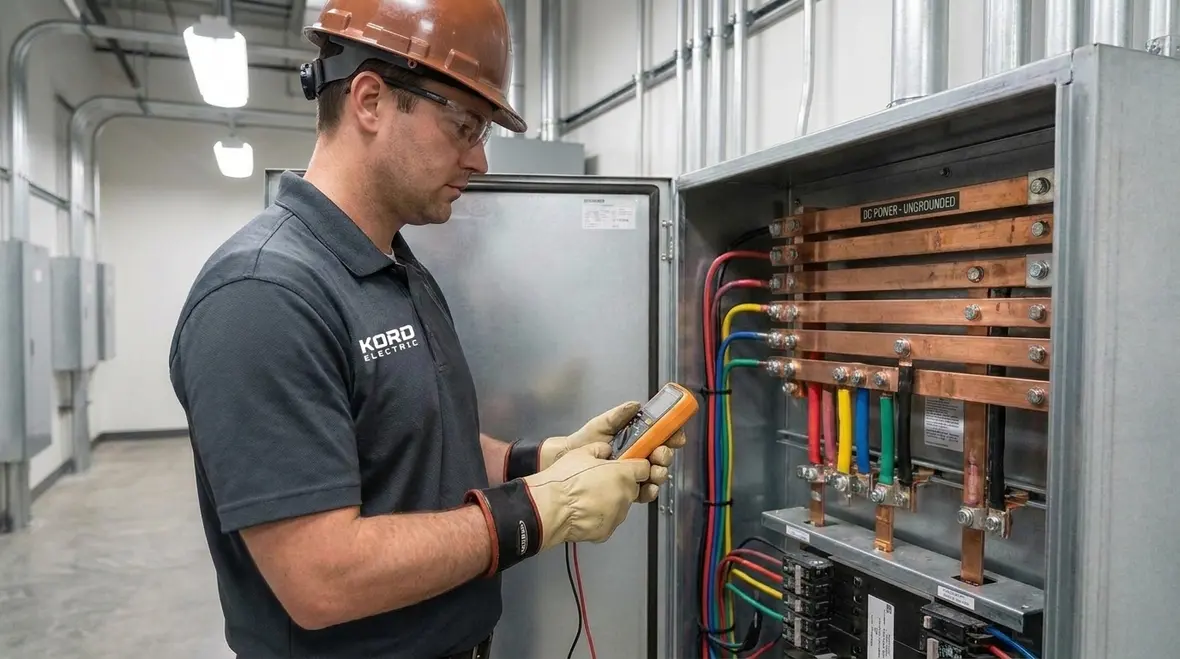
Third party designers and installers often read Section 250.169 and stop early, like someone deciding they understand a movie after reading the trailer. We do not. Our technicians review the essentials and then verify the field details. In plain terms, NFPA 70 Section 250.169 addresses ungrounded DC separately derived systems. This means the DC source does not intentionally connect conductors to ground at the source. In addition, the code expects you to handle faults and monitoring in a way that supports safety.
To be clear, an ungrounded design does not mean “ignore grounding.” It means the system is arranged so that fault conditions do not create an immediate, hard short to ground through an intentional connection. As a result, the system relies on detection and proper insulation practices. Meanwhile, the wiring methods and equipment ratings matter just as much as the concept. When we review projects, we link these rules back to broader NEC topics like system grounding and bonding covered in other Kord Electric articles, so the ungrounded DC rules never sit in isolation.
We also confirm that the “separately derived” part of the description is treated correctly. That includes how transformers, power converters, and DC supplies connect to the rest of the system and how isolation is maintained. If a drawing calls the system ungrounded but real world terminations quietly add ground references, then the code assumptions no longer match reality. Our job is to find those inconsistencies before they turn into unexplained faults, nuisance alarms, or surprise inspection findings.
How “ungrounded” changes fault behavior and safety decisions
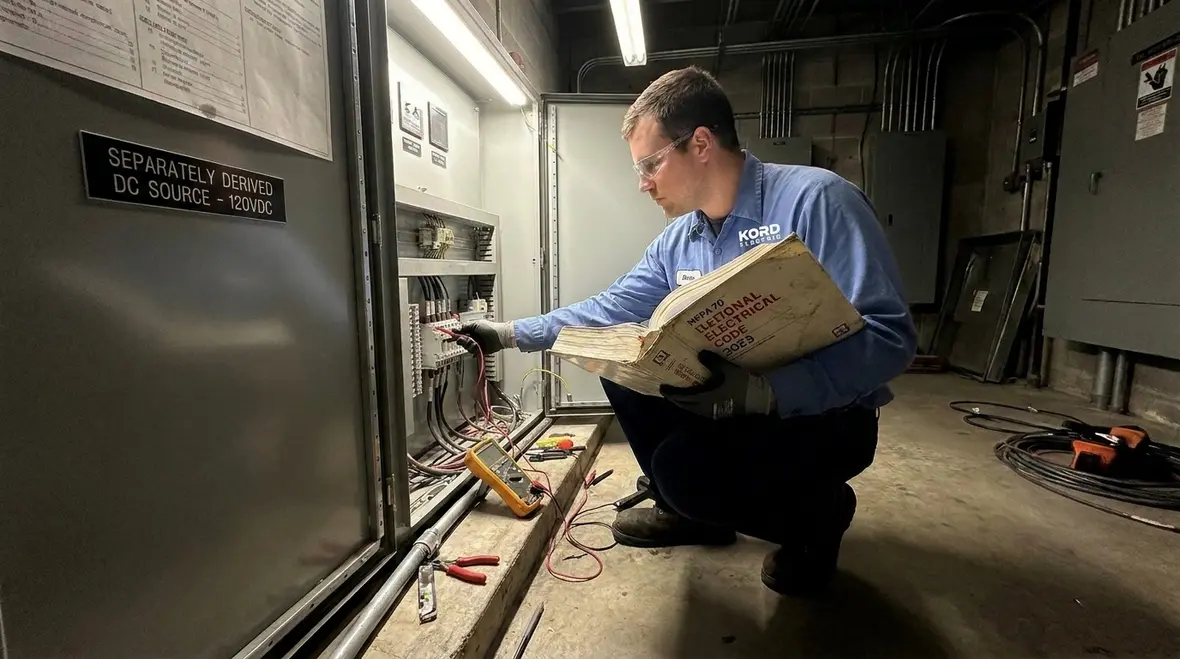
When a DC system stays ungrounded, a single insulation fault often does not trip power like it might in a grounded system. That is why the phrase “it keeps running” gets repeated in offices, usually with the same energy people use when they say, “the plan is working.” However, continuing operation can be good or bad depending on your response. Therefore, the system design must include the right protective approach so staff can identify problems early.
Our technicians explain it this way to facility managers at commercial and industrial sites: a first fault may not shut the circuit down, so your procedures must catch it. In parallel, the insulation level and the routing of conductors must reduce the chances of repeated faults. If the system allows only one fault to exist safely at a time, then your monitoring, labeling, and maintenance become part of the safety system, not an afterthought.
Additionally, the DC equipment connected to the ungrounded source must be suitable for the application. That means components, terminations, and any associated distribution gear must handle the expected voltage and any fault conditions. Kord Electric does not guess. We verify markings, confirm ratings, and then we document what we find for your records.
We also look at how ungrounded DC behavior ties into other protective strategies in the building. When facilities evaluate surge protection, supply side grounding, or hazardous location bonding, they often refer to related NEC topics discussed in our other code focused posts. That context helps decision makers see ungrounded DC rules as part of a single reliability story, not a niche side plot only the electrical team cares about.
Monitoring and labeling for NEC ungrounded DC systems
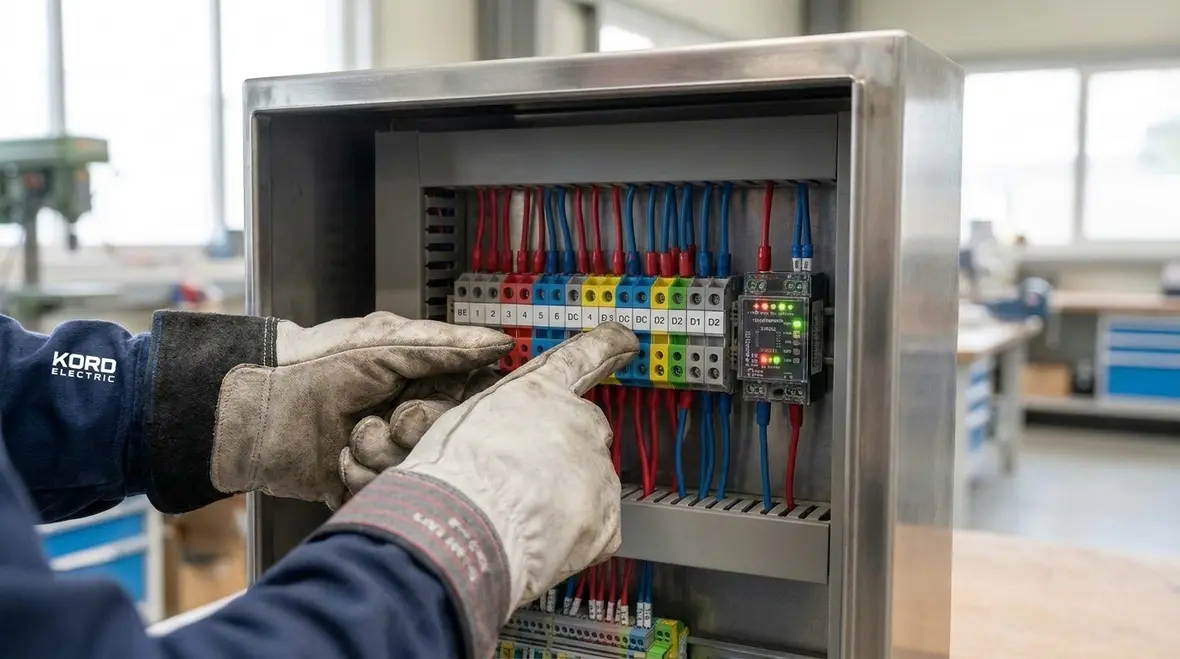
Once you accept that a first fault might not instantly remove power, monitoring takes center stage. So how do you keep people safe and reduce risk? You use the code aligned methods that support detection, alerting, and disciplined response. Our expert service staff walk through this with building teams so the process does not depend on one heroic electrician staying late.
At a practical level, facility teams should ensure the following are addressed for ungrounded DC operation:
- Clear identification of DC circuits and the system type, so maintenance crews can act without guesswork
- Training that tells staff what alarms mean and who responds, because “someone will handle it” does not scale
- Insulation quality and workmanship checks, since poor termination and careless routing can create recurring problems
- Test and inspection routines that follow the system design, so detection stays reliable over time
- Documentation that matches the as built condition, not a hopeful drawing
In other words, monitoring is not just a device on a panel. It is a workflow. Furthermore, when we serve major property buildings, we coordinate with operations teams so alarms do not become background noise. If your system alarms like a smoke detector with a grudge, nobody will trust it when it matters.
In many Los Angeles County facilities, we pair ungrounded DC monitoring with broader inspection and testing programs so teams do not reinvent the wheel for every system. That might include integrating DC checks into NEC inspections and tests routines, or aligning alarm response with existing electrical troubleshooting playbooks. When all of that is documented cleanly, your people spend less time guessing and more time executing a plan they actually recognize.
Wiring methods, isolation practices, and workmanship that matter
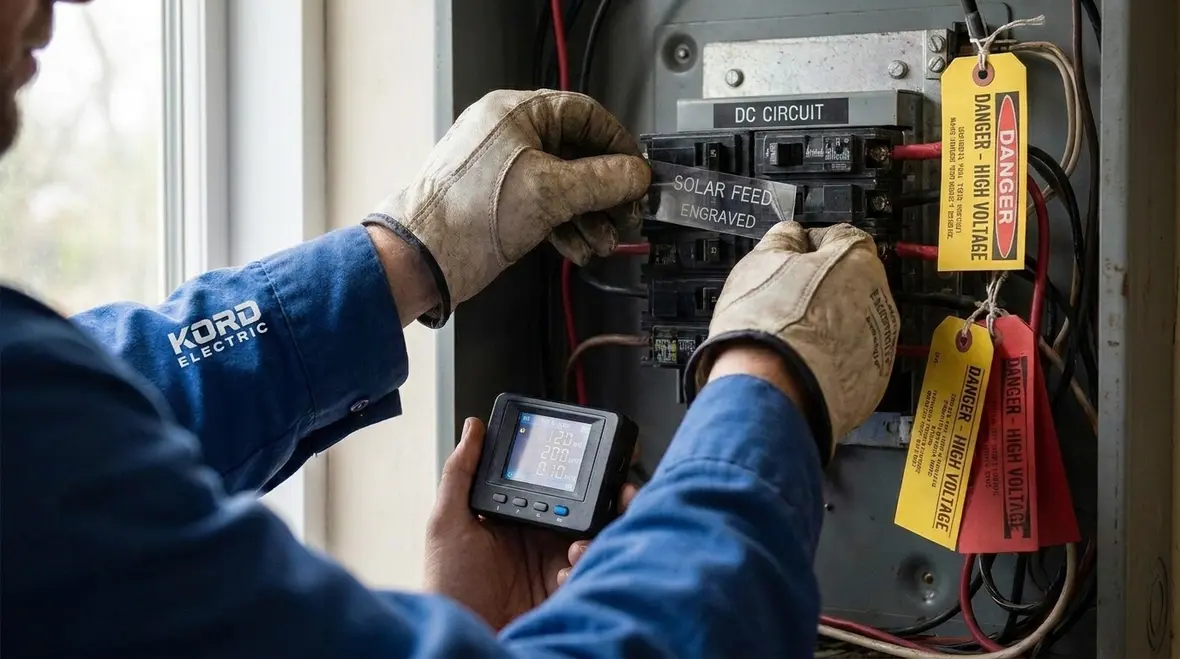
Even when the electrical concept is correct, execution determines whether safety holds. Therefore, Kord Electric focuses on wiring methods, routing, separation, and termination quality. NFPA 70 compliance depends on details that do not always show up in marketing brochures.
Our technicians check how conductors run through the facility and how they transition between enclosures. In major propertie buildings, the layout often includes shared trays, crowded mechanical zones, and long cable pulls. So we confirm separation where needed and ensure supports and bends follow manufacturer guidance. Then we verify terminations with attention to torque practices and conductor preparation.
We also treat isolation practices seriously. If the system uses separately derived sources, the isolation of the DC source conductors and any associated components must align with the design intent. That means you should avoid mixing grounding assumptions across equipment and circuits. If one portion of the installation behaves like a grounded system while another follows ungrounded rules, you create confusion that can hide faults longer than expected.
In short, careful workmanship helps the system do what the code expects. Meanwhile, a sloppy install turns a rule book into a weather report. Kord Electric aims for installations that do not need luck. When we support renovations and electrical code upgrades, we revisit DC wiring methods alongside panel changes, service improvements, and grounding updates so the finished system behaves like a single, coherent design.
Common mistakes we see in commercial DC projects
We have worked on many commercial and industrial facilities, and we see patterns. People do not always make mistakes on purpose. They do it because deadlines exist, contractors juggle crews, and nobody wants to slow the job down. Still, the mistakes have consequences.
Here are issues our expert service staff often encounter when they inspect or upgrade DC power systems governed by NFPA 70 requirements:
- Incorrect interpretation of ungrounded design, where staff treat “ungrounded” as “optional to verify”
- Missing or unclear labels, so future maintenance loses the map the first week
- Wiring practices that weaken insulation, including damaged jackets, poor termination, or unsupported cable runs
- Inconsistent documentation, where the drawing and field conditions do not match
- Equipment rating mismatches, where connected gear cannot handle the fault and voltage environment safely
Additionally, some teams try to solve everything with a single “fix it later” move. However, with ungrounded DC designs, “later” can mean longer exposure to undetected faults. Therefore, we encourage early design review and on site verification. That is faster in the long run, and it keeps safety boring, which is the highest compliment an engineer can receive.
Our field experience also shows that misalignment between DC system design and broader building upgrades can quietly introduce new risks. For example, adding equipment without revisiting calculated loads, or modifying service disconnect layouts without checking how DC fault paths behave, can leave your team relying on assumptions that no longer hold. When we review projects, we cross reference NEC ungrounded DC systems with related topics like service grounding, surge protection, and work space rules so nothing falls through the cracks.
When to involve our technicians and how we support your team
For commercial and industrial facilities, the best time to involve Kord Electric is before the system becomes hard to change. We support new installations and upgrades, and we also assist with inspections and compliance documentation. Our goal stays consistent: reduce risk, improve reliability, and help your team operate the system with confidence.
Our process typically includes a review of the electrical design intent, followed by field verification and practical guidance for operations. Then we help coordinate with your facility staff so that testing and response procedures align with the actual hardware. If your facility relies on DC power for critical functions, you need clarity and control, not mystery and hope.
We also keep the discussion grounded in the National Electrical Code framework. That includes referencing widely published code education sources, and we align our approach with the broader code community that explains how the NEC supports safe operation in buildings. If you want additional context on code education, you can also explore resources from Kord Fire and regional perspectives that help teams understand how NEC concepts apply in the real world. For more general code guidance, our sister site Kordfire.com and its Australia counterpart Kordfire.com.au provide background that teams find useful.
Also, for fire and pump system stakeholders, the broader discussion around life safety equipment and related infrastructure can be helpful. Organizations like firepumps.org support industry learning, and that helps teams connect electrical safety to life safety outcomes. For facility leaders focused on local support, pairing those resources with targeted Los Angeles County electrical services ensures that NEC guidance shows up as real work in real rooms, not just as theory on a screen.
Many owners also like to keep a library of project specific NEC references. In addition to ungrounded DC rules, they might review topics like supply side grounding, surge protection at the service, and hazardous location bonding so the entire system tells a consistent story. When we document findings, we often point facility teams to deeper primers such as Kord Electric's guide to the National Electrical Code for 2026, which explains why the rulebook evolves and how those changes show up in day to day decisions.
FAQ about NFPA 70 Section 250.169 and ungrounded DC power
Conclusion and call to action
Kord Electric helps commercial and industrial facilities handle NFPA 70 Section 250.169 with clarity, verification, and real job site discipline. Our technicians explain the logic in plain terms, then they check the details that keep NEC ungrounded DC systems safe and dependable. If your project involves separately derived DC power, we can review the design intent, verify installation quality, and support your operations team with practical guidance. Whether you are planning new work or correcting legacy systems across Los Angeles County, our team is ready to help you turn code language into understandable, maintainable infrastructure that your staff can trust.
If you would like even more context on how ungrounded DC rules fit into the bigger NEC picture, explore Kord Electric's broader code education resources, including their guide to understanding NFPA 70 for 2026. From supply side grounding to workspace clearances and calculated load rules, those materials show how each requirement connects to everyday decisions in major property buildings. Then, when you are ready to move from reading to action, our commercial and industrial electricians can step in, walk your site, and build a practical plan tailored to your facility.


