
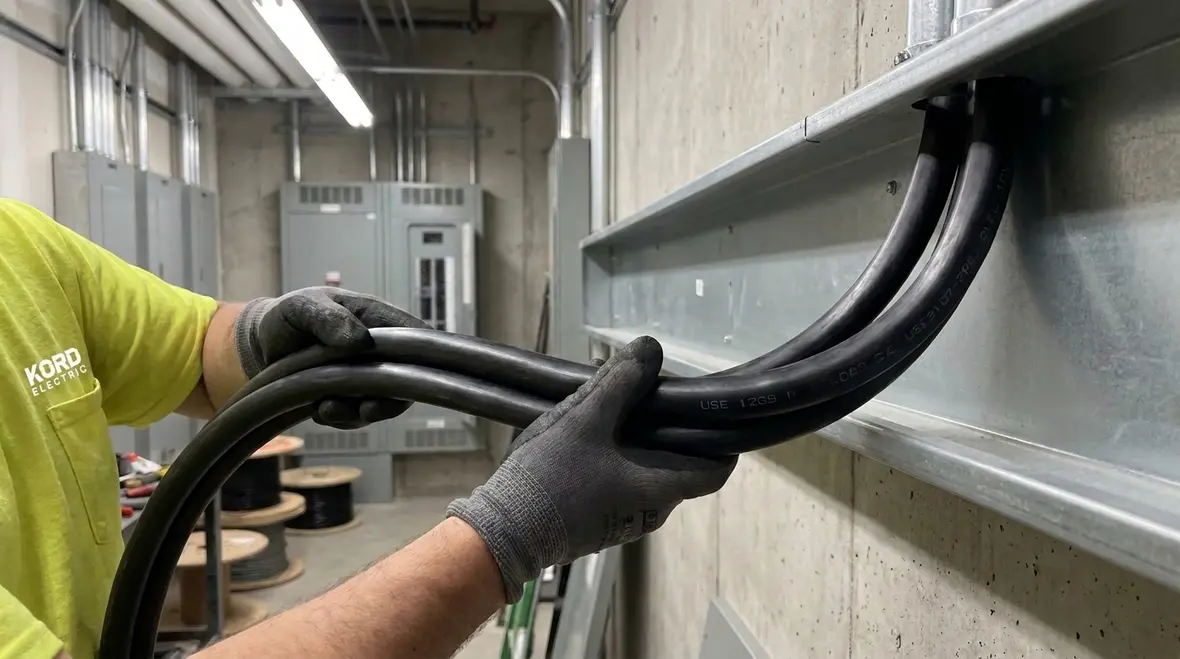
NEC USE Cable Bends: NFPA 70 326.26 Guidance
At Kord Electric, we often get asked about NEC USE cable bends and what NFPA 70 allows. In plain terms, NFPA 70 Section 326.26 guides how technicians should form bends in USE cable so the cable stays protected, stays functional, and keeps its insulation doing the job it was built to do. Now, if you have ever watched someone “just bend it a little” like they are shaping a coat hanger, you already know why this matters. In this article, our expert service staff explains the rules step by step, then connects them to real field practice for commercial and industrial facilities and major property buildings where reliability is not optional.
What NFPA 70 Section 326.26 requires for USE cable bends
NFPA 70 Section 326.26 addresses bends in USE cable used for specific system types. We focus on the core idea: you do not get to treat a cable like a flexible rope. The code sets expectations that prevent damage during installation and reduce the risk of future failure. Accordingly, when our technicians plan the route, they treat bends as a controlled part of the work, not a happy accident.
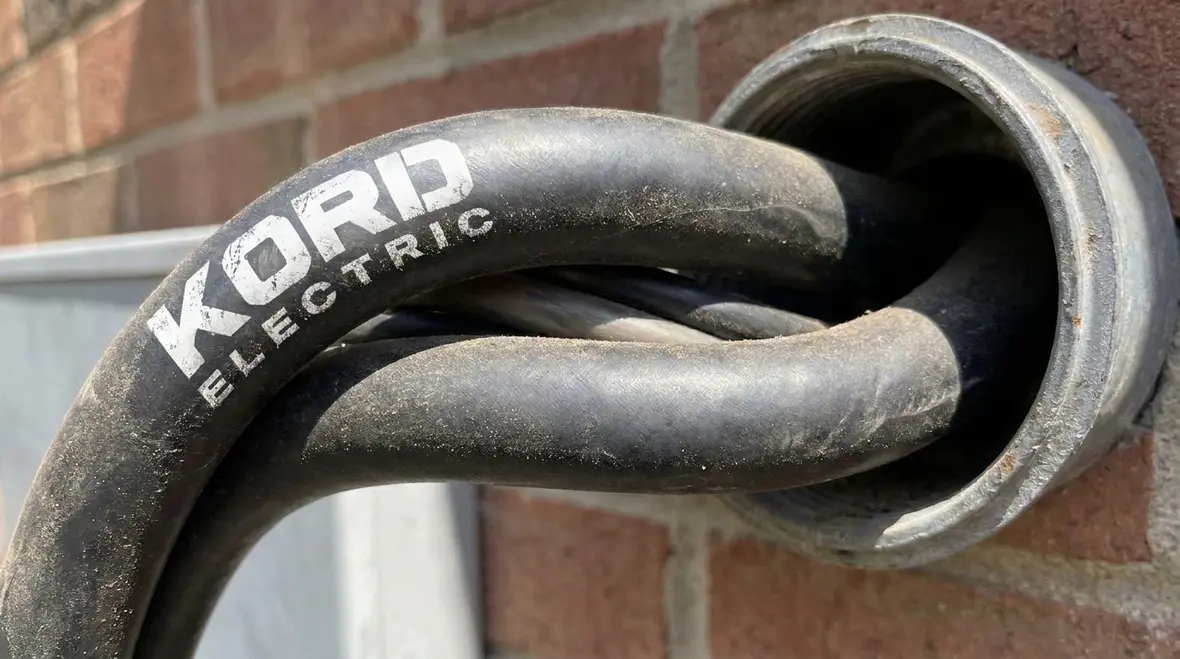
Next, the rule requires attention to bend limits, the way the cable enters and leaves the bend area, and the need to avoid strain. When electricians push too far or create a tight bend, they can stress internal conductors and insulation. Then, over time, stress can show up as higher resistance, insulation breakdown, or nuisance issues. And nobody wants a system that behaves like it is haunted.
Therefore, our approach is to confirm routing conditions before pulling and bending. We also document bends so the job stays traceable for inspections and ongoing maintenance.
If your team wants a deeper foundation on how NFPA 70 shapes these expectations before zooming into bend details, Kord Electric’s article Understanding NFPA 70, the National Electrical Code Explained for 2026 pairs well with this guidance and helps clarify how the broader NEC structure supports safe wiring methods, including USE cable routing and protection.
Why bend quality affects cable performance, not just inspection checklists
Many people think code rules exist only to pass inspections. We get it. After all, some permits feel like they were invented by a committee that never installed anything. Yet, bend quality directly affects how a cable performs.
First, a too sharp bend can create mechanical stress. Even if the cable “works today,” the stress can reduce long term margin. Second, poor bend practices can disturb how the cable layers sit together. When layers shift, the cable can become more vulnerable to moisture and heat cycling effects, especially in large buildings with busy electrical rooms and varying operating loads.
Then, there is the installer factor. Technicians often work in tight service corridors, utility areas, and rooftop transitions. As space gets crowded, the temptation grows to force the route. Instead, we help teams slow down at bends, align pulls, and maintain controlled handling from start to finish.
In other words, we treat bends like they are part of system reliability. And for commercial and industrial facilities and major property buildings, that is exactly what they are.
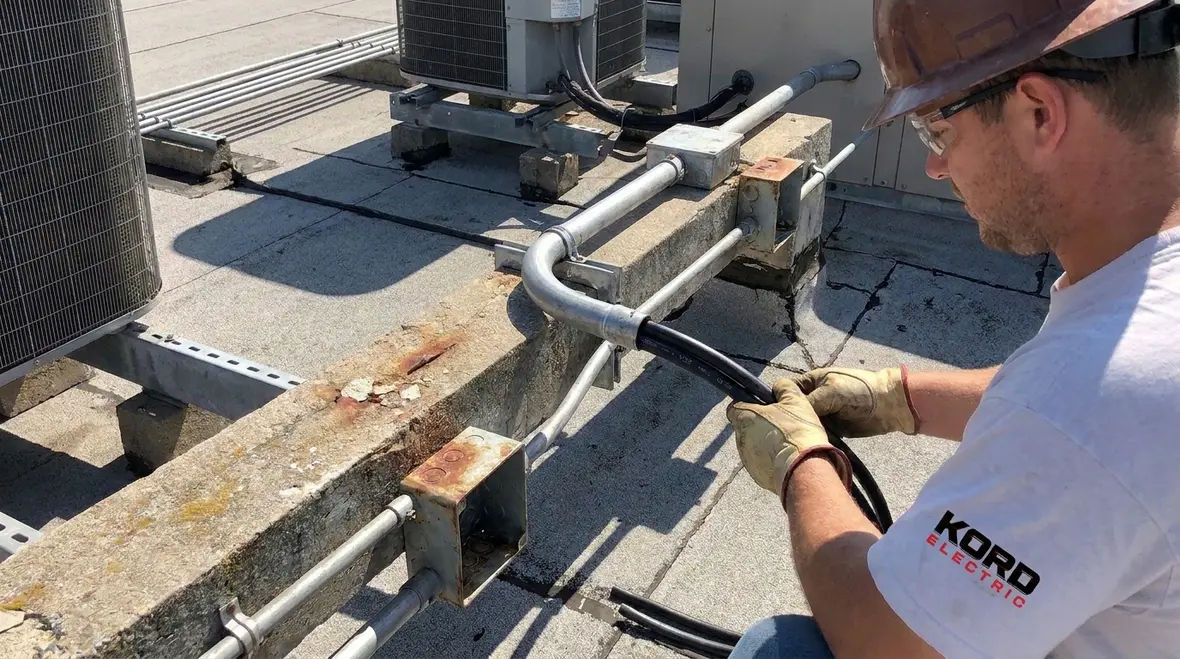
How technicians should plan bends during installation and pull practice
To follow NFPA 70 correctly, we plan before we ever touch the cable. Our expert service staff uses a practical sequence that reduces rework and protects the cable.
Step one: confirm route and turning locations. We review drawings, field measurements, and access constraints. When possible, we choose routes that minimize tight changes in direction. This one choice can save hours later, and it keeps everyone from playing “guess the bend” on site.
Step two: stage cable handling. We maintain cable support and avoid dragging or twisting. Twisting may look minor, but it can change cable behavior and increase stress at the bend zone.
Step three: control pull tension. Excess pull tension can compound bend stress. So we monitor tension during pulling and keep pulls aligned with the route.
Step four: form the bend with consistent technique. Our technicians create bends with care and avoid abrupt, improvised shaping. Also, we keep the cable in a steady condition as it transitions through the bend area.
Step five: inspect during and after. Before we close walls or finish cable trays, we check bend areas for visible signs of strain or abnormal deformation. Then we move forward with confidence.
This is not “slow for the sake of slow.” Instead, it is controlled work that reduces risk in real environments where downtime costs real money.
Meeting code in the real world: from conduit transitions to building constraints
Field conditions can turn a straightforward plan into a puzzle. Yet we still help clients meet NEC expectations without cutting corners. For commercial and industrial facilities and major property buildings, the route often includes transitions across decks, service penetrations, and locations with limited access.
For that reason, we coordinate bends with the full path of the cable, including how it connects to terminations and how it routes near structural elements. We also account for how the cable enters equipment spaces. If a bend lands too close to an obstruction or forces awkward entry, we adjust the route or the layout plan before the cable is pulled.
Next, we consider support and protection. A bend does not exist by itself. It is part of a system that includes cable support, spacing, and the surrounding environment. When a cable is supported correctly, bends experience less movement during building vibration, thermal expansion, and ongoing activity.
In addition, we support teams that handle ongoing upgrades. If the facility is already operating, our expert service staff sequences work to maintain uptime and safety. That matters in the real world, because the electrical system is not a museum exhibit. It works, and it gets used.
Common mistakes we see, and how to prevent them
We see the same mistakes often enough that we can almost predict them. And yes, sometimes the mistakes look like they were made during a rush that involved three different contractors and one missing drawing. Still, we help stop the pattern.
- Forcing tight turns: Technicians who push the cable too hard create stress at the bend area. We prevent this by planning turning locations and maintaining controlled technique.
- Skipping route review: If someone discovers constraints after pulling begins, the job becomes guesswork. We prevent this through pre routing checks.
- Dragging cable across surfaces: Dragging can scuff or deform the jacket and increase risk at bends. We handle cable to keep it protected.
- Ignoring support needs: Even if the bend forms well, poor support can allow movement later. We plan support as part of the same workflow.
- Not verifying bend condition: If the installer does not visually confirm the bend area, problems can hide until later. We inspect during and after installation.
Additionally, we help clients train internal teams or coordinate with their contractors so everyone uses the same good practices. Our team communicates the “why,” not just the “what,” because when people understand the reason, they stop repeating the same error.
Quick reference: guidance our clients use on major projects
When large buildings and complex electrical paths come into play, a clear reference helps keep field work consistent. Kord Electric builds project checklists around code rules and practical installation steps. We keep them simple enough for the jobsite, yet thorough enough for responsible documentation.
In one view, our teams track these areas:
|
Planning and handling
|
Bend execution and verification
|
After all, commercial electrical work does not improve by guessing. It improves through disciplined setup, careful installation, and solid verification. That is how we help facilities stay stable and future ready.
FAQ: NEC USE cable bends and NFPA 70 Section 326.26
Conclusion: Get bend-safe installation support from Kord Electric
When facilities handle USE cable routes, NEC USE cable bends are not a minor detail. They affect performance, safety, and long term reliability. Kord Electric serves commercial and industrial facilities and major property buildings, and we bring a calm, disciplined installation mindset backed by expert service staff who explain what they do and why it matters. If your project needs compliant planning, careful bend execution, or documentation support, contact us. We will help you move forward with confidence.
For facility teams planning larger system changes or pairing bend work with panel, feeder, or equipment upgrades, our broader Los Angeles County electrical services for commercial and industrial properties give you a single partner who can connect NEC USE cable bends, routing, and protection to the rest of your electrical strategy, from design to inspection and long term maintenance.


