NEC Work Space Guarding Rules for Safe Electrical Work
Safe electrical work starts long before a technician touches a tool. It starts with space, boundaries, and clear rules that keep people away from energized parts unless they are trained, protected, and ready. That is where NEC work space guarding rules become more than code language on a page. They become the framework that keeps real people safe in real buildings.
At Kord Electric, we work in commercial and industrial facilities where power is always in motion and electrical rooms rarely stay static for long. That is why we treat work space and guarding as core design elements, not afterthoughts. The National Electrical Code (NFPA 70) gives us the baseline. Our job is to translate those requirements into field-ready plans that actually survive daily use, renovations, and the occasional “just put it there for a minute” moment that lasts six months.
NEC work space guarding rules set the tone for safe electrical work
In the first moments of any plan, we respect the NEC work space guarding requirements that control who can access live or energized parts and how those areas must be protected. As a result, our approach at Kord Electric starts with clear boundaries, proper working clearance, and the right guarding methods before anyone ever lifts a tool. So, yes, we take it seriously, because electricity does not care about good intentions. It also does not care about pop culture references, but we try anyway. In commercial and industrial facilities, those rules help protect workers, reduce damage, and keep operations moving without chaos.
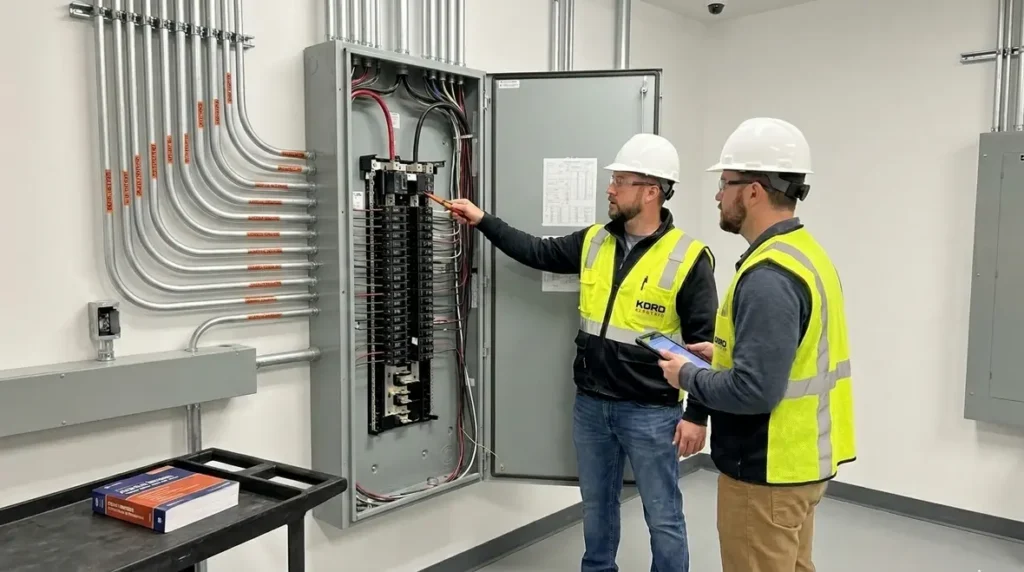
Those rules do more than check a compliance box. They shape how electrical rooms get laid out, how doors swing, where panels land on walls, and how your team brings in equipment for maintenance. When NEC work space guarding requirements are treated as design criteria instead of obstacles, facilities end up with rooms that feel organized, not improvised. That makes it easier for technicians to focus on energized work and for safety teams to verify that clearances, barriers, and access paths still meet code after years of changes.
If you want a deeper dive into how NFPA 70 shapes those expectations, Kord Electric’s own code-focused guides—such as our overview on how to read NFPA 70 for commercial buildings—show how the rulebook ties together everything from work space to grounding and overcurrent protection. That big-picture view helps facility leaders see work space guarding as part of a complete safety system, not a random paragraph buried in a binder.
What NFPA 70 Section 110.34 really demands on the jobsite
NFPA 70, also called the NEC, uses Section 110.34 to set practical rules for work space and guarding around electrical equipment. First, it establishes that you must provide enough space to work safely near electrical conductors and parts. Next, it requires guarding where accidental contact or approach could happen. Put simply, it defines a boundary between “safe reach” and “oops, that went badly.”
When Kord Electric sends technicians to major property buildings and industrial sites, we explain these requirements in plain terms and in context. Our expert service staff do not just cite the code. They connect the code to what your crew will face during inspections, maintenance, and upgrades. That means we talk about access, equipment layout, and the real world problem of squeezing around ductwork, cable trays, and temporary staging. And if anyone thinks those spaces magically appear on inspection day, well, we cannot promise a miracle.
Section 110.34 also plays nicely with the rest of NFPA 70 when you know where to look. Articles that cover switchboards, switchgear, panelboards, and industrial control panels layer on more detail about how equipment is built and installed. Our team connects those dots early in design so your work space plan does not fight your gear selection, and vice versa. If you are already exploring resources like “What Is NFPA 70? Understanding the National Electrical Code” on the Kord Electric blog, Section 110.34 becomes another key chapter in that ongoing story.
Electrical working clearance and why it is not optional
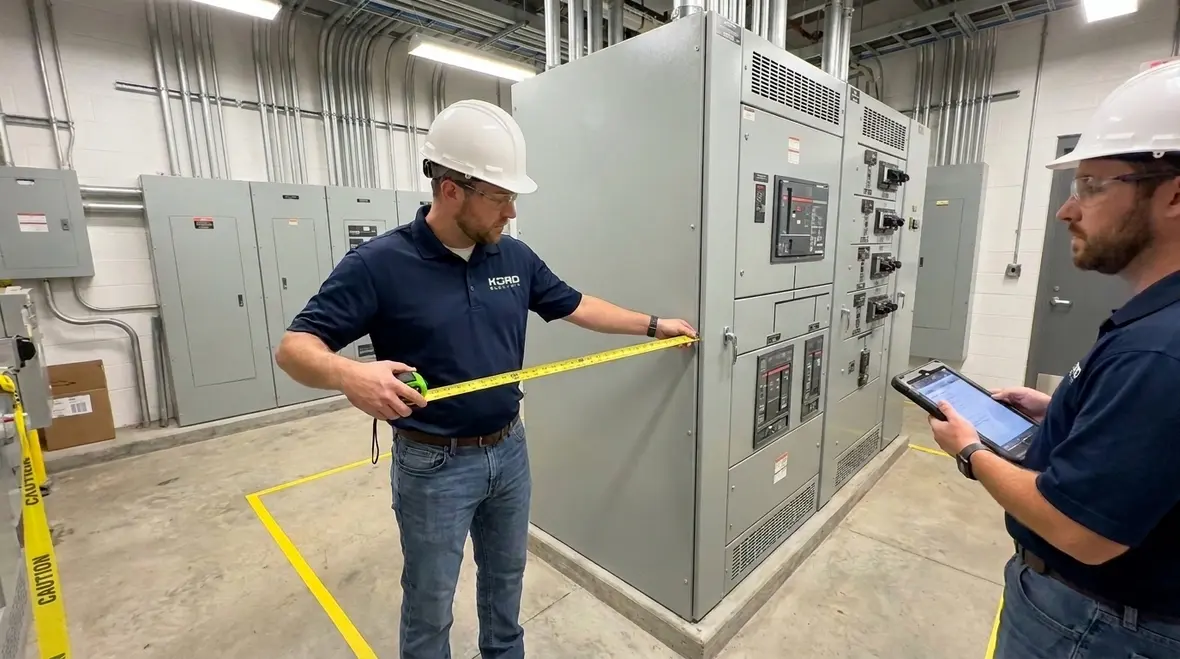
Section 110.34 focuses on the workspace around equipment. It sets limits tied to the voltage of the exposed parts and the way workers need to approach them. Therefore, designers and facility managers must keep clearances available for installation, operation, adjustment, and maintenance. If you block the space, you create a safety gap, and that gap can turn into a compliance issue fast.
Here is how this plays out for commercial and industrial facilities. Equipment often sits in rooms with high traffic, stored materials, or tight service aisles. Also, building changes happen over time. Someone adds racks, a contractor routes conduit, or a team stores packaging “just for a day.” Then the day becomes a month. Consequently, the guarding and workspace plan starts failing even if the original electrical installation was correct.
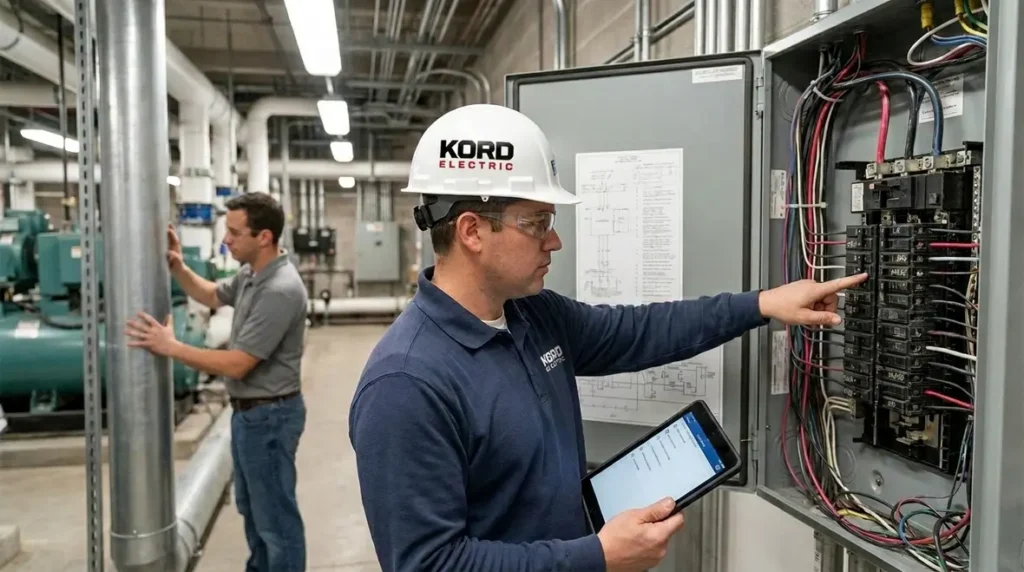
Our technicians at Kord Electric help teams spot these risk points early. We walk the area, confirm access routes, and evaluate whether the required workspace stays open. Then, when we find a conflict, we help the property team correct it with a practical plan. Not a wish and not a lecture. A plan that fits the building.
This is also where planning for renovations and code updates matters. When facilities modernize gear or expand service capacity, we often blend work space reviews into broader projects like electrical code upgrade consulting for renovations or building electrical system design planning engagements. That way, the updated clearances and guarding live in the drawings, the field installation, and the maintenance playbook instead of just in one person’s memory.
For organizations that want an even deeper background, our detailed guide on understanding NFPA 70 for 2026 explains how code cycles influence everyday decisions like panel locations, aisle widths, and equipment orientations. The more your team understands those relationships, the easier it becomes to protect clearance instead of sacrificing it every time someone needs a convenient storage spot.
Guarding methods that prevent contact and accidental approach
After workspace is addressed, guarding becomes the next barrier. Section 110.34 calls for guarding to reduce hazards from accidental contact with live parts or from movement into dangerous areas. We see common issues in facilities that run many trades in the same spaces. One crew works while another stores equipment nearby. Another crew “temporarily” places tools and stays longer than expected. Eventually, you end up with unplanned contact paths.
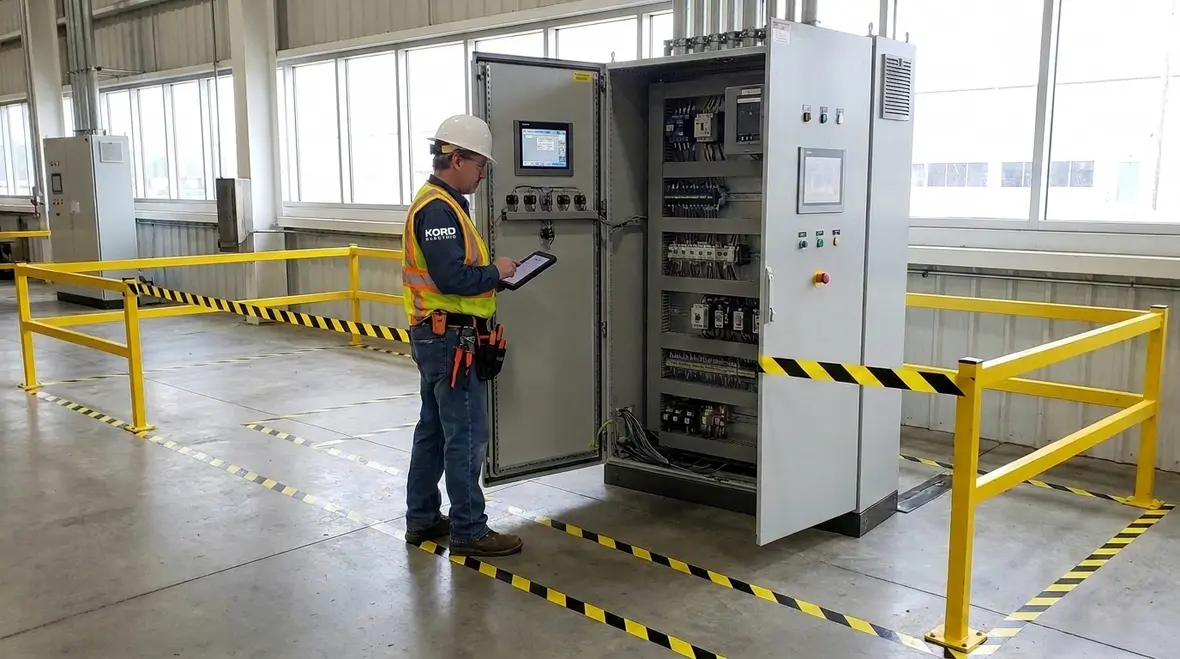
Guarding can include barriers, enclosures, partitions, covers, or other approved means. However, the key idea stays the same: the guarding must control access so workers do not step into a hazardous area. In addition, it must work as intended over time. That means it must remain secure, intact, and positioned correctly after any maintenance activity.
Our expert service staff explain guarding decisions by linking them to the facility’s workflows. For example, a service corridor in a data center cannot work like a warehouse receiving bay. The pace and traffic patterns differ, and the guarding strategy must match the environment. We design our recommendations to match real operations, so your team does not have to fight the building every week.
Guarding also interacts with other safety systems, including fire protection. Facilities that follow guidance from organizations deeply involved in fire and life safety planning understand that physical barriers, access control, and clear routes work best when fire and electrical planning are coordinated. That is why our recommendations for guarding around high energy equipment often reference both electrical code requirements and the realities of emergency response, so first responders do not have to navigate a maze just to reach critical disconnects.
In some buildings, guarding takes the form of locked rooms and restricted access zones instead of just rails and partitions. In those cases, we help property leaders decide who truly needs access, how credentials are issued, and how to keep that list current as contractors come and go. Because guarding is not only physical—it is also procedural. If everyone on site has the key, the barrier means less than it should.
Field realities: how facilities create risk without meaning to
In commercial and industrial buildings, risk often shows up quietly. First, a contractor installs new equipment but does not adjust the area around the panelboard. Next, someone adds a ladder for work that seems unrelated to the electrical gear. Then, the ladder “just stays until the job ends.” Meanwhile, the required clearance and guarding boundaries shrink.
Also, facility teams may rely on visual assumptions. They look at a space and think it feels wide enough. Yet, Section 110.34 depends on measured working clearances and on how workers actually approach equipment. So, the wrong assumption can survive for months, until a maintenance visit or an inspection forces the problem into view.
Kord Electric helps reduce that drift. We plan with the people who live in these spaces every day. Because when our technicians speak with your electricians, maintenance leads, and property managers, we learn where congestion happens and when. Then we map the guarding and workspace rules to the actual routes and access patterns your staff use. In other words, we help you build a safe system that matches how your facility operates, not how a textbook imagines the world.
Sometimes those conversations extend across entire property portfolios. A team may start by addressing workspace concerns at one site and then ask us to apply the same discipline to other facilities in Los Angeles County and Southern California. Because our field crews and expert service staff already support regional services like Los Angeles County electrical services for commercial and industrial properties, we can carry lessons learned from one building into the next, while adjusting for different layouts and operating conditions.
Coordination with design, maintenance, and inspections
Compliance does not happen only at installation. It continues through maintenance, upgrades, and facility changes. Therefore, you need coordination between electrical design documents, field layouts, and ongoing operations. When crews keep the required access open and keep guarding intact, the facility stays safer and inspections go smoother.
For our clients in major property buildings, we emphasize documentation and communication. Our technicians review the equipment room flow, confirm that access remains available, and check for barriers that were moved during work. If anything affects the workspace or guarding, we flag it and provide a clear path to correction.
It also helps to align with the broader NEC structure. While Section 110.34 focuses on workspace and guarding, other parts of NEC 2026 guidance can influence installation practices and equipment placement. We stay current and we explain changes in a steady, practical way. If you want to talk about the bigger picture, we point teams to resources like our NEC coverage on Kord Electric and the NEC overview content on Kord Fire sites, so property teams can see how the code fits together across topics.
In renovation-heavy environments, this coordination often appears under the banner of electrical code upgrade consulting or similar planning services. There, we blend Section 110.34’s work space expectations with newer requirements for things like selective coordination, arc energy reduction measures, and labeling. The goal is a design package and field build that inspectors recognize as current, defensible, and ready for long term operation.
Using guardrails in real work plans, not just on paper
Even when the equipment meets code at first, a facility can drift out of compliance if maintenance planning ignores workspace. So, we help clients build guardrails into work orders and routine practices. That means your maintenance team understands what areas must stay clear, what materials cannot block access, and how to handle temporary staging.
In addition, we train supervisors to treat barriers and enclosures like safety systems, not like decorative items. If a barrier gets removed for a task, it returns right after the task ends. Also, if a room layout changes, we recheck the affected clearance areas. This approach keeps compliance from turning into a yearly surprise.
For fire and life safety influenced environments, teams also coordinate with relevant fire protection guidance. Sites that follow the safety mindset of organizations that focus on fire pump performance and emergency water supplies understand that electrical safety and fire safety planning work best as a combined effort. Our work supports that shared goal by keeping equipment access safe, controlled, and ready for response.
We also embed work space and guarding checks into broader programs such as preventive electrical maintenance. When our technicians perform infrared scans, torque checks, and functional testing, they also observe whether clearances remain intact and whether guarding hardware has been bypassed, damaged, or casually removed. That way, “NEC work space guarding requirements” stay visible throughout the year instead of appearing only during formal inspections.
FAQ about NFPA 70 Section 110.34 and work space guarding
Facilities leaders, safety coordinators, and property managers tend to ask a similar set of questions about Section 110.34 and NEC work space guarding requirements. The answers below focus on commercial and industrial buildings where uptime matters, spaces evolve, and inspections arrive whether anyone feels ready or not.
Talk to Kord Electric before the next inspection forces the fix
When we evaluate Section 110.34 on your commercial and industrial property, we do it with care and clarity. Our technicians and expert service staff review workspace access, guarding condition, and real site traffic so safety stays real, not theoretical. Then we recommend corrections you can implement without slowing your entire operation. If you want fewer surprises and stronger compliance, reach out to Kord Electric and schedule an on site review with us today.
Whether you are planning a new facility, tackling renovations, or trying to tame a crowded electrical room that has evolved for years without a master plan, our team can help you reset. We bring the same disciplined mindset used in our NEC code education pieces and our broader commercial services into each workspace and guarding review. The result is a safer environment for your technicians, a cleaner path through inspections, and a clearer understanding of how Section 110.34 fits into your overall electrical strategy.
If you are responsible for properties across Los Angeles County or the surrounding region, you can also connect this effort with our broader commercial and industrial support. From code-conscious design help to ongoing service programs, our Los Angeles County electrical services give you a single team that understands the rulebook, the field conditions, and the business pressures that shape every decision around work space and guarding.
However you choose to move forward, do not wait for an inspector, an incident, or a near miss to start the conversation. NEC work space guarding requirements exist to protect your people, your equipment, and your operations. Kord Electric is ready to help you put those rules to work in every electrical room, corridor, and service space you manage.