NEC in Sight From Switch Rules NFPA 70 110.39
When people talk about the National Electrical Code, they often jump straight to big numbers and bigger panels. Yet one rule can make a real difference in daily safety and usability: NEC in sight from switch rules. Specifically, NFPA 70 Section 110.39 addresses when a switch must be visible from where someone stands to operate it. In plain terms, if a person flips a switch, they should be able to see the controlled equipment or the area being controlled, without guessing. Of course, guessing is fun in trivia, and chaos is fun in movies, but neither belongs in commercial and industrial electrical work.
Kord Electric works with major property buildings and commercial and industrial facilities, and we treat this kind of detail like it matters, because it does. We send skilled technicians and expert service staff to explain requirements in everyday language, and then we install, test, and document the work so your site runs safely and predictably.
NFPA 70 110.39 explained in practical terms
NFPA 70 is the name many people know, and we use it as the backbone for proper electrical design and safety. Section 110.39 focuses on the relationship between the switch location and the equipment or area it controls. The code requires that the switch must be in sight from the switch location, depending on what is being controlled and how the site is laid out.
To be clear, this is not about being “close enough” like a coworker offering help from across the hall. It is about visibility, so a person can confirm they control the right circuit or device. In commercial spaces, that often means HVAC units, lighting loads, or other equipment where accidental control could create hazards or disrupt operations.
Our technicians typically help facility managers answer one simple question: where does the operator stand, and what can they actually see? Then we connect that observation to the rule. That way, the design does not rely on hope, faith, or a switch that is “probably” in sight.

What “in sight” really means on real sites
In the real world, “in sight” depends on the layout. Lighting can change, walls can block, equipment can create blind spots, and doors can be open or closed based on routine. So, we look at how the system works during normal operation and during expected access conditions.
Often, a switch sits near a doorway, or it sits in a control room next to the equipment. If the path includes a corner, a railing, a structural column, or a lowered ceiling area, visibility can break. Additionally, glare from windows or bright displays can reduce effective visibility even if the device is technically not hidden.
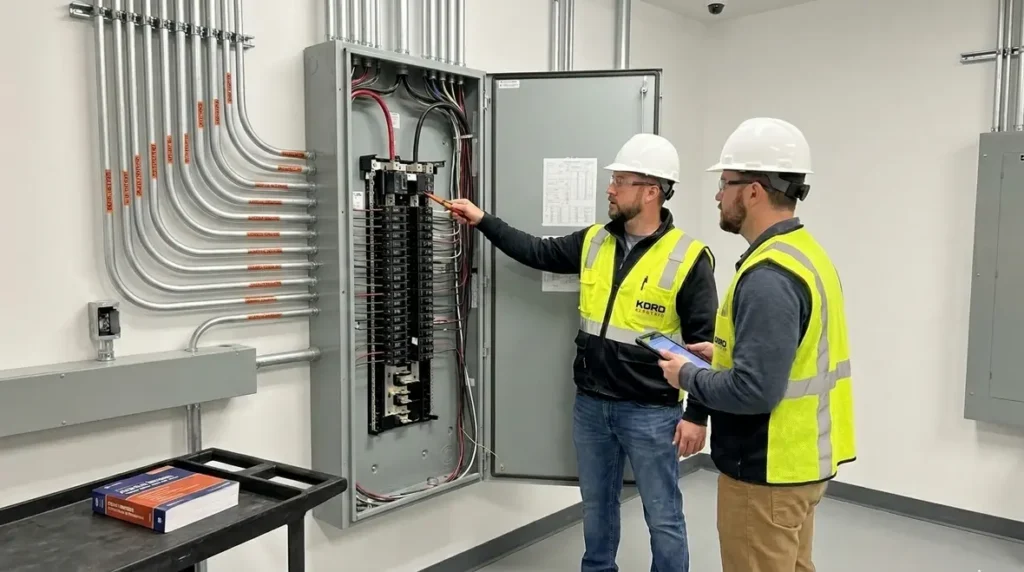
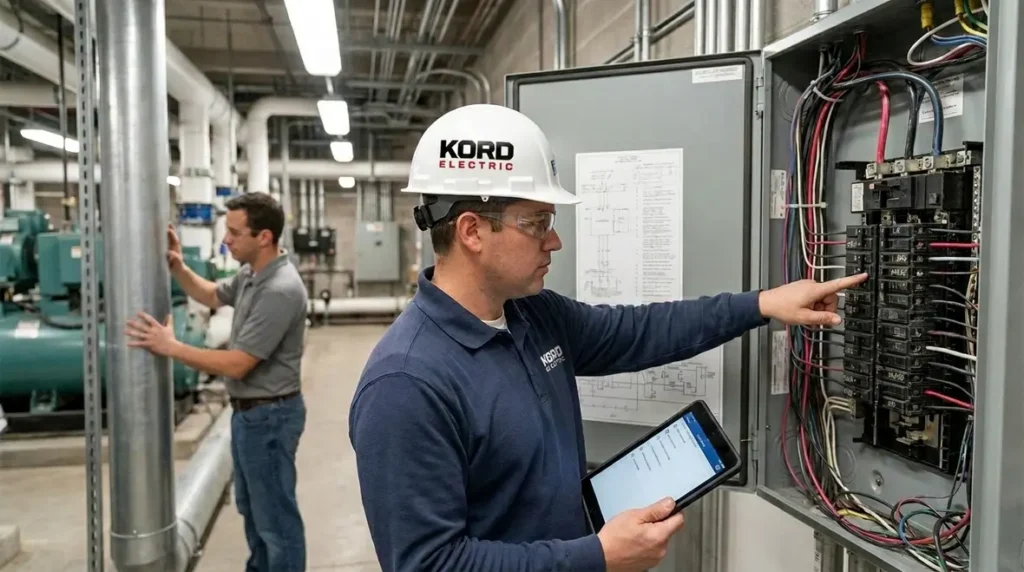
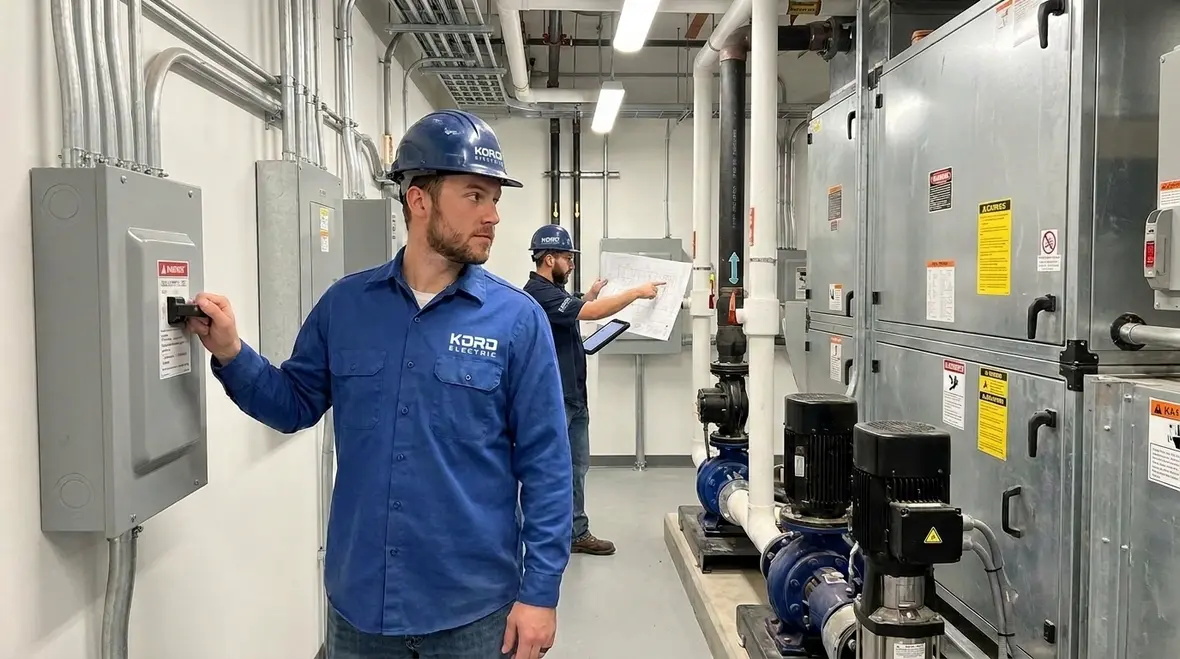
That is why our expert service staff does not just measure distance. We verify lines of sight and operator viewpoint, because the code intent aims to prevent the “wrong switch” moment. If a person cannot tell what they are turning on, the risk increases. In industrial and commercial settings, that risk can become expensive, fast.
And yes, we have heard every joke about turning things on “to see what happens.” Our team replies politely, and then we bring out testing gear. The code does not find that joke very funny.

How NEC designers and electricians handle switch visibility for equipment control
Once a facility decides where switching should occur, designers and electricians must plan the route of use. Therefore, Kord Electric evaluates both the control point and the controlled equipment during the design and retrofit phases for commercial and industrial properties.
We typically focus on these practical control patterns.
- Direct sight from the operating position: the switch location lets the operator view the controlled equipment or the protected space.
- Controlled access areas: where doors or barriers affect visibility, we plan switch placement so operators still meet the visibility intent.
- Multiple devices with one operator: when one switch serves multiple loads, we confirm visibility and clarity so staff do not confuse outputs.
- Retrofits in existing buildings: we look at what can be moved, what must stay, and what alternative arrangements can maintain safe operation.
In addition, we document what we found. That documentation helps in future inspections and helps maintenance staff understand the “why,” not just the “what.” In other words, our technicians explain the requirement so the site stays compliant after turnover, staffing changes, or equipment upgrades.

Common installation mistakes that create compliance headaches
Switch visibility problems usually start with convenience. Someone picks a location because it is tidy, close to a panel, or simple to rough in. However, NEC requirements do not run on convenience. They run on safety.
Here are common mistakes we see in commercial and industrial facilities.
- Switch mounted around a corner: the person can reach the switch, but cannot see the controlled equipment.
- Switch behind doors: the door remains closed during normal operation, blocking visibility.
- Switch placed in a corridor: it may look reachable, but equipment lies behind structural barriers or along another wall run.
- Switch “in the room,” not in the sightline: the equipment may be visible only if certain lights are turned on, which is not always the case.
- Last minute changes: electricians follow a drawing, but the final layout of equipment moves during installation, breaking the original sightline.
To fix these problems, Kord Electric often performs a structured field check. Then we propose a solution that respects the building workflow. We do not just say “move it.” We explain the options, discuss operational impact, and help maintain a calm, safe result for your staff and your facility.
Because in commercial environments, you need electricity that behaves like a professional: predictable, documented, and ready when your people show up.

Why this rule matters for safety, operations, and liability
Safety rules are not there to make electricians suffer. They exist because real people do real work under time pressure. When a switch must be operable while equipment is in sight, it reduces mistakes and speeds response.
For example, if a facility uses switching for equipment shutdown or energization during maintenance, visibility helps staff confirm the correct load. As a result, you reduce the chance of starting equipment that should remain off, or turning off equipment that should keep running.
From an operations standpoint, the benefit becomes even clearer. Clear switching reduces confusion in daily work and during emergencies. It also helps training. When our technicians teach staff, they can point to real sightlines and real locations, not abstract diagrams that look fine until someone walks the floor.
From a liability standpoint, proper compliance helps show that the facility used recognized safety standards. And when building owners ask, “What did we do to meet the code intent,” our team can explain it in a way that makes sense.
Planning and documentation for major property buildings
Large commercial and industrial properties often include phased construction, tenant turnover, and equipment changes. That means switch locations can become outdated when layouts shift. Therefore, Kord Electric supports planning and documentation that stays useful over time.
We recommend a practical approach.
- Confirm device location during commissioning: we check sightlines after equipment placement, not only during rough-in.
- Maintain as built notes: we record switch locations relative to controlled equipment, so future staff can understand the setup.
- Coordinate with fire and life safety needs: while this article focuses on NEC visibility, we align field checks with site safety goals and working constraints.
- Train operations staff: our expert service staff explains switching behavior so staff do not treat it like a mystery box.
In addition, when properties work with multiple trade partners, visibility can get missed. One contractor may relocate equipment for clearance, and suddenly the original sightline no longer exists. So, we encourage coordination early. Then we verify in the field. That reduces the odds of last minute fixes, and nobody enjoys last minute electrical changes, especially when the building schedule is already tighter than a superhero suit.
Where Kord Electric fits in for commercial and industrial facilities
Kord Electric serves commercial and industrial facilities and major property buildings, and we bring the same calm approach to code compliance every time. First, we listen to the site needs. Then we verify the physical setup. Finally, we help the facility maintain compliance through documentation and training.
We also operate with a safety mindset that aligns with broader code awareness used across life safety and electrical standards. Many building teams consult resources like Kord Fire and other fire-focused education platforms to connect electrical work with broader safety practices. For anyone who wants the wider context, they can review materials such as NFPA 70 explainers and code overviews from relevant sources, including the Kord Electric blog article Understanding NFPA 70: The National Electrical Code Explained for 2026, which helps connect NEC requirements to everyday decisions in major facilities.
If you are designing new areas or upgrading existing systems, our technicians can evaluate switch placement for visibility intent and help you avoid costly rework. And if you already have an installation, we can inspect the setup, explain what it means, and recommend next steps that keep your facility moving forward without drama.
For facilities in Southern California that want field-tested support, our Los Angeles County electrical services connect NEC visibility requirements with broader design, troubleshooting, and upgrade work, so your switching, distribution, and protection all move in the same safe direction.
FAQ: NFPA 70 Section 110.39 and switch visibility
Conclusion and next step with Kord Electric
If your commercial or industrial facility needs safer, cleaner switching setups, NFPA 70 Section 110.39 deserves attention before the floor gets busy. Kord Electric helps you confirm that switches meet NEC in sight from switch rules, and we explain it clearly to your team through site checks and practical guidance. If you want an expert look at a current installation or a new build layout, contact us. We will verify sightlines, reduce guesswork, and help keep your electrical systems compliant and reliable, the way they should be.