NEC Inspections and Tests Requirements Under NFPA 70 110.41
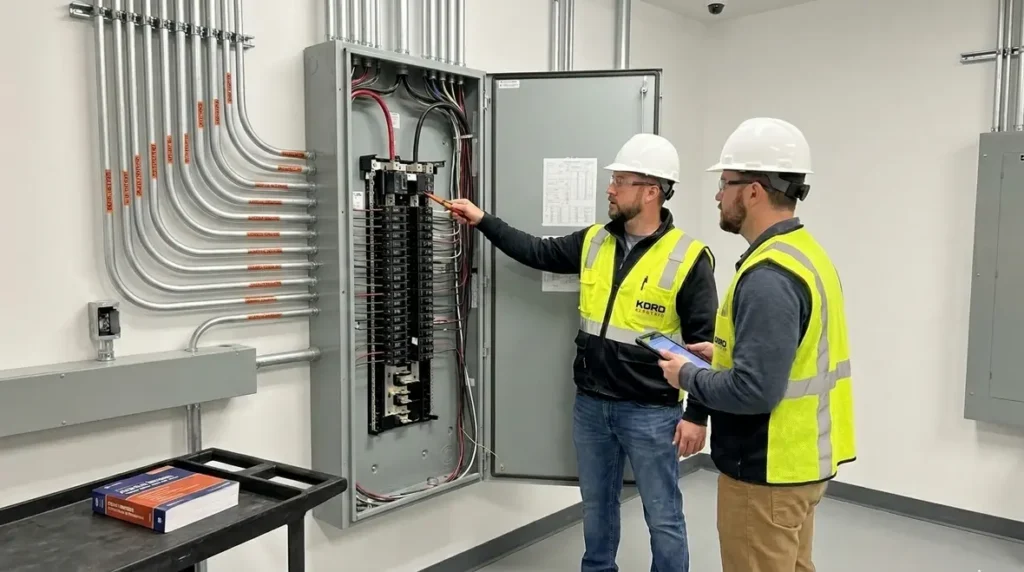
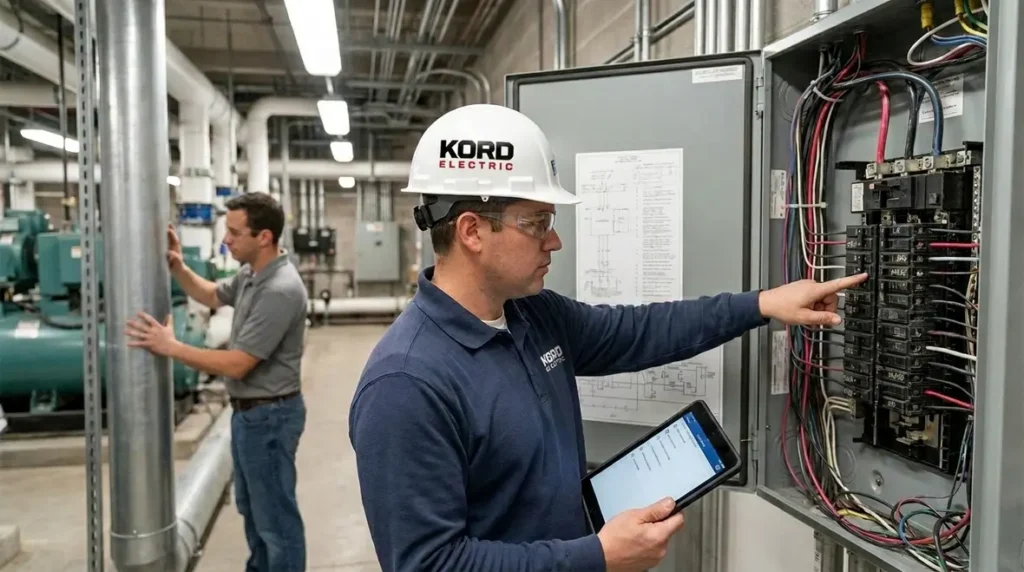
Kord Electric handles commercial and industrial electrical work, and we know the real question businesses ask is simple: “Are we safe, and are we compliant?” To answer that, our team follows NEC inspections and tests requirements built around NFPA 70 Section 110.41, so we plan and document inspections and tests before a system is ever treated like it is ready for real duty. In fact, within the first phase of many projects, our technicians and expert service staff verify terminations, insulation condition, grounding paths, and more. Then, we test, we record, and we communicate. After all, nobody wants surprise failures, and nobody wants to find out after a power event that the paperwork looks like it was written by a sleep deprived sitcom character.
What NFPA 70 Section 110.41 means for inspections and tests
NFPA 70 Section 110.41 focuses on a clear outcome: electrical equipment must be inspected and, where required, tested so it can operate safely and reliably. At Kord Electric, we treat this section like a process, not a checkbox. First, we apply the standard to the installation stage. Next, we confirm each system component meets the code requirements tied to its use. Finally, we document the results so the facility and stakeholders can trust the outcome.
Because commercial and industrial buildings depend on uptime, we also plan for practical constraints. For example, a facility does not pause operations just because a code section asks nicely. Therefore, we coordinate testing windows, isolate circuits when needed, and keep the work controlled and traceable. Our technicians walk clients through what they are doing and why, so the process feels less like a mystery and more like responsible engineering.
How we plan the NEC inspections and tests requirements on site
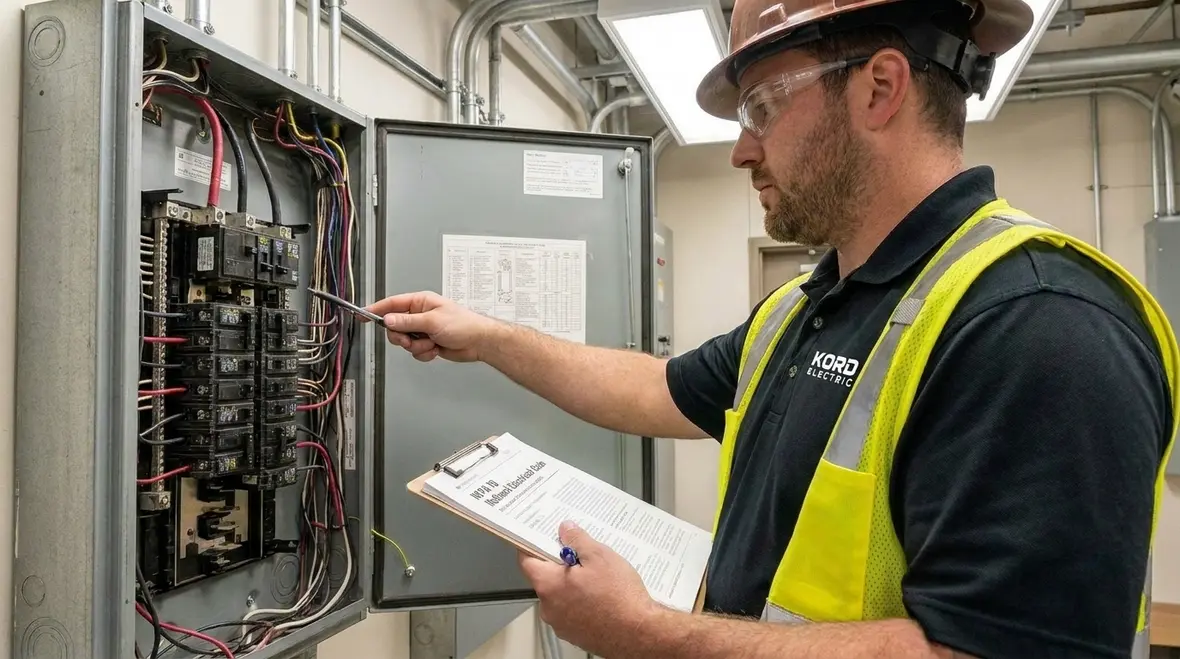
When we show up at a major property building, we do not start by guessing. Instead, we build a test plan that matches the scope of equipment and the schedule demands. Then, we verify the documentation needed for compliance, including installation checks that the system must pass before energizing.
Typically, our expert service staff organizes the work into stages. First, we inspect visible installation conditions, such as labeling, equipment accessibility, and proper connection methods. Next, we perform tests tied to the equipment type and the conditions stated by the code and project design. After that, we review results, confirm corrective actions, and update records.
To keep the process calm and transparent, we explain findings in plain terms. If something needs adjustment, we do not hide behind jargon. We show the issue, we explain the risk, and we outline the next step. That way, the conversation stays professional and grounded, not like a late night debate show where everyone shouts and nobody solves anything.
Inspection basics that catch problems before power does
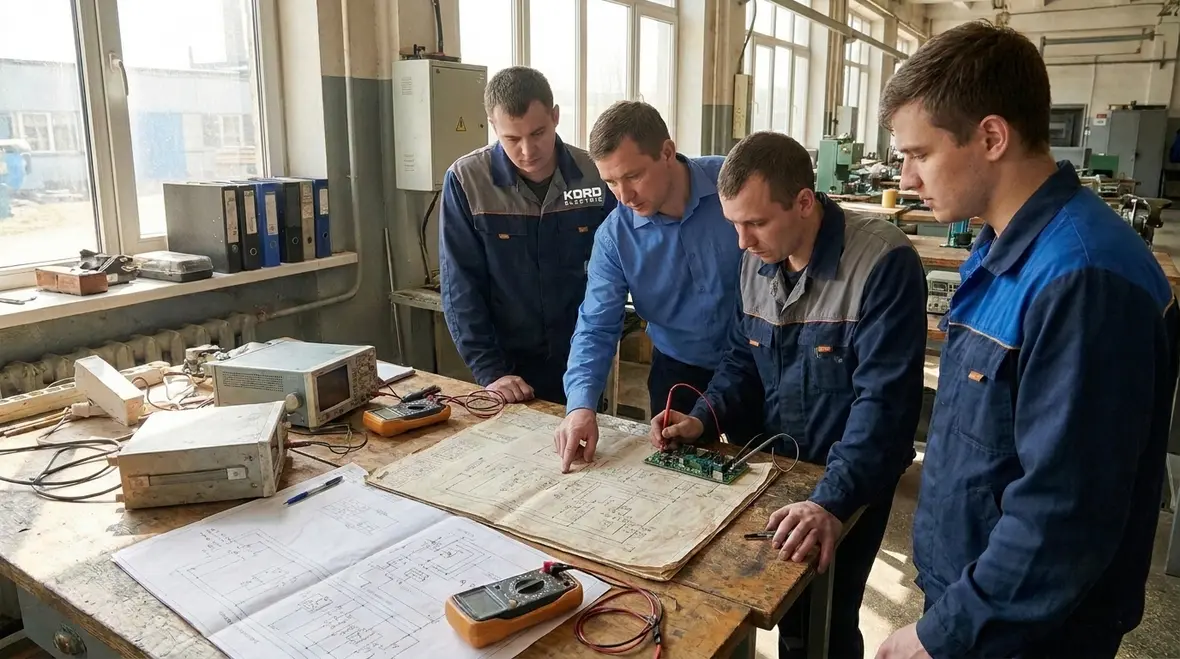
Inspections prevent the most expensive failures. In practice, we focus on details that affect safety and function. Moreover, we treat the inspection stage as the last chance to correct installation errors without the system already being live.
Our technicians commonly confirm items such as:
- Connections and terminations meet the required installation methods, torque practices, and conductor condition
- Wiring paths and physical installation support the equipment purpose and protection needs
- Clearances and access for maintenance and operation follow the code rules for the equipment type
- Grounding and bonding paths exist where required and show continuity through appropriate checks
- Damage control is addressed, including insulation condition and evidence of improper contact or strain
Then, we tie each observation to the equipment impact. For example, a loose termination does not just cause heat, it threatens reliability and can create cascading failures. Therefore, our inspections aim to reduce risk early, when fixes are still simple and efficient.
Testing methods we use to verify safe operation
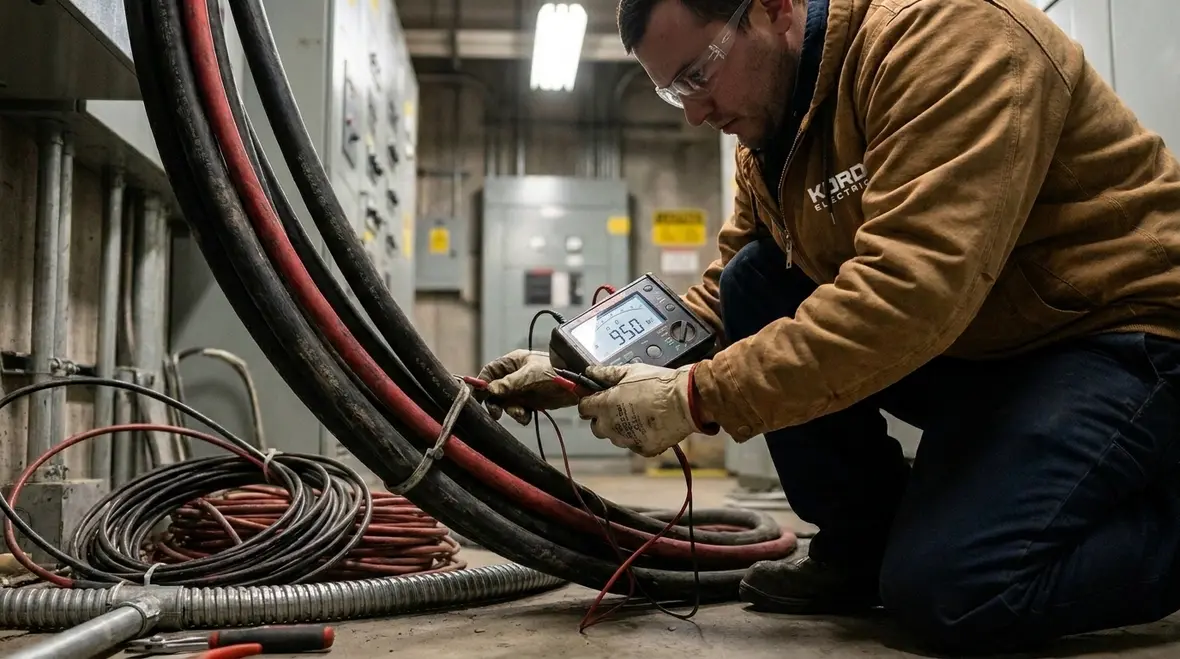
Testing in commercial and industrial environments goes beyond a quick “does it turn on” moment. Because equipment is supposed to behave under load and fault conditions, our approach aims to confirm performance and safety characteristics. At Kord Electric, we follow the intent of NFPA 70 Section 110.41 by applying tests where required and verifying results with a clear record.
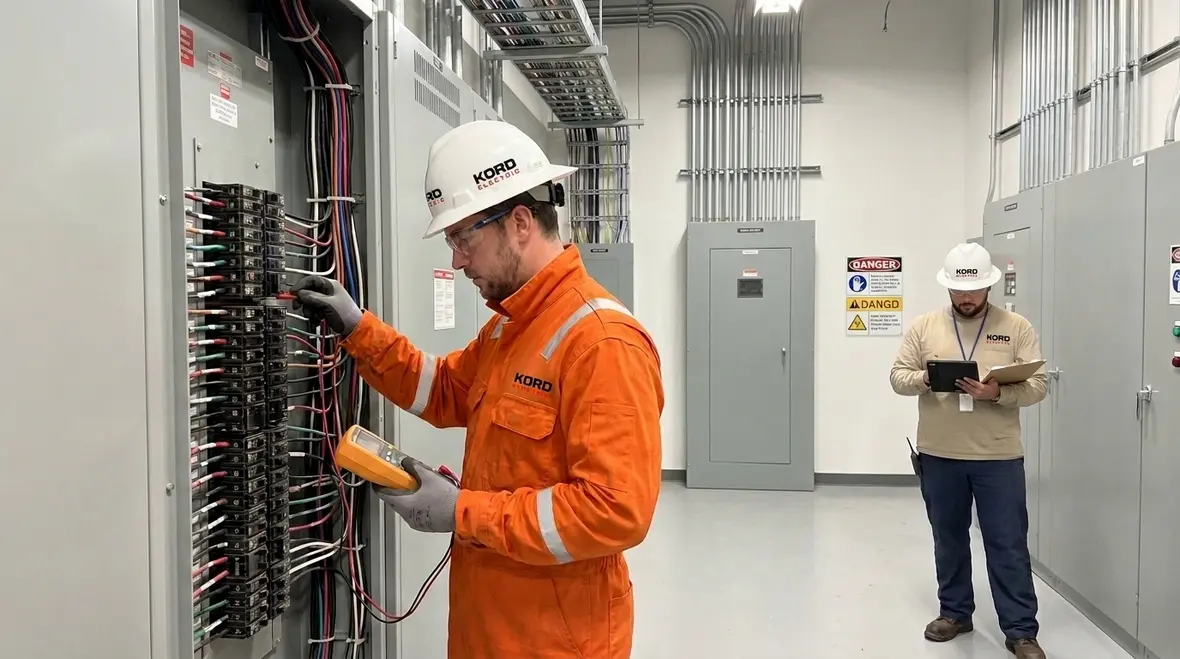
Depending on equipment and project scope, testing often includes checks such as insulation resistance and continuity tests. We also confirm proper circuit behavior and system conditions that affect protection. Additionally, we coordinate tests with the building’s operational needs so we do not create avoidable downtime.
Importantly, we document test methods, readings, and outcomes. As a result, decision makers can evaluate compliance and maintenance readiness. In fact, good records save time later, because troubleshooting without a history is like trying to assemble furniture from memory. Sure, it can be done. But it takes longer, and the extra screws do not magically disappear.

Common challenges in major property buildings and how we handle them
Major buildings bring real constraints. We often work around tenant schedules, facility access rules, and existing distribution setups. Because of that, we plan for how testing affects operations, and we control the scope to stay safe and efficient.
Some frequent challenges include:
- Phased renovations, where old and new systems share pathways and require careful coordination
- Complex distribution networks, where identifying circuits and verifying boundaries matters for correct testing
- Space limits and equipment access, where safe inspection requires proper work area setup
- Critical loads that cannot fully shut down, where partial testing and timing become essential
- Multiple stakeholders, where clear communication prevents misunderstandings and delays
To address these issues, our technicians and expert service staff communicate early. We coordinate access, verify permits and safety controls, and confirm the testing sequence. Then, we keep stakeholders informed with concise updates that focus on findings and next steps. And yes, we do it even when someone says, “We do not need documentation.” That is the moment we smile politely and point out that future troubleshooting does not run on optimism.
How documentation and communication support compliance
In commercial and industrial facilities, inspections and tests only matter if results are usable. That is why we treat documentation as part of the service, not an afterthought. After completing field work, our team organizes records to show what we inspected, what we tested, and what the outcomes were. This supports ongoing maintenance planning and helps facility managers evaluate compliance readiness.
We also explain results and any corrective actions in business casual language. Our goal is to ensure the facility team understands the risk and the fix. Consequently, our clients can make informed decisions without guessing. If we recommend follow up work, we explain the priority and the expected impact on safety and reliability.
Because compliance requires traceability, our reports often reference the relevant scope and observations in a way that supports audits and internal review. When you work with Kord Electric, you should feel like the electrical system has a reliable story behind it, not a bunch of isolated notes that no one can interpret later. For teams that want a broader code primer alongside these NEC inspections tests requirements, resources such as Kord Electric’s guide Understanding NFPA 70: The National Electrical Code Explained For 2026 help connect the field work to the rulebook behind it.
Featured FAQ on NFPA 70 Section 110.41 and NEC inspections tests requirements
How to use Kord Electric for compliant electrical inspections and testing
If your facility needs dependable inspections and tests tied to NFPA 70 Section 110.41, Kord Electric is ready to help. We focus on commercial and industrial buildings, major property projects, and critical electrical systems where reliability matters. Our technicians and expert service staff explain each step, then document results so your team can move forward with confidence.
For facilities planning broader upgrades or new construction, our team can also align NEC inspections tests requirements with early-stage design and code review, so the installation, testing, and documentation form one consistent story. That same mindset shows up across our resources, including articles on how to read NFPA 70, formal interpretations, and wiring workmanship standards, all aimed at turning dense rules into practical decisions in the field.
Reach out to us to discuss your scope, schedule, and compliance goals, and we will build a practical plan that protects safety and supports operational uptime. Whether you are coordinating phased renovations or planning a new major property build, our crews can integrate testing windows, isolation procedures, and reporting so inspections feel like part of a well-run project, not an interruption.
If you are managing a facility in Southern California and need support that goes beyond a single project, our dedicated Los Angeles County electrical services provide ongoing help with upgrades, maintenance, and compliance, so NEC inspections and tests requirements remain a steady part of operations instead of a last-minute scramble.
When you are ready to schedule inspections, organize NEC-compliant testing, or coordinate a full code-driven review of your electrical systems, Kord Electric is prepared to bring calm, documented structure to the process—and leave you with records and results that hold up when it matters most.