
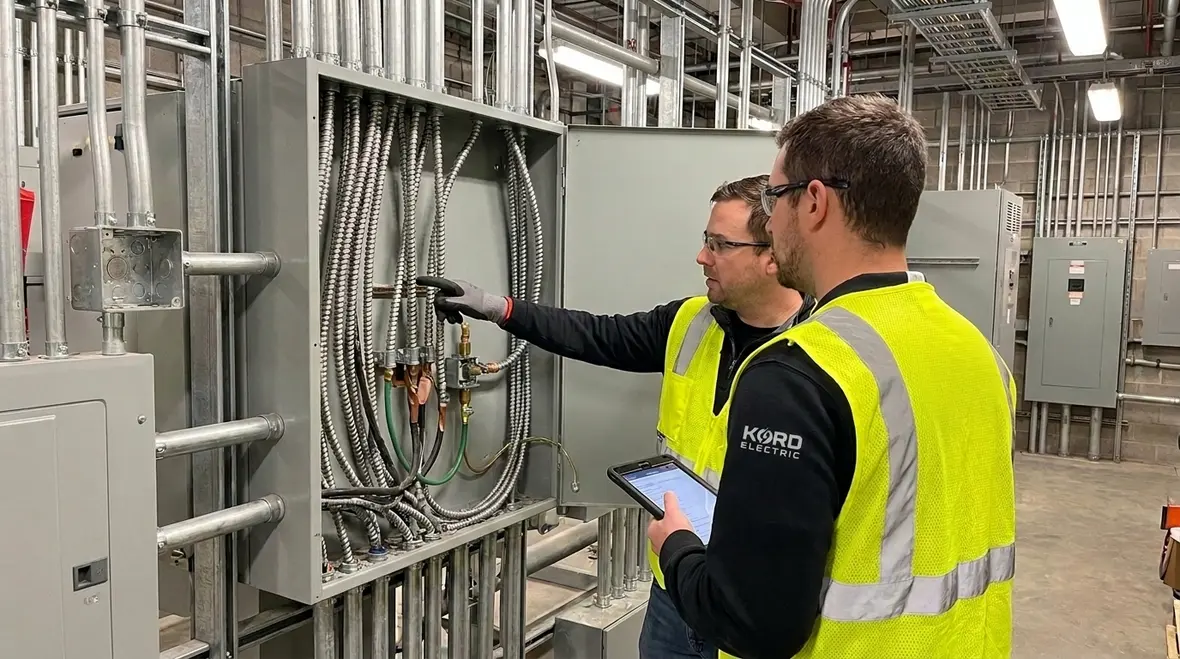
NFPA 70 322.100 NEC MC Cable Construction Compliance Guide
At Kord Electric, we help commercial and industrial facilities and major property buildings stay compliant, safe, and ready for inspection. In our NEC MC cable construction work, we often start by pointing to NFPA 70 Section 322.100, because it sets the baseline for how MC cable gets built. That matters, since the cable has to handle real job conditions, not just a friendly test bench. And yes, we hear it all the time: “It looks fine to me.” Well, that’s the electrical version of saying, “I’m sure the fire alarm is fine, because I have a good feeling.”
In this guide, our third party, expert service staff walks you through what Section 322.100 requires, why those requirements show up again and again in the field, and how we verify installation details during service visits. We also explain how NFPA 70 overall connects, so your team does not chase rules one by one like they are collectible trading cards.
What NFPA 70 Section 322.100 requires for MC cable construction
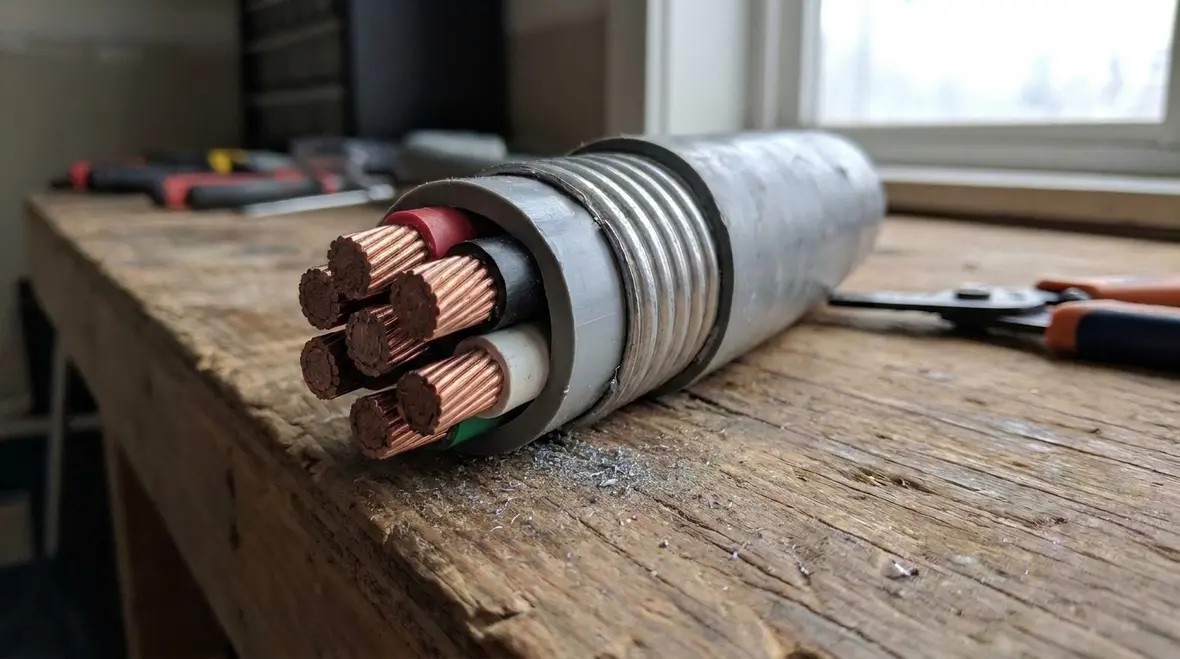
NFPA 70 Section 322.100 focuses on MC cable construction requirements, and it aims to ensure the assembly performs as a system. First, the cable must include conductors and a metal armor that protects the wiring. Then it must include components that support safe insulation, proper grounding, and dependable terminations.
Next, we remind facilities that “MC” does not mean “whatever fits in the conduit today.” The assembly has to match its intended design so it behaves during installation and later during operation. Moreover, when inspectors evaluate MC cable, they look for evidence that the cable assembly was built correctly and installed correctly. Our technicians explain these points in plain language on site, because reading a rule is one thing, and applying it in a real electrical room is another.
To make the idea stick, our team often compares it to a building envelope. If you rush the details, moisture and drafts eventually win. Similarly, when MC cable construction is off, stress, abrasion risk, and connection issues can show up later.
Why commercial and industrial facilities need this right the first time
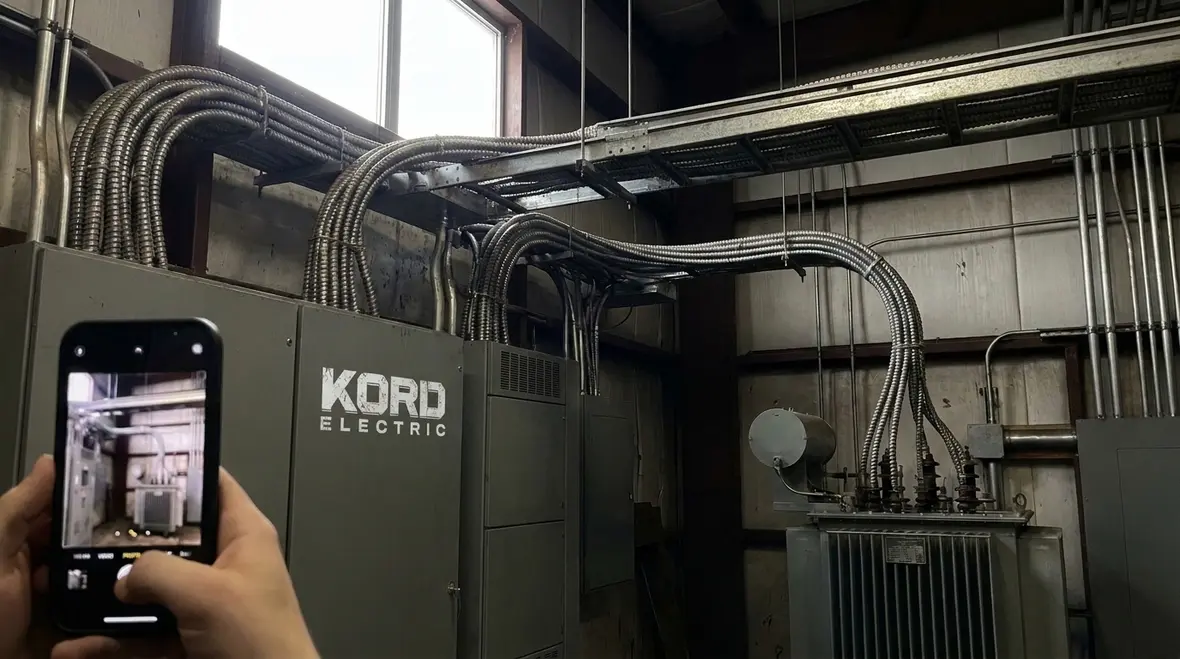
Commercial and industrial facilities live in a world of vibration, moving equipment, frequent maintenance, and sometimes hard schedules. As a result, MC cable ends up exposed to conditions that do not care about “close enough.” Therefore, getting the NEC MC cable construction details right protects people, reduces nuisance problems, and supports predictable system performance.
Additionally, major property buildings often involve shared power paths, distributed panels, and tightly managed workflows. If a cable run uses the wrong type of assembly or lacks the expected armor and conductor protection, teams may face downtime that looks small on paper and feels huge on the floor.
Our experience shows that the biggest wins happen when facility managers set expectations early. When our expert service staff reviews cable type selection, routing, and termination planning, they help prevent the kind of rework that no one schedules, but everyone ends up paying for.
How technicians confirm MC cable armor, conductors, and grounding
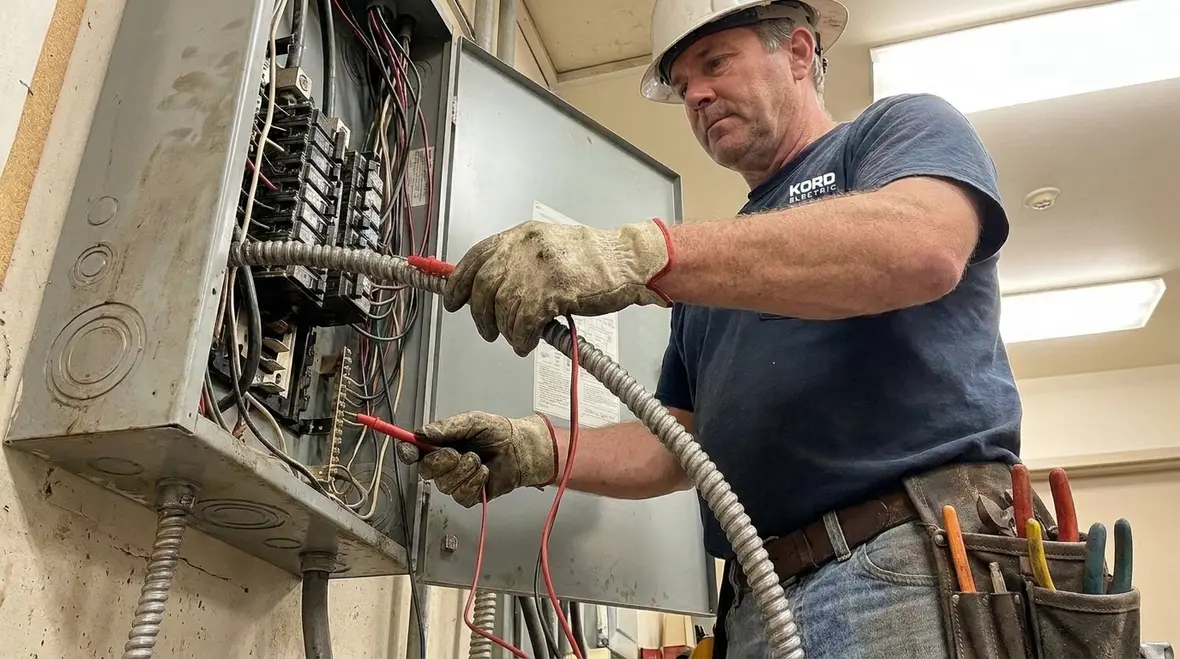
In the field, we do not treat Section 322.100 like a checklist you can wave at. Instead, we verify what we can measure, what we can observe, and what we can document.
During inspections and service work, our technicians commonly focus on these elements:
- Armor condition: We confirm the metal covering remains intact, protected from physical damage, and compatible with the environment.
- Conductor insulation: We check that insulation type and rating match the cable design and installation conditions.
- Grounding path: We look for a reliable bonding and grounding arrangement that supports safe fault current behavior.
- Termination integrity: We verify terminations support the cable assembly design and avoid loose, stressed, or mismatched connections.
Then we explain the “why” behind each item. For example, when armor gets compromised, you may not notice it during energization, but later you can see corrosion, increased fault risk, or intermittent problems. And yes, intermittent faults are like bad Wi Fi, except you cannot reboot the panel and hope for the best.
Transitioning from theory to practice, we also encourage facilities to standardize documentation. When your team can show consistent cable type selection, install practices, and termination methods, audits become smoother.
Where MC cable construction issues show up during inspections
Inspectors usually do not start with a magic wand. They follow patterns based on risk, and those risks often tie back to construction and installation details. Therefore, when NEC MC cable construction does not align with the assembly requirements, issues appear in predictable places.
Some common trouble spots include:
- Unauthorized substitutions: Teams replace cable with a look alike assembly, then wonder why performance or markings do not match.
- Mismatch at terminations: Installers use components that do not fit the cable design, which can lead to poor bonding or damaged armor.
- Routing damage: Even the correct cable can get compromised when pulled too aggressively, kinked, or installed where abrasion happens.
- Environmental exposure: Moist or corrosive locations can accelerate wear if the cable assembly and protection approach do not match the setting.
Moreover, some facilities assume that if a cable “worked once,” it will keep working. However, installation errors often reveal themselves after load changes, vibration cycles, or maintenance activities. At Kord Electric, we help teams treat the electrical system like a long term partner, not a quick one night stand.
Our approach mirrors the broader NEC context from resources we review, including Kord Electric content on the NEC and related fire and electrical code discussions from industry partners such as Kord Fire’s NFPA 70 overview and specialized fire pump resources. In other words, we connect cable requirements to the larger safety story, so your team builds a safer system end to end.
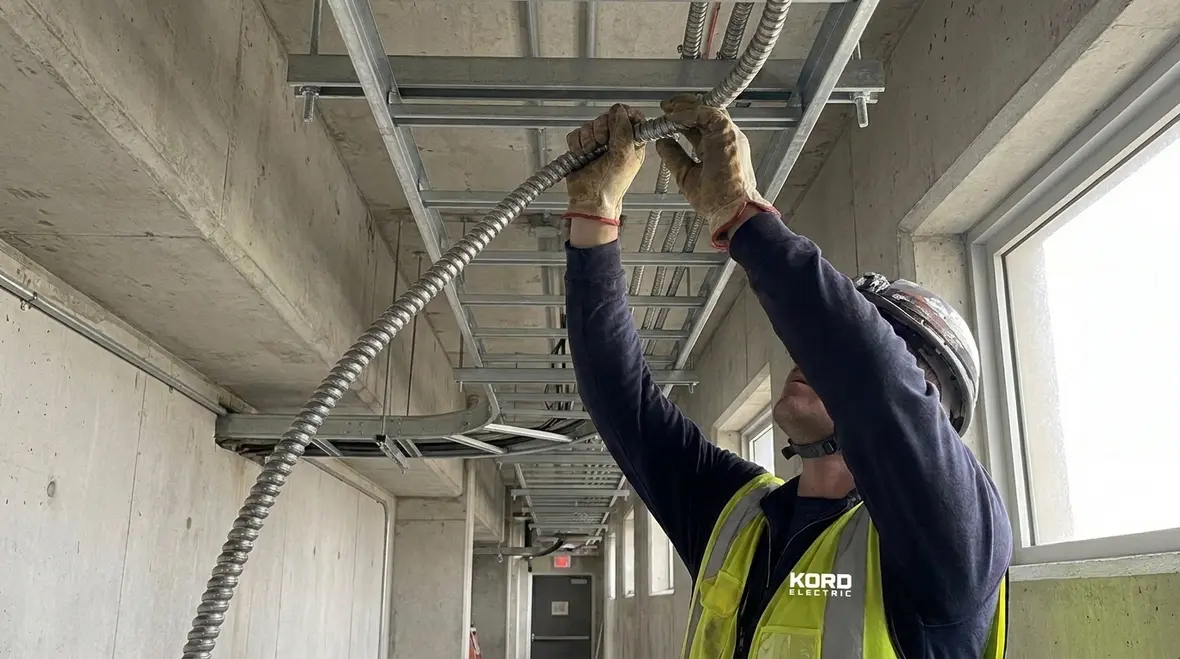
Best practices for routing, pulling, and terminating MC cable
Even when the cable assembly meets Section 322.100 expectations, installation methods can undermine the benefit. That is where we focus our service guidance for commercial and industrial facilities and major property buildings.
First, we emphasize planning. Before pulling conductors, our expert service staff helps define the path, the connection points, and the protection strategy. Then we align the pull with the cable handling rules in your procedures and the manufacturer guidance.
Next, we address routing. We recommend avoiding sharp bends, preventing abrasion, and using the right support spacing. Also, we ensure access to terminations stays practical for future maintenance. Because if no one can reach a connection without shutting down half the building, you will eventually pay for it.
For terminations, we stress correct components and proper torque practices where applicable. Finally, we verify grounding and bonding continuity so the system supports safe fault clearing.
And yes, there is a bit of humor in this: electricians sometimes pull cable like they are saving it from a burning bus. We get the urgency, but the cable does not care about adrenaline. It cares about mechanical stress and damage.
How the broader NEC mindset supports MC cable compliance
NFPA 70 does not treat Section 322.100 as an island. Instead, it connects cable construction with installation rules, grounding expectations, labeling practices, and overall safety goals. Therefore, we help facilities connect the dots rather than hunt for isolated requirements.
When teams review the National Electrical Code and related guidance, they often find that cable choice, environmental conditions, and termination methods all work together. Consequently, a facility that upgrades cable practices, documents the work, and trains staff reduces inspection friction. For a deeper orientation to that bigger picture, many facility teams also review Kord Electric’s guide Understanding NFPA 70: The National Electrical Code Explained for 2026, which connects high level NEC direction to field decisions.
Our team also encourages coordination across trades. Fire protection, electrical distribution, and building operations all share space, schedules, and pathways. When departments coordinate, MC cable runs get routed with fewer changes in the field, which means fewer opportunities for damage and mismatched terminations.
That is why we keep our focus on commercial and industrial facilities and major property buildings. Those sites need consistent processes, not one time fixes.
FAQ about NFPA 70 and MC cable construction
What is MC cable used for?
MC cable carries power and control wiring in many building applications where armored protection supports installation conditions.
How do we reduce rework after installation?
We plan routing, use correct cable type, support the cable properly, and ensure termination components match the cable design.
Does this apply to only new builds?
No. Existing facilities also benefit when we review conditions, verify cable type, and correct damaged or mismatched runs during service work.
Ready to get your MC cable practices inspection ready?
Kord Electric helps commercial and industrial facilities and major property buildings verify and improve NEC MC cable construction details, from cable selection to routing and terminations. Our technicians and expert service staff explain what they see, why it matters, and what to fix so you do not repeat the same problem next quarter. If you want a calm, organized path to compliance, contact us for an on site review. Let us handle the rulebook so your team can focus on running the building, not wrestling it.
For facilities in Southern California that want help tying MC cable practices into larger electrical reliability planning, our team also provides Los Angeles County electrical services that integrate NEC compliance, system upgrades, and long term maintenance support into one coherent plan.


